
Start with the hazards your baby can reach now: an unsafe sleep surface, a car seat used incorrectly, open water, unstable furniture, stairs, and objects or poisons within reach. Match each protection to what your baby can do, the room you’re in and the equipment’s instructions. Recheck when your baby becomes more mobile, the setting changes or a safeguard can’t be fitted correctly, and choose a safer arrangement.
Start with the hazard, not the gadget
A drawer full of corner guards and cabinet latches can leave the most serious hazards untouched. Before you buy another safety product, work out what your baby can reach in the room or activity you’re preparing for, and whether the protection will hold up in that setting.
A newborn who is mostly carried, fed and put down to sleep needs a different home check from a child who can pull open drawers or reach a staircase. Some protections remove the hazard. Others rely on equipment, an installed barrier or an adult watching continuously.
| Baby’s situation | Hazard to prioritize | Protection that matters | Detailed guidance |
|---|---|---|---|
| Sleeping | Unsafe sleep surface or loose objects | Firm, flat sleep space | Safe sleep setup |
| Riding in a vehicle | Wrong car seat or an unfastened harness | Child and vehicle fit; correct use on every trip | Car-seat installation |
| Newly crawling or climbing | Stairs, unstable furniture and reachable hazards | Gates, anchors and limited access | Babyproofing rooms |
| Bathing or near a pool | Unsupervised access to water | Attentive supervision and physical access barriers | Bath and water safety |
| Exploring toys, food and cabinets | Small parts, medicines and cleaners | Safe products, secure storage and careful food preparation | Food choking hazards |
| Visiting another home | Unfamiliar stairs, furnishings and equipment | A fresh look at the place you’re in | Arrival walkthrough below |
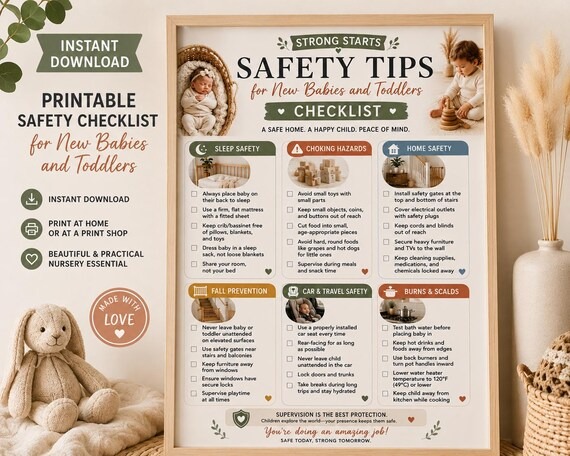
If your home has no stairs, you don’t need a stair gate. If you’re driving tomorrow, the car seat comes first. For each room or activity, ask what could hurt your baby most, then decide whether to move it, block it, use the right equipment or stay close.
No device makes a space completely childproof. A latch that’s often left open, a gate mounted where it can’t hold and an unanchored dresser are separate problems, whatever safety gear you’ve bought.
Recheck safety when your baby’s abilities change
Rolling, reaching, crawling, pulling to stand and climbing change what a baby can get to, sometimes before you expect it. Never leave a baby alone on an elevated changing table, bed or sofa, even before rolling is predictable. When you see a new skill, get down to your baby’s eye level and scan furniture, lower drawers, cords, loose objects and routes to the stairs. The rolling and sitting development guide gives related context.
When a baby falls asleep in a stroller or car seat
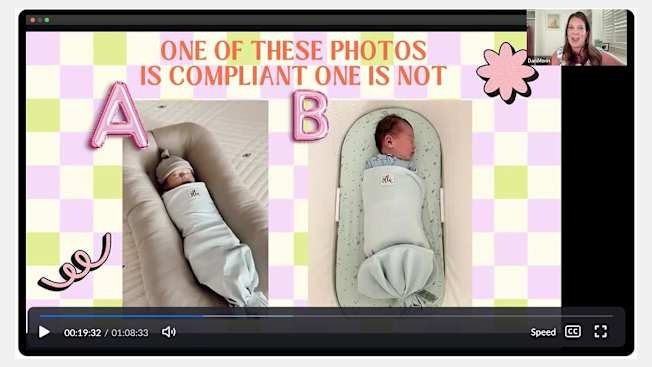
A stroller seat or car seat isn’t a sleep space. For routine sleep, CDC and CPSC guidance calls for placing a baby on their back on a firm, flat sleep surface with no loose soft objects.
A car seat protects your child while the vehicle is moving. Upright stroller seats raise a similar concern, but a separate stroller bassinet may be approved for sleep by its manufacturer.
One parent described the uncertainty of a walk interrupted by a nap:
My son is 5 months old, he often falls asleep in the stroller on walks. Do you allow your baby to nap in the stroller? And if so, for how long? I ask bc I know babies aren’t supposed to sleep in the upright position due to increased SIDs risk and positional asphyxia.. so I never know what to do when he falls asleep on a walk. Can I keep walking or should I head home right away? Should I purposely wake him up?
The medical reasoning in that post is the parent’s own. The CDC’s infant sleep recommendations are the authoritative source.
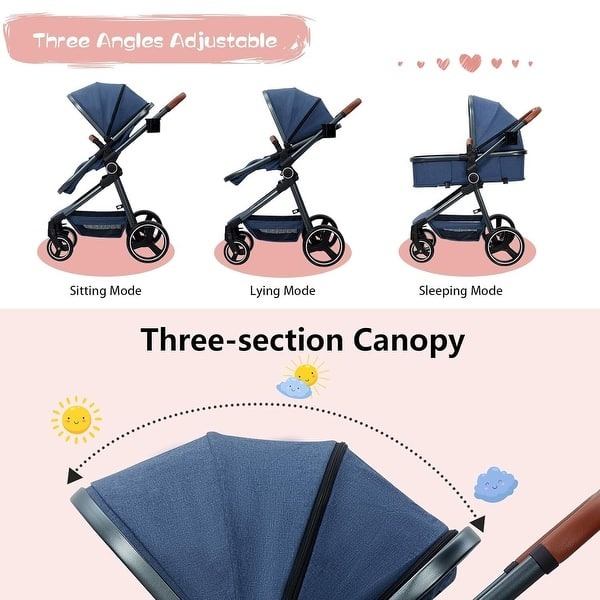
If your baby falls asleep in an ordinary seated stroller, or in a car seat after the drive has ended, move them to a firm, flat infant sleep surface as soon as you safely can. For a stroller bassinet, check the model’s instructions for infant-sleep approval before relying on it. If you need to compare feeding, sleep, and developmental milestones, use Baby Care Guide: What Matters Now, From Newborn to Age 2.
Reclining an upright stroller seat or keeping the stroller moving doesn’t make the seat approved for infant sleep. The full safe sleep checklist covers the sleep environment, and the guide to infant sleep products to avoid covers misleading product uses.
Secure stairs, furniture, windows and cords
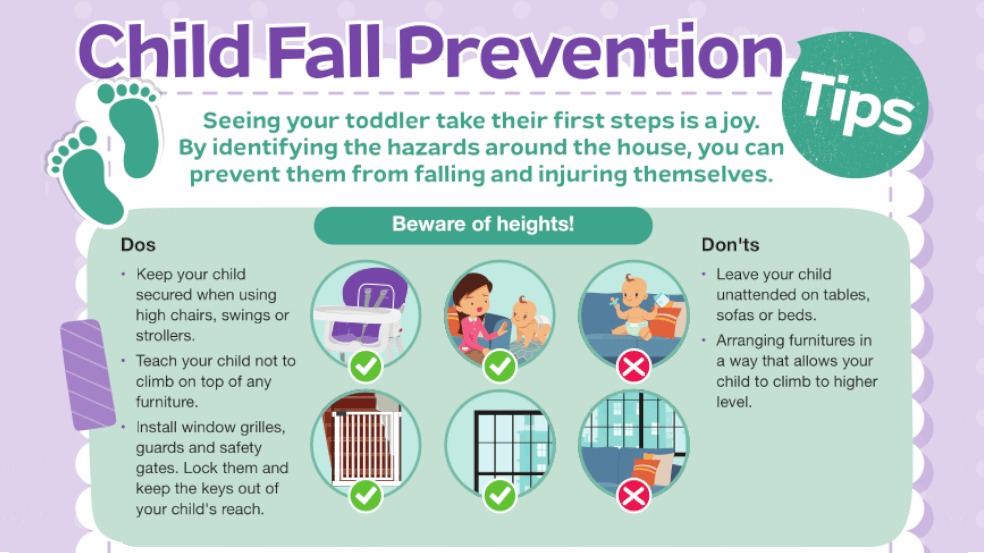
A child can pull on a dresser drawer or climb furniture before you realize how much leverage they have. Anchor TVs, dressers and ranges wherever tip-over is possible. Corner padding softens edges but won’t stop a heavy item from tipping.
| Household feature | Potential failure | Relevant safety condition |
|---|---|---|
| Top of staircase | Gate shifts or falls when pushed | Child-safety gate screwed securely into wall mounting points |
| Dresser, TV or range | Furniture or appliance tips when pulled or climbed | Proper anchoring for the item |
| Window | Child falls through an opening | Window protection that still allows emergency escape |
| Window covering | Accessible cord creates a strangulation hazard | Cordless coverings are preferred; for existing corded coverings, follow CPSC guidance, since some retrofit kits leave dangling pull cords |
| Cabinets and doors | Barrier fails or creates an access problem | Device fits the door, frame and daily use |
The CPSC’s childproofing guidance says to limit window openings to 4 inches or less, including the spacing between window-guard bars. An insect screen won’t stop a child from falling through a window. Follow the product’s installation instructions and keep an escape route through a window.
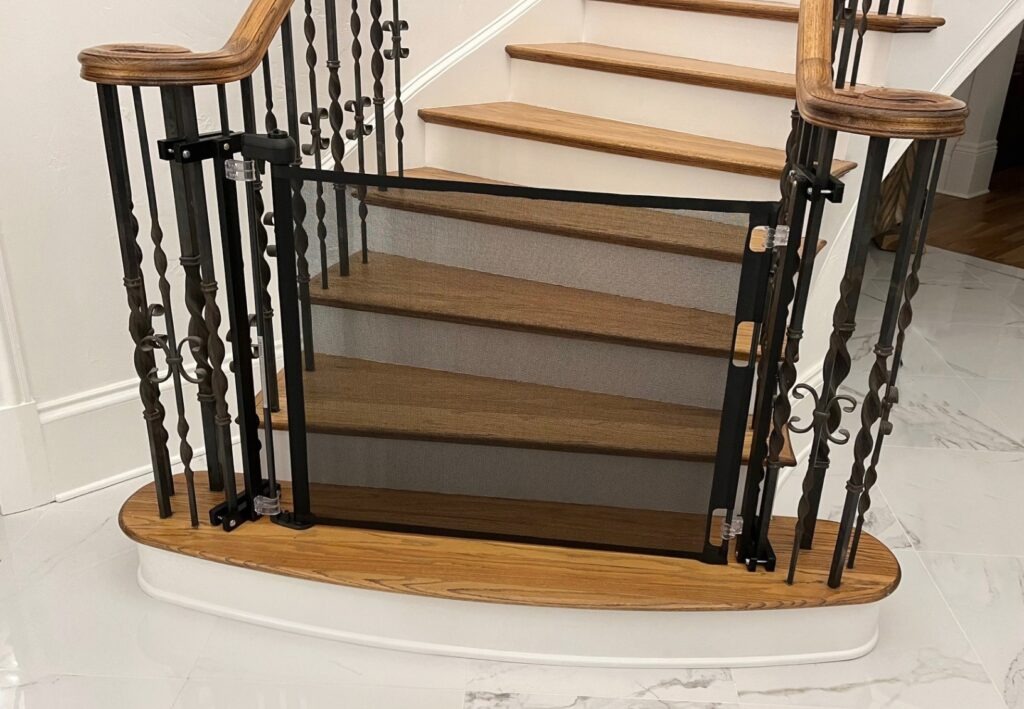
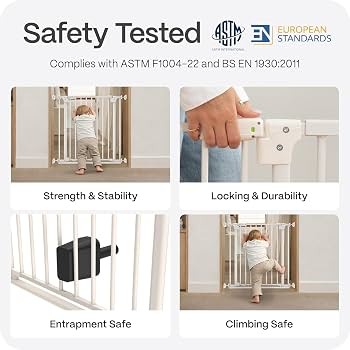
A staircase may end at an oddly shaped railing, a wall may lack solid fixing points, or a door protector may block a door’s normal movement. An installation that creates a new fall or exit hazard needs a rethink. Check each gate or anchor against the manufacturer’s mounting requirements and your wall, railing, frame or furniture. At the top of stairs, a pressure-mounted gate or pet gate can’t replace a child-safety gate screwed in correctly. If you can’t mount hardware properly, block access to the stairs until you can. The home babyproofing guide has room-by-room checks.
Baths, standing water, heat and fire
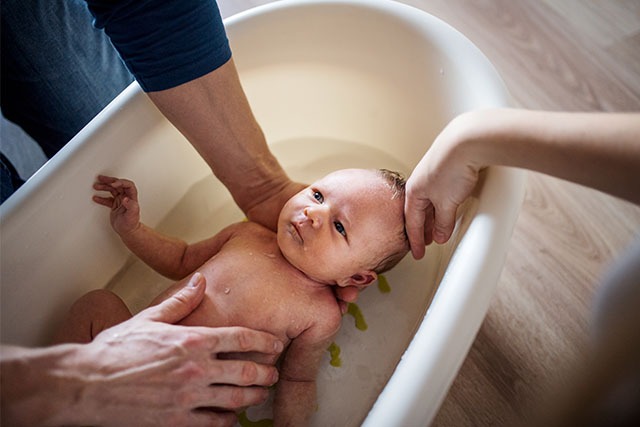
Stay close and attentive for the whole bath. A bath seat can help position your child but doesn’t replace you watching. If you must leave during the bath, take the baby with you. Pools and other open water need barriers that prevent unsupervised entry, plus direct supervision whenever your child is near the water.
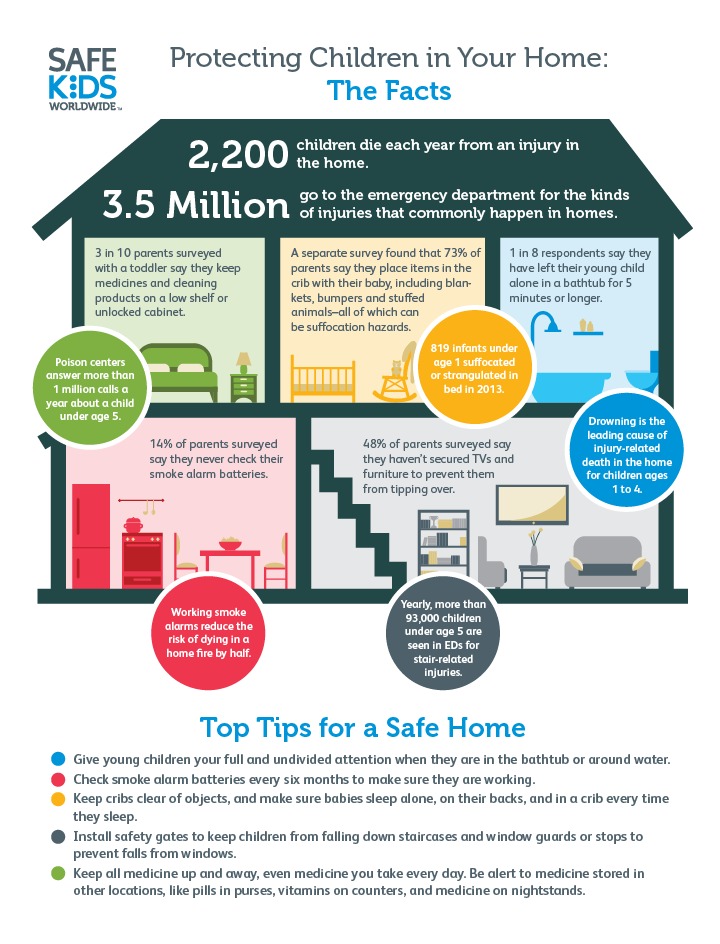
CPSC says to set your water heater to 120°F or lower to reduce scald injuries. It also calls for smoke alarms on every level of a home, inside bedrooms and outside sleeping areas, CO alarms near sleeping areas, and monthly smoke-alarm testing.
The bath and water safety guide covers water-specific setup and supervision in more detail.
Keep choking hazards, medicines and household poisons out of reach
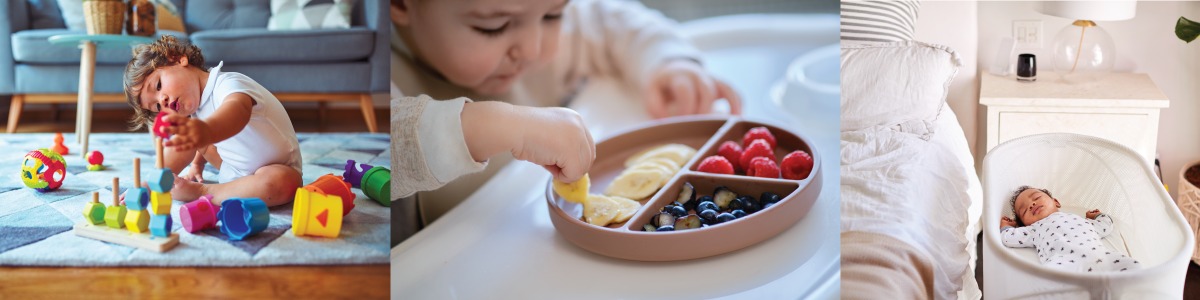
Watch for small loose objects, detachable toy parts, button batteries, medicines and cleaning products wherever your baby can reach. A child-friendly look or package doesn’t make the contents safe to explore.
Lock medicines and cleaners away. Child-resistant packaging only makes access harder.
A suspected swallowed button or coin battery is an emergency: go to an emergency department immediately or call 911. A lodged battery can cause serious internal injury even when your child seems fine at first.
When several adults share childcare, medication instructions get garbled in a rushed handoff. Whoever is watching the baby needs to know who is responsible, what the instructions say and whether a dose has already been given. Never guess at or repeat a dose when you’re unsure.
Check changing bags, purses, reachable tables and toys with small or detachable parts, as well as permanent cabinets. For other suspected poison exposures, CPSC lists the US Poison Control number, 1-800-222-1222. Call emergency services if symptoms are urgent or the situation is an emergency.
Food adds shape and texture concerns of its own, covered in the dedicated baby food choking guide.
Check the car seat before every drive
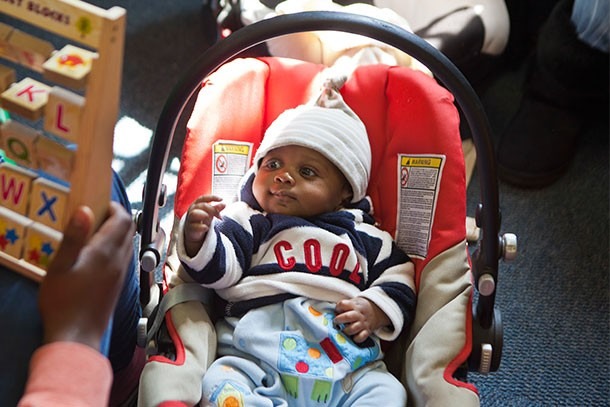
Installing the car seat and buckling your baby into it are two separate steps. The seat has to fit your child’s size and your vehicle, and your child has to be secured according to the seat’s instructions on every trip.
One parent described leaving a friend’s home in a hurry:
FTM here, I made a huge stupid mistake today that endangered the life of my child, and I can’t stop fixating on it. This morning, I went and visited a friend at her house for a couple hours — my baby was getting a little fussy so I put him in his convertible car seat/stroller and was slowly pushing the stroller back and forth to keep him happy and he had a blanket over his lap. My friend had to leave suddenly so I was scrambling trying to gather together all of his and my stuff and somehow I completely spaced that I hadn’t buckled him into the car seat/stroller yet when I clicked his car seat into the base. I only realized 7 minutes into driving that my baby was unbuckled in his car seat!! I immediately pulled over and strapped him in, and started balling thinking about what could have happened.
Grabbing bags, soothing a fussy baby and rushing out the door is when the buckle step is easy to miss.
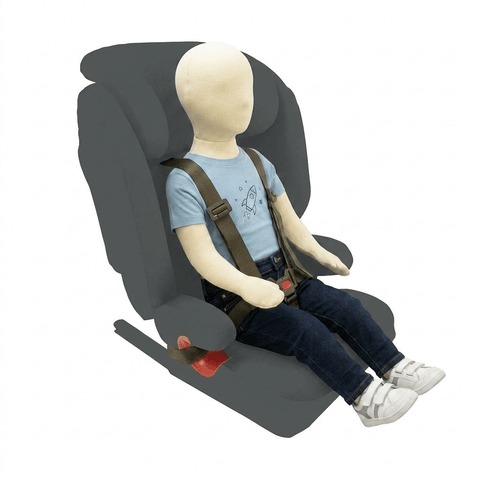
NHTSA’s car-seat selection and use guidance looks at your child’s age and size, the seat’s limits and your vehicle. Keep your child rear-facing until they reach the rear-facing height or weight limit of that particular seat, following the manufacturer’s instructions.
The car-seat and vehicle manuals govern installation and harness details. A birthday alone doesn’t mean a different seat will fit your vehicle correctly.
Before the vehicle moves, confirm your baby is buckled, the harness is fitted as instructed and the seat is secured as required. The car-seat installation guide has vehicle-specific instructions.
Check a baby’s products by model and intended use

A baby product is safe only for the uses and conditions its instructions cover. Model, installation requirements, condition and recall history all matter, especially for borrowed or secondhand equipment. A gate may have no readable model label, a used car seat may be missing its instructions, or a bath product may look like one covered by a recall. Similar names don’t mean identical models.
The CPSC maintains a public recall database for matching a specific item with an official notice. The published notice defines the affected products and remedies, and recall information can change.
On September 3, 2026, CPSC announced a recall of Skip Hop Baby Sesame Street Elmo Silicone Teethers, model 9R263210. The notice concerned detachable black eyes when frozen and approximately 22,660 US units.
Find the brand, model and any lot or manufacturing information on your item. Compare those details with the instructions and CPSC notices, and if it matches an official recall, follow that notice’s product-specific remedy. The product recall guide covers the lookup procedure in greater detail.
Reassess safety in relatives’ homes, rentals and shared care
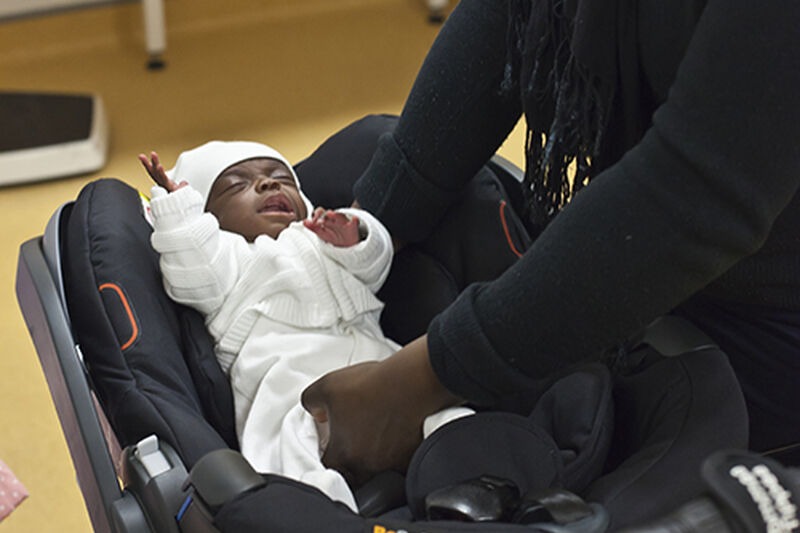
Your baby arrives at a relative’s home with the same abilities but different reachable hazards. Furniture, cabinet contents, stairs, windows and sleeping arrangements can all differ from yours.
Rentals are harder when the building layout or the terms of your stay limit what you can install. One parent described a staircase that was hard to gate:
I can’t use a baby gate on the stairs because of how the railing has been designed. It’s making it hard to get anything done cause if toddler isn’t in his playpen (which he’s starting to hate) he has to have constant supervision or he’ll make a beeline for the stairs. It also has to be very renters friendly cause this isn’t our house
Renting doesn’t make a pressure-mounted top-stair gate safe. Prevent your child’s access to the stairs, supervise closely and, where you can, pursue a fix to the property itself.
When you arrive somewhere unfamiliar, take a quick walkthrough before settling in:
- Sleep location: Decide where your baby will sleep and check that the equipment suits infant sleep.
- Stairs and windows: Spot accessible routes and openings, including barriers that can’t be installed correctly.
- Reachable items: Look for low cabinets, loose objects, medicines, cleaning products and unstable furnishings.
- Water access: Find baths, pools and other open water, and decide who supervises them.
- Borrowed equipment: Check that unfamiliar seats, strollers or sleepers suit what they were made for.
- Caregiver responsibilities: Agree who supervises high-risk activities and who handles medication instructions.
Next step: walk through today’s highest-risk setting, then open the relevant specialist guide.