
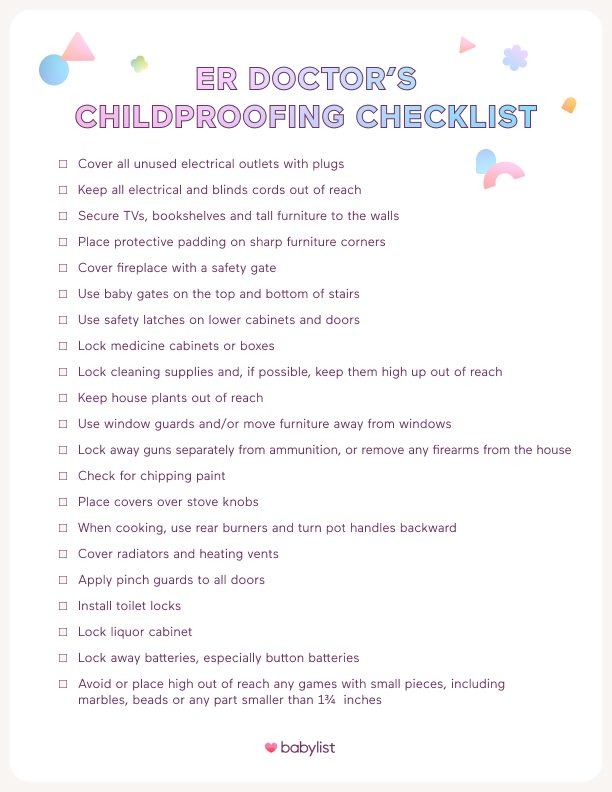
Secure the dangerous stuff before your baby can reach it: tip-prone furniture, stairs and windows, poisons, batteries, cords and water. Then walk through the house again whenever your baby learns a new move. Make sure every gate, anchor and lock actually works.
Start with the hazards that could cause serious harm:
- Furniture and TVs: Anchor dressers, bookcases and TVs that could tip when pulled or climbed.
- Stairs, windows, and exits: Block dangerous routes, including a pool, garage or balcony if you have one.
- Poisons and sharp objects: Lock up medicines, cleaners, laundry packets and knives.
- Batteries and small objects: Remove loose coin cells and small toy parts.
- Cords and electricity: Deal with blind cords, pull-down cables and open outlets.
- Water and heat: Control access to bathwater, pools, fireplaces, stoves and other serious burn risks.
What to Babyproof First, Before Crawling Starts
Deal with a serious hazard before your baby has the strength or mobility to reach it. The dresser beside a newborn’s play mat becomes a tip-over risk once your baby can pull a drawer or climb. Wait until then and you have little time to fix a faulty restraint.
Your home sets the list. A ground-floor apartment has different openings from a house with stairs or a pool. For a full rundown, see the Consumer Product Safety Commission’s home childproofing guidance, which covers furniture stability, falls, dangerous storage and correct use of safety devices.
Four verbs keep the first pass manageable:
- Remove: Take loose hazardous objects out of the rooms your baby uses.
- Anchor: Secure large furniture and equipment that could tip.
- Lock: Put medicines, chemicals and sharp objects behind locks.
- Block: Close off dangerous routes or rooms.

Say your seven-month-old starts crawling a few weeks early. The dressers are anchored, but cleaning products sit in a low bathroom cabinet and the stairs are open. Fix those two first. Corner cushions and playroom organizing can wait.
Check your smoke and carbon monoxide alarms in this first pass too, crawling or not. CPSC guidance calls for smoke alarms on every level, inside bedrooms and outside sleeping areas, and carbon monoxide alarms near sleeping areas.
How Babyproofing Changes With Rolling, Crawling, Pulling Up, and Climbing
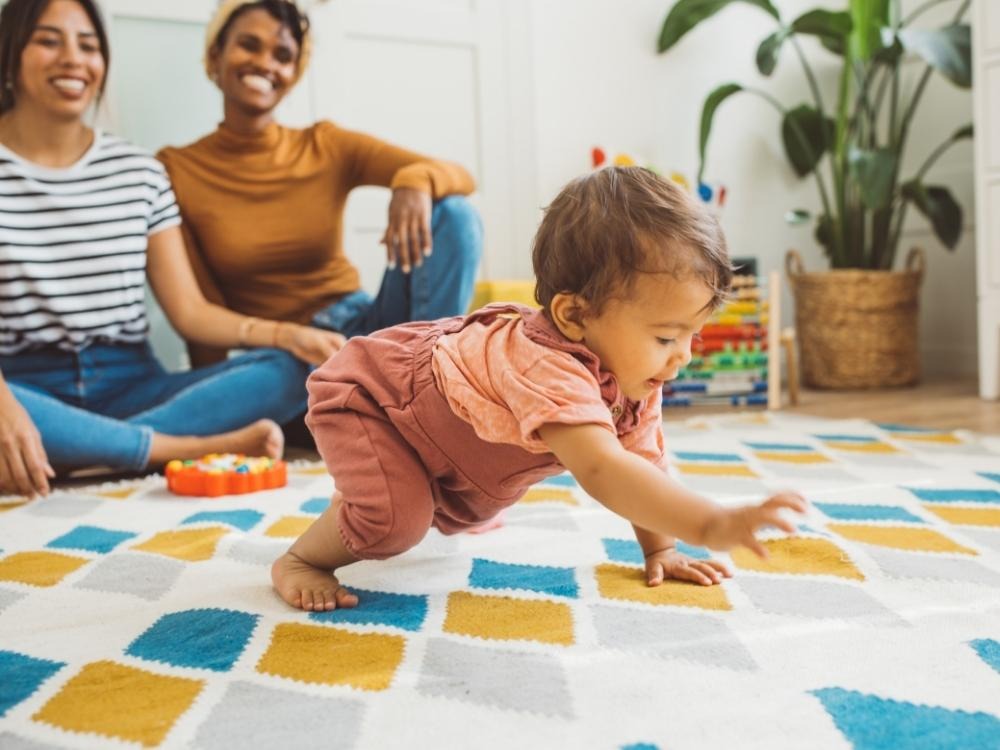
Each new movement opens up a new set of hazards. Go by what your baby can do now, not by a month-by-month schedule. Some babies scoot before they crawl, and some pull up earlier than you’d expect. For rolling, sitting and fall hazards, see When Do Babies Roll Over and Sit Up.
| What your baby does | New dangers | What to do |
|---|---|---|
| Rolling or scooting | Falls from changing tables or other raised surfaces; cords and objects near play areas | Never leave your baby unattended on a raised changing surface, even with a strap. Remove nearby cords and objects. |
| Crawling | Low cabinets, outlets, small objects, pet supplies, room exits | Lock hazardous storage, cover outlets and block dangerous routes. Check that locks and barriers latch, then scan the floor and reachable storage for anything left. |
| Pulling up or cruising | Drawers, TVs, low shelves, hanging tablecloths and cables | Anchor tip-prone furniture and remove anything your baby can pull down. Make sure each restraint suits the furniture and the wall, and replace damaged parts. |
| Walking or climbing | Higher storage, door handles, windows, stove areas, outdoor and garage access | Block newly reachable areas and secure objects within reach of climbable furniture. Confirm barriers still hold now that your child reaches and moves more. |
The American Academy of Pediatrics also advises keeping a hand on your baby throughout every change on a raised surface.
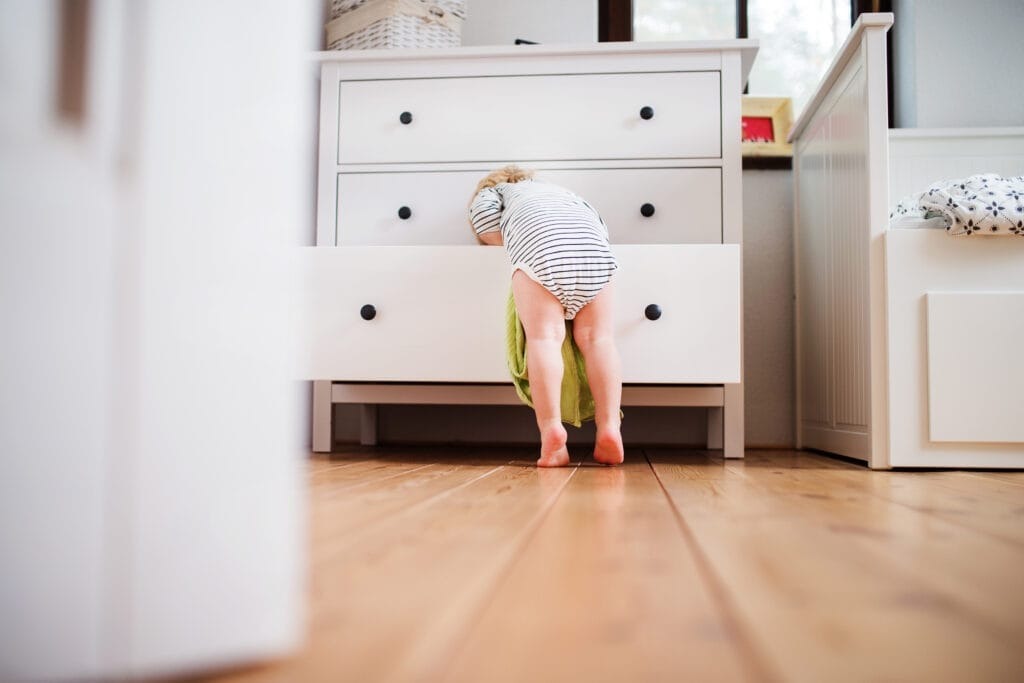
Crawlers find what you can’t see from standing height: a cable behind the sofa, a loose battery, the cupboard under the sink. Pulling to stand adds force. A drawer handle or low shelf becomes a handhold, and a dangling cord can bring something down. To judge crawling, pulling up and first steps, read Crawling and First Steps: How Babies Learn to Move. Climbing moves the inspection upward. A dining chair beside a window gives your child a route to a sill that was out of reach before.
Walk Through Your Home at Baby Level, Room by Room
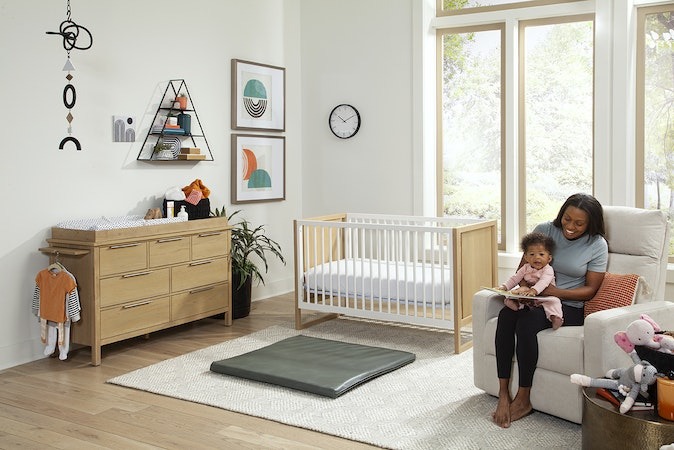
Get down to your baby’s level in the rooms your baby uses. Look for what’s within reach, routes into other spaces, and anything that could be pulled over or climbed. The American Academy of Pediatrics recommends this viewpoint because ordinary objects look different from the floor.
| Area | Look for | What to do and check |
|---|---|---|
| Living room or play area | Unanchored TVs and shelves, exposed cords, low objects | Anchor furniture, remove hazards, block cords or the room. Confirm each anchor is engaged and nothing dangerous is within reach. |
| Kitchen and laundry | Cleaning products, laundry packets, knives, hot surfaces, accessible cabinets, freestanding range | Lock storage, restrict access and fit a range anti-tip bracket. Test cabinet latches and verify the bracket is installed according to the appliance instructions. |
| Bathroom and nursery | Medicines, bathwater, cords near the crib, nearby windows | Store medicines securely, control water access and keep the sleep area away from hazards. Check reachable storage and water access. |
| Hallways and entrances | Stairways, garage, exterior doors, balcony access | Put barriers at dangerous routes. Check the actual opening and how the barrier closes. |
| Outdoor and utility areas | Pools, water containers, tools, chemicals, heaters | Restrict access. Find every route into the area. |
CPSC advises outlet covers or plates that young children can’t easily remove and that are too large to choke on. Tamper-resistant receptacles are another option when you replace receptacles.

Example: The living room dresser has drawer handles a toddler can grab, so it can tip if pulled or climbed. Anchor it with a restraint made for that furniture and wall, follow the manufacturer’s installation instructions, check every connection, and compare the restraint model with recall notices. Check it again if you move the dresser or a part loosens.
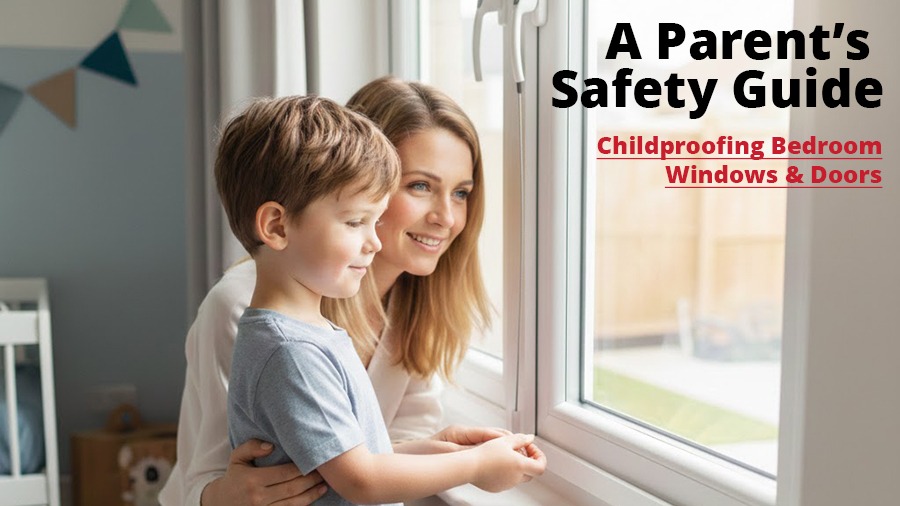
A chair directly beneath a window gives a climbing child a route to the sill. Pet bowls, litter trays, shoes and older children’s small toys also belong in the sweep when they share your baby’s floor space. Move them or block access. In the bathroom, CPSC recommends setting the water heater to 120°F or lower to reduce scalding, and you should stay right beside your baby around bathwater.
Check That Gates, Furniture Anchors, Window Guards, and Locks Work
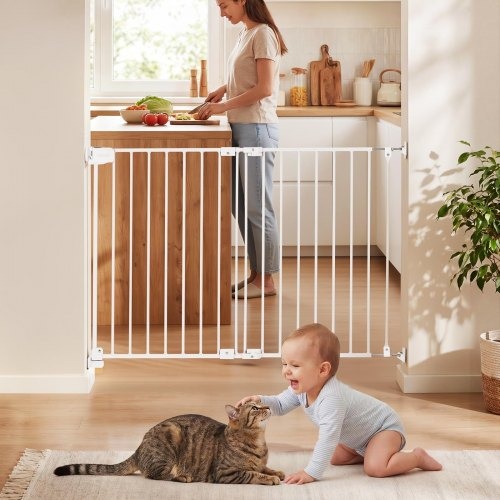
Pick each device for its exact location, then check the installation and run through how it works. A gate, anchor or latch only helps when its design and mounting match the hazard and you use it every time. Test each one the way you’d use it on an ordinary day, and fix any latch that doesn’t engage, loose part, bad mounting surface or recalled kit before you rely on it.
| Device or opening | Requirement | What to check |
|---|---|---|
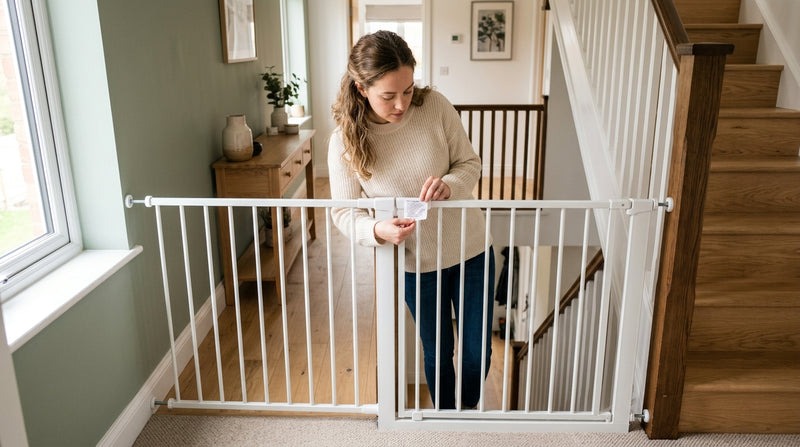
| Top of stairs | Child safety gate screwed into the wall | Confirm the product is meant for top-of-stair use, fits the opening and follows its mounting instructions |
| Other doorway | Gate type that fits that opening | Compare permitted installation and dimensions; confirm the gate latches after each use |
| TV, dresser, or bookcase | Restraint made for the object and the mounting surface | Check instructions, connection points, condition and product recalls |
| Window guard or limiter | Fall protection that keeps required emergency escape | Review mounting, opening dimensions and adult release arrangements |
| Cabinet or drawer lock | Reliable closure for the cabinet and its contents | Confirm the lock engages after every adult use |
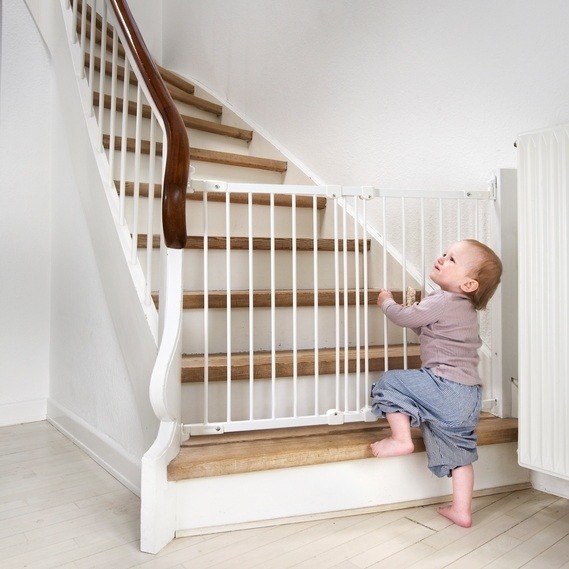
A pressure-mounted gate or pet gate is no substitute for a wall-screwed child safety gate at the top of a staircase. US gate and enclosure requirements fall under 16 CFR part 1239, which references ASTM F1004. The product instructions give the installation details for your opening.
For furniture, find the restraint’s manufacturer and model before you trust an existing kit. Its mounting method has to suit both the furniture and the wall. If either falls outside the instructions, keep children away from that furniture until you find a mounting solution that works.
On March 26, 2026, CPSC recalled approximately 253,500 4our Kiddies plastic furniture tip-restraint kits because the plastic brackets or zip ties could break or degrade. The recall notice instructed owners to stop using affected kits, contact the company for replacement stainless-steel kits, and keep children away from affected furniture while awaiting the remedy.

Window screens are not fall guards. CPSC advises window openings of no more than 4 inches, including the spacing between guard bars, while preserving emergency escape through at least one window in each room. The installation has to fit the window and the escape requirements that apply.
Window Cords, Batteries, Pills, and Other Hazards That Move Around the House
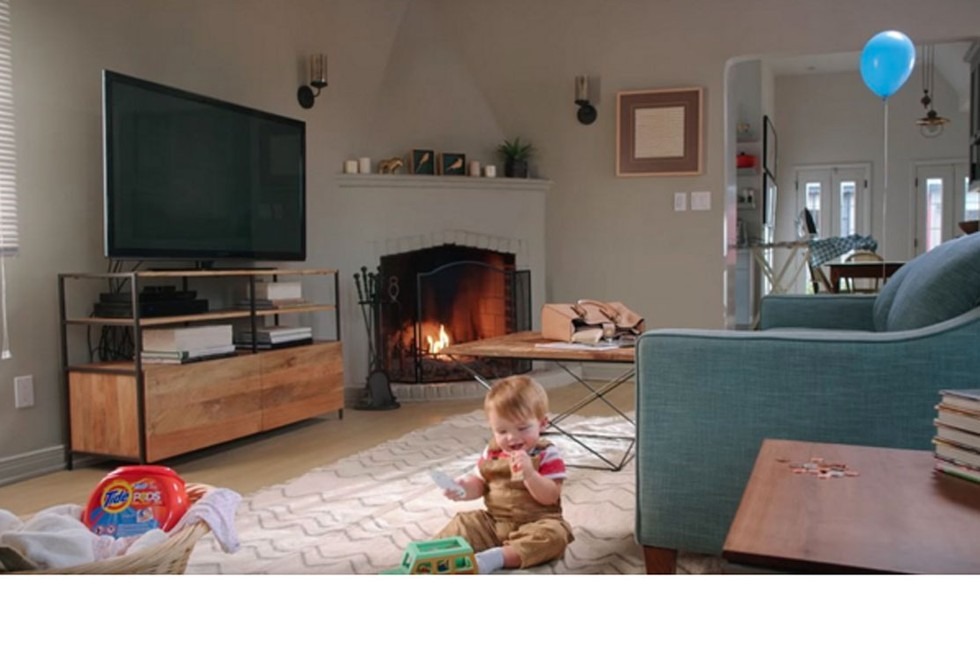
Small hazards travel with everyday belongings. A guest’s purse can put pills within reach, and a remote with a damaged battery door can expose a coin cell. Include these portable items in your sweep even after the furniture and gates are sorted.
Window-covering cords
Reachable window-covering cords are a strangulation hazard. CPSC recommends cordless window coverings, which remove the cord hazard. Tying up or retrofitting an existing cord helps a little, but cordless is the fix. Keep climbable furniture and your child’s resting areas away from window cords.
Coin and button batteries
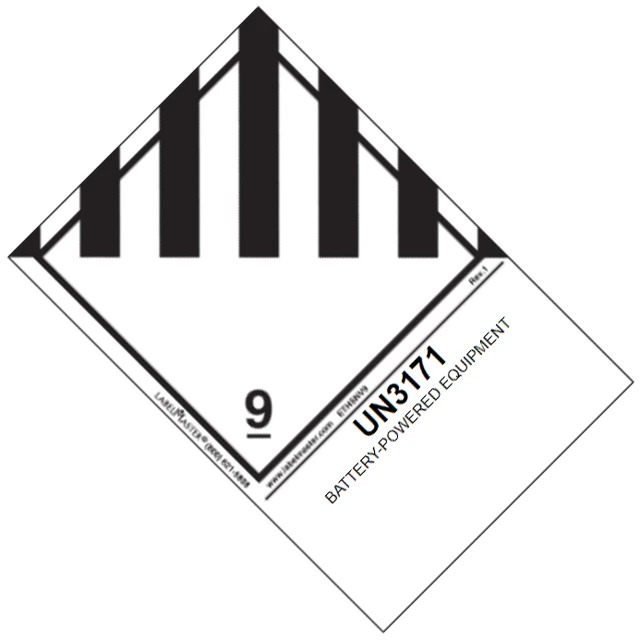
Check the battery compartments in remotes, key fobs, toys and small household devices. A missing cover or damaged fastener turns an ordinary object into something your baby can swallow. Store loose and used batteries securely.
The CPSC battery safety guidance warns that swallowing a button or coin battery can cause severe internal burns in as little as two hours.
If a button or coin battery may have been swallowed: Get immediate medical attention without waiting for symptoms. CPSC lists the National Battery Ingestion Hotline at 800-498-8666 and Poison Help at 800-222-1222 for immediate guidance. Don’t delay emergency care while you try to manage it at home.
Medicines, chemicals, and small household objects
Keep medicines, cleaning products and laundry packets locked up in their original containers. Child-resistant packaging adds protection, but it doesn’t replace keeping dangerous contents out of reach.
Inspect handbags, visitors’ bags, loose coins, small toy parts, plastic packaging, and cables that could pull a lamp or appliance down. These items move around, so set things up so they stay safe when people arrive, unpack or clean.
What Is Essential in an Apartment, Open-Plan Home, or Tight Budget?
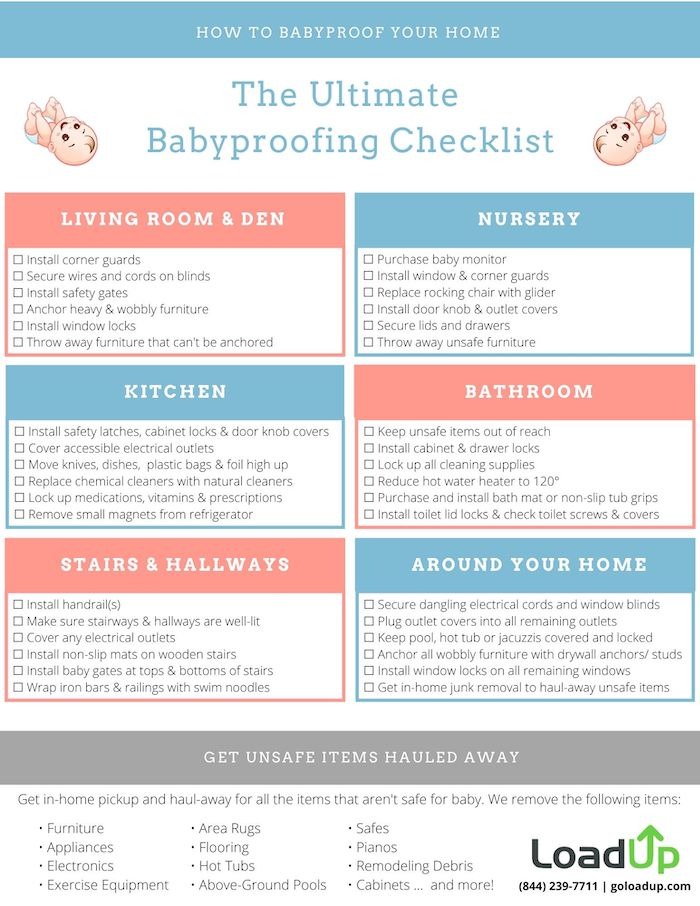
The serious hazards in your home set the essentials. An apartment with no stairs may not need a stair gate, but windows, furniture, chemicals and batteries still need attention. In an open-plan home, a crawler can reach cat bowls, a shoe rack or the next room before you finish a task. For sleep safety, car seat fit and home hazards, read Baby Safety at Home and on the Go: What to Check First.
| Priority class | Examples | Decision rule |
|---|---|---|
| Essential when the hazard exists | Furniture restraints, locked dangerous substances, stair and water-access barriers | Deal with serious dangers before your child reaches them |
| Layout-dependent | Room gates, play enclosures, fireplace barriers, specialized window devices | Choose by your actual access routes, construction and use |
| Convenience or minor-impact protection | Extra organizers, some corner cushions, duplicate accessories | Add after the major hazards are covered |
A play area helps you supervise in an open-plan room. It doesn’t make the rest of the home safe, especially if doors, chemicals, stairs or water stay accessible.
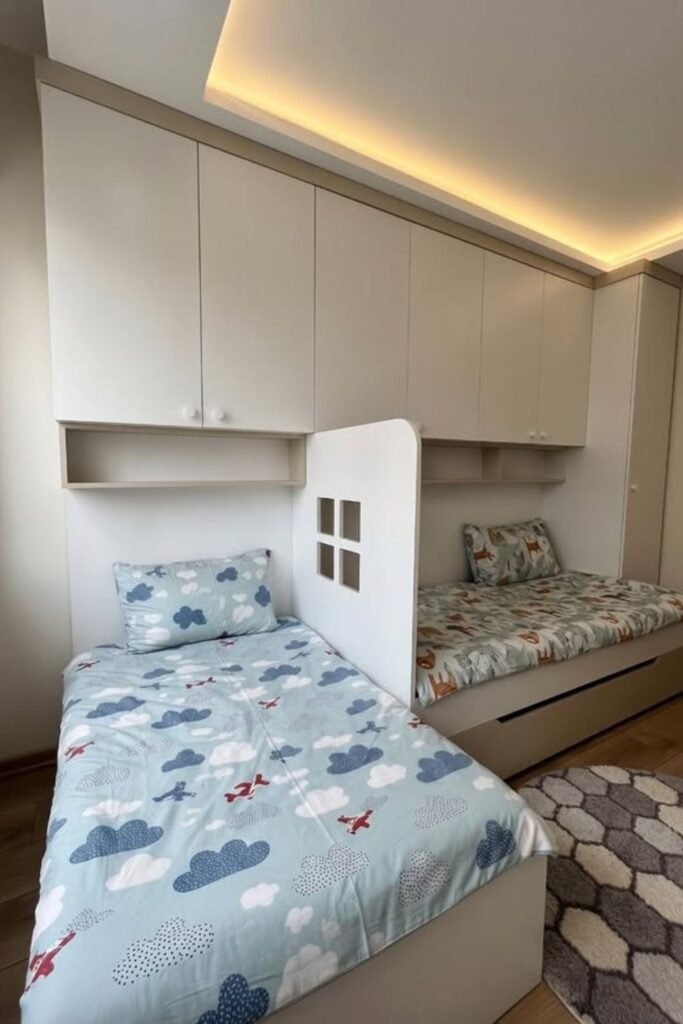
Rental rules, brick walls and unusual banisters limit how you can mount a barrier. For a nonstandard opening, ask a qualified installer to recommend a compatible product and mounting method, or block access another way until the hazard is dealt with. A masonry fireplace or wood stove adds heat and impact risk, so pick a barrier that fits the appliance and whether you use it.
Pet feeding and litter areas, older siblings’ small toys and the route to an outdoor pool can all change your plan. If you have a pool, the American Academy of Pediatrics emphasizes multiple barriers, including four-sided isolation fencing, to cut unsupervised access.
On a tight budget, compare devices by the hazard they cover, their fit, and whether you can install and maintain them properly. A cheap gate that fits the opening and is installed right does the job. A pricey one installed badly doesn’t.
Recheck Babyproofing After Every New Skill or Household Change
Check again after a new climbing or opening skill, moved furniture, a change of caregiver, damaged hardware or a product recall. If several things need fixing, start with the one that could hurt your baby most. To compare product model, serial number and the official recall notice, use How to Check Baby Product Recalls (and What to Do Next).