
Put your baby down on their back for every nap and every night, in their own crib, bassinet, play yard or bedside sleeper, on a firm, flat, level mattress with a fitted sheet and nothing else in there. If the product isn’t meant for sleep, something in the setup is unsafe, or your baby has outgrown the arrangement, fix that before the next sleep.
The safe sleep checklist: pass, fail, fix
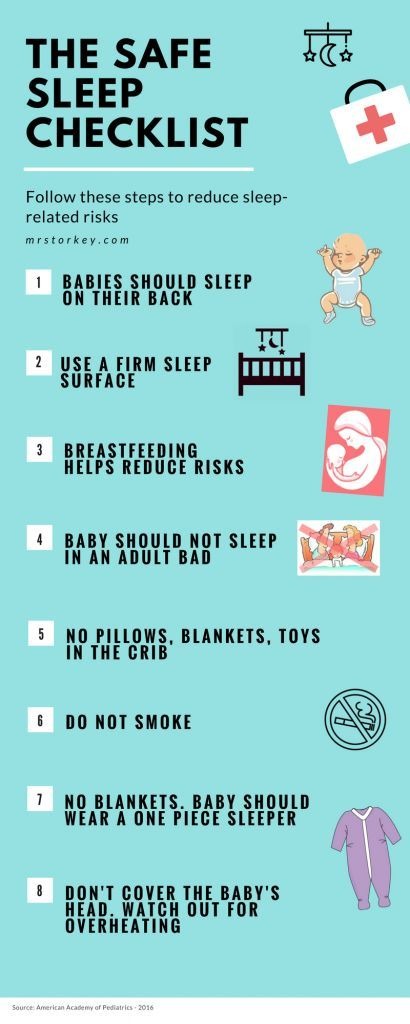
Before every nap and bedtime, look over the place where your baby will sleep. A crib can be the right product and still hold a loose blanket. A bassinet can look ready even though someone added a mattress pad that doesn’t fit it.
The first eight checks cover everyday setup. The product-identity check matters most when equipment is new to the household, borrowed, or changed.
| Inspect | PASS | FAIL and correction |
|---|---|---|
| Starting position | Baby is on their back | Put baby on their back |
| Sleep product | Compliant crib, bassinet, play yard or bedside sleeper, used as directed | Switch to an appropriate infant sleep product |
| Mattress | Firm, flat, level, made for that product | Remove extra padding or the improvised mattress |
| Bedding | Fitted sheet that fits; clear sleeping space | Remove blankets, pillows, bumpers, toys and positioners |
| Room setup | Separate baby surface, away from adult bedding and hazards | Move the product or remove the hazard |
| Clothing | Head uncovered; no signs of overheating | Adjust clothing; don’t add loose bedding |
| Swaddling | No rolling attempts while arms are wrapped | Stop swaddling the arms once rolling attempts begin |
| Current location | Baby is in an infant sleep space | Move a baby asleep in a swing or sitting device to a suitable surface |
| Product identity | You know the instructions, intended use, limits and recall status | Identify the exact model and check it before use |
Use the same test for daytime naps. The American Academy of Pediatrics explains that safe sleep practices reduce the risk of SIDS and other sleep-related deaths, although no practice guarantees prevention.
Place your baby on their back for every sleep
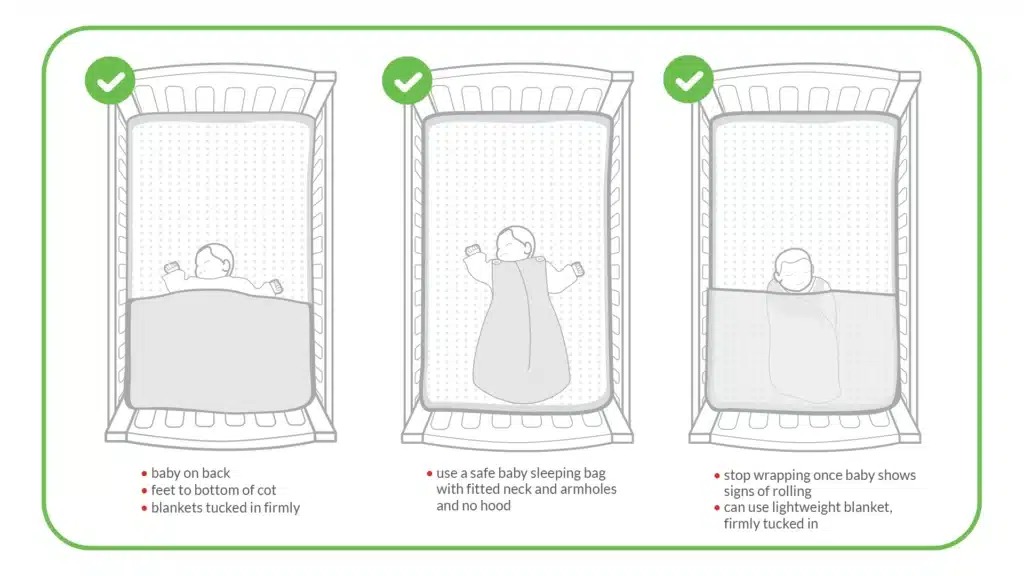
Start every sleep with your baby on their back for the whole first year, nap or night. Side placement isn’t a safer option for a baby who dislikes the bassinet.
Once your baby can roll comfortably in both directions, back to tummy and tummy to back, the AAP says you don’t need to keep turning them over after they roll during sleep. Keep putting them down on their back at the start and keep the sleep area clear. If your baby rolls only one way, you can move them onto their back when they end up on their stomach.
The same goes for a four-week-old you’ve just soothed in your arms: sleep starts on the back. If your baby’s clinician has prescribed a specific medical positioning plan, follow it.
Check the mattress, fitted sheet, and empty sleep space
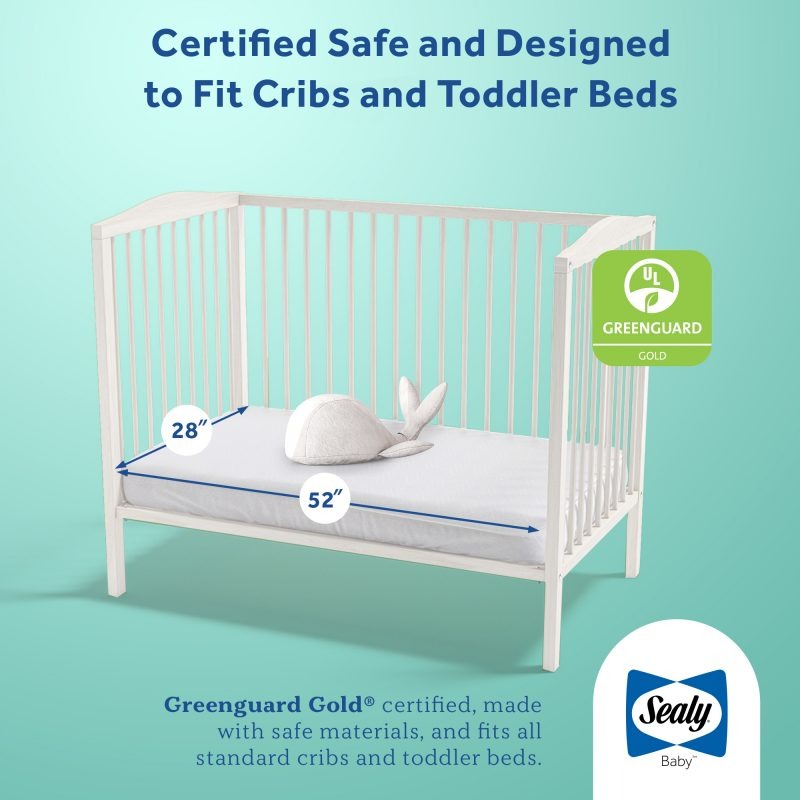
A safe infant sleep mattress is firm, flat, and level. The NIH Safe to Sleep guidance describes firmness as a surface that quickly returns to its original shape when pressed. Flat means it doesn’t sag; level means it isn’t angled.
Use the mattress made for your particular crib, bassinet or play yard, with a fitted sheet that fits. A topper, folded blanket, wedge or improvised mattress changes the fit or makes the surface soft or inclined.
Keep the space around the baby bare. Take out pillows, quilts, stuffed animals, bumpers, loose blankets and sleep positioners. A “breathable” label on an accessory doesn’t make it safe to add.

A thick folded blanket under a newborn fails the surface check, even if a parent added it to make the bassinet more comfortable. Adult beds, couches and armchairs aren’t substitutes for a separate infant sleep surface.
What counts as a sleep product?

The US Consumer Product Safety Commission identifies compliant cribs, bassinets, play yards, and bedside sleepers as infant sleep product categories. Follow each product’s instructions. A label or a familiar look doesn’t establish that a particular model complies.
| Product or arrangement | Use for routine sleep? | What decides it |
|---|---|---|
| Crib | Yes, when compliant | Applicable requirements, complete assembly, intended mattress and product limits |
| Bassinet | Yes, when compliant | Model instructions, baby’s size and developmental limits |
| Play yard | Yes, when compliant | Approved setup and mattress configuration |
| Bedside sleeper | Yes, when compliant | Specific installation and manufacturer directions |
| Swing or bouncer | No | Designed for soothing or seating |
| Car seat | Travel only | Correct restraint use doesn’t make it a home bassinet |
| Nest, pod, or in-bed sleeper | Can’t be judged by product name | Exact model, intended use, applicable requirements, and compliance; no endorsement of adult-bed sleep |
| Adult bed, couch, or armchair | No | Adult sleeping surfaces carry separate hazards |
Choosing something to buy? The guide on choosing between a crib and a bassinet covers space and practical use. For the product already in your room, correct identification and setup decide the safety check.

CPSC’s infant sleep product standard is codified at 16 CFR Part 1236, and certain nests and in-bed sleepers fall within its scope depending on their intended use. The Safe Sleep for Babies Act of 2021 covers inclined sleepers separately, through 16 CFR Part 1310.
The US inclined-sleeper ban covers products intended, marketed, or designed for infant sleep with a sleep-surface angle greater than 10 degrees. A shallower angle doesn’t certify a product; its actual design, compliance, and use still decide.
Room-sharing setup and adult bedding near the crib
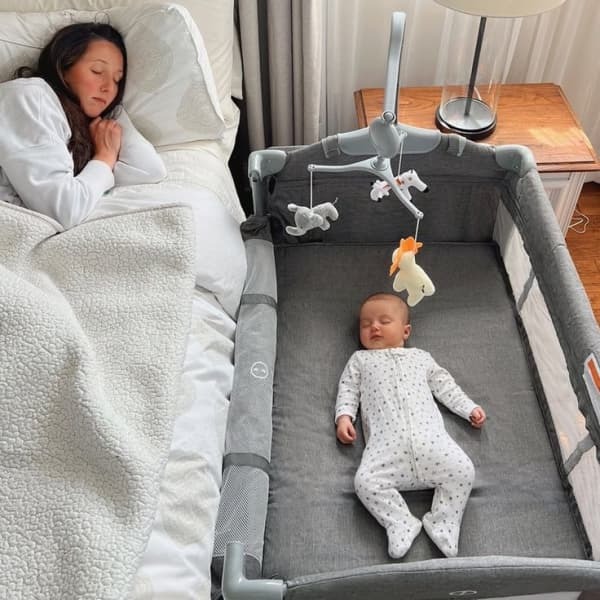
The AAP and CDC recommend sharing a room with your baby, ideally for at least the first six months, with a separate infant sleep surface. Place a bedside sleeper close enough for caregiving and install it as its manufacturer directs. When sorting out infant lounger, inclined sleeper, and crib safety, consult Baby Sleep Products to Avoid and What to Use Instead.
A duvet can slide toward a bedside crib while you sleep. Keep the baby’s mattress clear of it.
Check nearby cords, curtains and reachable objects as well as the bed. If something could fall or reach into the baby’s space, rearrange the room.
Sleep clothing and overheating check

Dress your baby in suitable sleep clothing and leave their head uncovered. Sweating or a hot chest are the CDC’s signs of overheating. If you see them, adjust the clothing.
A wearable blanket or sleep sack that fits properly gives warmth without a loose blanket, as long as it suits your baby’s stage and follows the product instructions. Don’t use weighted sleep garments or add loose bedding for warmth.
Swaddling and rolling: when the setup must change
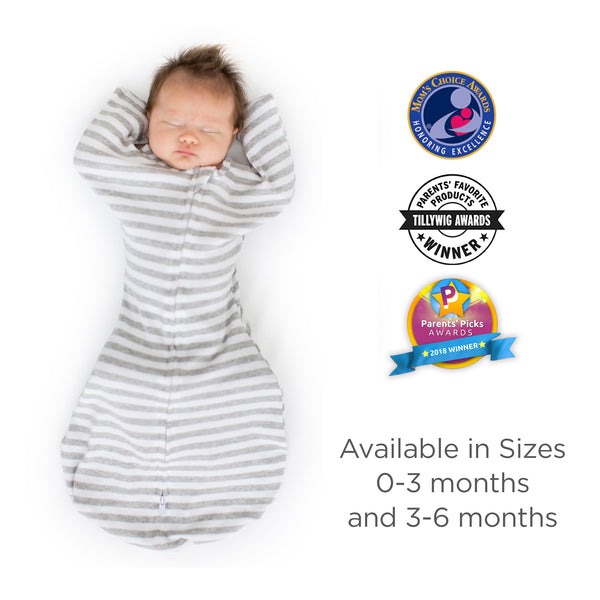
Stop swaddling with the arms restricted as soon as your baby shows signs of trying to roll, even if the garment’s suggested age range allows longer use.
A baby who starts twisting or trying to turn is ready for a change. A properly fitting wearable blanket that leaves the arms free is a different option, with its own instructions.
Sleep products also have limits based on weight, height, or developmental abilities. Know them before your baby outgrows the permitted configuration. For the transition itself, see moving from swaddling to a sleep sack.
What if the baby falls asleep in a swing or car seat?
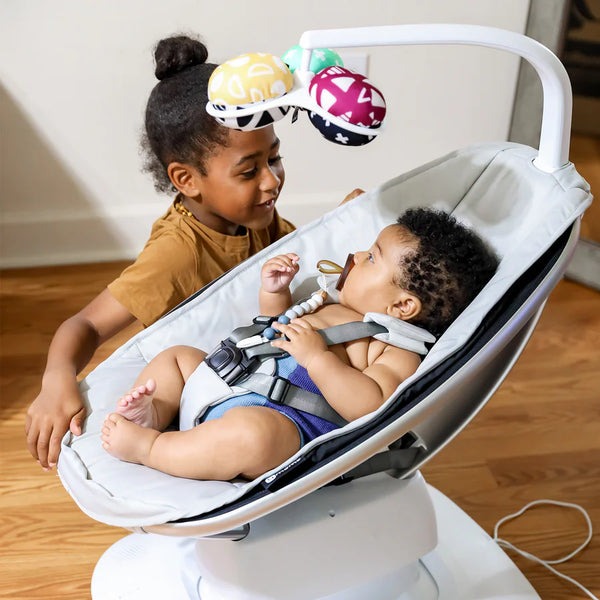
If your baby falls asleep in a swing, bouncer, or another sitting or soothing device, move them to an infant sleep surface. A curved or semi-reclined position can compromise the baby’s airway, even when the device settles them quickly.
A car seat used correctly is essential for travel. Using it as a regular place to sleep at home is a different matter.
One parent describes a baby who refuses the bassinet but settles in a swing:
4 week old absolutely HATES bassinet. I have tried everything. I can get him to sleep in no time but transferring to the bassinet doesn’t work and he is immediately awake and crying every single time. Partner is back at work and we can’t do shifts at night anymore. If I am lucky enough to get him to sleep in the bassinet, by the time I get him there it’s time for him to eat again and he’s waking up hungry with little to no time being asleep.
I am desperate to sleep when he sleeps but he doesn’t at night and only wants to be in his swing during the day so I am awake then too since he isn’t suppose to be in the swing unsupervised.
Watching a swing doesn’t turn it into a sleep surface.
When a baby refuses the safe sleep space
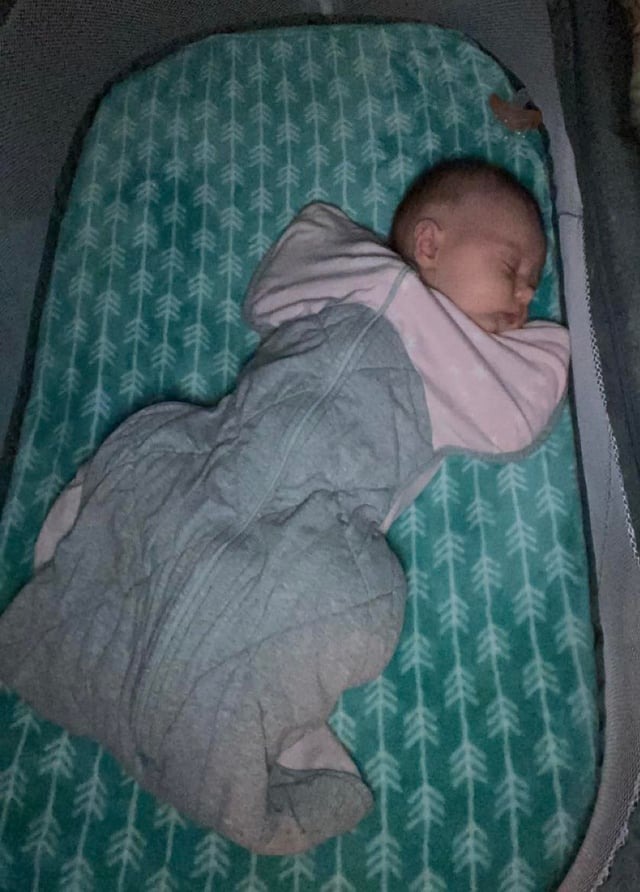
Repeated wake-ups after a bassinet transfer leave caregivers little time to rest. One parent describes it:
My wife and I just had our first kid (he’s about to be a month old!). We’re doing a lot of learning as as we go, but we’re having a VERY difficult time getting him to sleep in the bassinet.
He starts crying within 30-40 min of putting him in his crib or bassinet (after we’ve rocked him to sleep in our arms, which can take about an hour). Sometimes he just starts crying immediately. We’ve tried putting him down on his side feet first, hips/butt, and head. Same issue. We have bedside bassinet and just got a Cradlewise (smart crib that bounces). Nothing has worked long term.
Side placement, which this family tried, isn’t an option. Keep laying your baby down on their back, even if settling takes several attempts.

When repeated waking becomes a persistent problem, read about what newborn sleep can look like in the first months for sleep patterns and settling. If feeding, illness, or another health concern seems involved, ask your baby’s clinician rather than diagnosing it from another family’s story.
Comfort workarounds that need an equipment check
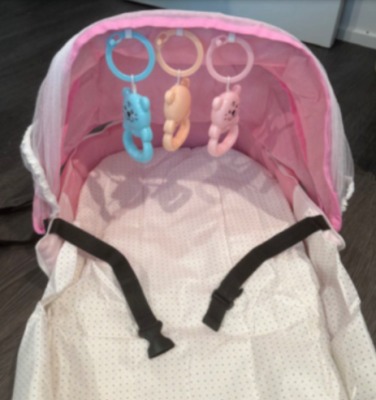
An improvised comfort fix can turn a safe product into an unsafe sleep setup. Heating devices, wedges, extra padding, loose cloth and makeshift inserts don’t belong in your baby’s sleep area. An online tip might promise an easier bassinet transfer if you tilt or warm the mattress. Check the result against the manufacturer’s instructions and the firm, flat, level, bare standard, and reject any modification that fails either one.
When exhaustion makes the checklist harder

When you’re exhausted, you can start a feed wide awake and drift off with the baby in your arms. Couches and armchairs are particularly dangerous places to fall asleep with an infant.
The AAP advises against feeding on a couch or armchair when you might fall asleep. If you might fall asleep feeding in an adult bed, remove all bedding and other items from the area where the baby could be, including pillows, blankets, sheets, and other soft objects. If you do fall asleep, return the baby to their separate sleep surface as soon as you wake. These steps reduce harm in an unintended situation. They aren’t an endorsement of bed sharing.
If another alert caregiver is available, split the night so each of you gets some rest. That’s harder if your partner is back at work. What matters is that whoever holds the baby stays awake.

When you can’t stay alert, hand the baby to an awake caregiver or put them in their safe sleep space before you sleep.
Check a secondhand or borrowed sleep product before use
A used crib or borrowed bassinet needs a check specific to its model. Find the manufacturer’s name and model number, then locate the matching instructions and any size, weight, or developmental limits.
A relative’s bassinet may look almost new yet come without a manual. Its looks tell you nothing about the permitted mattress, the assembly, or whether every original part is there.
Check the assembled hardware, parts, mattress, and sheet fit against the instructions. Use the exact model to check for a product recall through official CPSC information; don’t guess from a similar-looking item.
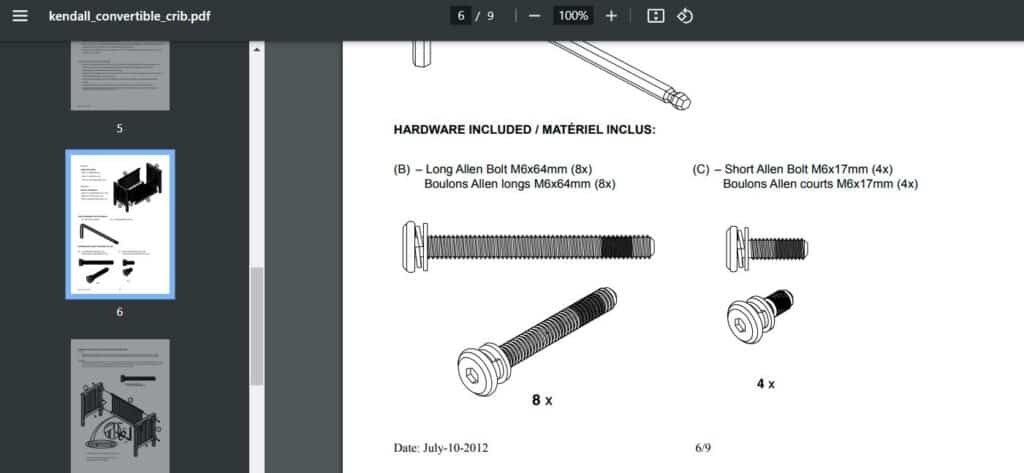
If you can’t identify the item or establish its instructions and compliance, don’t treat it as cleared for infant sleep.
What monitors and SIDS-related marketing cannot promise
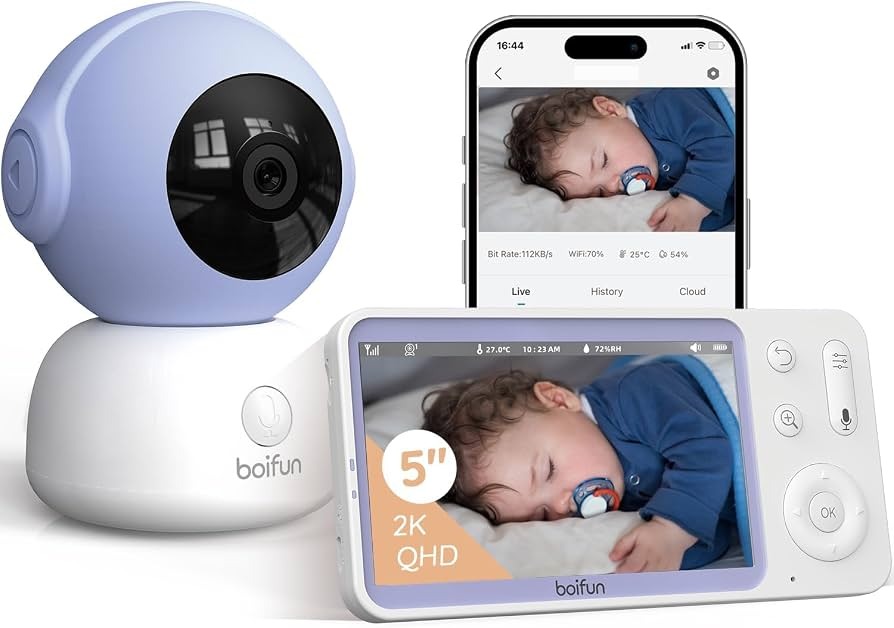
A consumer vital-sign monitor can’t make an unsafe sleep space safe or prevent SIDS. In a September 16, 2025 safety communication, the FDA warned that unauthorized monitors may give inaccurate readings or miss important changes, and said it had not cleared or approved devices to prevent SIDS. To check medical authorization, search the FDA’s 510(k) and De Novo databases by device name; QYU is the relevant product code. Monitoring a clinician directs for a medical condition is a separate decision and doesn’t replace a safe sleep surface.
Make the checklist repeatable for every caregiver
A safe setup has to survive a change of caregiver. A grandparent preparing a nap might find a stuffed animal left in the crib after play. The same inspection you use at bedtime tells them to clear it before putting the baby down.
Keep the checklist where anyone responsible for sleep can use it, and make sure they know which product is meant for infant sleep and where its instructions are kept. Tell whoever takes over about a recent rolling attempt, a changed sleep garment, or a different bassinet before they prepare the next sleep.
To assess sleep surface, night waking, and nap schedule, review Baby Sleep: Safe Setup, Typical Patterns, and What to Try.