
In the first three months, short, broken sleep is normal. Put your baby to sleep on their back on a firm, flat surface of their own, and follow your pediatrician’s feeding plan. Get medical help right away if your baby is hard to wake, feeds poorly, has a rectal temperature of 100.4°F (38°C) or higher, or has trouble breathing or a change in color.
A newborn who wakes repeatedly after being put down needs a different response from one who is unusually hard to wake or feed. Work out which one you have first.
| What you notice | Where to start | What you’ll find |
|---|---|---|
| Short, frequent sleep with usual feeding and responsiveness | Normal sleep patterns | What typical newborn sleep looks like |
| Baby wakes or cries after being set down, but is otherwise well | Bassinet transfers | What to try at the bassinet |
| Unusual difficulty waking, poor feeding, abnormal color or a breathing concern | Medical warning signs | Which symptoms need 911, the emergency department or a call to the pediatrician |
What normal newborn sleep can look like
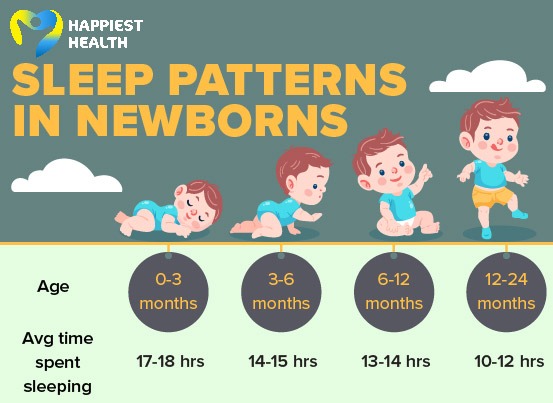
A newborn can spend much of a day asleep and still leave their parents feeling as though nobody slept. The sleep comes in pieces. A baby may doze, wake for milk, settle again and repeat the process throughout the night, with little regard for when everyone else wants to sleep.
The American Academy of Pediatrics puts newborn sleep at about 16 to 17 hours across 24 hours, often in stretches of one to two hours. Frequent waking fits that pattern.
The American Academy of Sleep Medicine found too little evidence to recommend daily sleep hours for babies younger than four months. Its 12 to 16-hour recommendation begins at four months (see the AASM consensus methods).

Online “realistic night” videos can make your own baby look like the odd one out. Here is how one parent of a six-week-old put it:
I feel like I see so much content online with “realistic nights with a newborn” and the first thing that stands out to me is that baby is in their bassinet sleeping. Yes, everyone has to get up fairly often (every couple hours), but it seems like people are still getting to sleep some while baby sleeps? However, my baby (6 weeks) will cry within minutes every single time. I have tried putting her in drowsy but not sleeping and I have waited until she’s in a deep sleep. I have a sound machine with white noise going that seemed to help for a few nights.. and by help I mean she stayed in her bassinet for roughly 30 minutes at a time in the middle of the night.
Why newborns sleep in short stretches and mix up day and night
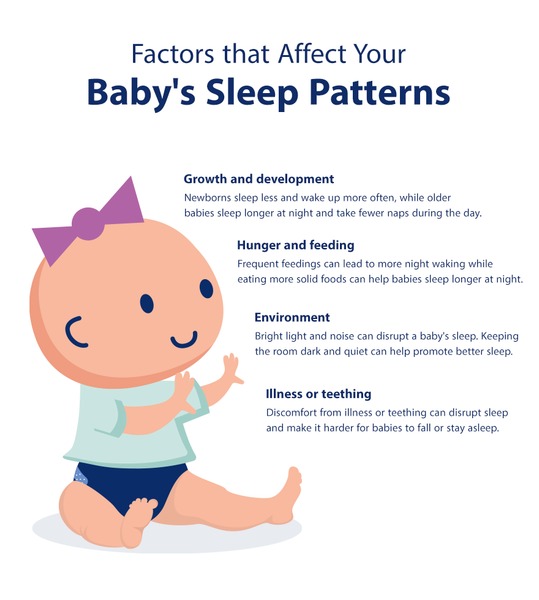
Newborn sleep is broken up partly because sleep-wake organization is still developing, and babies don’t yet tell day from night. Circadian rhythm, the body’s process for organizing activity and rest across the day, develops during infancy and responds to cues such as light and darkness. A 2018 systematic review of 74 studies found wide variation in reported sleep patterns, along with a general shift toward longer nighttime stretches as babies develop.
What changes from birth through three months
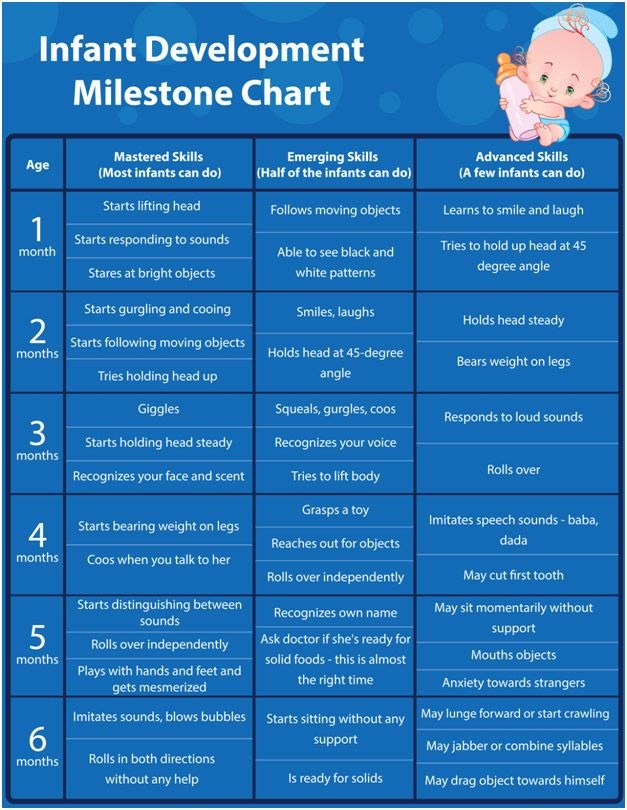
A two-week-old and a nearly three-month-old sit at different points in sleep development, but the shift between them is gradual.
| Approximate age | What to expect or consider | How to interpret it |
|---|---|---|
| Birth to 4 weeks | Sleep is scattered around feeds and care, including overnight | Feeding needs and your pediatrician’s instructions come first |
| 4 to 8 weeks | Sleep stays highly irregular | Some babies still struggle with bassinet transfers and need comfort after being set down |
| 8 to 12 weeks | Some families notice longer nighttime stretches or a clearer day/night difference | Change comes gradually, with no fixed timetable |
Premature babies, babies with medical conditions and babies monitored for feeding or growth follow their own clinical instructions instead of these general age descriptions.
When your newborn wakes as soon as you put them down

A baby can seem deeply asleep on your chest and be upset within minutes of lying in a bassinet. The gap between sleeping held and sleeping separately is one of the most frustrating parts of early parenting, especially when it happens night after night.
A parent of a 6.5-week-old posted this:
HELP. As the title mentions, our 6.5 week old only contact naps. We maybe get two 2-hr stretches of sleep in her bassinet at night, but outside of that she refuses to sleep anywhere except our arms. We’re exhausted. When did your LO start to adjust to sleeping more in their bassinet? What did you do to stay sane when stuck with your baby in our arms?
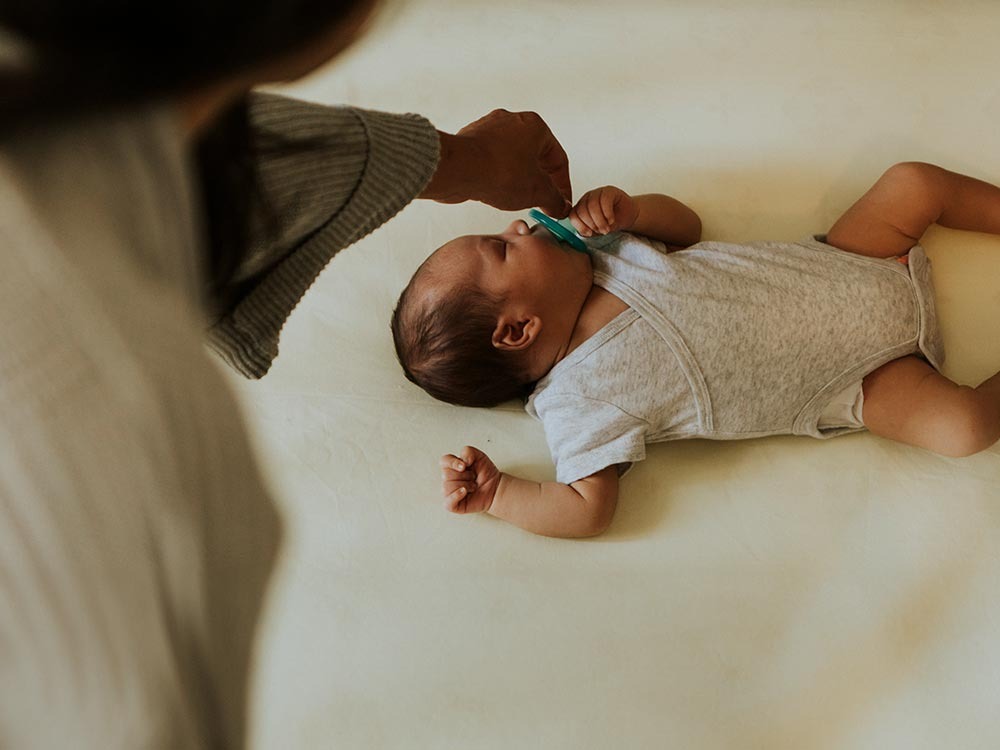
For a baby who is otherwise well, keep the next attempt simple:
- Wait a moment after you put your baby down. A small squirm or noise often settles on its own.
- Comfort a baby who is clearly awake and crying. Offer ordinary soothing and try again when you can.
The AAP discusses putting babies down drowsy but awake in its guidance for babies four months and older. At six weeks, settling still depends heavily on your comfort and support.
Grunting, squirming, and crying out: is your baby awake?
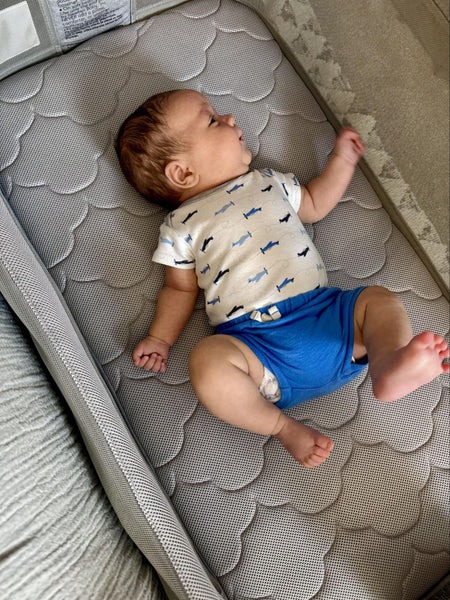
Newborns twitch and move during active (REM) sleep. In lighter sleep they can also whimper, groan or briefly cry, and they are often still asleep while they do it.
A parent of a 13-day-old described the noises like this:
First time mom here. My baby is 13d old, EBF, term baby. She’s an incredibly grunty noisy baby all day, but at night after 30-45 minutes of silent sleep in the bassinet, she wakes up and has on and off loud noises anywhere from grunting, moaning, weak cries. She will be silent for a couple minutes then start up again. She really doesn’t escalate to full on crying. I was waking her every time this started, in which she usually stops the noise when picked up. Sometimes she sleepy feeds or will do a full feeding depending on when I last fed her, sometimes she is still asleep and won’t feed. Her eyes are usually closed with the episodes, so I’ve now tried to sleep through them in which can’t.
This parent sometimes found a baby ready to feed and sometimes one still asleep. Rooting, opening the mouth and repeated hand-to-mouth movements are hunger cues worth checking alongside the sounds.
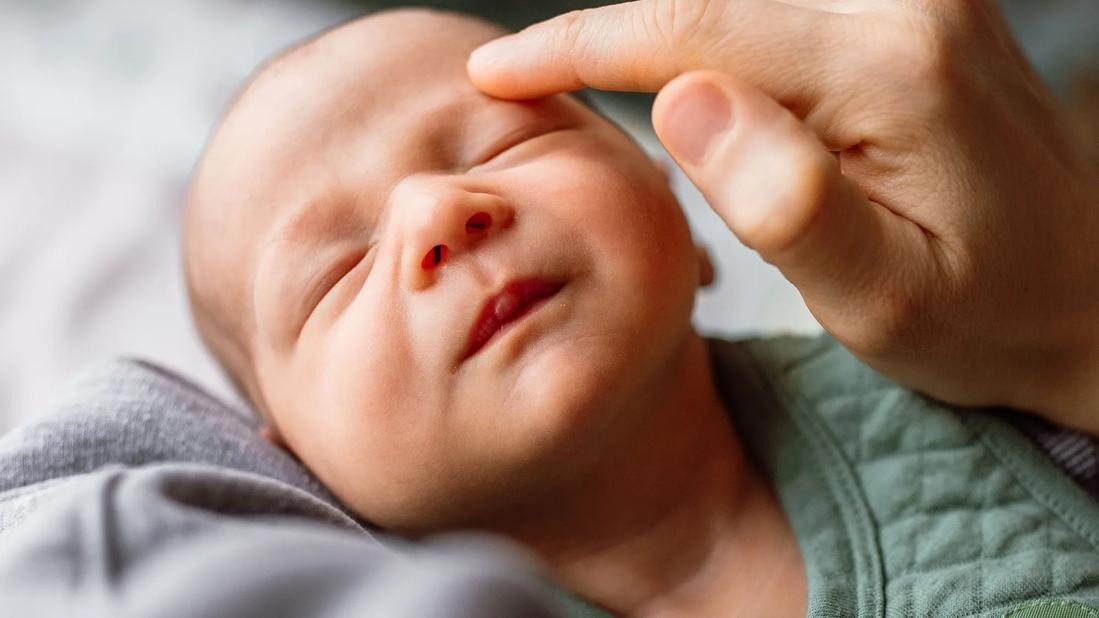
| What you observe | What it may mean | What matters next |
|---|---|---|
| Intermittent sounds or movements with comfortable breathing | Normal sleep noise | Watch whether your baby settles and stays comfortable |
| Sustained crying or clear waking | Your baby needs care or feeding | Respond to what your baby needs and follow the feeding plan |
| New grunting or moaning with every breath, blue or gray lips, tongue or face, or inability to wake | Emergency warning signs | Call 911 now; see the emergency guidance below |
Check breathing, skin color and responsiveness along with the sounds. Closed eyes alone can’t tell you whether your baby is asleep or unwell.
Should you wake a sleeping newborn to feed?
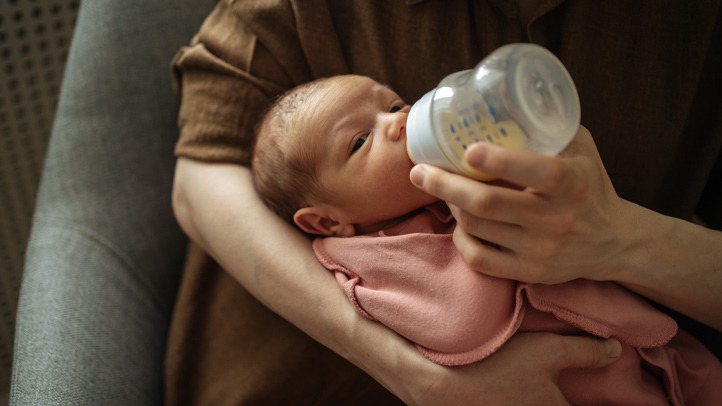
Whether to wake your baby for a feed depends on how well they feed, how they are gaining weight and what your pediatrician has told you. A long stretch of sleep doesn’t change that plan. For feeding cues, milk intake and newborn diapers, see Feeding a Newborn: Cues, Methods, and When to Get Help.
Take a two-week-old whose pediatrician is monitoring feeding or weight gain. If the plan calls for feeds at set intervals, it applies even when the baby sleeps peacefully. A baby with a different feeding and growth history may have different instructions.
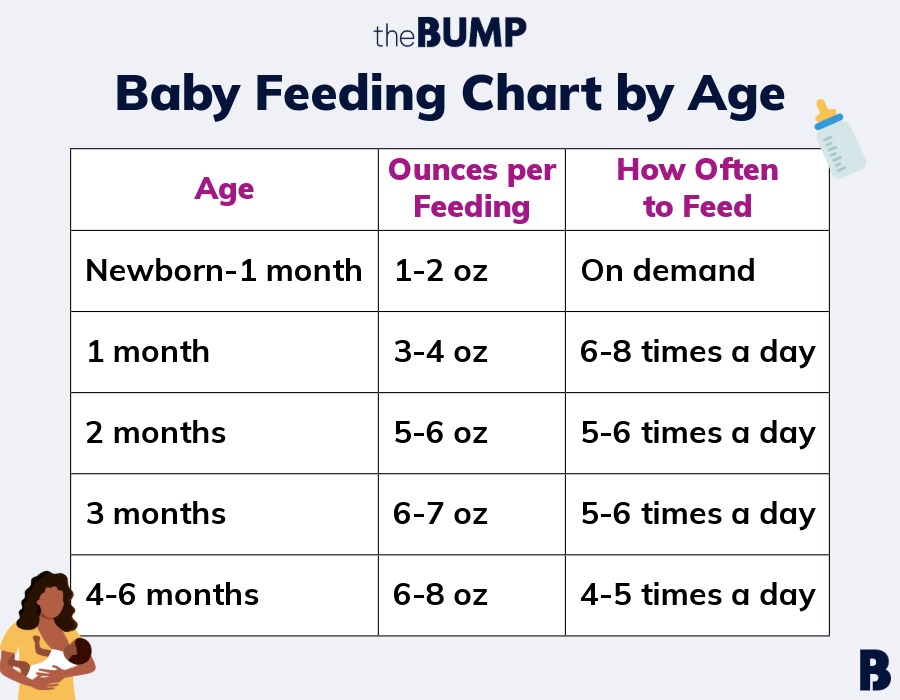
Before you allow a longer overnight stretch, check three things: the feeding plan you were given, whether your baby feeds effectively, and what your pediatrician has said about weight gain. If the plan is unclear, get your pediatrician’s guidance before changing it. New feeding difficulty or weak sucking falls under the medical warning signs below.
Keep every sleep attempt safe, especially when you are exhausted
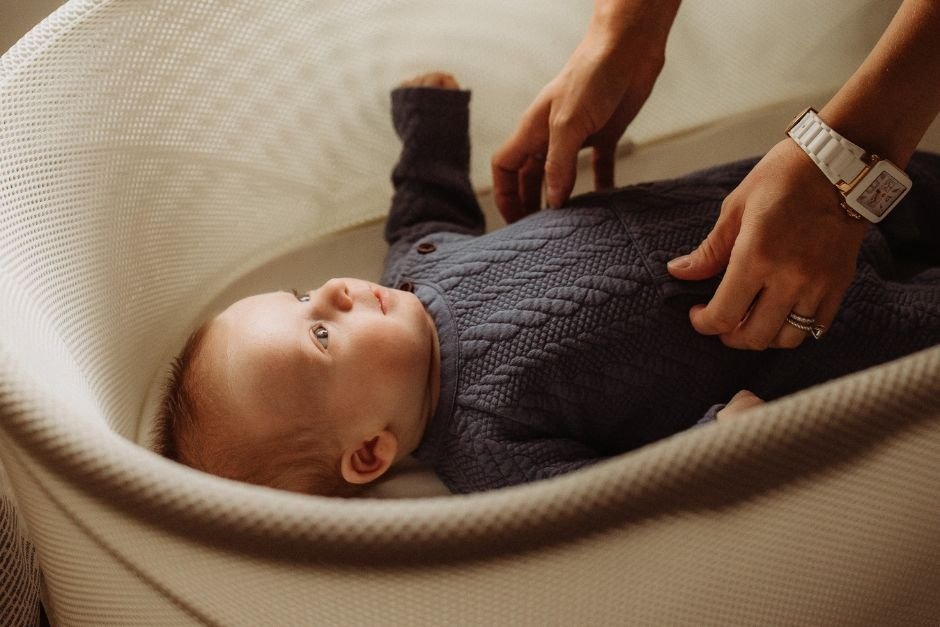
When another bassinet transfer has failed, it is tempting to keep holding your sleeping baby. However tired you are, the sleep environment is what keeps your baby safe.
The AAP and CDC recommend the following for every nap and nighttime sleep:
- Back placement: Put the baby to sleep on their back.
- A suitable separate surface: Use a firm, flat, noninclined surface in a crib, bassinet or other infant sleep product appropriate for that purpose.
- A clear sleeping area: Keep loose bedding and other loose objects out of the infant’s sleep space.
- An alert caregiver: While holding a sleeping newborn, notice when tiredness makes it hard to stay awake. Place the baby in the appropriate separate sleep space, and hand off to another alert caregiver if one is available.
A sofa, reclining chair or adult bed becomes especially dangerous if you fall asleep with your baby by accident. An inclined seat, swing or baby lounger is not a safe replacement for an infant bed, however easily your baby settles there. If your baby falls asleep in a car seat, stroller or swing, move them to a firm, flat sleep surface as soon as it is safe and practical. For crib, firm mattress and fitted sheet details, see Safe Sleep Checklist for Babies.
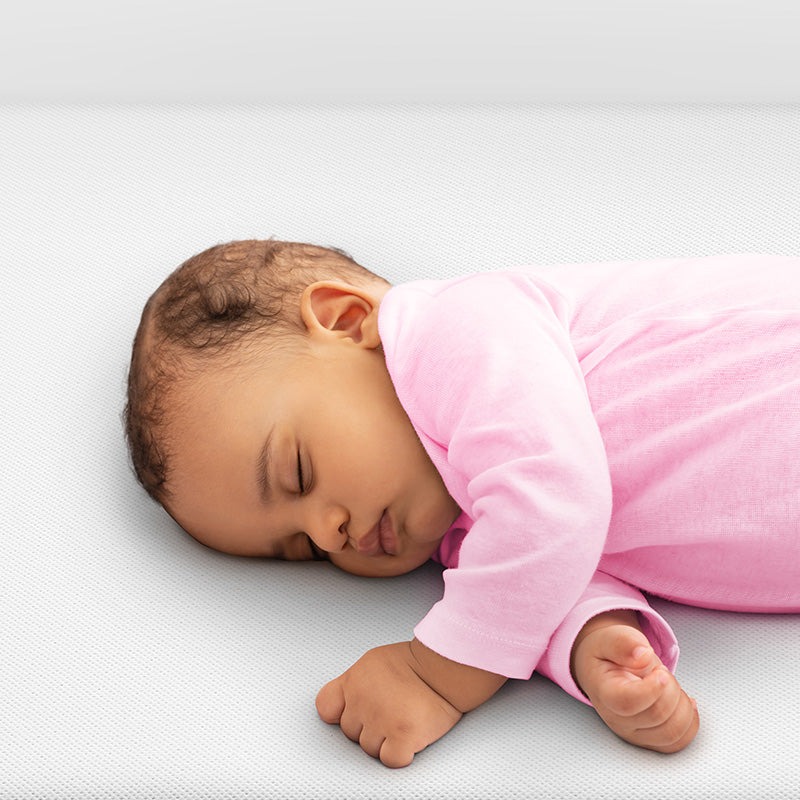
The AAP’s 2022 safe-sleep policy recommends room sharing without bed sharing, ideally for at least the first six months. This setup reduces risk, though it can’t remove every danger.
These precautions follow the AAP’s 2022 safe-sleep recommendations.
A simple day-and-night routine without a rigid schedule
Daytime and nighttime care can feel different to a newborn before any sleep schedule forms.
During awake periods, daylight and normal household activity give daytime context. Overnight, quiet interactions and less stimulation make care calmer for you and your baby. Feeds and diaper changes still happen whenever they are needed. For night waking, feeding needs and sleep environment, see Why Babies Wake at Night (and What to Check First).
A 2022 review of infant circadian regulation lists light and darkness among the cues that shape sleep rhythms. Whether a particular lighting or quiet-night routine lengthens newborn sleep is still uncertain. For sleep surface, night waking and nap schedule, see Baby Sleep: Safe Setup, Typical Patterns, and What to Try.
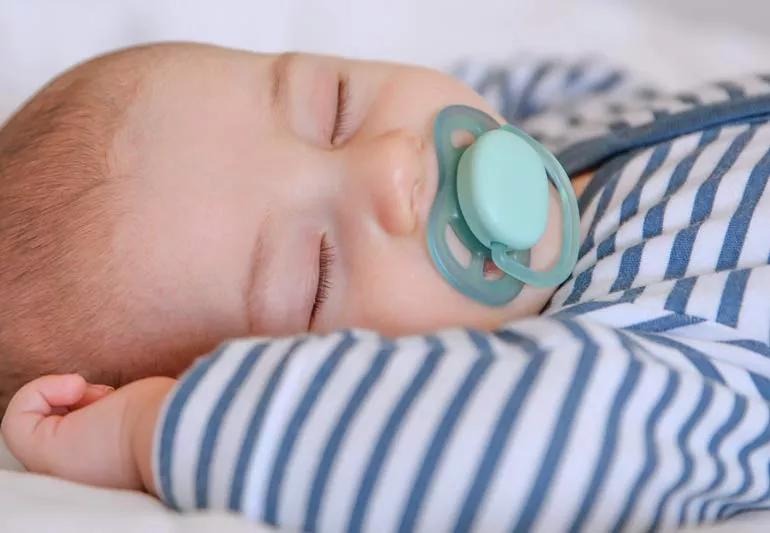
In practice, that can mean bright, busy daytime feeds and dim, quiet night feeds.
When newborn sleep needs medical attention

A newborn sleep concern becomes urgent when it comes with serious changes in breathing, color or responsiveness. The AAP separates life-threatening signs from other problems that need prompt evaluation, such as feeding changes and fever.
| Observation | Appropriate response |
|---|---|
| New grunting or moaning with every breath, unable to wake, or blue or gray lips, tongue or face | Call 911 now |
| Unusually difficult to wake but responsive | Seek emergency evaluation now |
| Weak sucking or unable to suck for long | Go to an emergency department now |
| Rectal temperature of 100.4°F (38°C) or higher at three months of age or younger | Contact the pediatrician immediately |
| New trouble finishing feeds or a concerning change in feeding, without the emergency signs above | Call the pediatrician or seek medical care now |
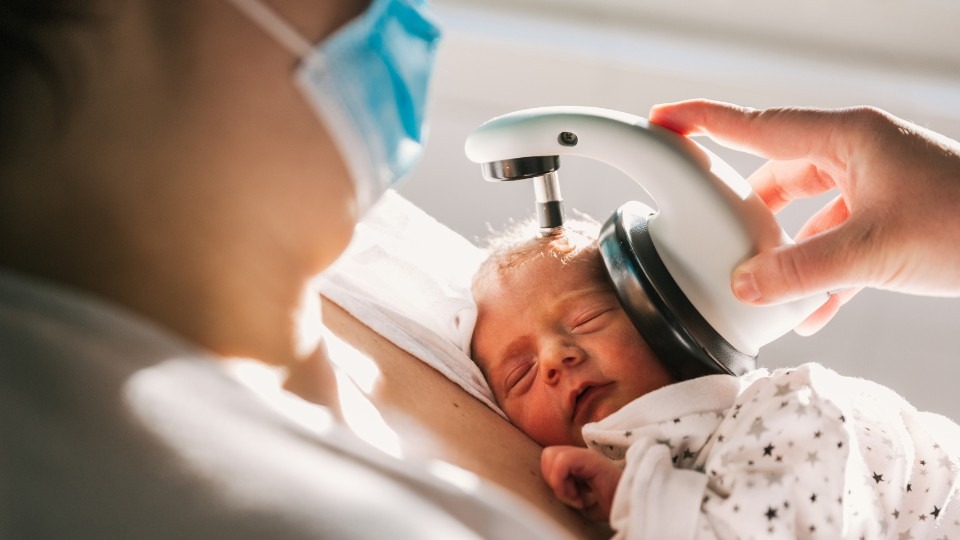
The fever threshold comes from the AAP’s guidance on fever in young infants. It applies to a rectal temperature in a baby aged three months or younger.