
If your baby or young toddler is eating solids, serve a food only when your child can handle its shape and texture, and keep your child seated upright with an adult watching. If a food is too hard, round, sticky or tough, change how you prepare it or pick something else. Before the next meal, check the preparation table below and make sure every caregiver knows where to find age-appropriate choking first aid.
Which Foods Are Choking Hazards for Babies?
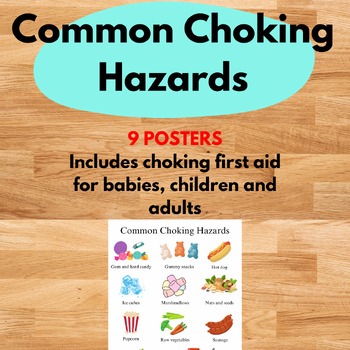
A grape, a piece of apple and a spoonful of peanut butter are all choking hazards, each for a different reason. A whole grape is round enough to block an airway. Hard apple breaks into pieces a baby cannot chew well. A thick glob of peanut butter sticks together in the mouth and is hard to move.
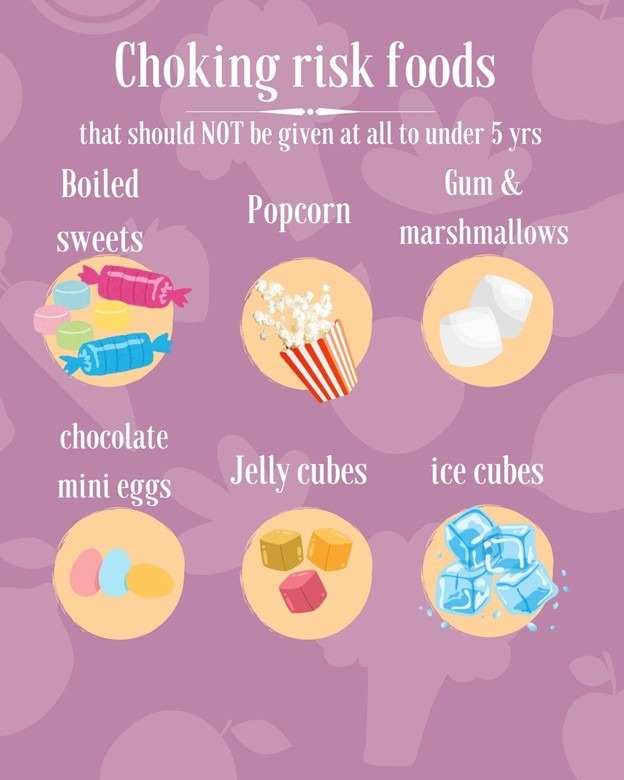
The CDC’s choking-hazard guidance names these forms to watch for:
- Round or cylindrical foods: Whole grapes, grape or cherry tomatoes, cherries, melon balls, and round slices of hot dogs or sausages.
- Hard foods: Raw apple and carrot pieces, whole or chopped nuts and seeds, popcorn, and hard snack fragments.
- Sticky or chewy foods: Thick globs of nut butter, gummy candy, marshmallows, and some dried fruit.
- Tough or dense pieces: Large meat and cheese chunks, particularly when bones, gristle, or other difficult parts remain.
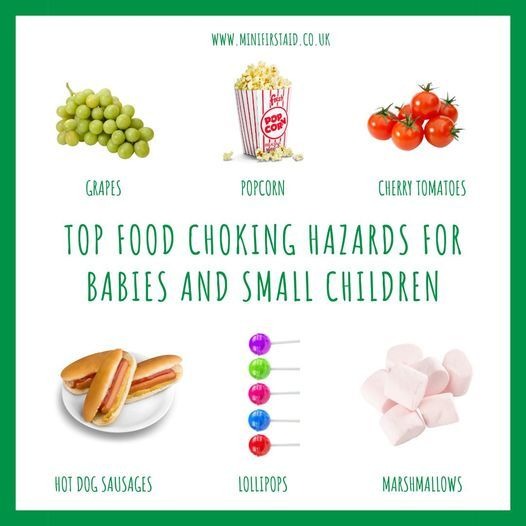
Look at the piece as it will reach your baby’s mouth: how round, firm or sticky it is, and whether a bite can break off a hard piece. Careful preparation lowers the risk but cannot remove it.
How to Prepare Common Choking-Hazard Foods
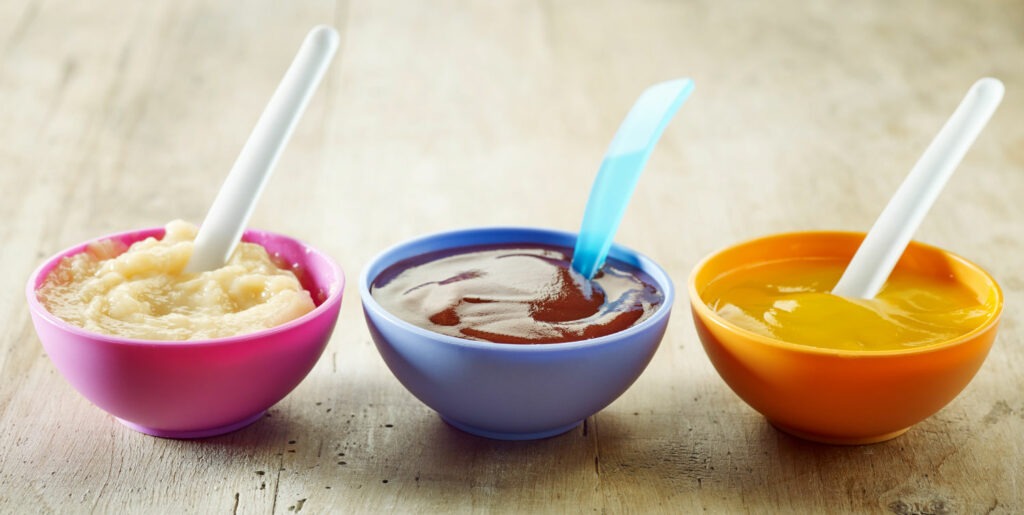
Each hazard needs its own fix. Cutting changes a grape’s shape, and cooking softens a carrot. The CDC’s solid-food guidance describes preparing food to match a child’s developing eating abilities.
| Food | Why it’s risky | How to serve it | Skip it when |
|---|---|---|---|
| Whole grapes, grape tomatoes, cherries, or other small round fruit | A round piece can block an airway. | Cut into small pieces. Cut grapes into narrow lengthwise quarters to fix the round shape. Remove pits where present. | Halves can still leave a rounded piece. |
| Hard raw apple or carrot pieces | Firm pieces can break off before a baby can chew them. | Cook until a fork mashes them easily, then mash or serve soft. | Peeling alone leaves the texture hard. |
| Hot dogs, sausages, or cylindrical string cheese | Round slices and whole cylinders can block the airway. | Cut into short, thin strips. | The strips are still too tough for your baby to manage. |
| Meat or fish in large, tough pieces | Dense fibers, bones, skin, or gristle are hard to chew. | Remove bones and tough parts. Cook until tender, then shred finely or mash. | Small pieces of tough meat are still hard to handle. |
| Large cheese cubes or firm chunks | Dense pieces are hard to chew and swallow. | Use thin strips, grated cheese, or another easy form. | The cheese is still too firm. |
| Whole or chopped nuts and seeds | Hard pieces need chewing skills a young child may not have. | Avoid whole or chopped nuts and seeds. Smooth nut butter spread thinly is a different food form. | Grinding or chopping does not make every nut or seed preparation safe. |
| Thick spoonfuls of peanut or other nut butter | Sticky globs are hard to move and swallow. | Spread smooth butter thinly or mix it into a soft food. | A thick glob is a hazard even without whole nuts. |
| Popcorn, hard pretzels, hard chips, or hard candy | Hard kernels and fragments are hard to chew. | Do not offer these to babies and young toddlers. | Breaking popcorn or hard candy into smaller pieces does not make it an infant food. |
| Gummy candy, chewing gum, or marshmallows | Chewy or sticky texture is hard to manage. | Leave these off the menu. | Cutting does not reliably change the texture. |
| Whole beans, hard grain kernels, or foods with pits | A firm texture or hidden hard part is a hazard. | Cook beans until soft and mash them for early eaters; remove pits. Cook whole-grain kernels, then grind finely or mash. | Never serve intact hard kernels. Fixing one food does not make other hard pieces suitable. |

The CDC’s April 14, 2026 guidance lists hot dogs, sausages, and string cheese among the foods to prepare as short, thin strips.
Nut-butter consistency is a separate question from whether and when to introduce an allergenic food, which the guide to introducing allergenic foods covers.
When a Baby Starts Biting Off Bigger Pieces
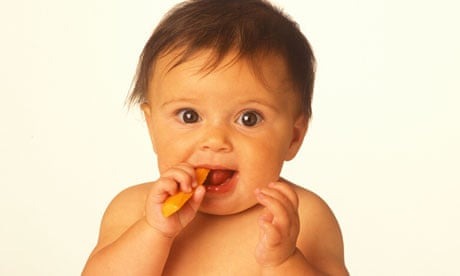
Biting changes the risk. A baby who used to suck on a large piece can start breaking off chunks that are hard to chew.
One parent described that surprise after offering raw apple to a six-month-old:
My six month old recently started on solids. Everything has been purreed or mushy and he has been doing well. The exception to this rule is that sometimes I hold an apple slice and let him suck on it because he likes the juice. … He never bites the apple when I let him suck on it, but I guess his jaw has become strong and he may have the slightest bit of tooth poking through (nothing I can see) so it was enough for him to bite off a chunk.
The parent suspected a new tooth. Whatever caused it, hard raw apple needs to be cooked soft first.
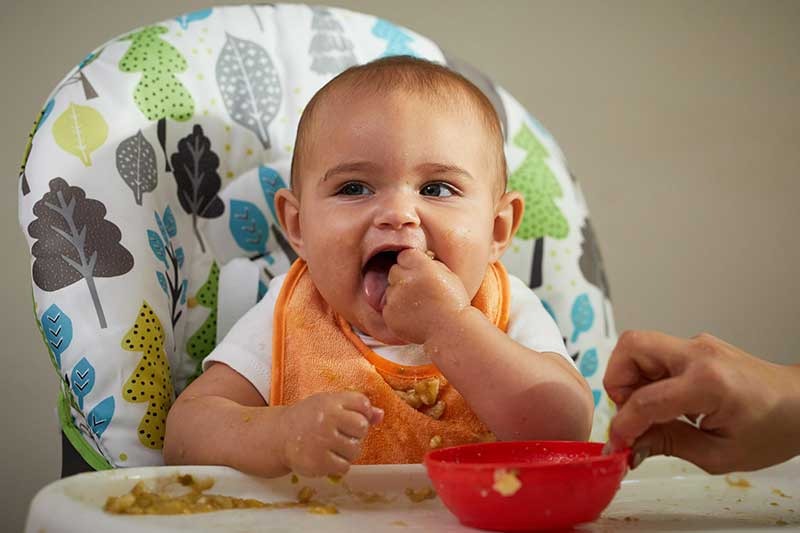
The CDC describes starting solids at about six months, once a child is developmentally ready. Readiness means head and neck control, sitting with support, and swallowing food instead of consistently pushing it out of the mouth.
If your baby starts biting off chunks, change the form you serve. A food you offered for sucking may now need to be cooked, mashed, or swapped for something softer. The starting-solids guide covers readiness in more detail. The baby-led weaning and purées comparison covers feeding methods, and the method you choose does not change a food’s hazards.
What About “Dissolvable” Baby Snacks?
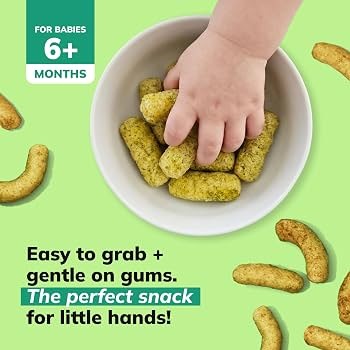
A “6m+” or “dissolvable” label does not tell you whether a snack suits your baby’s eating skills. Follow the package directions, watch your baby’s eating pace, and choose another food if the snack is hard for your baby to manage.
Safer Mealtimes With Other Caregivers
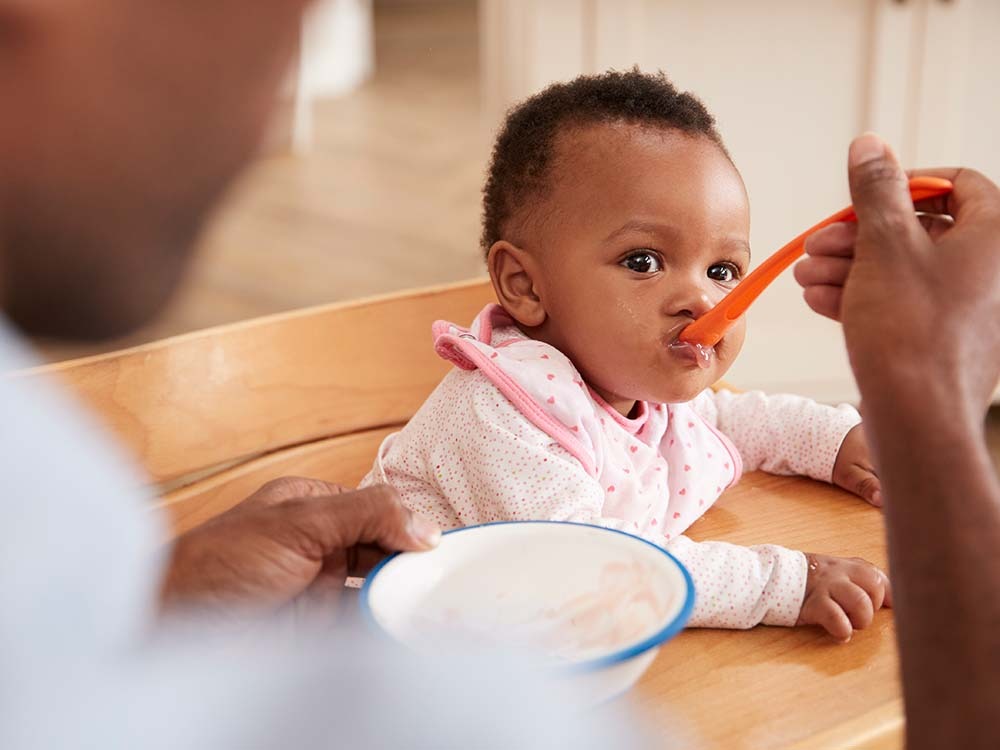
A suitable food also needs a safe place to eat. The CDC advises seating young children with an adult watching throughout the meal. Avoid eating while walking, crawling, lying down, or riding in a car or stroller.
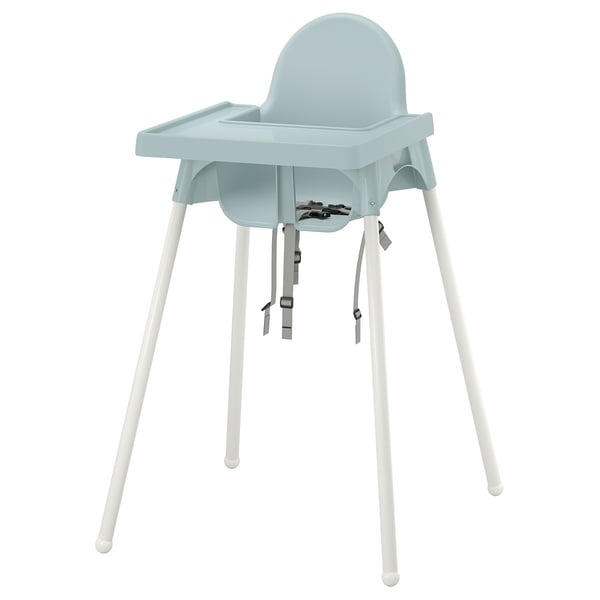
A high chair or other suitable seat gives a stable place to eat when you use the restraints as directed. Screens, phones, pets, and household activity can pull an adult’s attention away from a child who needs close watching.
At family meals and celebrations, fruit meant for older children can end up on a baby’s tray, or each adult assumes someone else is watching. Tell the next caregiver three things:
- Preparation: Say exactly how you serve each food, including the form to avoid.
- Supervision: Name the adult who watches the seated child for the whole meal.
- Emergency readiness: Share emergency contact arrangements and where to find choking-response instructions for your child’s age.
“She eats grapes now” leaves out the details that matter. “We cut grapes lengthwise into narrow pieces, and she eats seated with an adult watching” gives the next caregiver something to follow.
Gagging vs. Choking: What the Signs Mean
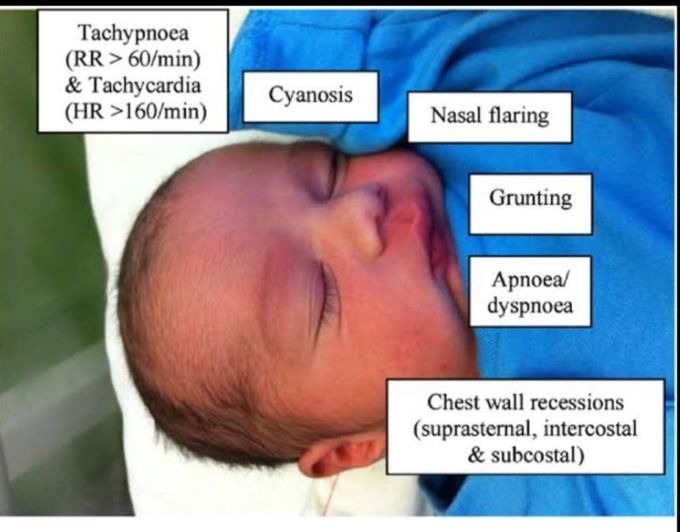
A baby who gags or coughs effectively can still move air. Severe choking can stop effective coughing, crying, or breathing and needs an immediate emergency response.
| What you see | What it can mean | What to do now |
|---|---|---|
| Gagging, spitting out food, or coughing effectively | A protective response while handling food. Air can still move. | If your baby can cough or cry effectively, encourage the coughing and watch closely. Act if it gets worse. |
| Weak or absent cough; inability to cry normally | Possible severe airway obstruction | Start the emergency choking response and have someone contact emergency services. |
| High-pitched or absent breathing sounds; pale or blue color | Possible severe airway obstruction | Emergency response is needed. Do not wait for a color change when other severe signs are present. |
What to Do in a Choking Emergency
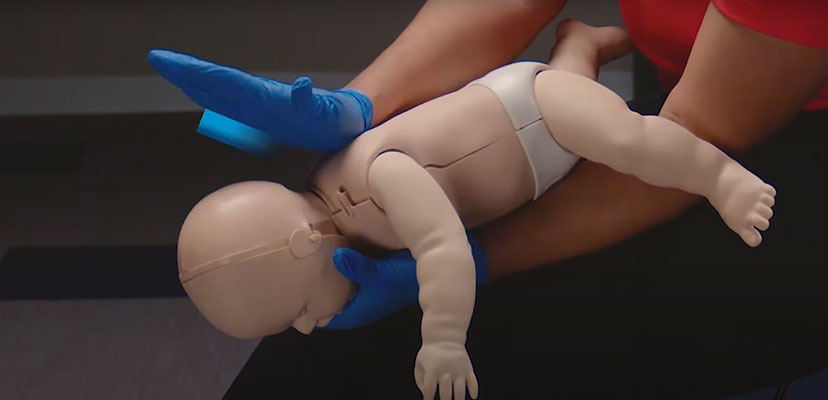
If an infant shows signs of severe airway obstruction, call 911. For a responsive infant under 12 months, the American Red Cross infant guidance specifies five back blows followed by five chest thrusts. Continue as directed until the infant can cough or cry or becomes unresponsive. If the infant becomes unresponsive, place them on a firm, flat surface and begin CPR according to your training and the official instructions.
Do not perform blind finger sweeps.
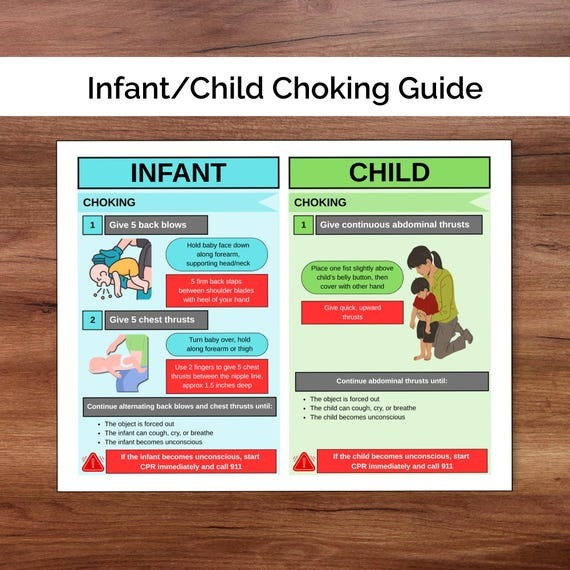
A child 12 months or older follows the separate Red Cross child choking procedure, which describes five back blows followed by five abdominal thrusts for a responsive choking child. Do not apply the infant chest-thrust procedure indiscriminately to older children.
Red Cross first-aid and CPR courses are available online. Pick one with hands-on practice if you want supervised instruction in the techniques.
After a Choking Scare: Getting Back to Meals
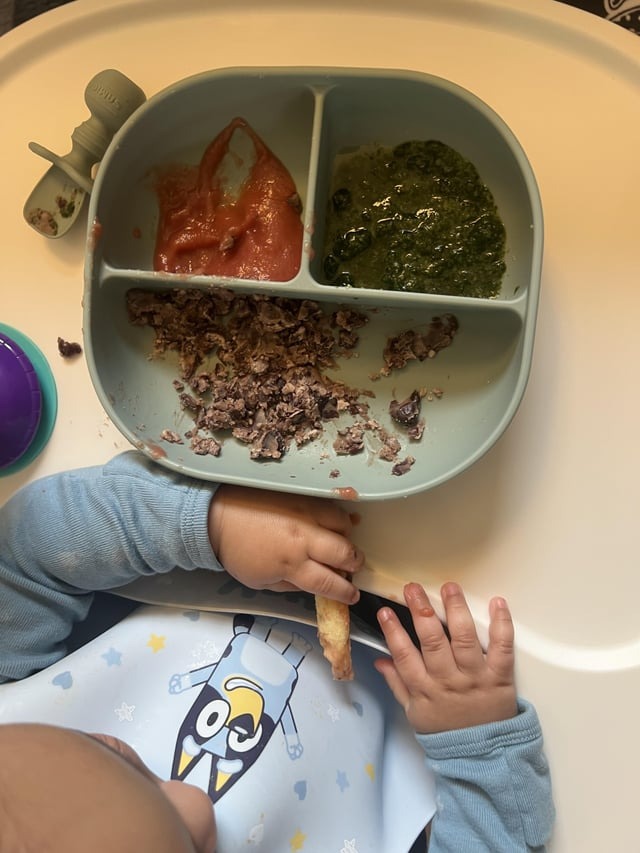
A choking incident can make familiar foods frightening, and texture decisions that felt routine suddenly don’t.
One parent described the difficulty of returning to foods beyond purées after a nine-month-old choked on a snack:
Now I’m terrified to give him anything other than purées or yogurt. He can’t eat purées and yogurt for the rest of his life and I need to get over this but I’m having a really hard time. The snack he choked on was supposed to dissolve in his mouth. It didn’t.
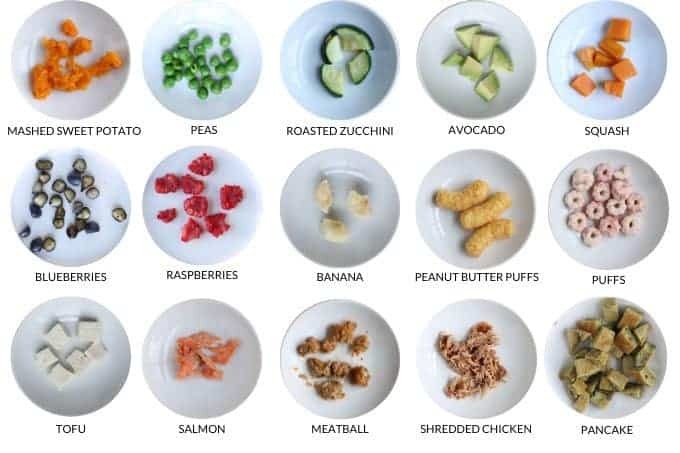
Once the obstruction has cleared, arrange a medical assessment even if your child seems fine. If breathing or swallowing stays difficult, seek urgent medical attention. A clinician can determine whether further evaluation is needed before you change food textures.
For how breast milk, infant formula, and solid foods fit together, see Baby Feeding From Birth to 24 Months: What Changes and What to Do Next.