
Start solids around six months, when your baby holds their head steady, sits upright with support, and can take food and swallow it. If those signs are missing, or a medical or feeding concern applies, wait and ask your pediatrician. Once your baby is ready, offer a small amount of safely prepared, nutrient-rich food and keep giving breast milk or formula. Follow your baby’s cues.
When Is Your Baby Ready to Start Solids?
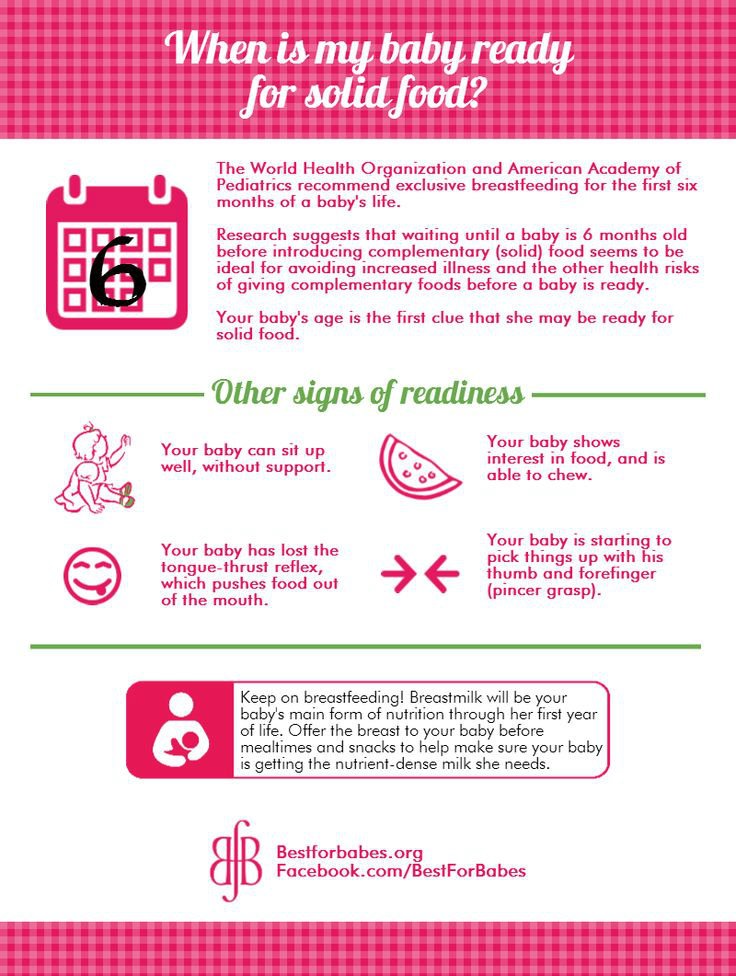
Most babies start solid foods around six months, when they can sit and use their mouth well enough to eat. The CDC’s guidance on starting solids advises against introducing solids before four months.
Look for steady head and neck control, upright sitting with support, an open mouth when you offer food, and the first signs of moving food back to swallow it. Some of these skills only show up at the first offer. A baby who can’t yet sit unaided on the floor can still sit upright and secure in a feeding seat.
Ready, wait, or ask for individual guidance?
| What you observe | Decision | What matters next |
|---|---|---|
| About six months, steady head control, upright with support, and your baby accepts and swallows food | Ready to start | Offer a small first taste |
| Head or trunk control is still unsteady, or food keeps getting pushed out of the mouth | Wait and try again later | Give the skills more time to develop |
| Premature birth, suspected swallowing problems, or a significant feeding or medical concern | Ask your pediatrician | Follow a feeding plan made for your baby |

Weight, interest in your plate, and whether your baby drinks formula often cause confusion. None of them replaces age plus feeding skills.
Parents hear a lot of conflicting rules, such as whether assisted sitting counts and whether formula changes the starting age:
Start when they can sit up independently (mine cannot)
Start when they can sit up with assistance and good neck control (mine can do this) and pushing up with arms during tummy time( mine CANNOT do this yet)If formula fed, they can start early (4 months) vs 6 months breastfed (mine is now exclusively formula fed)
Start when they turn 6 months (mine is 4.5 months)
Start when they turn 4 months
When to Wait or Speak With Your Pediatrician Before Starting
If your baby was born early, has trouble swallowing, has a significant feeding condition, or can’t hold a steady supported feeding position, talk to your pediatrician before the first attempt. The pediatrician will look at your baby’s development and medical history. For a baby born early, corrected age can factor into the decision alongside feeding skills.
What to Offer First: Foods, Nutrients, and Textures
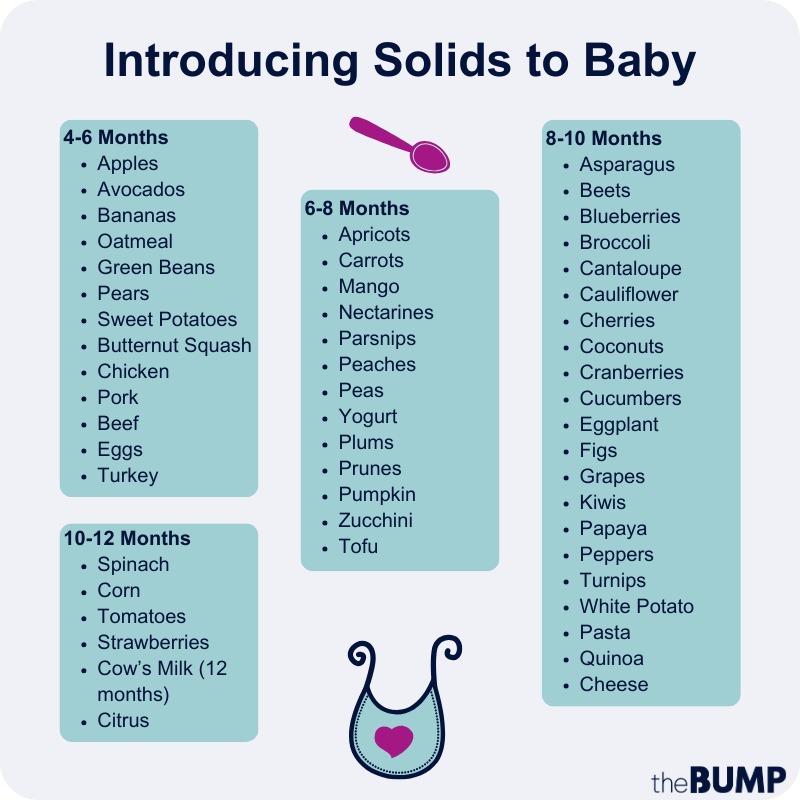
Fruit, vegetables, infant cereal and other foods all work as first foods. The order of fruit and vegetables doesn’t matter.
Iron matters most during the move to complementary foods, and zinc plays an important role too. Iron-fortified infant cereal, well-prepared meat and other iron-containing foods can share the menu with soft vegetables and fruit. The American Academy of Pediatrics’ starting-solids guidance backs a flexible order and a variety of nutritious first foods.
| Food option | What it gives | First texture | Check before offering |
|---|---|---|---|
| Iron-fortified infant cereal | Iron | Smooth | Thin enough to swallow |
| Thoroughly cooked meat | Iron and zinc | Blended or finely mashed | Cooked through, no tough pieces |
| Soft cooked vegetables | Flavor and nutrient variety | Soft purée or mash | Cooked until soft |
| Soft fruit | Flavor and nutrient variety | Purée or mash | No hard pieces |
Other foods can follow as your baby’s eating skills develop.
Your Baby’s First Solid-Food Meal: A Seven-Step Example
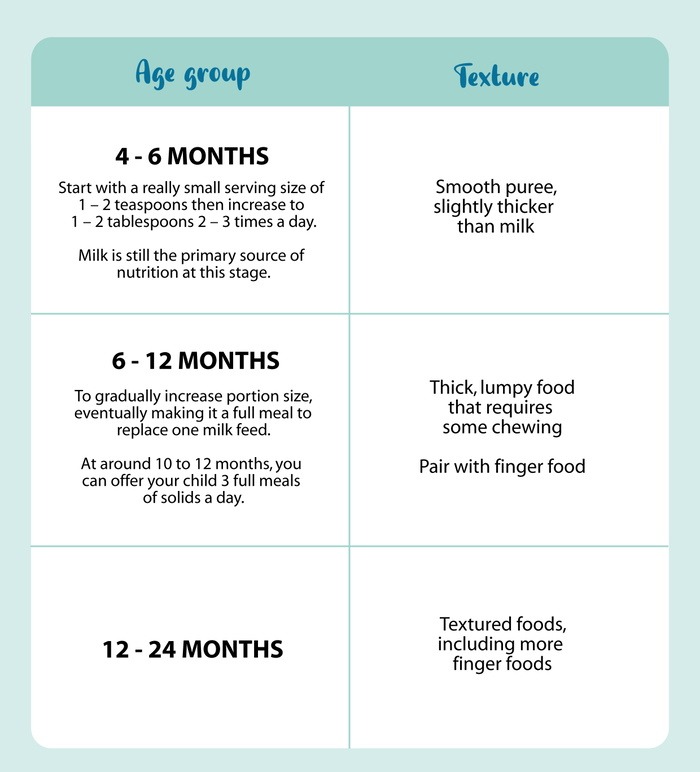
A first meal is short and small. The CDC gives 1 to 2 tablespoons as an example of a starting amount. Your baby’s response decides how much actually gets eaten.
For example, mix iron-fortified infant cereal with breast milk, formula, or water until smooth, then offer a little from a spoon.
- Seat your baby upright. Use a feeding seat that supports the head and trunk without slumping.
- Get the area ready. Wash your hands and use clean utensils and surfaces.
- Choose one new single-ingredient food. Offering unfamiliar foods one at a time makes it easier to spot which one caused a reaction.
- Make the texture smooth or soft. Match it to what your baby can handle right now.
- Offer a small amount. Let your baby reach for the spoon or food at their own pace.
- Watch the response. See whether your baby accepts the food, moves it and swallows, or turns away.
- Stop when interest fades. A calm finish beats working through a set portion.
Some parents struggle most with deciding which concern comes first:
I wanted to try to introduce iron rich foods first, but I’m seeing that we might need to be introducing allergenic foods first? What about those little packets that have a mix of all major allergies that people give to babies? Or do you introduce one allergenic food per week?
When Baby Spits Food Out, Gags, or Refuses

Early feeding is inconsistent. Your baby may take several tastes, push food out with their tongue, or turn away. If your baby refuses another offer or gets upset, pause.
Gagging is common while a baby learns a new texture. A gagging baby may make noise, cough or bring food forward. Severe choking can be silent: a baby who can’t breathe, cry or cough effectively, or whose color changes abnormally, needs emergency help right away. In the United States, call 911 for suspected severe choking and follow infant first-aid instructions for your baby’s age. Do not do a blind finger sweep.
See your pediatrician if swallowing stays difficult, troubling episodes repeat, or feeding problems continue.
Unpredictable reactions can turn a normal feeding into an anxious one:
Some days they’ll open their mouth and do a few bites and I’m like ok ok we’re doing it, and then the next day it’s gagging, coughing, spit everywhere, and this offended face like I personally betrayed them with a spoon.
I know gagging is “normal” but it still spikes my anxiety every single time. I keep hovering with a finger ready to scoop stuff out (which I read you shouldn’t do) and my heart is pounding like we’re defusing a bomb.
Purées or Soft Finger Foods: Do You Have to Pick One Method?
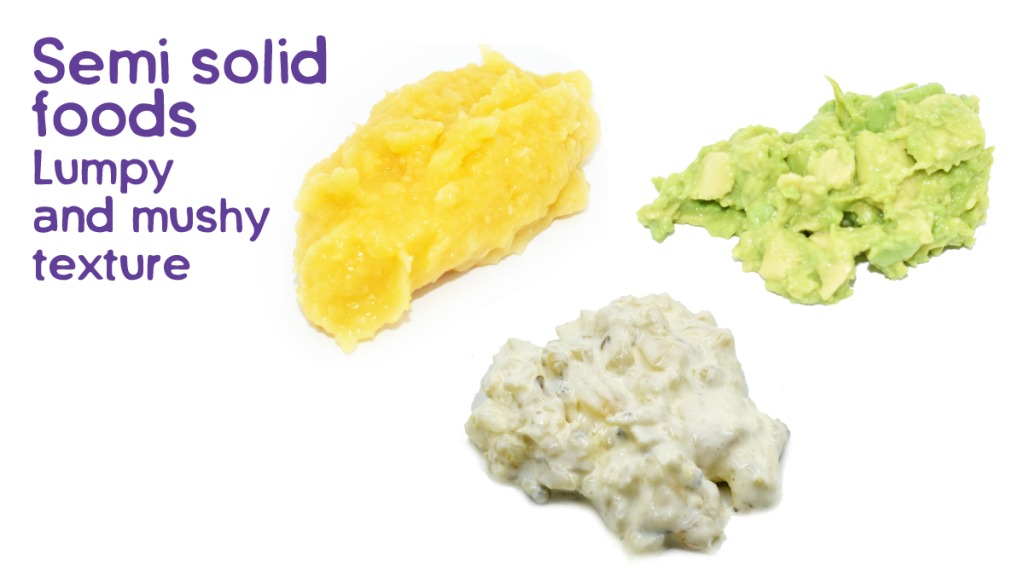
Purées, mashed foods and soft finger foods are all ways to begin. Start with one format and add other textures as your baby’s skills grow.
| Format | How the food is offered | What the baby needs | Trade-off |
|---|---|---|---|
| Smooth purée | Usually on a spoon | Supported sitting, and accepting and swallowing food | Other textures come later |
| Mashed food | On a spoon or in another soft form | Managing a soft, uneven consistency | Unexpected lumps need more preparation |
| Soft finger food | Baby brings the food to the mouth | Hand skills and safely prepared food | Shape and texture need extra care |
The 2016 BLISS trial enrolled 206 healthy infants and compared a modified baby-led approach with usual care. It found no statistically significant difference in reported choking events between the groups. The babies in the trial had support from the study, so the result doesn’t cover every baby-led feeding practice.
For a deeper method comparison, see the guide to baby-led weaning versus purées.
Choking Hazards and Foods to Avoid When Starting Solids
Before serving any first food, check its shape, size, hardness, stickiness and texture. The CDC’s food choking-hazard guidance names the high-risk forms.
- Round foods: Whole grapes and small tomatoes need preparation for your baby’s age. Served whole, they are a hazard.
- Hard foods: Whole nuts, seeds, and hard raw vegetable or fruit pieces are difficult for an infant to manage.
- Sticky foods: Thick lumps of peanut or other nut butter form a hard-to-manage mass in the mouth.
- Supervision: Stay with your baby throughout the meal. Never give food to a baby who is lying down or moving around without supervision.
- Honey: No honey before 12 months, including honey mixed into homemade food.
Don’t give cow’s milk as a drink before 12 months. Pasteurized yogurt and cheese can be part of complementary feeding, in a form your baby can manage.
For food-by-food preparation details, see how to reduce choking hazards when preparing baby food.
Introducing Allergenic Foods: What Changes for Higher-Risk Babies?
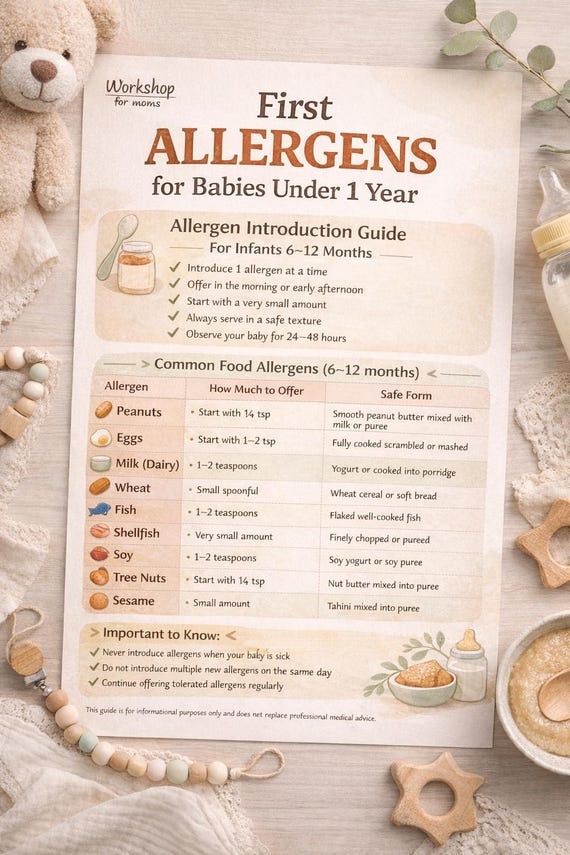
Once your baby is ready for solids, you can introduce common allergenic foods in a suitable form. The AAP’s allergen-introduction guidance doesn’t support routinely delaying these foods to prevent allergies.
Form matters. Smooth peanut butter can be thinned and mixed into infant food. A thick spoonful of peanut butter and whole peanuts are choking hazards.
A few localized hives or another mild suspected reaction after a new food calls for prompt medical advice. Widespread hives, major facial swelling, or vomiting within two hours of a high-risk allergenic food need urgent emergency-department assessment. If your baby has trouble breathing, sudden difficulty swallowing, or swelling of the tongue or throat, call 911 immediately.
Babies with severe eczema or a diagnosed egg allergy may need a pediatric or allergy-specialist assessment before peanut introduction. Discuss a significant family history of allergy with your pediatrician too. A parent’s allergy doesn’t mean your baby has the same diagnosis or risk category.

The LEAP trial (PMID 25705822) studied early peanut consumption in infants selected for high allergy risk. Its findings apply to that group and protocol, so babies with risk factors need an individual plan.
For more detail, see the guide to introducing common food allergens.
What Happens After the First Few Solid-Food Meals?
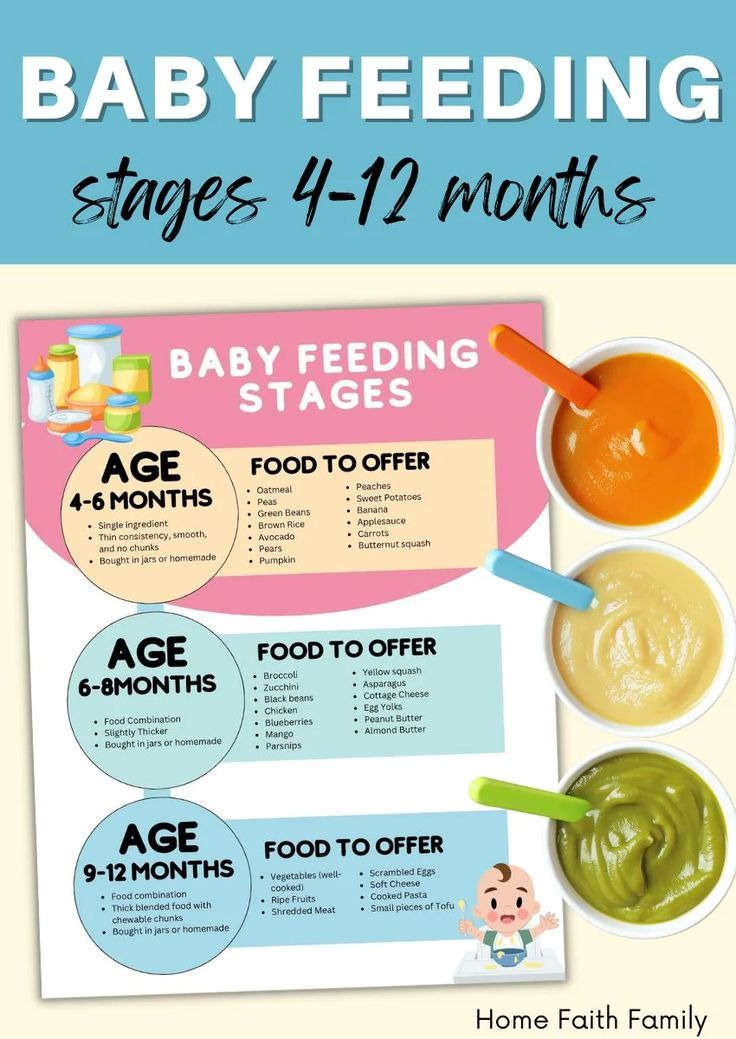
Complementary foods add more to your baby’s diet as flavors, textures and eating skills develop. Breast milk or infant formula stays the main source of nutrition from six to twelve months, and nutrient-rich solids matter more over time. For how milk and solids fit together, see Baby Feeding From Birth to 24 Months: What Changes and What to Do Next.
A baby who handles smooth food comfortably may start on other textures, while another needs more practice. Meal frequency and portion size grow with development and appetite, with no fixed first-week quota. Later routines by age are covered in feeding routines by age.