
Bathe your baby only when one attentive adult can stay close enough to touch them, you have checked the water yourself, and the setup fits what your baby can do today. If you have to look away, or your baby is slipping, standing or outgrowing the support, lift them out and fix the setup first. Shallow water, a bath seat or a mat never makes an unattended bath safe.
Before the bath: plan for hands-on supervision
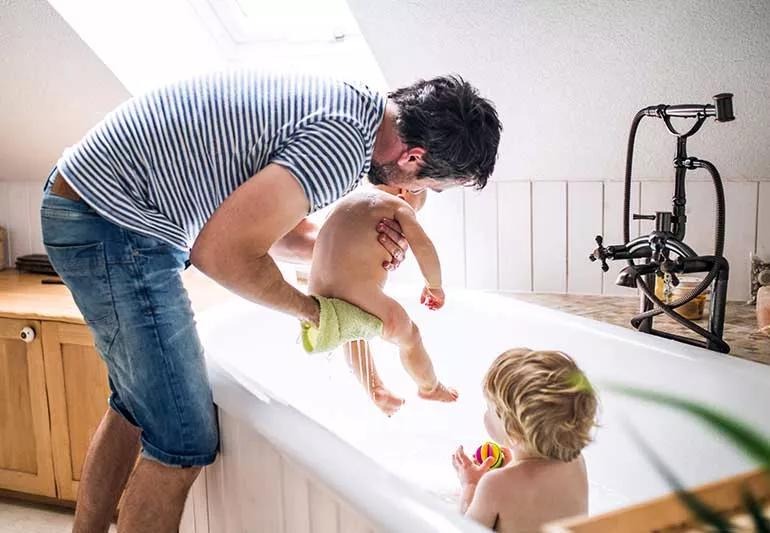
Baby bath safety starts before you turn on the faucet. One adult takes charge of the whole bath and stays close enough to touch the baby and react the moment they slip or shift.
The American Academy of Pediatrics recommends touch supervision around water. An infant can drown in very shallow water, and even a short break in supervision is dangerous.
- Pick one adult. That person stays within reach from start to finish. A second adult in another room doesn’t count.
- Set out the towel, washcloth, clean diaper, clothes and washing supplies before your baby goes in the water.
- Put the phone away, and postpone the bath if you can’t stay alert. If the phone rings, someone knocks or an older child calls from the hallway, lift your baby out and take them with you.
For how to hold and wash a newborn, see how to bathe a newborn step by step.
Bathwater depth and temperature: two separate numbers
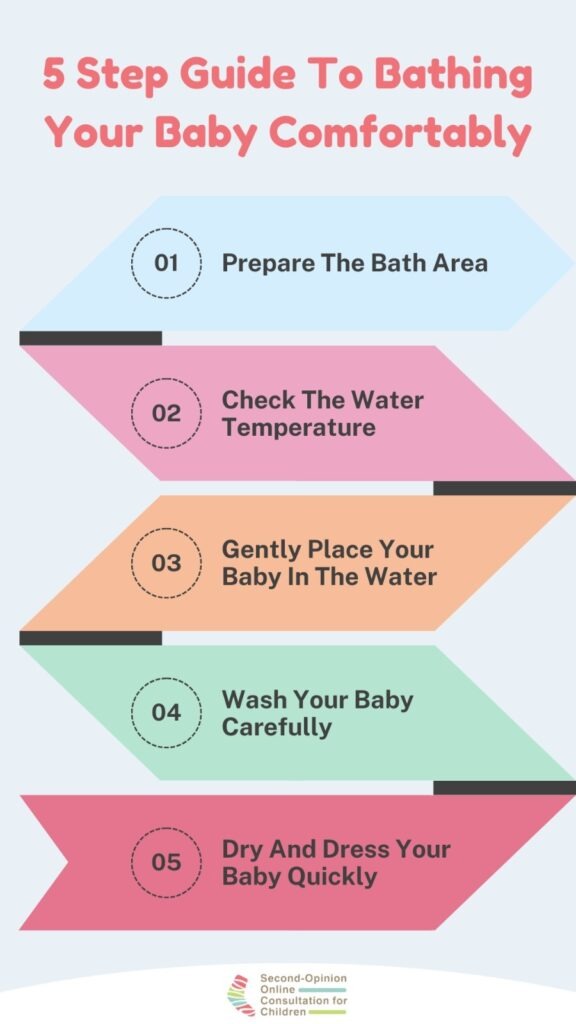
Your baby’s bathwater should feel comfortably warm, about 100°F (38°C) according to the Mayo Clinic. Its separate advice to set a water heater below 120°F (49°C) concerns the household hot-water supply and scald prevention.
| Measurement | Number | Where it applies |
|---|---|---|
| Baby’s mixed bathwater | About 100°F (38°C) | The water in the tub before your baby gets in |
| Water-heater setting | Below 120°F (49°C) | Your home’s hot-water supply, not the baby’s bath |
| Newborn bathwater depth | About 2 inches | The shallow amount in Mayo’s newborn bathing instructions |
Test the mixed water with your wrist or elbow before you lower your baby in. If it’s too hot, fix it and test again. The faucet and the heater dial can’t tell you what the water in the tub feels like once hot and cold have mixed.
If your baby has a skin or temperature condition, follow your clinician’s advice.
Infant bathtub, bath seat or non-slip mat: what each one does
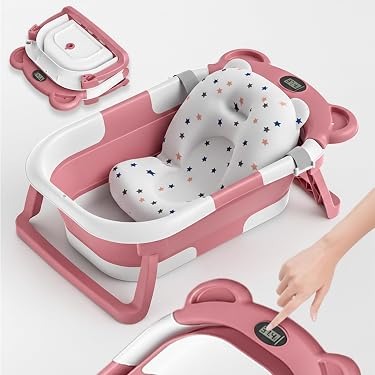
The American Academy of Pediatrics advises avoiding infant bath seats because they can tip and drop a child into the bathwater. Design features and compliance with a product standard don’t change that advice.
| Equipment | What it does | Safety decision |
|---|---|---|
| Infant bathtub | Holds a small amount of bathing water | Stay within the manufacturer’s size and developmental limits. CPSC 16 CFR Part 1234 governs this product class |
| Infant bath seat | Positions a child inside a bathtub | AAP advises avoiding it because of tipping and fall hazards. CPSC 16 CFR Part 1215 regulates the class |
| Reclined bath support or sling | Helps position a baby during washing | Follow the specific instructions and match the setup to what your baby can do |
| Non-slip mat | Gives a wet surface more grip | Doesn’t hold back a baby who leans, stands or climbs |
CPSC’s infant bathtub framework incorporates ASTM F2670-22 for infant bathtubs manufactured after September 24, 2022. The separate infant bath-seat framework incorporates ASTM F1967-24 for seats manufactured or imported beginning January 4, 2025. For sleep safety, car seat fit and other home hazards, see Baby Safety at Home and on the Go: What to Check First.
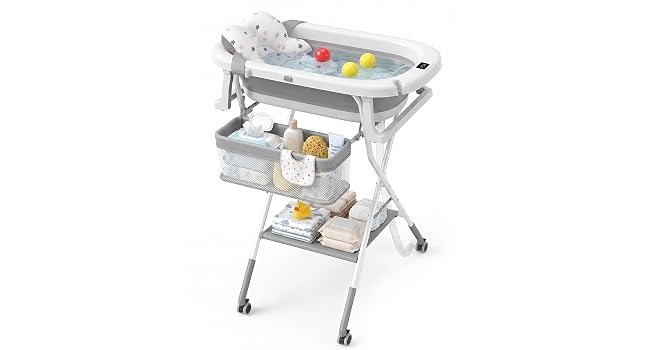
When bath time hurts your back
Bathing a moving baby over a tub strains your back. An upright support can look like the easy fix, especially once a reclined insert gets awkward.
One parent described that dilemma with a seven-month-old:
Baby is now seven months and loves splashing away in the bath so we’re retiring the angelcare reclined bath seat. The problem is I don’t know what to replace it with (I’d rather she was still in something to keep her steady and save my back!) The ones I’ve seen look like her hands wouldn’t be able to reach the water. Anyone have any recommendations for an upright bath seat where she can still splash away?
Back strain is a fair complaint, but the AAP advises against bath seats, so a seat is not the fix.
For more on choosing equipment, see baby bathtubs and bath equipment.
When your baby kicks, sits, stands or climbs: change the setup to match
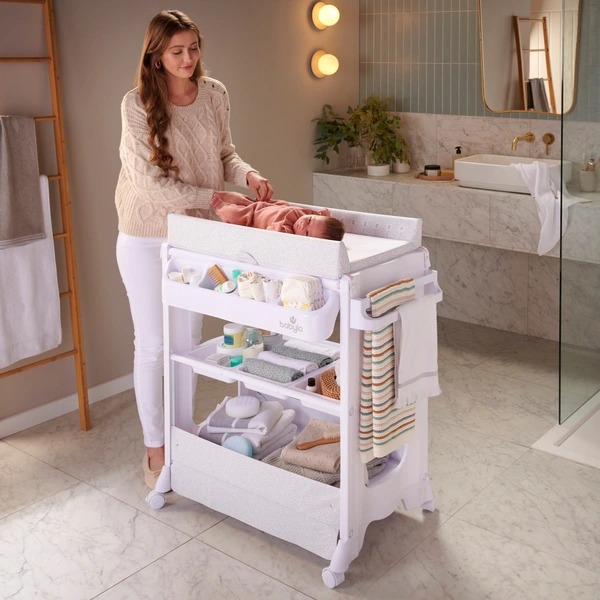
Movement changes fast. A baby who once lay quietly in a support starts kicking hard, leaning for a washcloth, pulling upright or trying to climb out. No set age tells you when to leave the baby tub. What matters is what your baby can do, the product’s use limits and whether you can keep a steady hold.
| What you see | What changes |
|---|---|
| Needs head and body support | Positioning depends heavily on you |
| Kicks, twists or reaches | Your hold gets harder to keep, so reassess the support and simplify the bath |
| Sits and leans | A sudden sideways move can make your baby slip |
| Pulls up, stands or climbs | Your baby can fall against a hard tub surface or leave the support |
A full-size bathtub gives more space, but the slippery floor, faucet and hard edges come with it.
Before each bath, compare what your baby does now with the equipment instructions. If your baby keeps standing, climbs or no longer fits the support, end that bath and change the setup before you try again.
A baby trying to stand in the baby tub
A parent of a nearly 17-month-old described being stuck between a cramped baby tub and the slippery surface of the larger one:
My son will be 17m this month, and we still have him in the baby tub. He’s starting to try to stand up out of the seat, and I’m afraid he’s going to hit is head if he slips. Bath time is a fight now too because he gets really antsy and wants to move around constantly. When did you all start transitioning from the baby tub to putting your babies in the big bath with no seat? I feel like he’s almost ready, but I’m afraid the slickness of the big tub will make him slip too, especially once he realizes he can move around more in it. I’ve considered getting a bath mat, but then I worry about him trying to stand. Maybe I’m overthinking things, I just want some honest opinions!
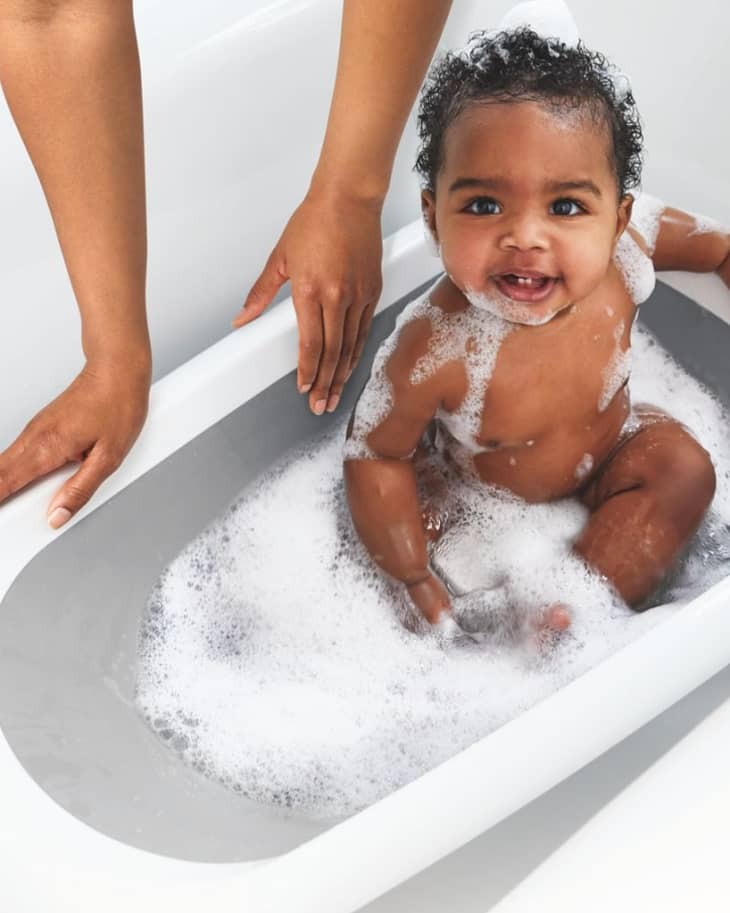
The baby tub is getting cramped, and the big tub is slippery. Age alone won’t tell you when to switch.
How to check a baby bath product for recalls and instability warnings
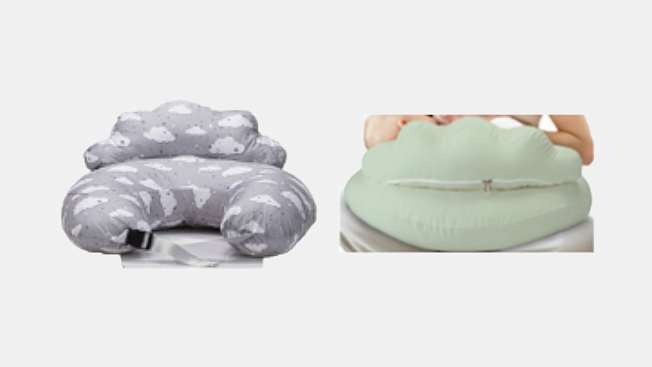
Start with the item in your bathroom. Its brand, model and manufacture date decide whether an official notice applies.
- Find the identifiers. Read the label, manual and any packaging for the manufacturer, model number, lot or manufacture date.
- Search official CPSC recall records with those identifiers.
- Compare the listed models, dates, hazard and owner remedy with your item.
- Follow the recall remedy. Stop using an affected item and follow the official instructions. Don’t modify it yourself.
On January 8, 2026, the CPSC recalled NFSVLB baby bath seats, model ZY2025, over instability and leg-opening entrapment hazards. Its recall notice reported no incidents at the time it was issued.
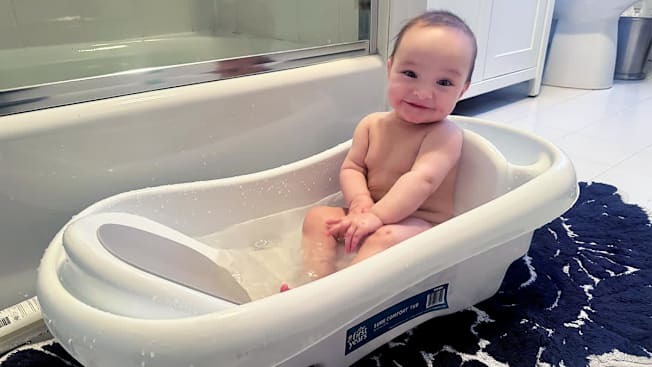
What if a secondhand baby bathtub has no readable model label?
A similar-looking retail listing can’t tell you which model you have or how to use it. If you can’t identify the tub and how it should be used, don’t use it.
For the full lookup process, see how to check baby product recalls.
Prevent slips, bumps and risky reaching while washing
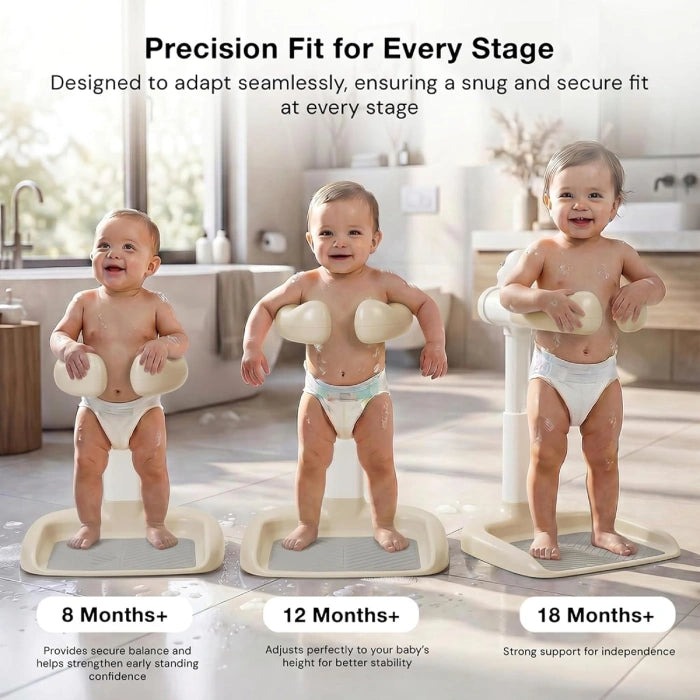
A wet, moving baby is hard to hold even when you’re fully focused. Keep your baby’s body supported while you wash and reposition, especially near hard tub walls, the rim and the faucet.
Turn off the faucet before you put your baby into standing bathwater. The AAP warns that running water can change temperature through household plumbing and scald.
When your baby leans toward the washcloth, don’t reach the other way. That weakens your hold just as your baby shifts weight. Pause and get stable before you continue.
After the bath: remove the water and close off access
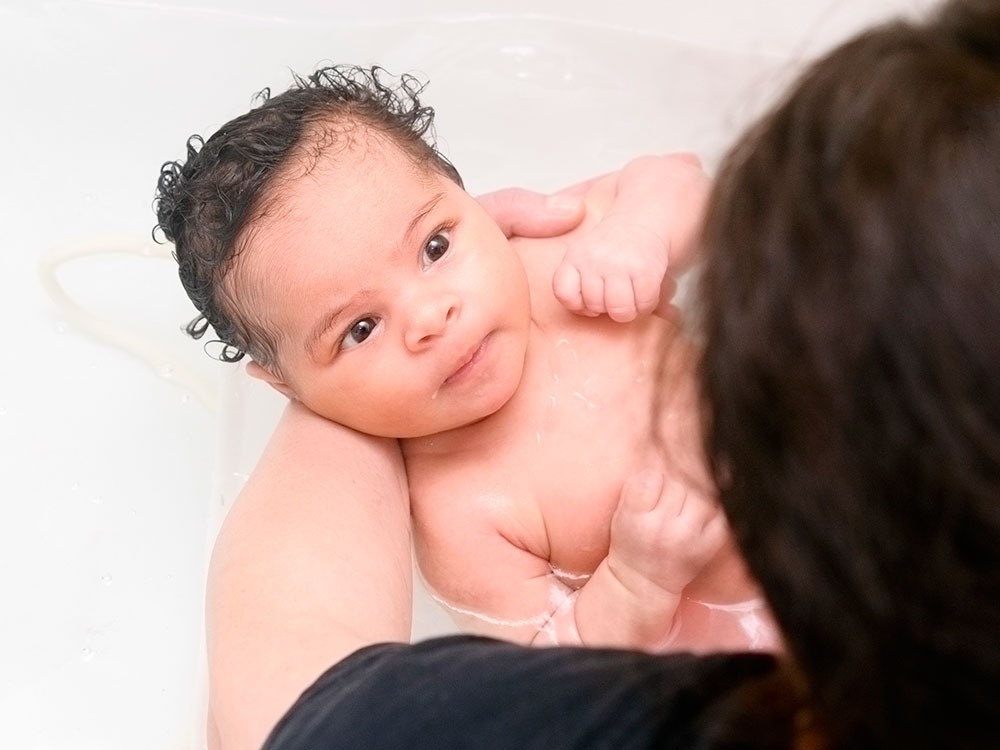
Once your baby is out, drain the tub and empty any buckets or containers you used. Block access to toilets, filled tubs and other standing water, using suitable bathroom barriers as your baby gets more mobile. A crawling baby can reach a bucket left full after cleaning.
If your baby slips under water or looks injured: act immediately
If your baby slips under the water, pull them out immediately. Check whether they respond and breathe normally, and look for signs of serious injury.
Call 911 immediately if the baby is unresponsive, isn’t breathing normally or looks seriously injured. If the baby is unresponsive and not breathing normally or is only gasping, start infant CPR following your training or the emergency dispatcher’s instructions.
A brief splash with no breathing difficulty is different from submersion that leaves your baby struggling to breathe. If your baby has been submerged and has trouble breathing, or you suspect a nonfatal drowning even if breathing seems to improve, get prompt medical help.