
Choose a purpose-built infant tub or a reclined support made for bathing, one that suits your baby’s movement, your bathroom and the manufacturer’s instructions. Avoid an upright infant bath seat as a safety shortcut. If your baby outgrows the equipment or the instructions no longer allow that use, change the setup and check the exact model for recalls before using it.
A baby bathtub can look great in a product photo and turn awkward the first time you wash a wriggling child. The basin might not fit your sink, an insert might belong to another model, or the support might leave little room to reach the baby’s back and legs.
Baby bathtub, reclined support, or upright bath seat: what’s the difference?
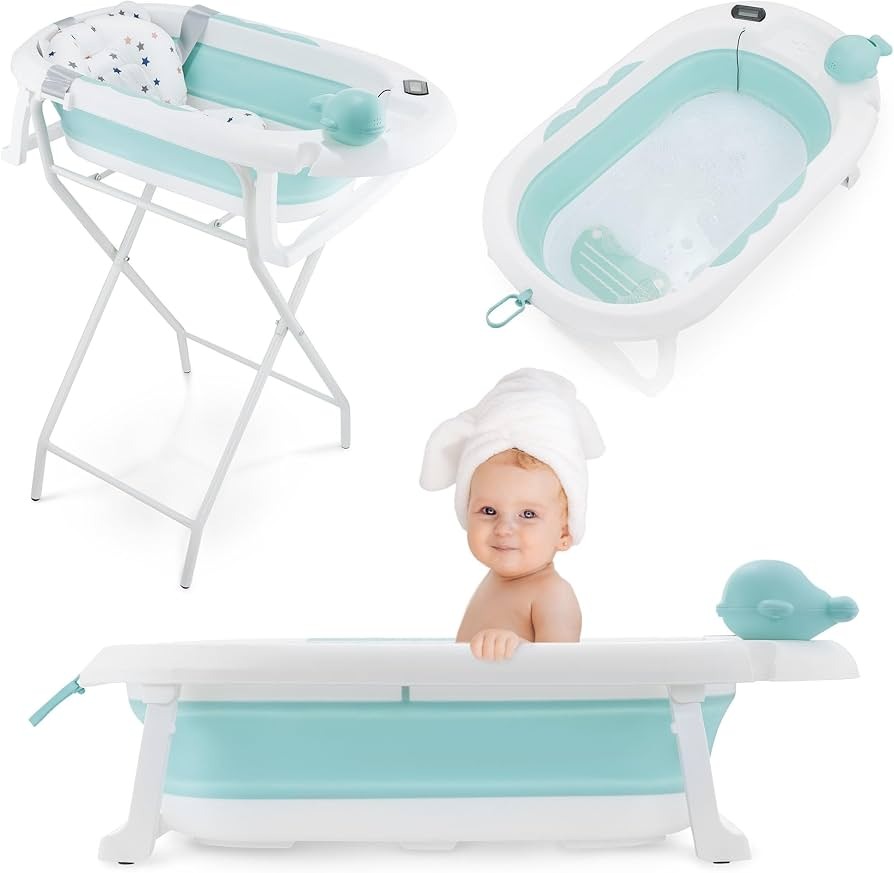
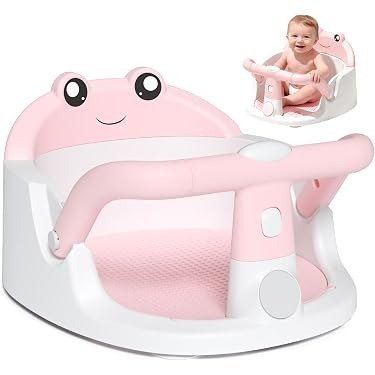
The word seat is surprisingly unhelpful in shopping listings. An infant bathtub holds the bathing water, a reclined support holds a baby lying back in an approved bathing position, and an upright bath seat holds a child sitting up.
| Product type | Water and baby’s position | What sets the rules for use |
|---|---|---|
| Infant bathtub | Holds water. Position varies with the design and support | Approved location, fit, child limits and any included components |
| Reclined bath support or insert | Holds no water if it is support-only; a water-holding unit counts as a tub. Baby lies reclined as designed | The manufacturer’s intended arrangement and any required compatible tub |
| Upright infant bath seat | Holds no water. Baby sits, supported at the front and back | Separate product standard; AAP advises against this type |
The US Consumer Product Safety Commission (CPSC) regulates infant bathtubs under 16 CFR Part 1234, incorporating ASTM F2670. Upright infant bath seats fall under 16 CFR Part 1215, incorporating ASTM F1967. The two have separate definitions and requirements.
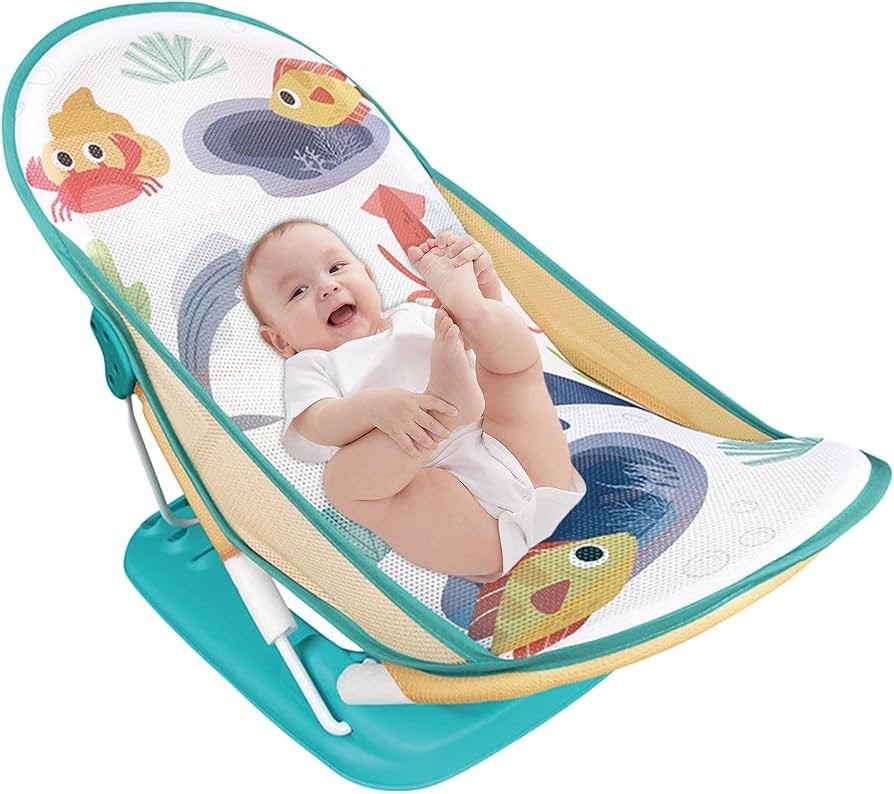
A listing that calls something a bath seat hybrid still needs a closer look. A reclining insert made for a particular infant tub does a different job from an upright seat attached inside an adult bathtub. To identify a product, find out what holds the water, how the baby is positioned and whether another container is required. For sponge baths, first tub baths and water supervision, read How to Bathe a Newborn Safely: Sponge Bath and First Tub Bath.
Two accessories from the same brand don’t necessarily fit together, and a similar shape proves nothing. The manual for your model says which parts can be combined.
Which bath products should you rule out for safety?
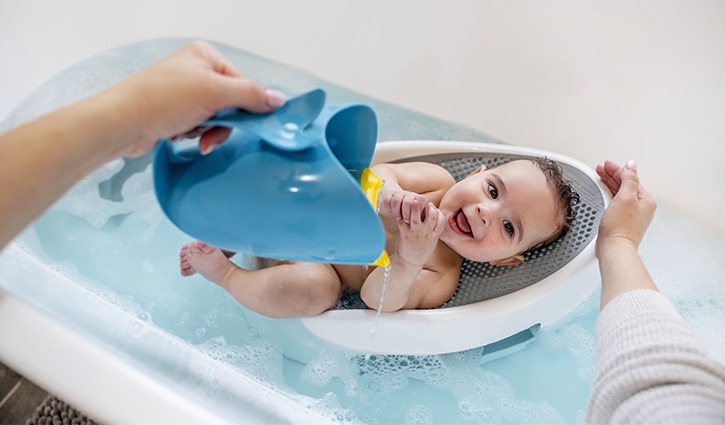
The American Academy of Pediatrics (AAP) advises against upright infant bath seats because of tipping and drowning hazards. A regulation sets requirements for a product type. It doesn’t mean pediatricians recommend that type. Comparing car seats, strollers and baby carriers too? See Baby Gear: How to Choose What You Need.
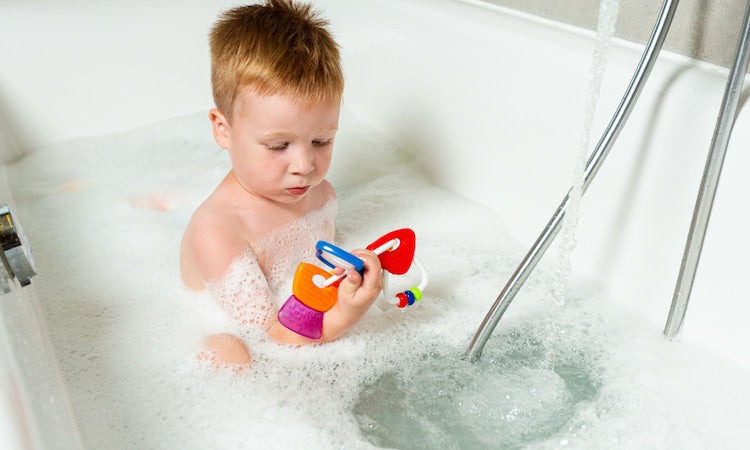
The AAP’s infant bathing guidance calls for hands-on supervision: keep a hand on the baby throughout the bath. If you need to leave, take the baby with you. Shallow water, suction attachments, non-slip mats and bath supports do not remove the drowning risk.
Safety rule: Reject unstable or prohibited placements and any setup that keeps you from holding the baby. Follow the manufacturer’s use restrictions for any tub or reclined support.

Sudden reaching or climbing is hard to control, and what looks steady when a child sits still can change when a toy slips away. For the wider household precautions, see bath and water safety basics.
When to stop using a baby bath
A tub can be finished long before any expected transition age. A baby who tries to stand, climbs out or shifts past the support has outgrown it. It also stops working when the baby no longer fits the position it was designed to provide.
| What changed | Problem | What to do |
|---|---|---|
| Trying to stand or climb | Movement goes beyond what the support holds | Change or stop the setup once it is outside permitted use |
| Body no longer fits comfortably | Posture and washing access suffer | Stop using the outgrown setup |
| Reaching causes wobbling or a fall | Balance on a dry floor doesn’t carry over to a wet bath | Reassess before the next bath |
One parent described a child approaching 17 months who was beginning to stand in a small infant tub:
My son will be 17m this month, and we still have him in the baby tub. He’s starting to try to stand up out of the seat, and I’m afraid he’s going to hit is head if he slips. Bath time is a fight now too because he gets really antsy and wants to move around constantly.
When did you all start transitioning from the baby tub to putting your babies in the big bath with no seat? I feel like he’s almost ready, but I’m afraid the slickness of the big tub will make him slip too, especially once he realizes he can move around more in it. I’ve considered getting a bath mat, but then I worry about him trying to stand. Maybe I’m overthinking things, I just want some honest opinions!
His movement is now the problem, and the slippery adult bathtub he worries about is a separate question.

No single month suits every baby for moving to a larger tub. Compare your child’s movement and size with the exact manufacturer’s stop-use instructions, and end that setup once the tub no longer meets them. A move to an adult tub means assessing that new setup from scratch.
Where will the bath fit in your home?

The bathroom can rule out an otherwise appealing tub. Check the width and length of the bathing area, the rim height, the drain route and where you will stand or kneel, then compare them with the placement the product allows.
| Bathing location | Main obstacle | What to check |
|---|---|---|
| Sink | Bowl shape and projecting faucet | Usable length, width and faucet clearance. Choose only a product approved for that sink |
| Standard adult bathtub | Placement within the bath and caregiver access | Footprint, edge access and drain route. Match the product’s approved position |
| Deep garden bathtub | High edge and long reach | Rim height, reach and a workable body position. Reject any position that prevents hands-on contact |
| Shower-only space | No adult bathtub to receive equipment | Stable permitted placement and where to empty it. Use only equipment approved for that location |
If you bathe your baby in a sink, turn off the faucet before placing the baby in standing water. Running tap water can change temperature unexpectedly.
Photos of baby tubs rarely show the problem one family had with a deep garden bathtub. Leaning over the installed tub was hard enough that they changed their bathing routine.
I used to feel like this was a little weird or something since I didn’t hear a lot of other moms doing it, but I started getting in the tub with my daughter around 6 months. She is now 21 months and we still do (almost) nightly baths this way, or my husband will put his swim trunks on and do it.
Another factor for us is that we only have a garden tub in our house, and with the way it’s installed, it’s way too difficult to lean over and bathe her. Even though it feels like our only or best option by far, all 3 of us truly love it and look forward to bath time every night. I highly recommend.
That’s how one family solved it. For a purchase, what counts is whether you can stay at your child’s side and use the equipment in an approved position. A support that happens to fit across a sink or countertop is wrong for that spot if its instructions prohibit that placement.
Compare infant bath formats by use, fit and drawbacks
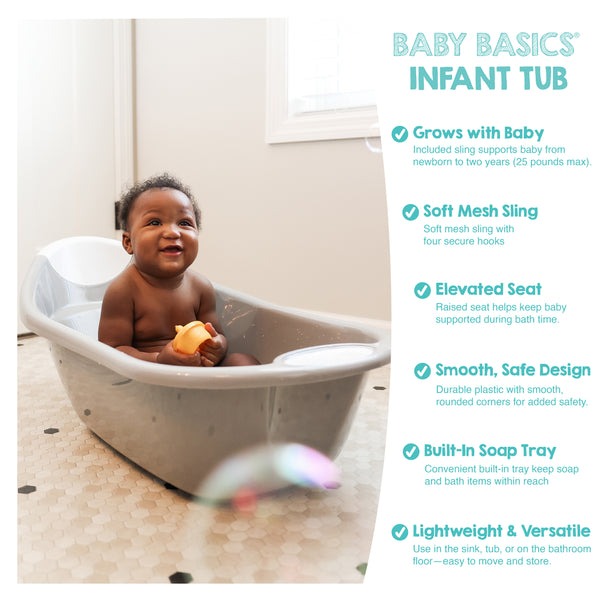
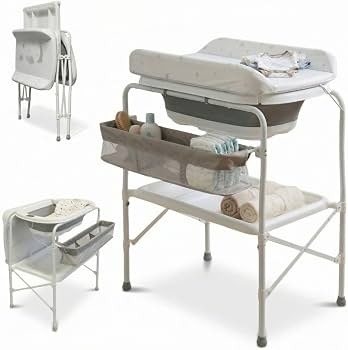
With type, safety and placement sorted, compare formats on storage space and washing access. The same tub can suit a newborn and feel cramped once the child needs more room to move.
| Format | Useful feature | Trade-off and what decides fit |
|---|---|---|
| Rigid infant tub | Holds its own water | Needs storage space and a draining plan. Fit depends on footprint, position and permitted stages |
| Reclined support or insert | Positions a younger baby as intended | May require a particular compatible tub. Fit depends on the exact approved configuration |
| Fabric or mesh sling | Offers a supported reclining position | Fabric and attachments need drying and care. Fit depends on the specified tub and attachment method |
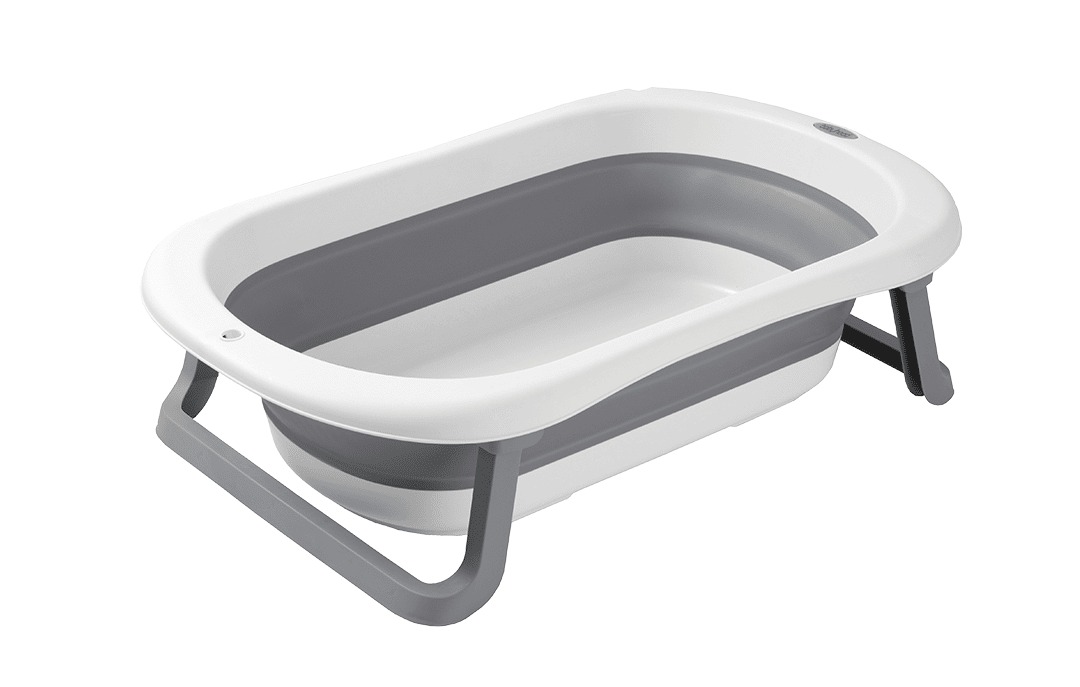
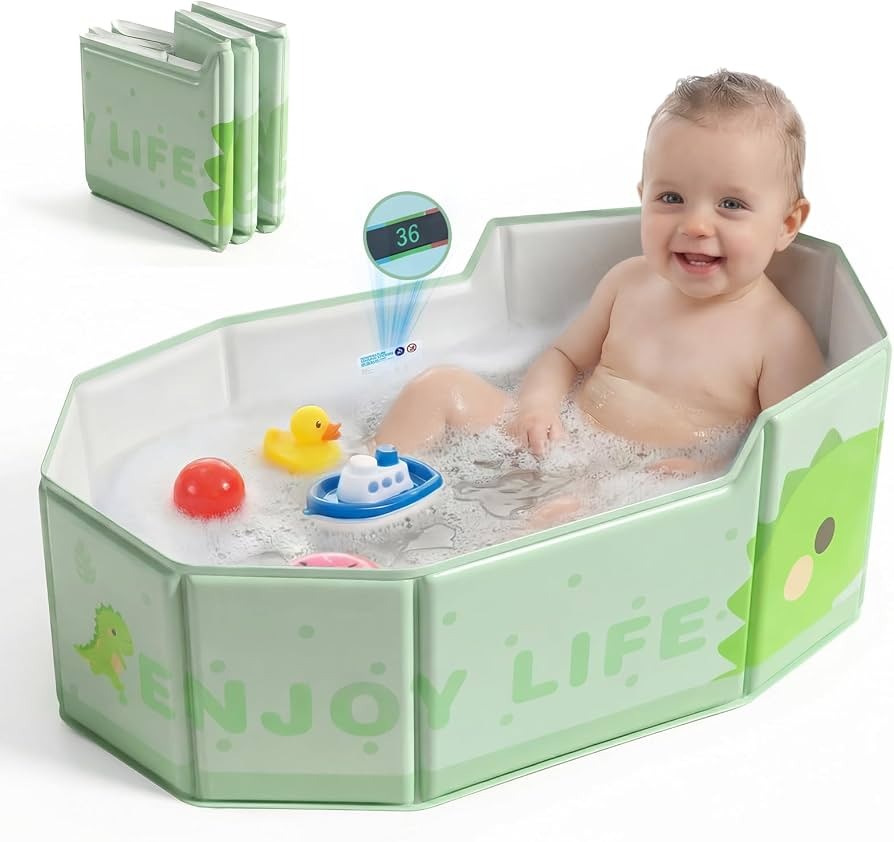
| Folding or collapsible tub | Smaller storage footprint when folded | Hinges, seams and drains add components. Fit depends on stability in the intended position and on care needs |
| Sink-suitable bath product | Can work in a permitted compact sink setup | Faucet and sink shape constrain placement. Fit depends on the specified sink use and measured clearances |
A more enclosed position can make it harder to wash a larger baby’s back and legs. An open design gives different access but still has to suit the baby’s position and the way the product is meant to be used.
Some products include thermometers or other accessories. Each one needs inspecting and caring for, so choose an integrated feature only if you will really use it and it doesn’t interfere with the product’s specified setup.
Cleaning and storage are part of the decision
A tub that folds neatly can still leave a sling, a drain fitting or several hinged surfaces to clean and dry. Check the drain, removable pieces, seams and fabric parts of any model you shortlist, follow its care instructions, and decide where everything will dry and be stored. Pick the one whose upkeep suits your household. No construction is automatically mold-free or dishwasher-safe.
How to check recalls, labels and secondhand bath products

A recent purchase date or a familiar brand doesn’t tell you whether a product is part of a recall. Recent examples:
- On October 8, 2026, ONTHEWEI recalled baby bath seats including model MY002 for instability and a tipping hazard associated with drowning.
- On January 8, 2026, an NFSVLB bath-seat recall involved instability and entrapment through the leg openings.
- On November 6, 2025, CPSC announced a Napei infant-bathtub recall because an integrated thermometer had an accessible button-cell battery.
The AAP also advises choosing an infant bathtub manufactured on or after October 2, 2017. That date is relevant for an older or secondhand tub; a later date doesn’t make a product suitable or recall-free. To compare product model, serial number and official recall notice, use How to Check Baby Product Recalls (and What to Do Next).
Check the exact model
- Identify the product. Record its brand, model and any date, lot or batch information from the label, package or manual.
- Search the regulator. Use the official CPSC recall database for the exact product and model.
- Match the notice. Compare the affected identifiers, date ranges, hazard and instructions with the item in hand.
- Follow the remedy. If it is recalled, stop using it and follow the official remedy. Do not rely on an improvised repair.
- Record the result. Keep the model details and the date you checked with the product information.
Recall notices change over time, and finding no match is not a safety certification.
With a used tub, missing instructions, damaged components or parts of unknown origin are reasons to hold off buying or reusing it. The same applies when assessing secondhand baby gear.
Make the choice and know what would change it
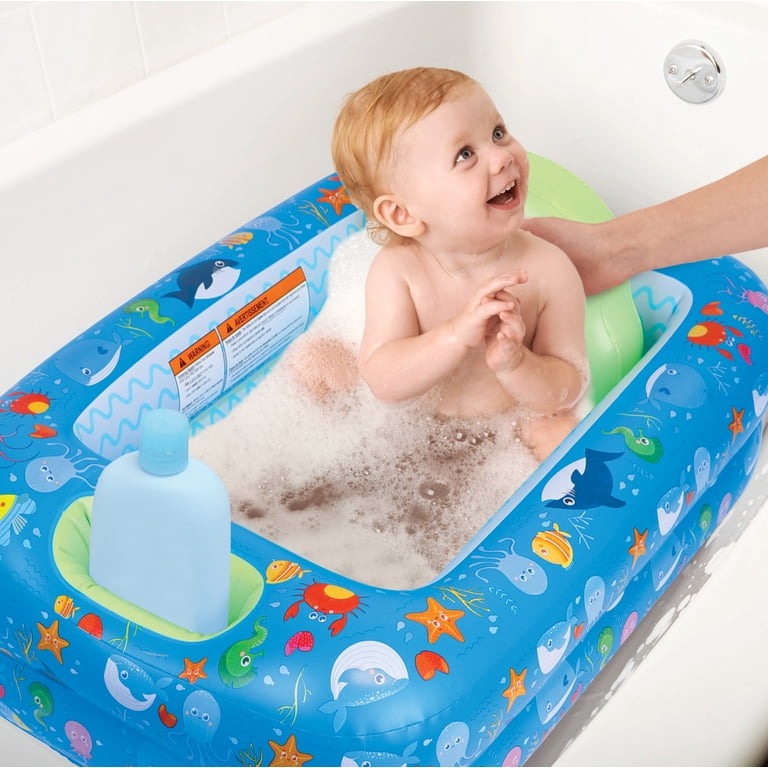
Sort what you are considering into one of three outcomes. It is suitable when the product type is right, its specified use fits your baby and home, and the model-specific checks are done. Reject or change it when it conflicts with the AAP’s upright-seat advice, exceeds the manufacturer’s permitted use, can’t be placed as intended, or is covered by a recall. Hold off when you can’t identify the model, can’t confirm that a support is compatible, or can’t establish an essential placement or fit condition.
For a newborn in a compact bathroom, a small infant tub or compatible reclined support can qualify. For a child trying to climb out of an infant tub, the old setup no longer qualifies. An unidentified used tub stays in the hold-off group until you know what it is.