
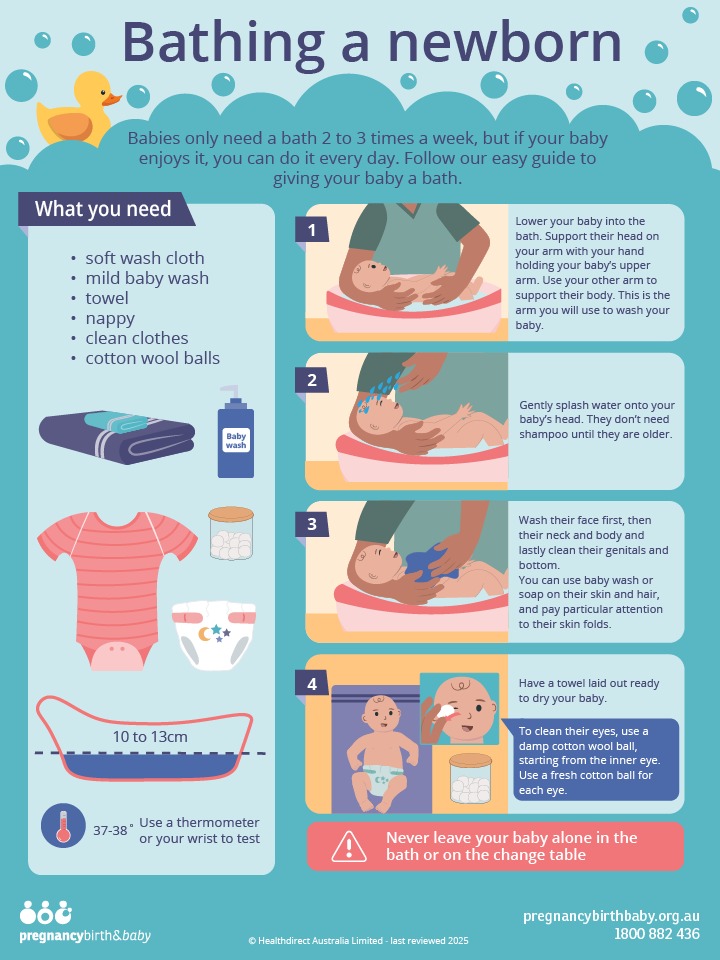
Give sponge baths until your baby’s umbilical area has healed. After that, a short bath in shallow, comfortably warm water works, as long as you hold your baby the whole time. Set everything up before you undress your baby.
When should you give your newborn the first bath?
The first bath can wait. The World Health Organization recommends waiting at least 24 hours, which leaves time for warmth, skin-to-skin contact and early feeding. A 2022 review found that delayed bathing may reduce hypothermia, though most of the evidence was low certainty. Hospitals sometimes change the timing for medical reasons.
Sponge bath or tub bath: which is appropriate right now?
Start with the umbilical area. The American Academy of Pediatrics recommends sponge bathing until the cord stump falls off, and the American Academy of Dermatology says to wait until the area has healed.
A sponge bath means cleaning your baby with a damp cloth, with no standing water. A tub bath means lowering your baby into shallow water while you support the whole body.
| Your baby’s situation | Appropriate next step |
|---|---|
| Cord stump still attached | Use a sponge bath under the AAP/AAD approach |
| Stump detached, but the area has not healed | Continue sponge bathing |
| Umbilical area healed, with no other restrictions | A supported shallow tub bath is an option |
| Circumcision still healing, if applicable | Follow the clinician’s restrictions before immersion |
The cord stump falls off within one to two weeks. A date on the calendar can’t tell you whether the skin has healed, so look at it yourself.
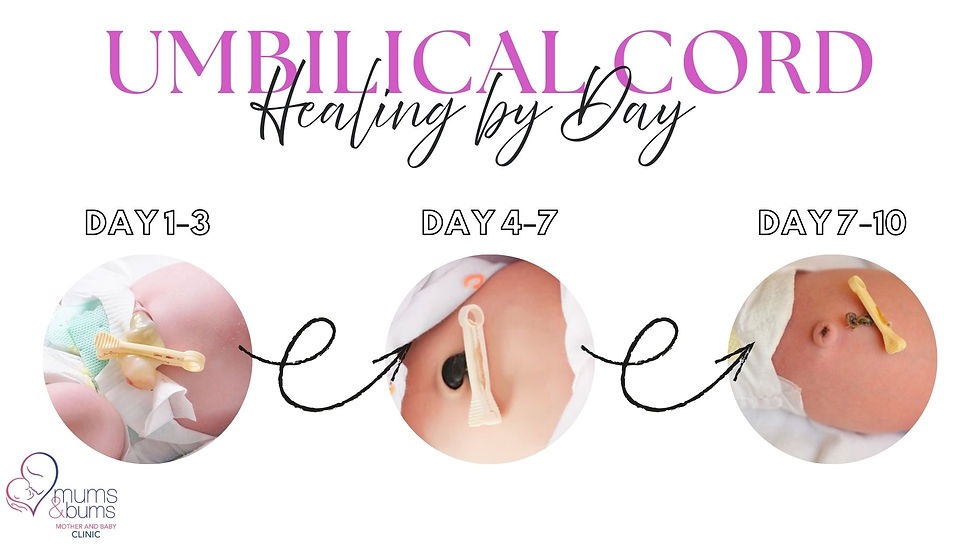
Check the umbilical area and any hospital or pediatrician instructions before you switch. The guide to what to check as the cord stump heals covers the healing process in detail. UCSF allows bathing with the stump still attached, unless your clinician says otherwise.
What should be ready before you undress the baby?
Set everything up while your baby is still dressed. Wet babies are slippery, and you can’t leave to fetch a towel.
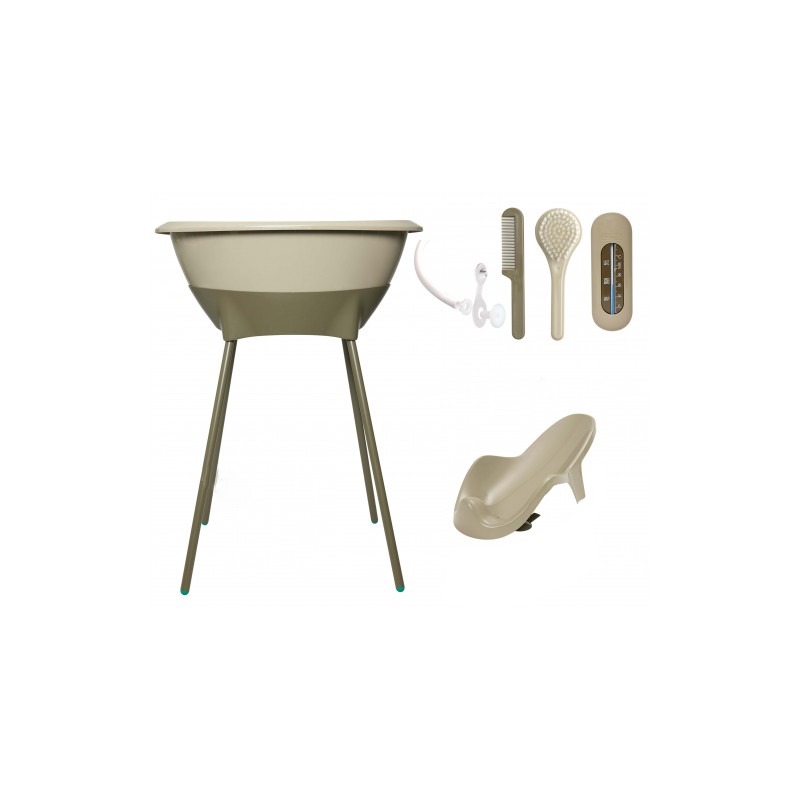
- Water and washcloths: A clean basin or infant tub, plus one or two soft washcloths. A bath thermometer helps.
- Towel and clothing: A dry towel, a fresh diaper and clean clothes within reach.
- Cleanser: A mild, fragrance-free baby wash if needed. Plain water is enough for some parts of the routine.
- Secure surface: For a sponge bath, use a stable, flat surface with a towel under your baby. Skip high countertops and slippery sink edges.
- Warm room: Keep the room warm and free of drafts so you don’t have to leave halfway through.
Stanford Children’s Health gives about 75°F (24°C) as an example of a comfortably warm room for newborn bathing.
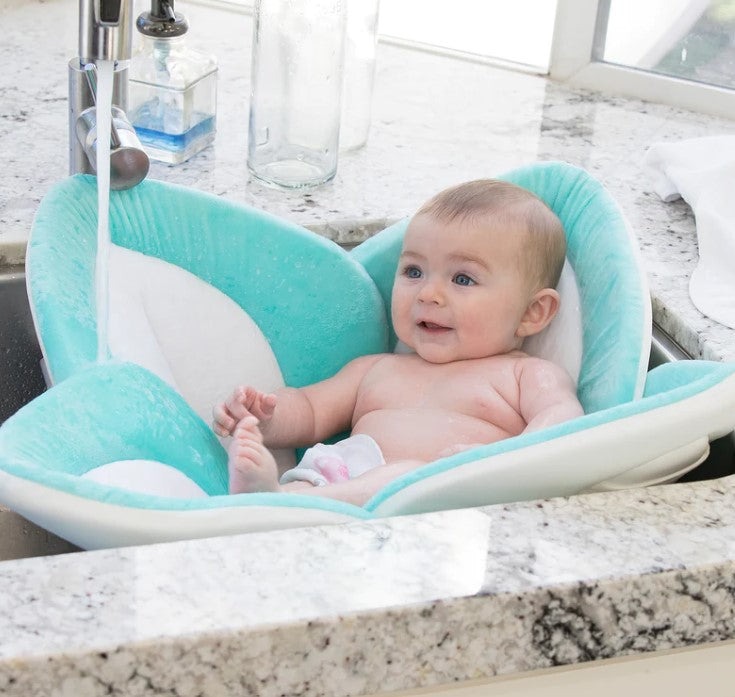
Skip infant bath seats for newborns. The AAP warns that they can tip and drop your baby into the water. Use a stable infant tub, and keep a hand on your baby even if the tub has a built-in sling. Read the product instructions and check CPSC recalls for your model.

For more on diaper changes, bathing routines and crying, read Everyday Baby Care: What to Do and When to Call. To choose a tub, see how to assess an infant bathtub.
If the towel is across the room or something interrupts you, take your baby with you. Never leave a newborn alone on a changing surface or in bath water, even for a moment.
How warm and how deep should a newborn bath be?
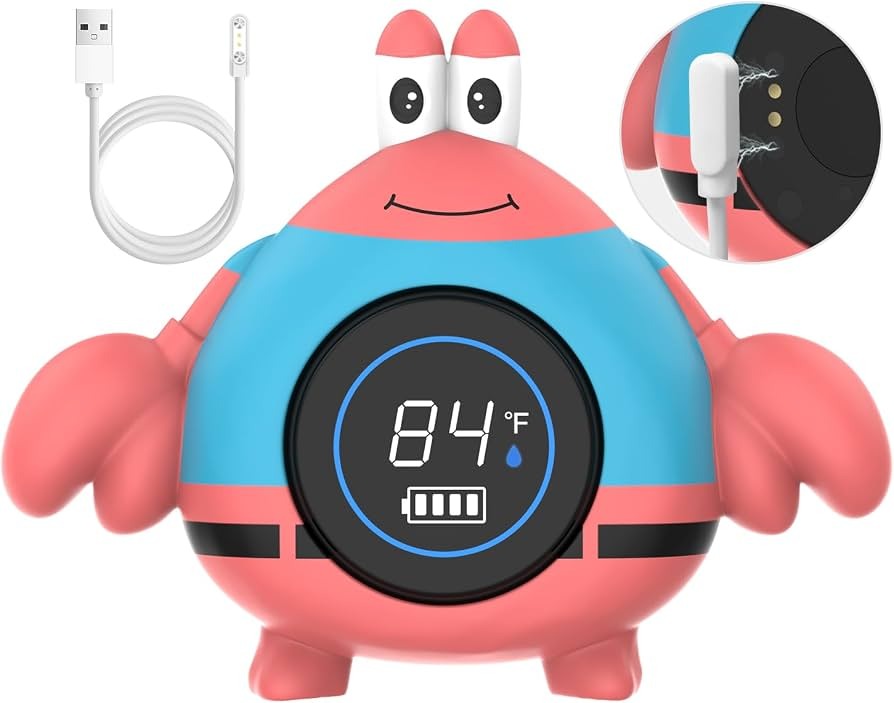
Prepare comfortably warm water. Cleveland Clinic sets a conservative limit for the water that touches your baby; the AAP covers standing-water depth and the hottest faucet output.
| What you are checking | Reference | What it controls |
|---|---|---|
| Water the baby will bathe in | No hotter than about 100°F (38°C) | Burn risk in the bath |
| Standing-water depth | About 2 inches (5 cm) | Keeps the bath shallow |
| Hottest water from the household faucet | No higher than 120°F (49°C) | Scald risk at the tap |
The 120°F limit applies to the hottest water from your faucet. The bath itself should stay near 100°F, and 115°F is too hot for a newborn.
Fill the tub, turn off the faucet, then check the standing water with a bath thermometer if you have one. Test it with the inside of your wrist or elbow. It should feel comfortably warm, not hot. Check the depth before you lower your baby in.
Keep your baby’s head and face above water the whole time. Even shallow water can drown a baby, so keep your hands on your baby throughout.
UCSF gives a slightly warmer range of 100 to 104°F. This guide uses Cleveland Clinic’s limit of about 100°F.
Running water or a handheld sprayer can change temperature without warning. Wash and rinse with the water you already prepared. The bath water safety and supervision guide covers the other hazards of bathing equipment and water.
How do you give a newborn a sponge bath?

A sponge bath cleans your baby without standing water. Work steadily and keep it short so your baby stays comfortable.
- Settle and cover your baby. Lay your baby on a stable surface with a clean towel underneath. Keep a hand on your baby and wrap another dry towel loosely around the body, uncovering only the part you’re washing.
- Clean the face first. Wipe the face and around the eyes with a soft, warm, damp washcloth, no soap. Clean the outside of the ears, then the scalp. Don’t put cotton swabs in the ear canals.
- Move to the body and folds. Uncover one small area at a time. Wipe the neck, behind the ears, under the arms, hands, fingers, legs and feet. Check the folds where milk or other residue collects. Use a little mild cleanser on soiled skin.
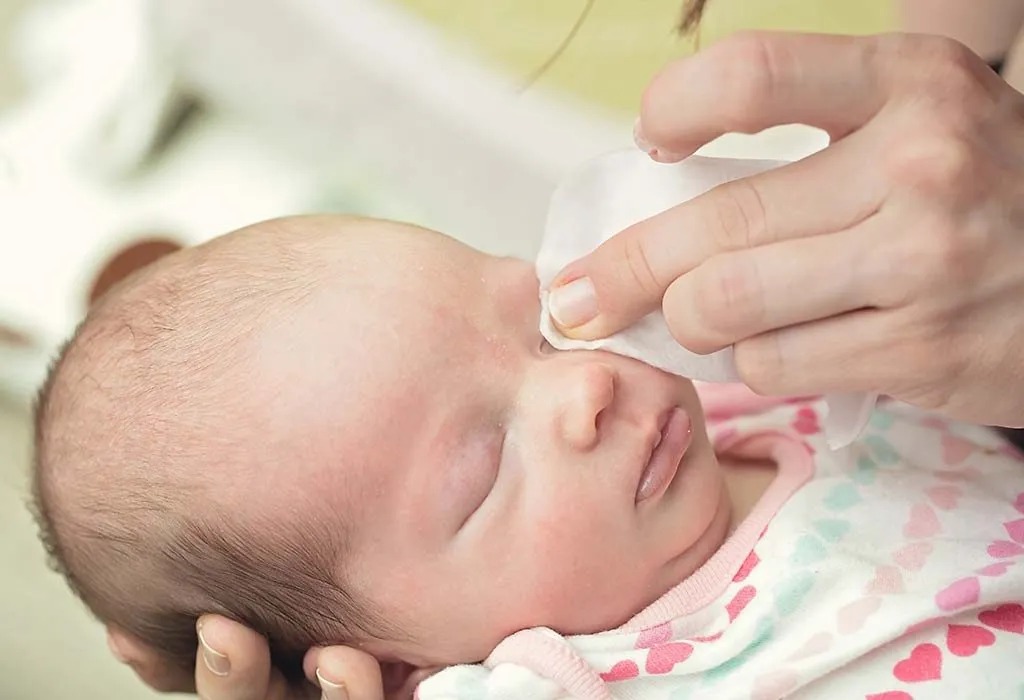
- Rinse and dry. Wipe off cleanser with a clean, damp part of the cloth. Pat the area dry and cover it again before you move on. Keep the healing cord area dry.
- Finish with the diaper area. Use a clean part of the washcloth, and wash this area last so residue doesn’t reach the face or upper body. Don’t rub hard.
How do you bathe a newborn in a small tub?
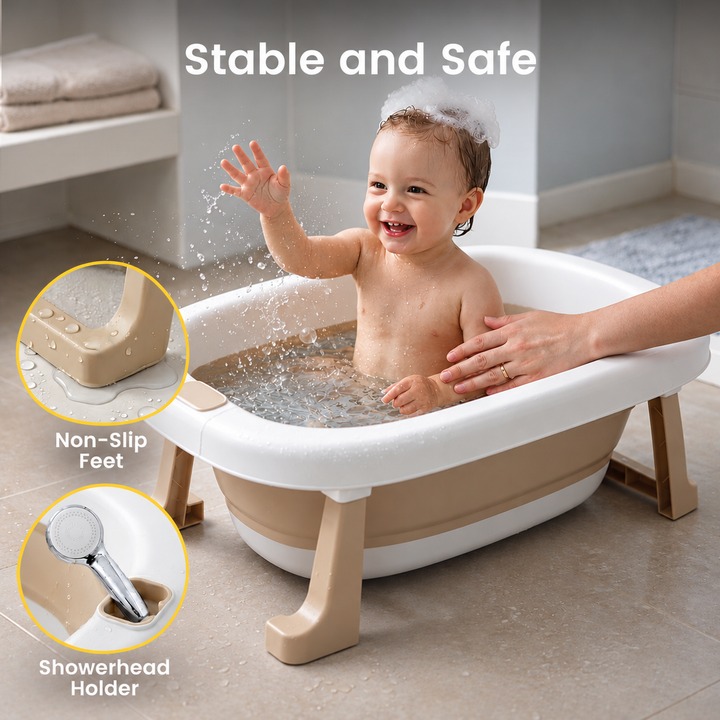
Once your baby is ready for immersion, a small, stable infant tub keeps the bath shallow while you support the head and neck. Prepare and check the water before you undress your baby.
- Set up the tub. Make sure it’s stable, within easy arm’s reach and used as its instructions say. Sit or stand where you can hold your baby without stretching across the bath.
- Lower your baby feet first. Support the head and neck with your nondominant arm. With your other hand, guide the body into the water feet first, keeping the face above the surface. Keep supporting the head and back as your baby settles.
- Wash gently. Clean the face and scalp with a soft, damp cloth, then the body and skin folds, and the diaper area last. Apply mild cleanser only where needed and rinse with the prepared bath water.
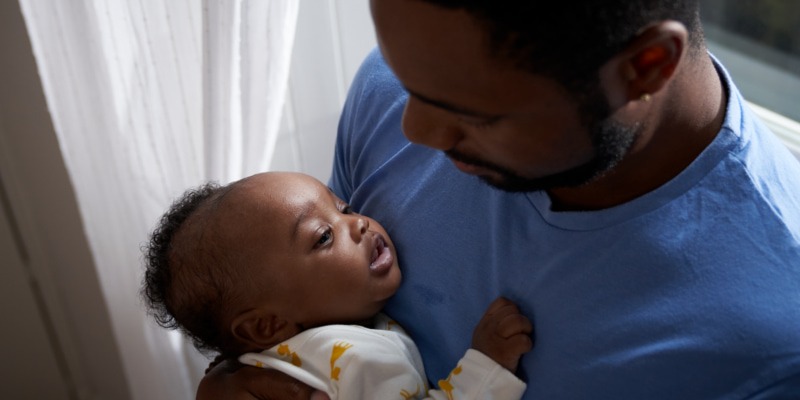
- Lift your baby out. Hold firmly as you raise the body from the tub, and move your baby straight to the towel beside you.
If your baby stiffens or is hard to hold when the feet touch the water, pause. End the bath if you can’t keep a safe hold. Keep the faucet off and don’t aim a running sprayer at your baby.
What should you do immediately after the bath?

Wrap your baby in the waiting towel as soon as your baby leaves the water. Pat the neck, underarms, behind the ears and other folds dry, then put on a clean diaper and clothes.
Once your baby is secure and supervised, empty the bath so the water isn’t within reach of other children.

A parent of a seven-week-old described a baby who enjoyed the water but became distressed as soon as the bath ended:
Our LO is 7 weeks old. Her first bath experience in a little baby tub was a disaster and she hated it. Our midwife suggested doing baths with mom and baby together, so since then, our bathing routine looks like this: … As soon as dad lifts baby out of the tub, baby starts crying. He wraps her up in a towel immediately and brings her quickly to get her in a diaper and pyjamas. By the time I get out of the tub (because it has a door I have to wait inside until it is drained – about 2 min), baby is crying super hard, red-faced, and takes 10-15 min of intensive soothing to calm down.
This family used a shared adult tub, not an infant tub. The crying started when the baby came out of the water.
For diaper fastening and changing-surface steps after the bath, see safe diaper-changing steps.
How often should you bathe a newborn, and is soap necessary?
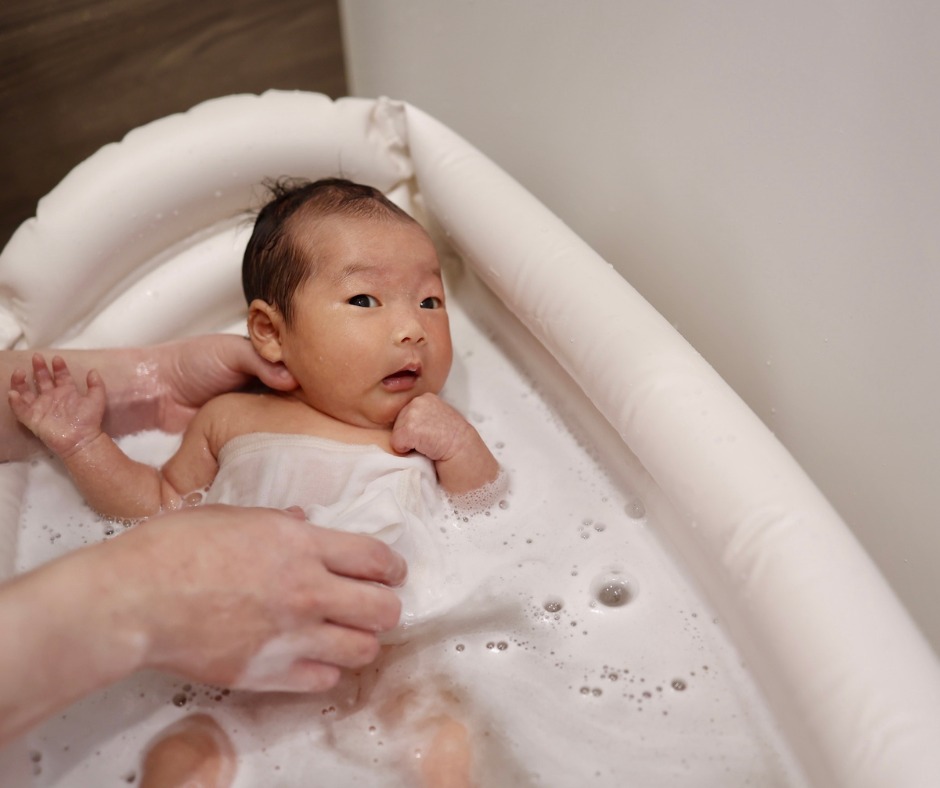
Two or three full baths a week are enough for a healthy newborn, as long as you clean the diaper area and any soiled skin in between. The American Academy of Dermatology gives that frequency, and the AAP says three baths a week are sufficient.
Clean any dirty patch of skin between full baths, and keep up normal diaper hygiene on days without a bath.
Frequent washing and soap dry out baby skin. Plain water does most of the job. Use a mild, fragrance-free cleanser sparingly and rinse it off. If your baby’s skin gets dry, bathe less often and watch how it responds. Ask a clinician about persistent skin problems.
Bathe whenever it suits your household. A bath doesn’t have to be part of every bedtime, and it won’t reliably improve your baby’s sleep.
What if your newborn cries during a bath or hates bath time?

When your newborn cries, notice when it starts. Crying in the water, after you lift your baby out and throughout a sponge bath each call for a different response.
| When the crying begins | What you can do |
|---|---|
| As the baby touches tub water | Pause, keep a secure hold and shorten or end the bath if the distress continues |
| After a calm bath, during lifting or dressing | Notice whether it starts at lifting, toweling or dressing, then adjust that step |
| During a first sponge bath | Keep the next attempt simple: brief cleaning, less exposed skin |
A parent described an 11-day-old’s first sponge bath:
Today we got all excited to give my 11 day old boy a little sponge bath. We did all the things we got recommended: lay him on a warm towel, place a warm wet cloth on his chest, sing to soothe him while you wipe his body. He SCREAMED the whole time then when we were done and I held him wrapped on the towel to go put some clothes on, he proceeded to poop, pee and puke all at the same time. It was quite the scene
The second bath went much better.
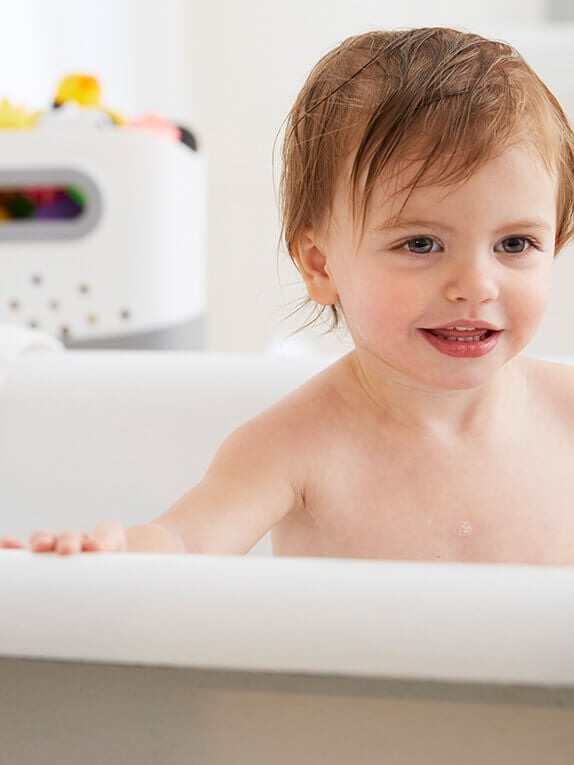
If your baby cries as soon as immersion starts, check the supporting position, the contact with water and the room’s warmth. Stop an upsetting bath instead of finishing it for the sake of the routine. The AAP and AAD support going back to sponge baths for a while if your baby doesn’t tolerate the tub. Try the tub again when your baby seems more comfortable. Crying along with signs of illness or injury needs medical assessment.
When should you skip the bath and contact a pediatrician?
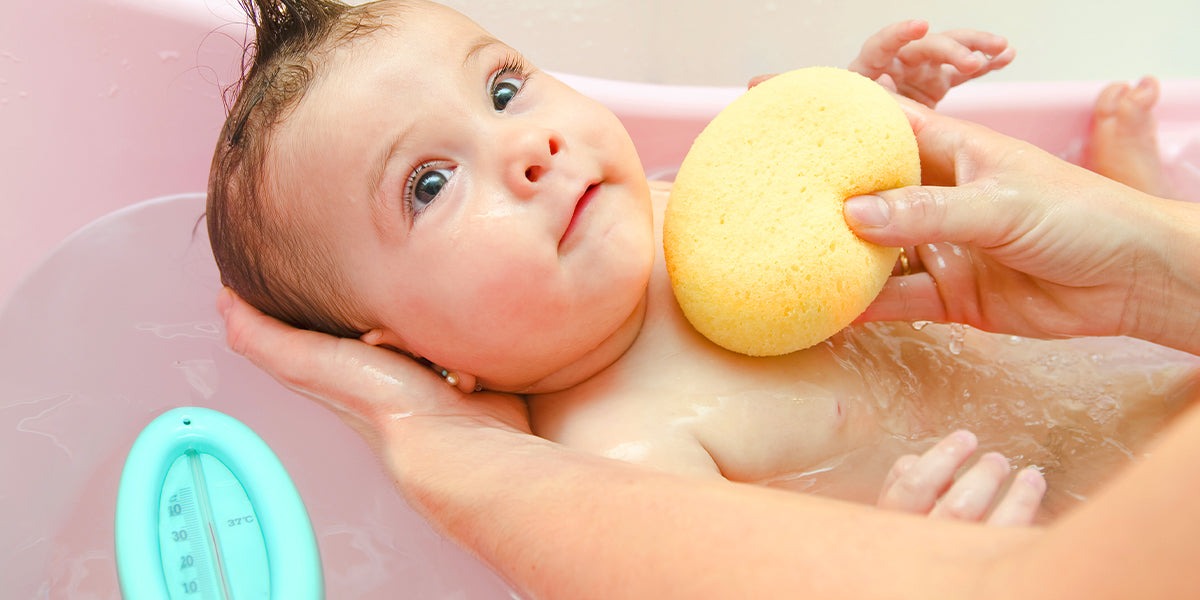
The steps above are for healthy, full-term babies. Skip the bath and call your pediatrician if any of these apply.
- Special discharge instructions: A preterm baby, a baby discharged from a neonatal unit or a baby with specific medical needs may have a different care plan.
- Healing wounds or an unhealed cord area: Follow the clinician’s instructions for the umbilical site, circumcision or any other wound before immersion.
- Skin or illness symptoms: Call a clinician about a rash, unusual discomfort or signs of illness. For a baby three months old or younger, a rectal temperature of 100.4°F (38°C) or higher means calling the pediatrician immediately, even without other symptoms.
- Injury or breathing emergency: Call 911 if your baby stops breathing, has severe trouble breathing, becomes unresponsive, or has blue, purple or gray lips. Get urgent medical care for a suspected serious scald or injury.