
You’re ready for the first days when your baby has a safe place to sleep, a car seat for the ride home if you’re driving, basic feeding and changing supplies, a newborn-care contact, and a plan for who helps with what. The nursery and registry can stay unfinished. If a specific medical, transport, household, or insurance requirement applies to you, handle it first. Check the safety and deadline items, assign the remaining essential tasks, and let the rest wait.
Preparing for a baby can fill every weekend you have. There are clothes to sort, products to compare, appointments to book, and rooms that always seem to need one more round of organizing. The list keeps growing because shopping, safety, medical care, and household logistics get tangled together.
Split the decisions that have consequences before birth from the purchases whose usefulness shows up later. Then spend your time on tasks with a clear purpose.
What needs to be ready before your baby arrives?
Sort your preparations into four groups: things to verify, things to prepare if they apply to you, jobs to assign, and purchases or projects to defer. The test is simple. Does an unfinished task affect your baby’s first days or an approaching deadline?
Your transportation, space, feeding plans, healthcare, and support network decide which preparations come first. For feeding cues, milk intake, and newborn diapers, see Feeding a Newborn: Cues, Methods, and When to Get Help.
| Preparation | Purpose | What to arrange or check | Timing |
|---|---|---|---|
| Infant sleep space | A safe place to sleep from the first night. | Compliant sleep surface, safe setup, product instructions. | Before the baby first sleeps there. |
| Ride-home transportation | Car travel requires a child restraint. | Rear-facing seat that fits your vehicle, installed correctly. | Before the car journey. |
| Newborn healthcare | Early care needs a contact and a follow-up route. | Pediatrician or practice contact, discharge instructions. | Before discharge. |
| Feeding and changing basics | Daily care starts immediately. | Initial supplies and feeding support. | The first days. |
| Delivery arrival | You need to reach the facility. | Arrival instructions, transportation, a bag of essentials. | Before a hospital or birth-center delivery. |
| Leave and health coverage | Some employment and enrollment actions have deadlines. | Your eligibility, required notices, coverage procedures. | By the deadline. |
| Meals and household support | Food, errands, and chores continue after birth. | Who does what, plus a backup. | Before you need the help. |
| Nursery extras and gadgets | Mostly convenience or preference. | Whether the item has an immediate use. | Usually later. |
Verifying something and buying something are different tasks. A crib must meet safety requirements before use; matching storage baskets can wait. A coverage deadline can matter before a nursery furniture order.

Set up a safe place for your baby to sleep
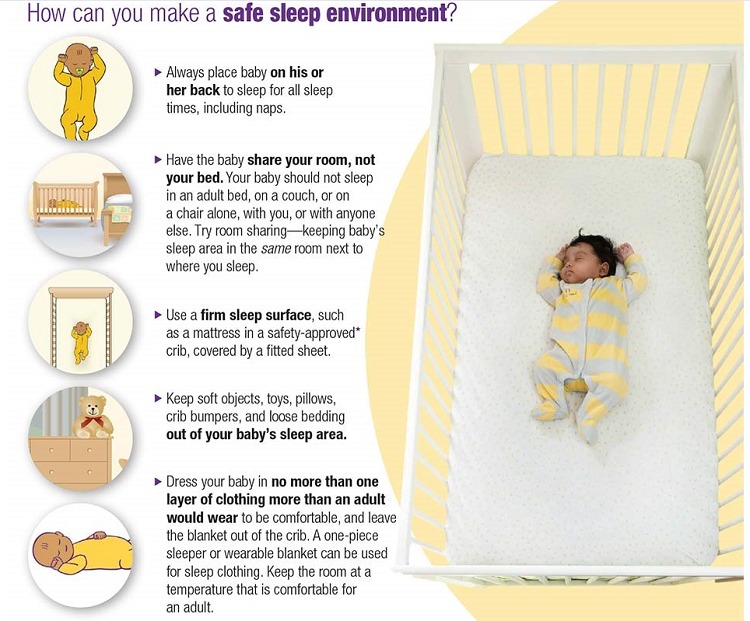
A safe sleep space comes first. It needs a firm, flat surface that meets infant sleep safety standards, with your baby on their back and nothing extra in the bedding.
The American Academy of Pediatrics’ safe sleep guidance recommends placing babies on their backs, on a compliant surface with a fitted sheet, with pillows, loose blankets, and other soft items kept out.
The AAP also recommends that your baby sleep in your room, on a separate surface, for at least the first six months. That is room-sharing, which differs from bed-sharing.
A crib, bassinet, or other product made for infant sleep works when it meets the requirements and you follow its instructions. A lounger or relaxation seat is not a sleep product by default.
Padded crib bumpers are banned under the federal Safe Sleep for Babies Act. The US Consumer Product Safety Commission’s safe sleep guidance also covers hazardous infant sleep products and unsafe sleeping arrangements.
For the product you plan to use, find the manufacturer and model, read the instructions, and check safety information and recalls. Do this especially for a crib or bassinet that is secondhand, a gift, or stored since an older child outgrew it. To check a crib, firm mattress, and fitted sheet, see Safe Sleep Checklist for Babies.
A compliant sleep surface in your own room covers the immediate need. You don’t need a fully decorated nursery for it.
Check the actual car seat and ride-home plan
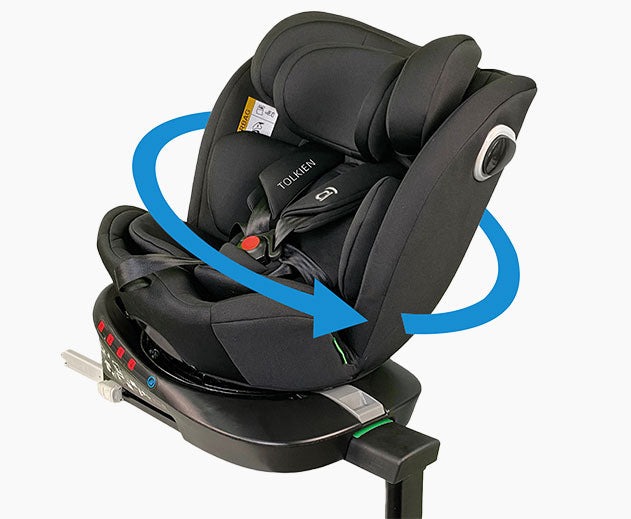
If your newborn rides home by car, you need a rear-facing car seat that fits correctly in that vehicle. In a vehicle with a back seat, install it there. Never place a rear-facing car seat in front of an active passenger airbag.
After you buy the seat, check the installation and the harness fit. Both depend on the seat, the car, and your baby. For fit, rear-facing limits, and installation, see How to Choose a Baby Car Seat That Fits Your Newborn and Your Car.
The National Highway Traffic Safety Administration’s installation guidance tells you to read both the car seat instructions and the vehicle owner’s manual.
Before the ride, settle four things:
- Which vehicle. A borrowed car or a different family car needs its own check of seating and installation.
- Which seat. Its manufacturer limits must fit your baby and your trip.
- How it’s installed. Use the permitted installation method and check harness fit against the instructions.
- Where to get help. NHTSA provides child passenger safety information and inspection resources if you want installation help.
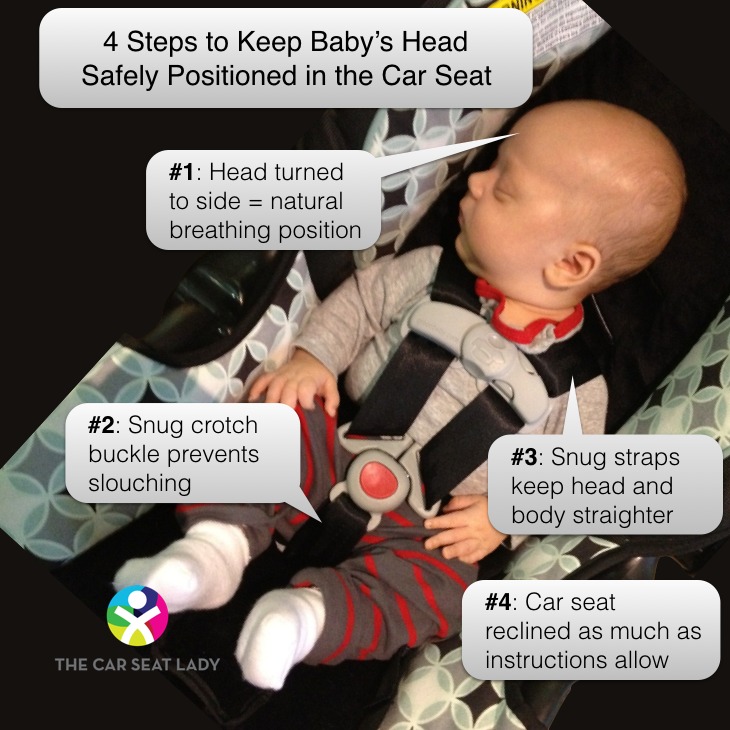
If your stroller comes with an infant car seat, check that the stroller, adapters, and seat work together. That purchase doesn’t replace checking the seat’s installation in your car.
Arrange newborn care before you leave the hospital

Know who will provide your baby’s early medical care and how you will reach them. Choosing a pediatrician or newborn-care clinician belongs on the preparation list, apart from shopping.
You can pick the practice before the birth and keep its phone number and appointment procedures handy. That gives whoever books appointments a starting point once the hospital team hands over discharge instructions.
Before discharge, the clinical team should explain your newborn’s follow-up plan, any appointments you need to book, and whom to call about symptoms or questions. Timing depends on your baby’s clinical circumstances and the team’s instructions.
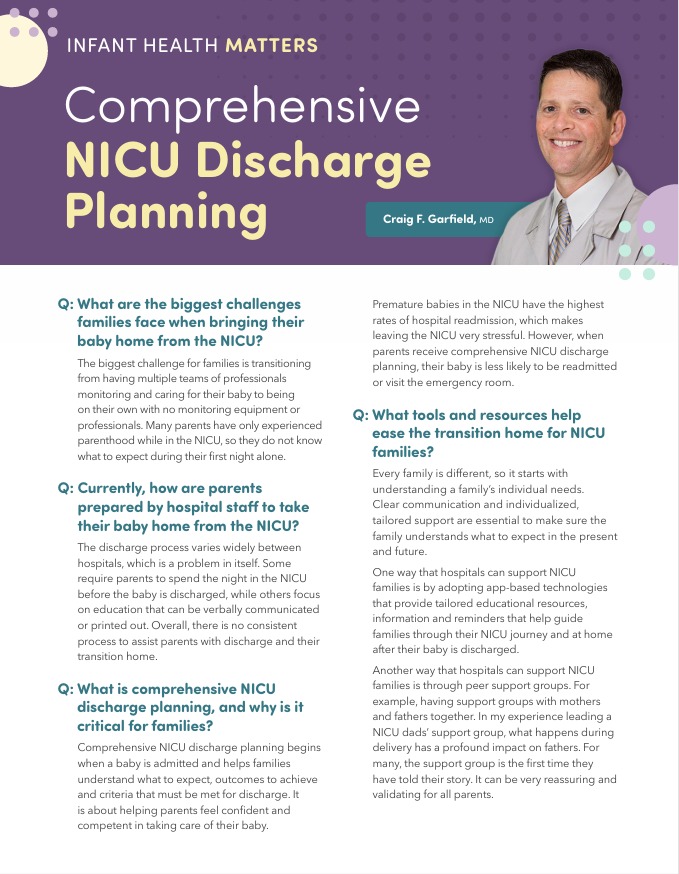
Newborn screening is also part of early care. The tests, how results reach you, and any follow-up depend on your healthcare system and your baby’s circumstances.
Have one caregiver write down the discharge instructions, the right contact details, and the next appointment or scheduling task. This helps most when the person arranging follow-up missed some of the conversations with the hospital team.
Make feeding and changing possible from day one
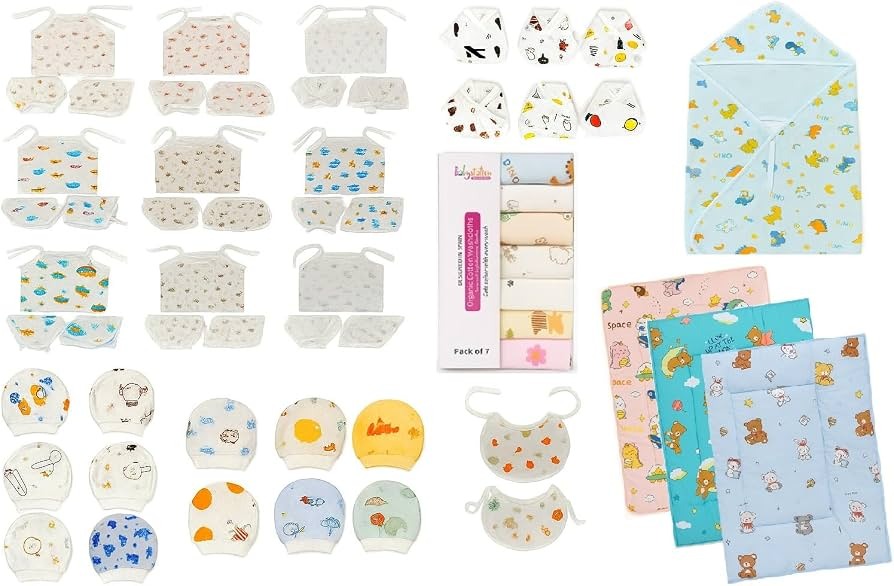
Line up a feeding setup: the supplies and a support contact that fit how you expect to feed, with room to change after the birth. For feeding concerns or special preparation procedures, use clinical guidance.
Keep a modest stock of diapers, wipes, and clean clothing, plus a changing area within reach of whoever does the care. Sizes, amounts, and extras depend on your baby, so know who can pick up anything you find you need. For newborn diapers, safe sleep space, and feeding supplies, read Newborn Essentials Checklist for the First Month.
Buy what you need; leave room to change your mind
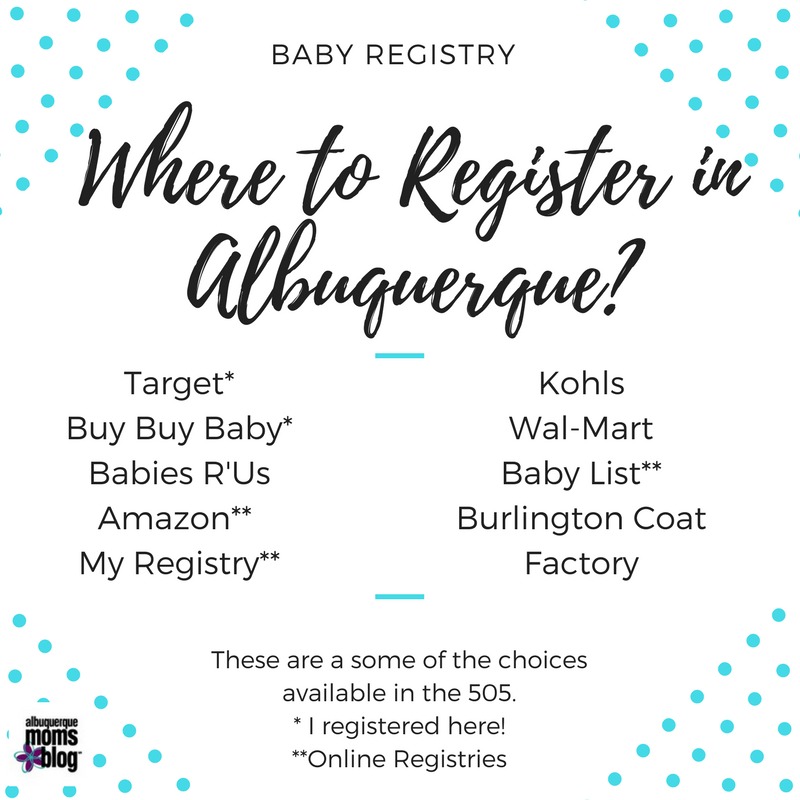
A baby registry makes it easy to picture every purchase fitting neatly into life with a newborn. Some products have an immediate, predictable use. For others, you only find out once daily routines begin.
The buying question is how soon an item will solve a real need at home.
| Decision | Best fit | Reason |
|---|---|---|
| Buy or prepare now | Equipment for immediate safe sleep, car travel, and essential care. | You need it working before first use. |
| Decide later | Accessories that depend on feeding patterns, preferences, or routines. | You’ll choose better once the baby is here. |
| Usually defer | Extra decorations, duplicate conveniences, and later-stage items with no present use. | They take money and space without solving an immediate task. |
Buy early when you need an item before you could realistically get it later. Long delivery times or limited local stock can justify an early purchase.
One second-time parent compares planning a first registry with learning what was worth buying.
When I was pregnant with my first, my registry was my favorite hobby. I spent so long deliberating over what to put on there, what to buy, and how it would perfectly work with my baby and life. HA! I’m on round 2 now, 1.5 years later, and have officially curated my baby needs. So, if you feel like reading my totally unasked for opinions, here is a list of all of the things I bought, that were not worth it, and what I ended up using that was worth it instead.
An expensive convenience product can turn out to be a poor match for your family. Before buying an optional item, ask what its first use would be, whether something you own already does the job, and how easily you could buy or return it later.
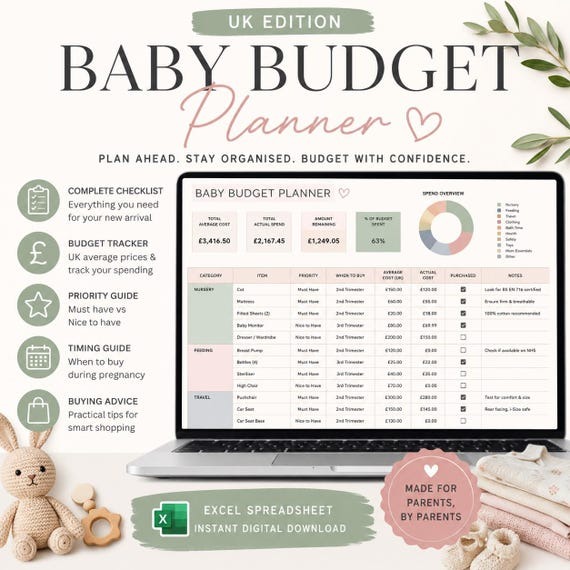
For used gear, identify the item, check its condition and instructions, and look up safety or recall notices before relying on it. A low price only helps when the product does its job safely.
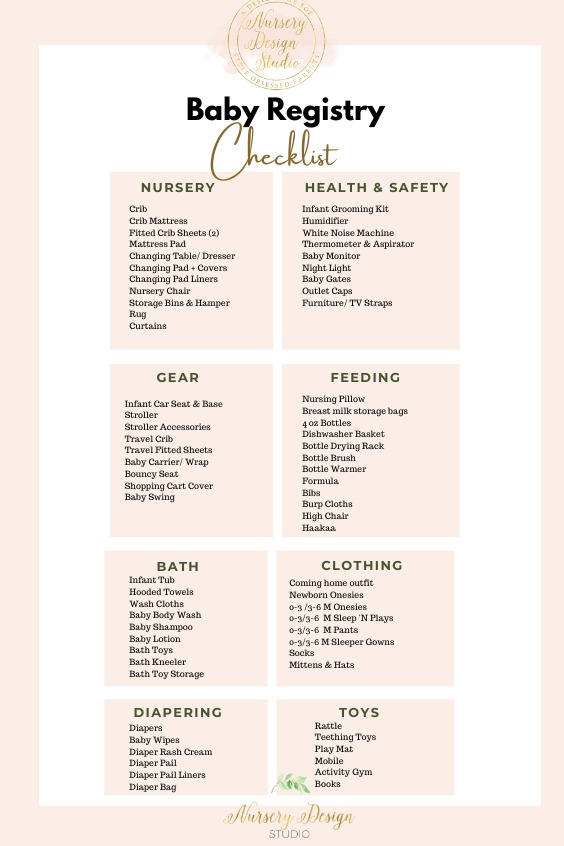
Keep quantities, gift categories, and product comparisons in a separate checklist. To compare registry items, newborn essentials, and gear quantities, use Baby Registry Checklist: What You Need, What Can Wait, and What to Skip.
Make the home usable without finishing every room
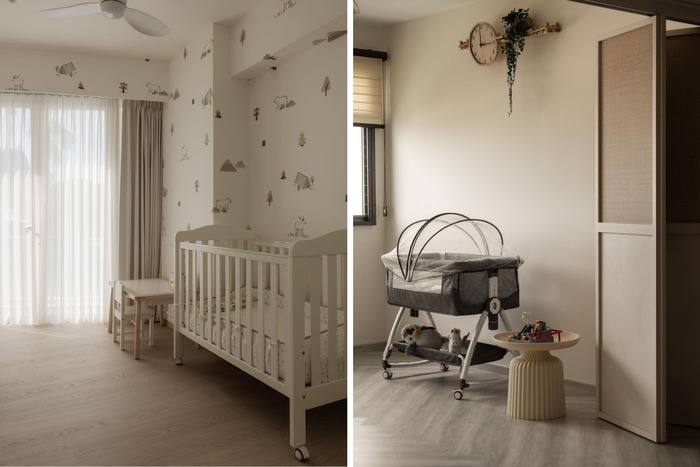
Your home setup needs a safe place to sleep and enough reachable space for routine care. It can fit inside an existing bedroom or another suitable part of the home.
In a small apartment, keep changing supplies close to where care usually happens. With more space, you might separate storage and care areas. Choose whichever matches how you will use the rooms.
Furniture and changing surfaces must suit their purpose. A decorative dresser or improvised changing surface isn’t automatically safe for infant care.

Walk through the rooms where you’ll spend time with the baby. Check where daily supplies can be reached, where routine care will happen, and whether furniture or clutter gets in the way.
If your current setup works, a big furniture project can wait, along with detailed layout and storage choices. For nursery furniture, crib placement, and storage layout, see How to Set Up a Nursery: A Safe, Practical Room Layout.
Decide who handles meals, errands, and backup help

Meals, groceries, laundry, and errands continue after the baby arrives. Planning for them makes the first weeks easier, when your time and energy are unpredictable.
One caregiver described filling a freezer before the birth and being glad of the ready meals afterward.
Can’t recommend this enough. I stuffed our chest freezer with so many different crock pot meals a week or so before my wife gave birth and it truly made a difference. Having good food with no effort other than to thaw and throw into a crock pot was a both a highlight and a sense of normalcy in those first few weeks! I’ve been meaning to do another big meal prep day like that again, but it’s much harder to do that now
Food safety depends on how you prepare and reheat a meal. USDA guidance advises thawing meat and poultry before cooking them in a slow cooker and advises against reheating cooked leftovers in one. For a commercially frozen slow-cooker meal, follow the manufacturer’s preparation instructions. The original account doesn’t say what the meals contained or how they were handled.
With little freezer space, simpler groceries, prepared meals, delivery, or a helper who shops all work too.

Decide who handles each recurring job:
- Meals and groceries. Choose who organizes the food.
- Household work. Name who handles laundry, essential supplies, and errands that can’t wait.
- Other dependents. Cover pets, older children, or relatives where they apply.
Write down one primary person and one alternative for each important job, and keep the backup contact where whoever needs it can find it. Help can come from a partner, family member, friend, paid service, or a deliberately simpler routine.
Check leave, health coverage, and time-sensitive paperwork
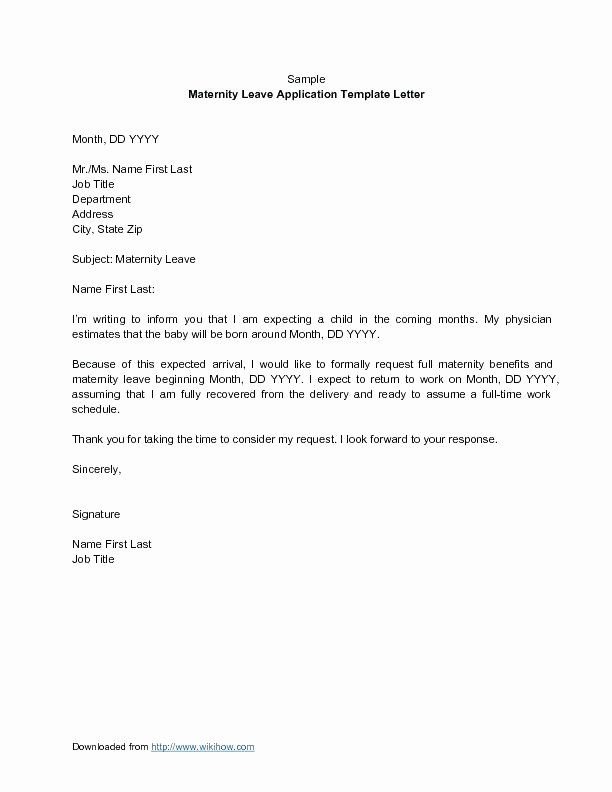
Employment and insurance deserve attention before the birth because some need advance notice or action within a set enrollment period. The rules depend on you, your employer, your insurer, and your coverage program.
Under the federal Family and Medical Leave Act, eligible employees of covered employers can take up to 12 workweeks of unpaid, job-protected leave in qualifying circumstances. The federal provision doesn’t guarantee paid leave, and not every US worker is eligible.
If you use the Health Insurance Marketplace, HealthCare.gov explains the 60-day special enrollment window following a birth. Employer-sponsored coverage, Medicaid, and state programs have their own enrollment procedures and deadlines.
| Situation | What to establish | Contact |
|---|---|---|
| Employee considering FMLA leave | Employer coverage, your eligibility, notice requirements, leave dates, and pay arrangements. | Employer or HR; US Department of Labor. |
| Family using Marketplace insurance | The after-birth enrollment action and the 60-day period. | HealthCare.gov or Marketplace administrator. |
| Employer plan, Medicaid, or state coverage | The plan’s newborn enrollment procedures and timing. | Insurer, benefits administrator, or state program. |
| Family anticipating childcare needs | Availability, application requirements, and local timing. | Your intended childcare provider or program. |
The administrator of your coverage route can tell you the required notice or enrollment action. Write down the real deadline and who will complete it. Childcare may also need an early application, though no national timetable applies to every provider.

Leave room for rest and time together

Once the essentials are under control, the remaining time is yours. That might mean quiet days, time with your partner or older children, or fewer errands.
An expectant parent near the due date described being well prepared and asked what other parents enjoyed doing together before the birth.
My due date is in about 2 weeks, my husband and I are both educators and have finished our school year, and we are about as prepared as we can reasonably be for our chunky monkey to arrive. What do you wish you and your partner did to celebrate your last days as a couple before you became parents? Or what did you do that you’re very glad you did? We’re both incredibly excited for our new life ahead of us, but we would love to spend some intentional time together to celebrate this change.
The longer account described a ready bassinet, installed car seat, packed hospital bags, and freezer meals. With the practical tasks done, the parent wanted to choose how to spend time together. For first-week supplies, newborn feeding, and car travel, see Bringing Baby Home: A Practical First-Week Checklist.
The household had also made a Costco trip for paper goods and nonperishables.

Some parents work until delivery, others manage medical restrictions or look after older children. A restful afternoon, a familiar outing, or uninterrupted time at home might fit.
Pick a stretch of time to keep free and take one noncritical project off the calendar. Once the real requirements are handled, personal preference is reason enough.
Run one last readiness check, then stop
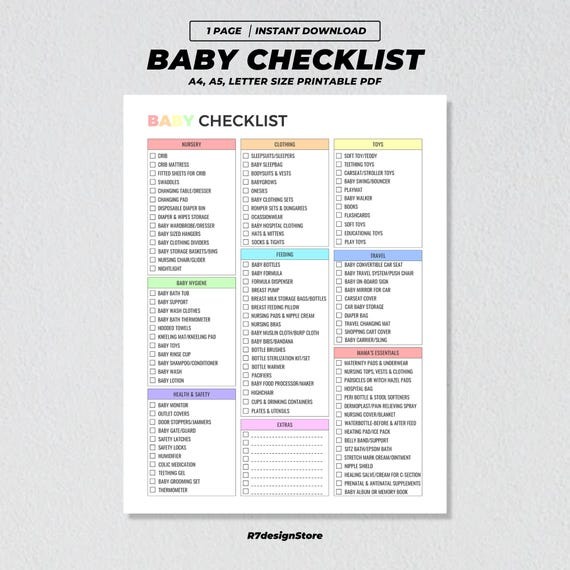
Keep the final check short. Go back through the preparations that matter to you and give each unfinished item a status.
- Ready. The arrangement is in place and verified.
- Assigned with a next action. An essential task still needs attention, with a named person and a specific next step.
- Deferred. No immediate safety, care, or deadline depends on it, so it can wait.
If a medical arrangement or administrative deadline is still open, keep that task active until it’s done. Everything else can stay on the later list.
You’re ready for the first days when your baby has a safe place to sleep, a car seat for the ride home, basic feeding and changing supplies, a newborn-care contact, and a support plan. The nursery and registry can stay unfinished. To compare feeding, sleep, and developmental milestones, use Baby Care Guide: What Matters Now, From Newborn to Age 2.