
List only what you still need and mark each item: buy new, buy used, borrow, ask as a gift, or wait. Used gear earns a spot only when you can confirm its safety, condition, fit, and remaining life. Rank the list and fund the first open essential.
A baby registry can grow surprisingly expensive before you’ve bought a single diaper. Someone offers a stroller, a relative has a crib in storage, and a secondhand marketplace has a premium model priced below the basic version on your list. You’re also trying to decide whether you need all of it before the baby arrives.
Start with what your household already has. Then decide which items must be ready, which can safely come from another family, and which purchases can wait until you know you’ll use them.
Count What You Already Have Before You Price Anything
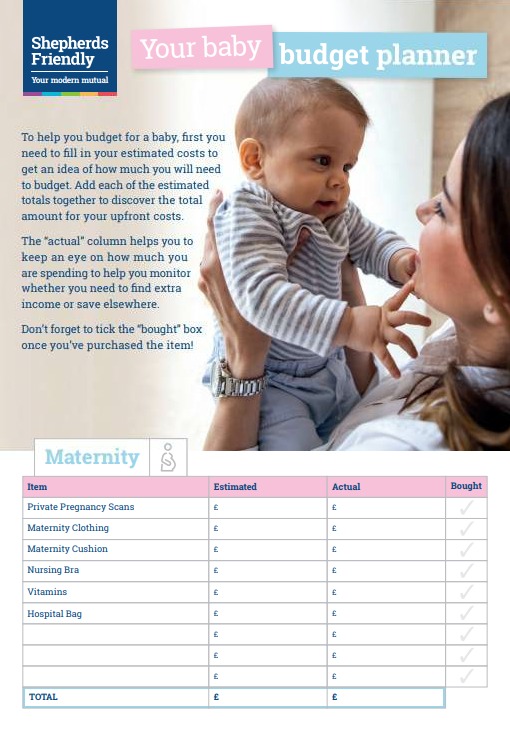
List the needs your baby will have, then subtract anything your household already owns in verified, usable condition. An item that works doesn’t need a second purchase.
Think in needs first. Your baby needs a place to sleep. If you’ll drive home from the hospital, you need a suitable car seat. Feeding, diapering, clothing, and washing follow, but products and quantities depend on your household and plans.
Babylist has published a registry built around a $500 example budget. That figure is one editorial product selection, not a minimum every family should spend. Set the amount you can afford before adopting someone else’s list.
A fictional example:
| Function | Existing item or offer | Verified and available? | Status |
|---|---|---|---|
| Safe sleep | A relative offers an older crib | Documentation pending | Borrowed pending verification |
| Travel by car | No suitable car seat acquired | No | Still needed |
| Clothing | Usable hand-me-downs | Yes | Owned and verified |
| Feeding supplies | Initial needs under consideration | Pending | Still needed |
A stroller someone intends to buy stays a pending gift until the correct product is confirmed.
Mark each entry owned and verified, confirmed gift, borrowed pending verification, still needed, or optional for later. Record your available cash separately, and set aside money for sales tax, delivery, essential accessories, and replacement parts.
Decide What Must Be Ready Before Birth
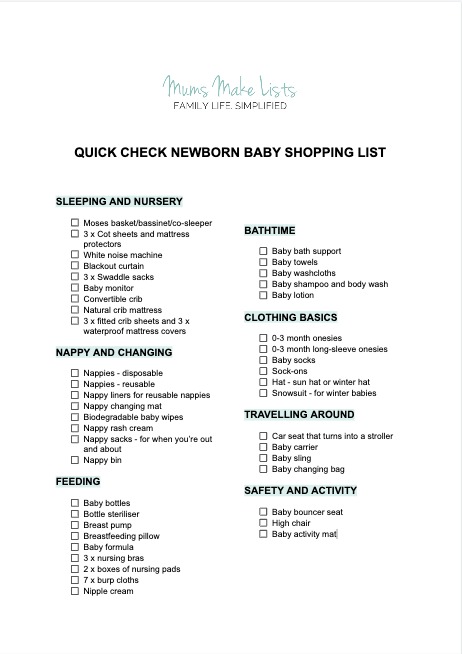
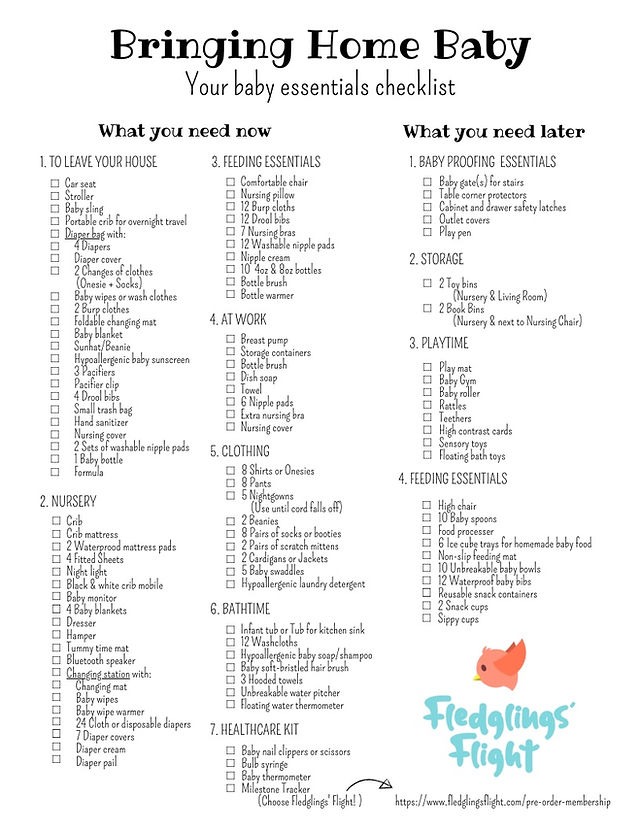
Plan three first-use windows: the trip home, the first days and weeks, and later needs.
For car travel, have a seat suitable for your baby and vehicle. For every sleep, have a compliant crib, bassinet, play yard, or bedside sleeper. Put the baby on their back on a firm, flat surface with a fitted sheet and no soft bedding, as outlined in CPSC safe sleep guidance. Swings, loungers, and rockers cannot replace a compliant sleep space. A second compliant sleep space is a convenience for some households. Plan initial feeding and diapering supplies for the first days, and tag extra clothing, feeding accessories, and later conveniences for when you expect to use them.
Choose What to Buy New, Find Used, Borrow, Wait On, or Skip

Which route works depends on what the product does, when you need it, and whether you can check its condition and suitability.
| Route | Possible candidate | Decision condition |
|---|---|---|
| Buy new | A suitable infant car seat when a used candidate’s history cannot be verified | Right for the child and vehicle, with safety requirements met |
| Buy used | Washable hand-me-down clothes; a secondhand stroller with identifiable model and complete parts | History, condition, completeness, and suitability pass the checks |
| Borrow | A compliant bassinet or play yard needed for a limited period | Complete and suitable, safety checks done, return arrangements settled |
| Wait | A high chair or other later-stage convenience | No immediate need; get it when you’re about to use it |
| Skip | Extra outfits when usable hand-me-downs already cover the initial need | The need is covered, or the item is unsuitable |
Clothes in good condition are easy to reuse. A car seat, crib, or other regulated safety product needs a much closer product-specific check. You can also choose to buy certain equipment new for its documented ownership history and support.
A first-time parent looking at expensive equipment on a registry and secondhand listings described the dilemma on Reddit:
For reference I’m 16 weeks with my first baby. I started building my registry which feels so overwhelming. I’m very torn on what to do for the “big items” like stroller, bassinet, etc. I’m sure if I put them on my registry someone will buy them for me new, but I see so many nice items on Facebook marketplace. It feels “gross” to buy a used high chair and maybe some other things, but is it worth it to get a fancy stroller like the Uppa Vista used? Short version – what do I buy used and what’s worth investing in new?
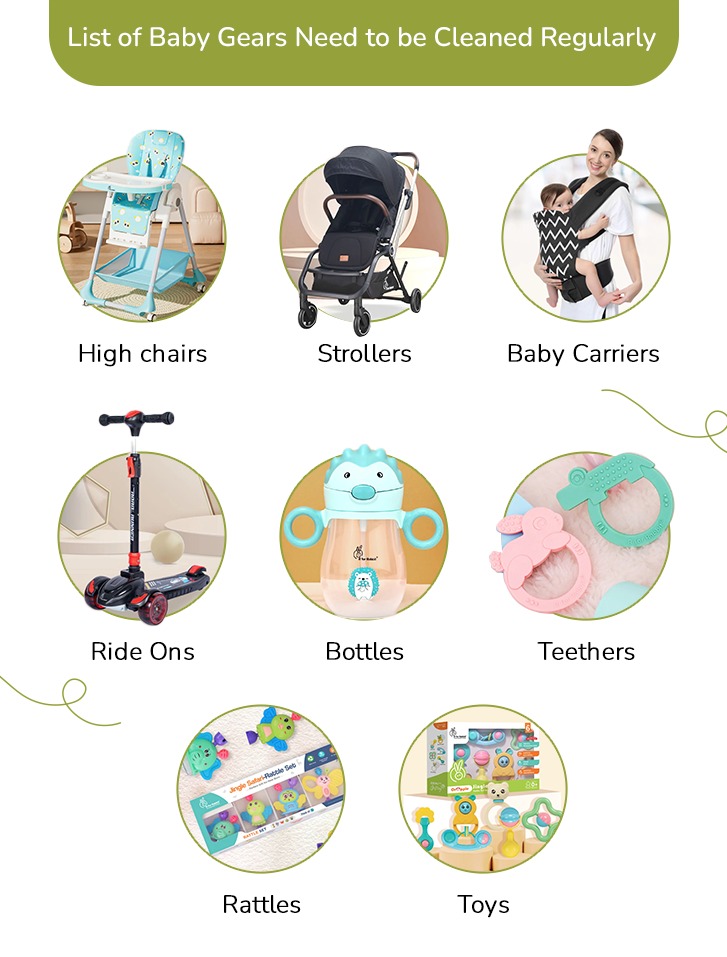
The high-end stroller question turns on condition, intended use, remaining life, and total cost. A used high chair raises separate questions about cleanliness, completeness, and whether it will suit the child when they start using it. For baby registry, newborn essentials, and gear quantities, see Baby Registry Checklist: What You Need, What Can Wait, and What to Skip. Give each remaining item one tentative sourcing route.
Check a Used Product Before Calling It a Bargain
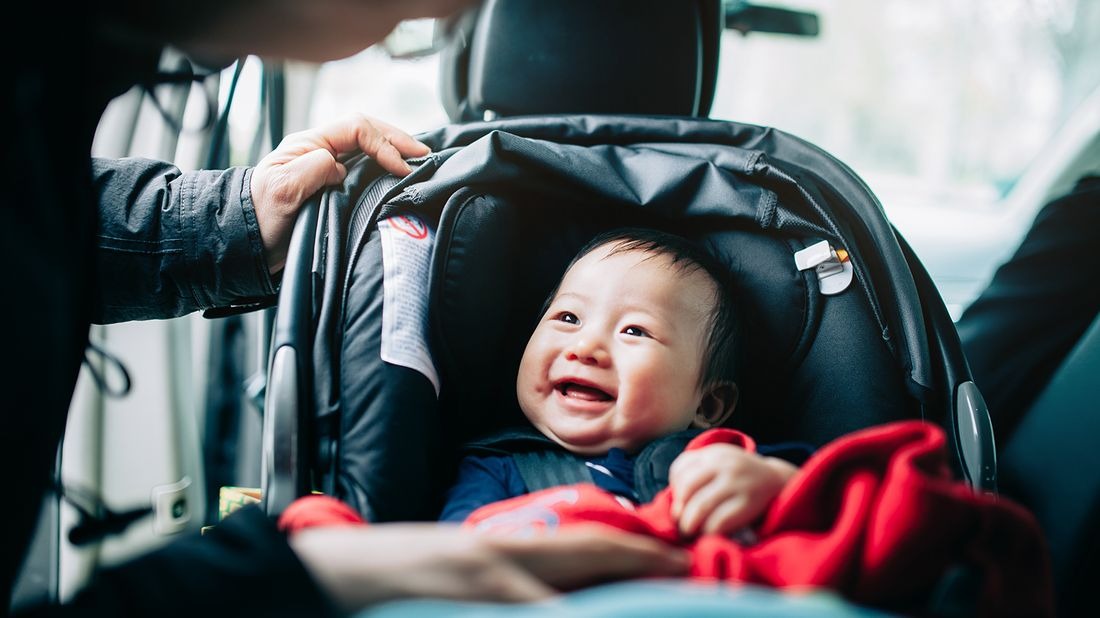
Before accepting secondhand baby equipment, confirm the exact product’s identity, recall status, history, completeness, and intended use. A seller saying it looks clean or worked for another child doesn’t settle any of that. For product history, model number, and recall status, see Used Baby Gear: What to Check Before Buying.
- Identify the model. Get the manufacturer, model, manufacturing-date label where relevant, instructions, and the component list. Look for missing or substituted parts.
- Check the right recall authority. Use CPSC Recalls for CPSC-regulated baby products; check NHTSA’s car-seat recall resources for child restraints. Match the exact model and follow its specified remedy.
- Assess the actual item. Tell cosmetic wear and replaceable parts apart from unknown crash history, missing essential components, or compliance you can’t demonstrate.
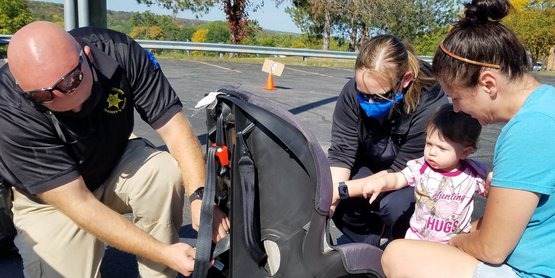
For used car seats, the NHTSA used-car-seat checklist requires all five of the following:
- The seat has never been in a moderate-to-severe crash.
- Its date of manufacture and model number are identifiable on its labels.
- It has no unresolved recall.
- All required parts are present.
- Instructions are available, including a suitable replacement manual if necessary.
The car seat must also be appropriate for the child and compatible with the vehicle and manufacturer’s instructions. Unknown crash history isn’t cleared by appearance or by time left before the stated expiration.
Cribs need the same model-level check. Federal crib standards took effect June 28, 2011, and older models need documented compliance, not an assumption based on a sturdy look. Check parts and the manufacturer’s instructions, and keep bumpers out of the infant sleep space.
A recalled product with no remedy applied must not be sold or used against the recall instructions. CPSC allows resale once the authorized remedy is complete. For model, serial number, and official recall notice, see How to Check Baby Product Recalls (and What to Do Next).
Accept a secondhand product only when you can confirm the safety requirements. If a safety-critical fact can’t be resolved, leave the item off your usable inventory and choose another suitable option.
Used Premium Gear vs. New Basic Gear: Compare the Total Cost
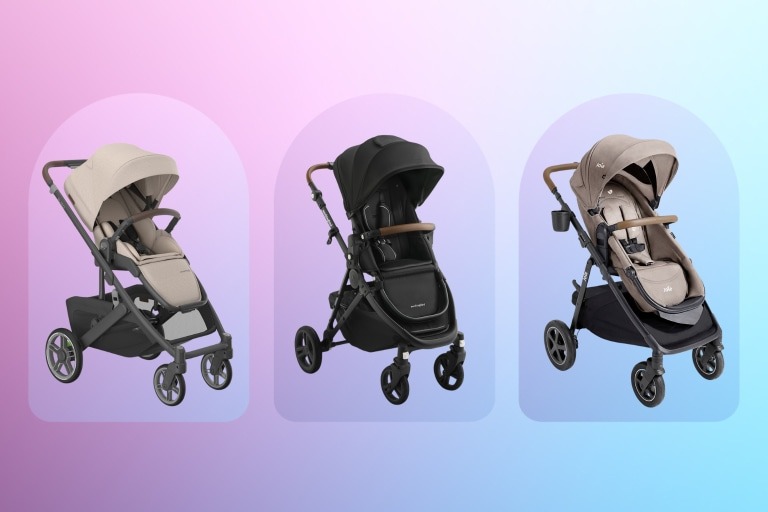
A secondhand premium stroller can cost less upfront than a new basic model. Price alone doesn’t settle it.
| Factor | Used premium option | New basic option |
|---|---|---|
| Extra parts | Missing adapters, fittings, or required pieces you’d have to buy | Items not included in the package |
| Transport and cleaning | Collection, shipping, or cleaning | Delivery or setup costs |
| Remaining useful life | Condition and product limits | Fit for how long you’ll use it |
| Compatibility | Exact model and adapter fit | Exact model and system fit |
| Return or replacement | Seller terms and replacement exposure | Retailer terms and support |
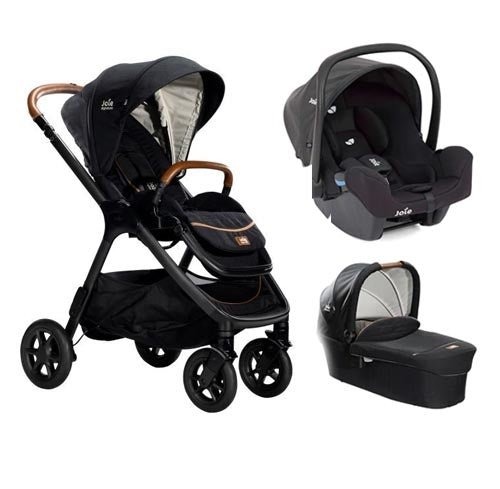
For a stroller system, the frame, infant seat, car-seat bases, and adapters are separate components with model-specific compatibility. A matching brand name or an attractive bundle listing doesn’t mean the pieces form the configuration you need.
One parent said a relative bought a used Britax-branded car-seat and stroller bundle for $225. It reportedly included two bases and had two years left before the car seat’s stated expiration. None of that tells you whether it fits your setup or has a safe history.
Write down the all-in cost of each eligible option, including anything extra that makes it usable. A new budget model may cost less overall if the secondhand bundle needs extra parts or won’t last as long as you need it.
Prevent Duplicate Gifts and Off-Registry Substitutions
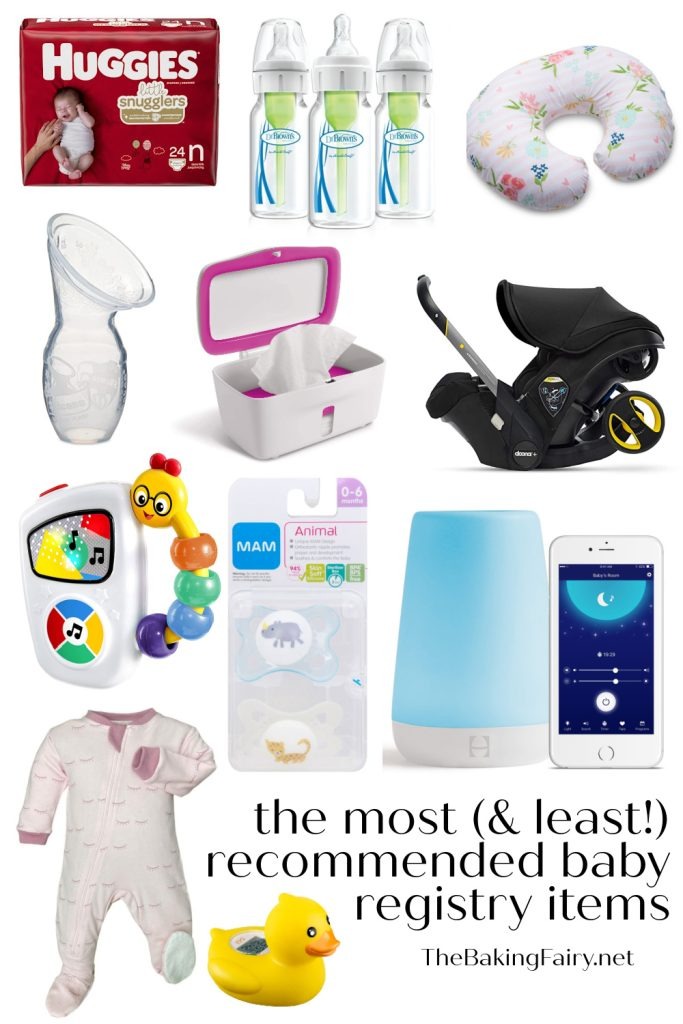
A registry should show a need as fulfilled only when the item you actually receive meets it. Someone can spend generously on a different product while the original need stays open.
A parent described what happened when a relative bought an unrequested secondhand car-seat and stroller system and marked the selected product as purchased:
TLDR: MIL bought a used car seat/ stroller for us that is different than the one on our registry & marked it off our registry as purchased. I don’t feel comfortable with a used car set and am annoyed she marked it as purchased when it’s not the one that we wanted. AIO? Are used car seats NBD? I’m usually I’m a pretty go with the flow person, idc about brand names, but my husband and I did a lot of research on what we wanted. Idk how to approach her about this bc she is so excited about getting us “a great deal”. Can’t be returned since she got it from a pre-owned sale event.
Mark your registry entries with whichever instruction applies:
- Exact model required. The selected dimensions, configuration, or compatibility matter.
- Equivalent options welcome. Several suitable choices perform the same function.
- Used only by prior agreement. A secondhand gift gets screened before you accept it.
- Group gift welcome. Several people can contribute toward one selected item.
- Purchase status to be confirmed. Keep the need open until the received product is appropriate.
A short note can prevent an awkward surprise without making a gift feel like an order:
“Thank you for wanting to help us with this. We chose this particular model because it suits our setup, so please check with us before buying a different one. If you’d prefer, a contribution toward the listed item would be wonderful.”
If a different item arrives, update the registry to match what you received and can use.
Use Insurance, Assistance, and Registry Discounts Carefully
Count a cost offset in your budget only when it applies to your household and that expense. Health-plan breastfeeding equipment, retailer registry offers, and WIC nutrition support each have different eligibility rules and uses.
Breast pump coverage
HealthCare.gov describes breastfeeding support and equipment coverage under most Marketplace and other applicable health plans. Your plan decides the timing, pump type, authorization, and whether you buy or rent. Grandfathered plans can be exempt. Ask your insurer which pump arrangement is covered before paying out of pocket.
Retailer completion discounts
Target’s published baby-registry help terms described a 15% completion offer usable twice, subject to eligibility and exclusions. The stated conditions included a registry active for at least 14 days, an offer expected around eight weeks before the baby’s arrival, and an expiration period of six months.
The offer and checkout conditions govern what you can deduct. The Target baby registry help page provides the retailer’s terms, including exclusions and membership requirements.
WIC nutrition support
WIC provides specified nutritious foods, nutrition education, and breastfeeding support for qualifying households, under federal and state program requirements. It is not an unrestricted allowance to buy a stroller, crib, or other registry equipment.
When a verified benefit reduces a covered expense, record the net amount you’ll pay. Don’t subtract the same discount from a product’s price and again from your overall registry total.
Turn Your Decisions Into a Usable Registry
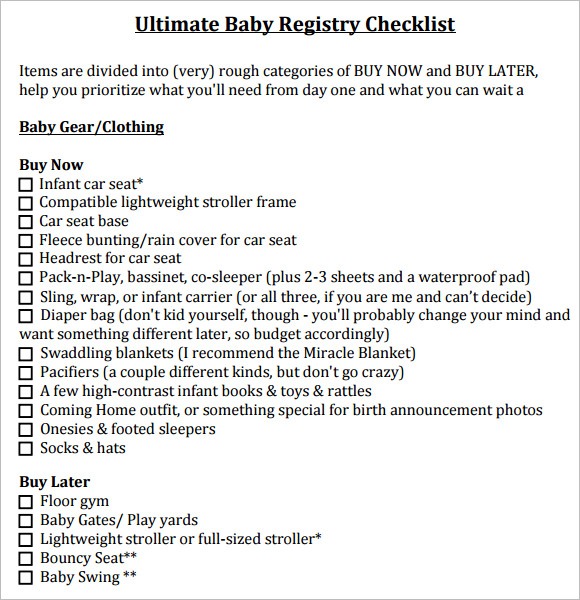
A finished registry lists each remaining need, its first-use deadline, how you’ll get it, and the cash you must supply. Use prices for the exact suitable products you’ve identified, including extra costs.
A fictional decision sheet, unfinished. Cash entries stay open until a real product or confirmed gift gives you a figure.
| Priority and need | Availability | First-use timing | How you’ll get it | What you pay |
|---|---|---|---|---|
| 1. Safe sleep space | Offered crib unverified | First sleep at home | Find a documented suitable option | $____ after verification |
| 2. Suitable car seat | No confirmed gift | Trip home by car | Arrange an appropriate verified seat | $____ after selection |
| 3. Additional outfits | Usable clothing already available | Covered initially | Defer additional purchase | $0 for now |
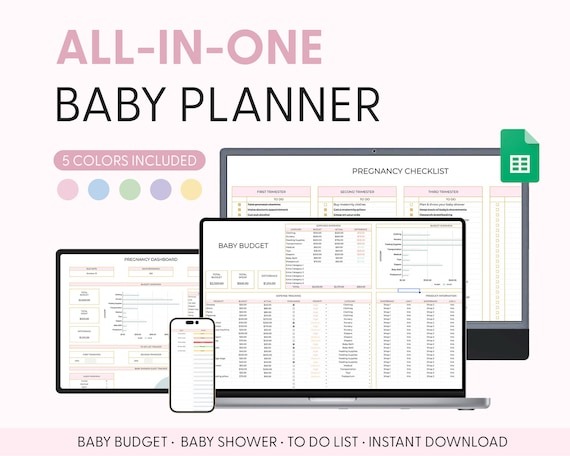
Fill in your household totals: available cash $____; net cost of still-uncovered needs $____; cash remaining $____; shortfall $____.
Add the net cost of each uncovered item: price, taxes, delivery, and necessary parts, minus eligible discounts and confirmed gift contributions, each deducted once. Subtract that total from your available cash. A positive result is cash remaining. A negative result is your shortfall. Put $0 in the other field.
If you have a shortfall, defer optional purchases and revisit secondhand, borrowed, or group-funded options for the remaining needs. Safe sleep and a suitable car seat for planned car travel stay required; a cheaper item with unresolved safety information doesn’t close the need. For newborn supplies, sleep space, and ride-home car seat, see Getting Ready for Baby: What to Prepare Before Your Newborn Arrives.
Keep the final sheet current as gifts arrive or product choices change.