
Before you go, line up a restraint for every ride and a safe place for your baby to sleep. Then sort your gear into four groups: carry within reach, pack for later, arrange at the destination, or leave behind. Let your route and your baby’s feeding method decide what goes where. If a safety item or your baby’s fitness for travel is still unsettled, fix that before departure or change the itinerary. Start with your transport and accommodation.
Before You Book, Check the Whole Trip
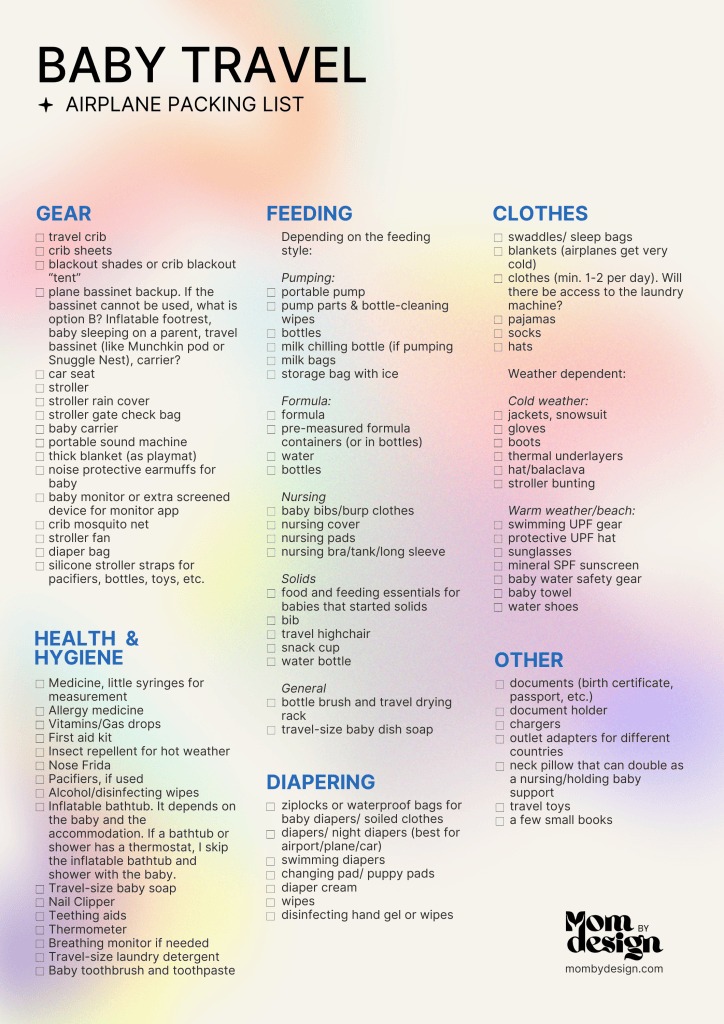
Start at your front door and follow the trip all the way to the room where your baby will sleep. An easy flight can end with a taxi that has no child restraint. A manageable drive turns hard if your baby needs frequent stops.
List each leg before you book: home to the departure point, flight or drive, connections, pickup at the airport or station, and the final ride to your accommodation. For each leg, note the vehicle, the restraint your baby will use, and who provides it. For a rental car or taxi, the last transfer deserves as much attention as the longest leg.
Flying or driving: what changes?
| Decision | Flying | Driving |
|---|---|---|
| Restraint | Aircraft-approved child restraint system (CRS) in a purchased seat; it must fit the aircraft seat and meet airline requirements | Appropriate rear-facing car seat, correctly fitted and installed for the child and vehicle |
| Stops | Airport procedures, departure times and connections set your schedule | You choose safe stopping places and can adjust arrival time |
| Final transfer | Taxis, rental cars and other vehicles each need their own restraint plan | The car seat usually travels in the same vehicle |
| Bags and gear | Cabin allowance, checked equipment and gate-check rules depend on the carrier | Vehicle space and access to supplies at stops matter most |
The route with fewer transfers is easier for one caregiver to manage, even when the travel time on paper looks similar.
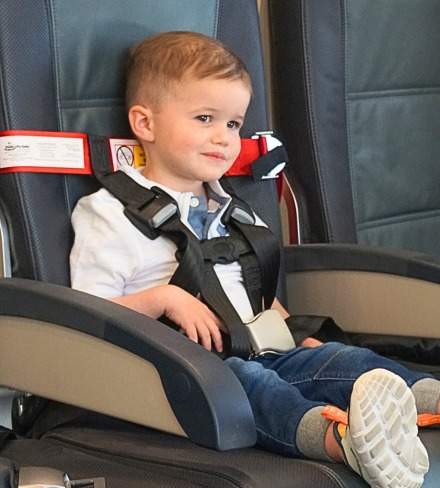
US rules may permit a child younger than two to fly on an adult’s lap. The Federal Aviation Administration strongly recommends an aircraft-approved CRS in a separate purchased seat. Settle that before you buy tickets.
A car seat made for vehicles is not automatically approved for aircraft. Look for its aircraft-approval label and the manufacturer’s instructions, then check the seat’s dimensions and the airline’s acceptance rules. The FAA child-restraint guidance explains the approval requirements. For vehicle setup, see the car-seat installation and fit guide.
Airlines differ in family seating and fare conditions. For US domestic travel, TSA generally does not require identification from children under 18, though the airline may ask for proof of age or other documents. Check the requirements on your booking, especially for a lap infant.
A parent planning a first flight with a four-month-old had several of these choices to make at once:
We’re planning our first flight with our little one (she’ll be exactly 4 months old when we travel), and I’d love any advice or insight from parents who’ve been through it! It’s a direct flight from LA to the East Coast, about 6.5 hours.
Here are a few specific things I’m wondering about:
Airlines: Are some domestic airlines better than others when flying with a baby? Any standout experiences (good or bad)?
Sleeping gear: Do you recommend bringing your own pack ‘n play (we have the Guava Lotus) or renting one at the destination?
Seats: Is it worth paying extra for more legroom or to choose our seats?
Luggage: Is it easier to check bags or manage with carry-ons when traveling with an infant?
Confirm Where Your Baby Will Sleep and What the Destination Provides

A hotel listing that says “crib available” tells you very little. Ask for the product type, model, condition and setup, and whether it fits your baby’s age and size. Check the model for recalls.
The Consumer Product Safety Commission advises putting babies on their backs in a sleep product with a firm, flat, bare surface. Leave out pillows, loose blankets, loungers and added padding. US play yards are regulated under 16 CFR Part 1221, but you still need to assemble the product correctly and use it according to its instructions.
You have three options:
- Bring a product you know. You control which sleep equipment arrives with you, at the cost of luggage space and handling.
- Use the accommodation’s equipment. This saves baggage when you can confirm the exact product and its condition in advance.
- Rent or borrow locally. This works when pickup or delivery and setup are reliable.
Use the same contact to ask about refrigerator access, water, a place to wash bottles or pump parts, laundry and nearby stores for essentials.
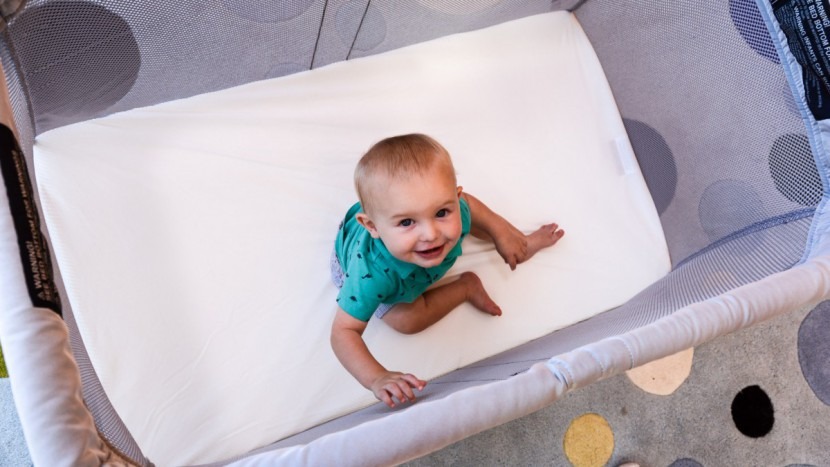
Once you arrive, move your baby from the car seat to a crib or play yard. A car seat is for riding, even if your baby fell asleep on the drive.
The safe-sleep checklist covers the sleeping environment in detail.
What to Carry, Check, Rent, Buy on Arrival, or Skip
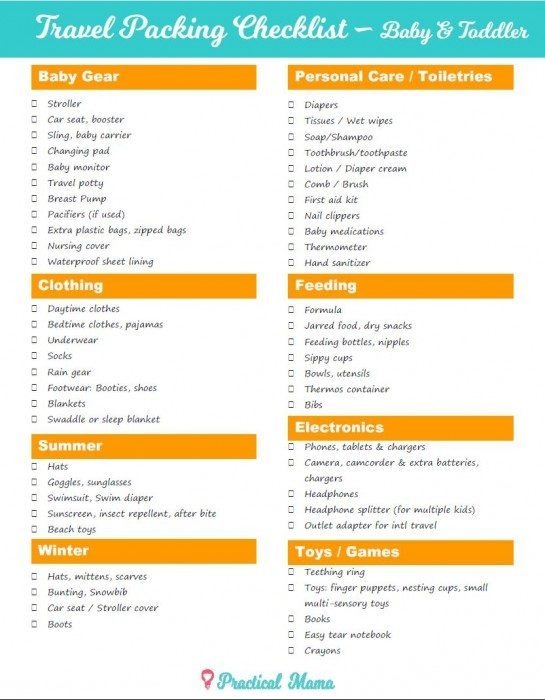
Give every item a reason to travel with you. What matters is when your baby will need it and whether you can easily get a replacement.
- A: Carry within reach. Items you need before you can next reach your bags or buy supplies.
- B: Pack for later. Clothes, refills and equipment that can stay out of reach until you arrive.
- C: Arrange at the destination. Supplies or equipment you have confirmed are available there. If you can’t confirm it, pack it or adjust the itinerary.
- D: Skip. Convenience accessories and duplicates you don’t need on this trip.
Unsuitable sleep products and accessories stay out of the plan entirely. They don’t belong in bin D.
Put common baby supplies into the right bin
| Item | A: Carry | B: Pack | C: Destination | D: Skip if unnecessary |
|---|---|---|---|---|
| Diapers and wipes | Changes needed en route, including a delay | Refills for the stay | Local stores you have confirmed | Duplicate organizers |
| Feeding supplies | What safe feeds on the way require | Supplies that can wait until arrival | Water, storage and cleaning facilities you have verified | Devices your feeding routine doesn’t use |
| Sleep equipment | Only sleep equipment needed before your other bags are reachable, if transport rules allow; otherwise a verified sleep space at the stop | Portable product for the destination | Verified crib or play yard | Duplicate compliant gear you don’t need |
| Clothing | A change of clothes within reach | Most outfits and extra layers | Laundry or confirmed replacement access | Excess outfits for a short stay |
| Stroller or carrier | One way to manage the planned transfers | Equipment checked under carrier rules | A confirmed loan or rental | A second bulky device with no clear job |
| Comfort and play | Small familiar age-appropriate items | Extras for the stay | Safe items available on arrival | Large collections that add little |
A parent planning a thirteen-hour drive with a seven-month-old wanted to avoid overpacking:
Hello! We are taking our will-be 7 month old on a 13-hour road trip next week. We will be staying at a hotel for 3 days/2 nights.
We will be leaving right around bed time so she hopefully sleeps most of the way there, and will be leaving to come back around nap time.
What did you bring that was a life saver and what ended up not being used?
We are debating bringing her bottle warmer and sterilizer (will be hand washing in the hotel room).
I am going crazy with overthinking what to bring because I won’t be in the comfort of my home and I also want to avoid buying things on the road/at our destination.
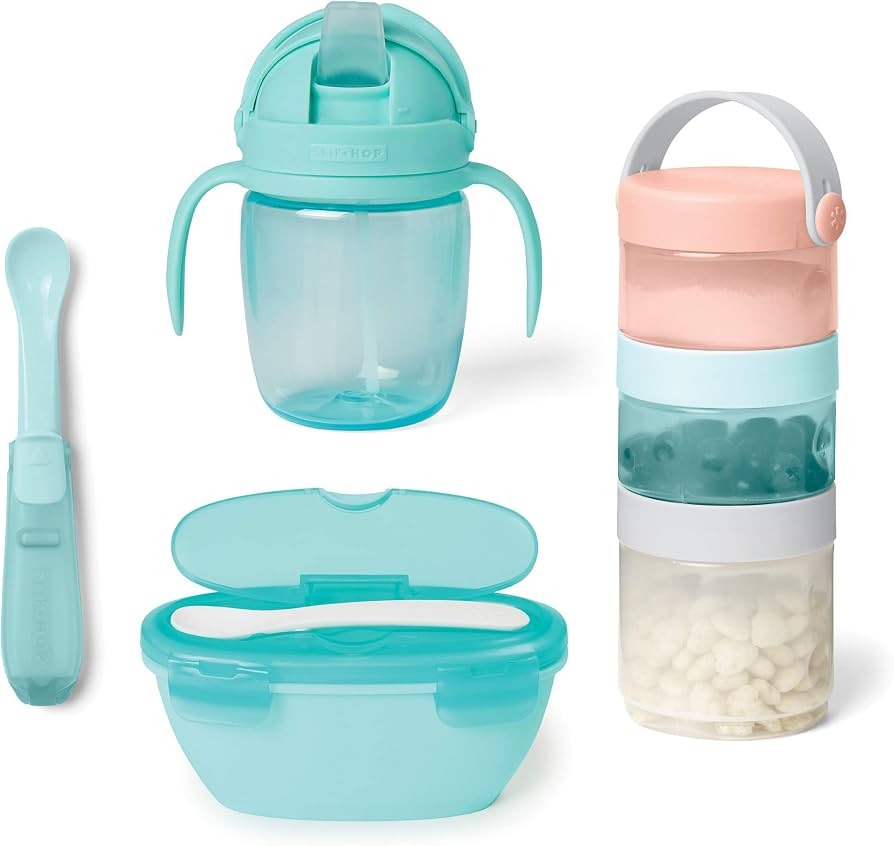
For this family’s three-day, two-night stay, the bottle warmer and sterilizer decision depends on how the baby is fed and what cleaning facilities the hotel has. A hotel sink supports hand washing, but it won’t cover every feeding or sanitizing need.
No fixed quantity of diapers, bottles or clothes fits every baby trip. Base your count on your baby’s routine, the travel time, likely delays and your next dependable chance to restock. The diaper-bag guide helps once you know what has to stay within reach.
Flying With a Baby: Plan for the Airport and the Seat
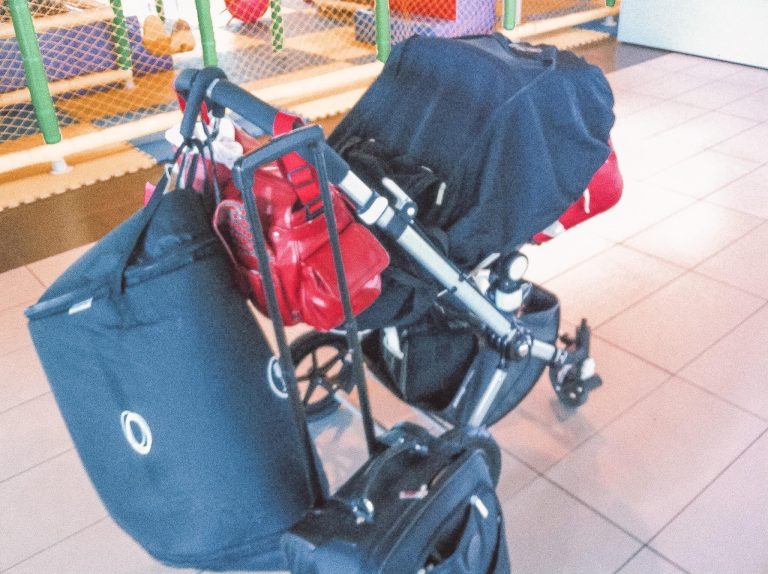
TSA permits formula, breast milk, toddler drinks and baby or toddler food in quantities above the usual 3.4-ounce (100 mL) liquids limit, and outside the standard quart-sized liquids bag. Tell the screening officer and expect separate screening. At the checkpoint, follow the officer’s instructions for presenting feeding liquids and cooling accessories. These security rules are separate from your airline’s cabin baggage, stroller and child-restraint allowances. Gate-check procedures, and the point where baby equipment is returned, differ by airline and airport.
Road Trips With a Baby: When the Nap Plan Fails
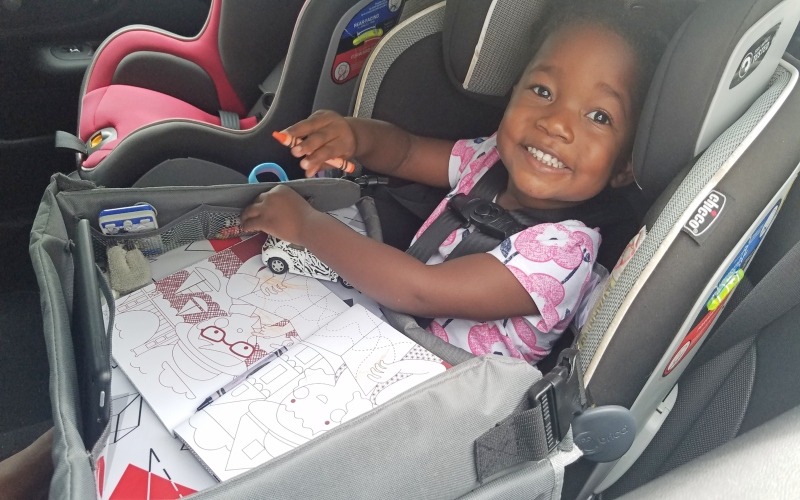
Plan a long drive around safe places to stop and a flexible arrival time. Leaving at bedtime or nap time works for some families and fails for a baby who rarely settles in a car seat.
A parent heading into a first vacation described a five-hour drive with a child who finds car rides especially distressing:
My son will be 12 months old when we take our first family vacation since he was born, and I’m already stressed about the drive.
The problem is that he absolutely HATES car rides.
It starts with complaining, then yelling, then crying, and eventually full on screaming until he’s coughing and struggling to catch his breath.
We’re planning about a 5 hour drive, and then obviously we’ll have to do it all over again on the way back.
Please give me all your survival tips.
We generally don’t do screens, but for difficult car rides we’re willing to bend the rules, so I’d also love recommendations for age-appropriate shows/videos that might hold a 12-month-old’s attention.
This parent had also tried music, toys, snacks, an adult in the back, different seating and frequent stops, with only short periods of relief. Your route needs a plan for an awake, upset child.
The American Academy of Pediatrics recommends a correctly installed rear-facing car seat with the right recline and a snug harness. Its car-trip guidance suggests breaks every 2 to 3 hours during a long daytime drive.
Park somewhere safe to feed, change or comfort your baby. Keep your baby restrained whenever the car is moving, and never unbuckle your baby to feed or soothe in a moving vehicle.
- The baby settles between planned stops. Keep going, with the usual restraint and care.
- The baby becomes upset. Pull over safely, check for immediate needs, and let the stop change your arrival time.
- The journey becomes unmanageable. Take a longer break, change the route or stay overnight if you can.
If your baby has difficulty breathing, stop safely and call 911 in the United States. Ordinary fussiness without breathing problems can wait for a safe stop.
Feeding and Bottle Care Away From Home
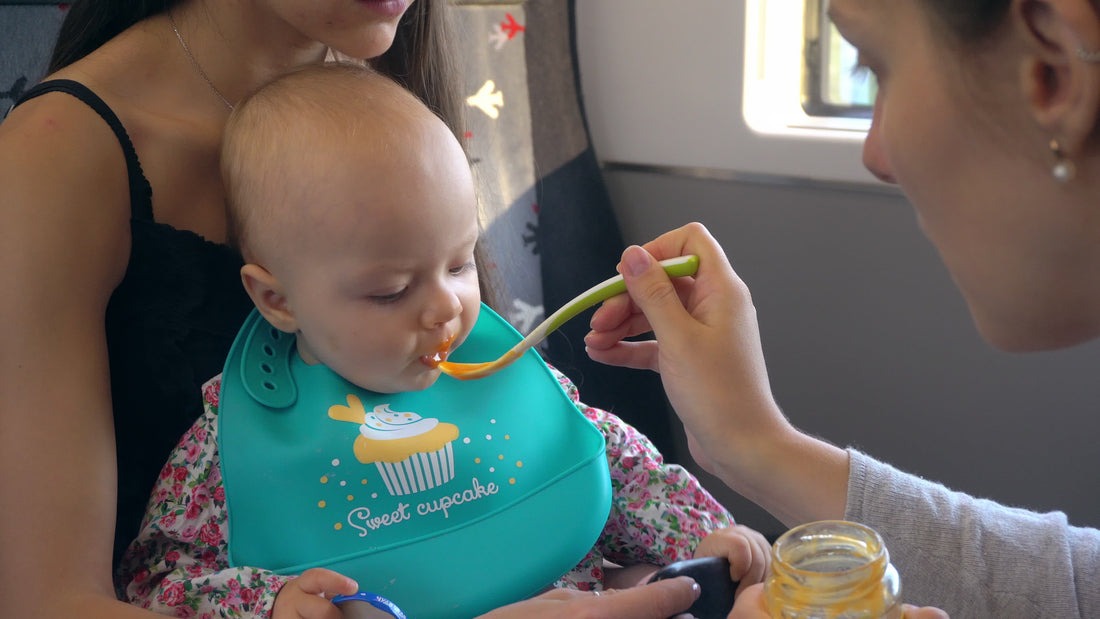
Your feeding plan depends on your method. Direct breastfeeding, pumping and carrying expressed milk, and preparing formula each need different supplies and rely differently on clean water, refrigeration and equipment.
If you breastfeed directly, you need a time and place to feed. If you express milk, bring pump equipment, a hygienic way to clean it and a plan for storing the milk. For formula, check the manufacturer’s preparation instructions, water safety and the cleaning facilities on your route and at your destination.
The CDC’s formula preparation and storage guidance gives different limits depending on when a bottle is prepared, used and refrigerated.
- After preparation. Use prepared formula within 2 hours.
- Once feeding starts. Use it within 1 hour after the feeding begins; discard the remainder after that.
- If refrigerated promptly before use. Formula that has not been fed from can stay refrigerated and be used within 24 hours under the CDC’s conditions.
Don’t leave prepared formula in a car, stroller or unrefrigerated bag. Babies younger than two months, babies born before 37 weeks and those with weakened immune systems may need extra precautions for formula preparation.

Check what your hotel room offers beyond a sink. A parent who pumps needs cleaning access and refrigeration. A family using formula needs a dependable source of suitable water and a way to clean bottles safely.
Write a feeding plan for the next few feeds and mark where safe storage or cleaning could fail. Detailed procedures are in the breast-milk storage guide and formula-feeding guide.
If the Trip Goes Wrong: Delays, Missing Supplies, and Solo Travel
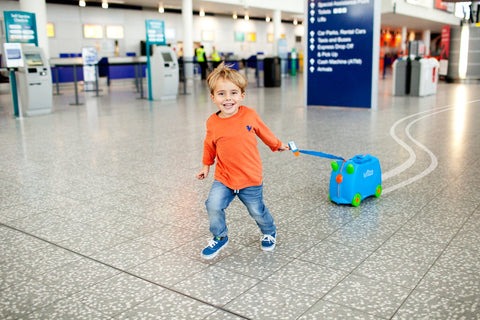
A trip goes wrong fastest when the diaper, feeding supply or carrying equipment you need is in a bag you can’t reach. A solo caregiver may also be handling the baby and several bags with no second adult. For diaper changes, bathing routines, and crying, use Everyday Baby Care: What to Do and When to Call.
Say you reach a connection with almost no accessible diapers and learn that the stroller won’t be returned where you expected. One problem needs replacement supplies. The other needs a safe way to move the baby and bags. Both can hit at once if you have no backup.
| Disruption | First priority | Available response |
|---|---|---|
| Needed feeding or changing supplies are unavailable | Attend to your baby’s immediate needs in a suitable place | Ask for help finding safe supplies; adjust the onward journey |
| Stroller is missing during a transfer | Find a safe way to carry baby and luggage | Ask airport or transport staff for help |
| Connection or departure is delayed | Keep essential feeding and care within reach | Review remaining supplies and change onward plans if needed |
| Arrival transfer is no longer workable | Keep yourself and your baby safely accommodated | Change the vehicle, route or timing to match the restraints and help you have |
If you travel alone, a backup that means carrying several extra bags creates a second problem. Pick the likeliest problem on your route, such as a late connection, and decide now who you would ask for help and which onward decision you can change. Map the connection where you carry both baby and luggage; that is where you need assistance.
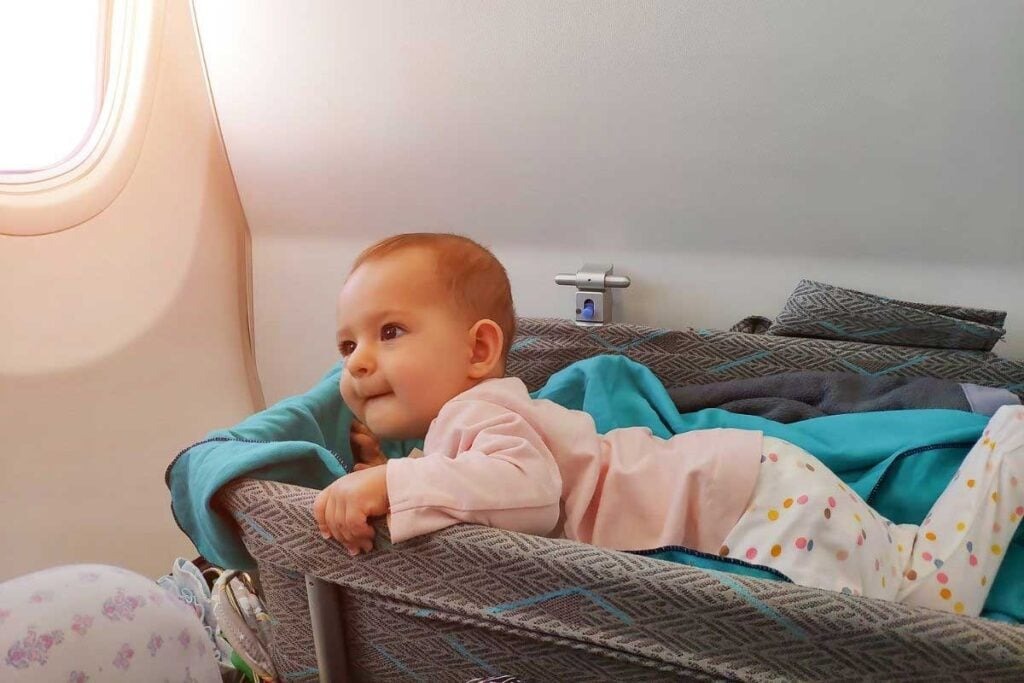
Change the Plan for a Younger Baby, Multiple Children, or an International Trip

A newborn, an older baby and a child with particular medical needs may need different arrangements for the same route. Prematurity, current illness or other medical concerns change travel readiness, so get individual pediatric advice if any of them apply.
One adult managing an infant, luggage and several transfers has less flexibility than a group with a second caregiver. Fewer accommodation changes mean fewer transfers and gear handoffs. That helps with a baby and a two-year-old, and with a six-to-eight-month-old on a multi-stop trip in Europe.
International trips add paperwork. Check your baby’s travel documents and the entry, exit or parental-consent rules for everyone traveling. Requirements depend on the countries and your family’s circumstances.

The CDC Yellow Book covers destination-specific medical risks and vaccine considerations for infants and children. Your baby’s age, medical history and destination decide whether you need a clinical review. Check the CDC destination guidance and talk to a pediatric professional when your baby’s circumstances call for it.