
Stop swaddling the moment your baby tries to roll. Keep sleep on a firm, flat, clear infant surface. Breast milk or infant formula remains the feeding foundation, and solids usually begin around six months once your baby shows developmental readiness. Let what your baby does set the routine.
What changes between three and six months?
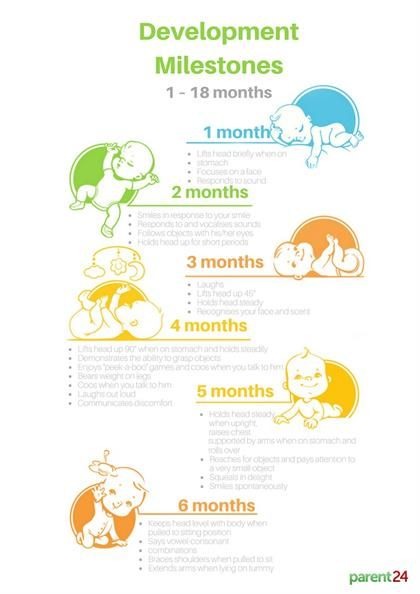
Your baby turns toward your voice, makes sounds back at you, and swings an arm toward a toy. Stronger movement soon changes where and how your baby can safely spend time.
The CDC offers milestone checklists at four and six months. Use them as reference points as skills emerge.
| Broad stage | What you might notice | What it means for care |
|---|---|---|
| Early in this period | Cooing, responding to voices, steadier head control, holding a toy placed in the hand, or swinging an arm toward toys | Make room for face-to-face conversation and for reaching and moving during awake play. |
| As movement increases | Stronger pushes during tummy time and attempts to turn or roll | Sleep setup and elevated surfaces now need new precautions. |
| Approaching six months | Laughter, exchanging sounds, reaching for a wanted toy, rolling from tummy to back, or leaning on hands while sitting | Keep play responsive and start thinking about feeding readiness. |
At four months, the CDC milestone list includes holding a toy placed in the hand and swinging an arm toward toys; reaching to grab a wanted toy appears on the six-month list.

A four-month-old batting at a rattle during supervised play is starting to engage with objects. Trying to roll changes a safety decision.
When rolling starts, change the sleep setup
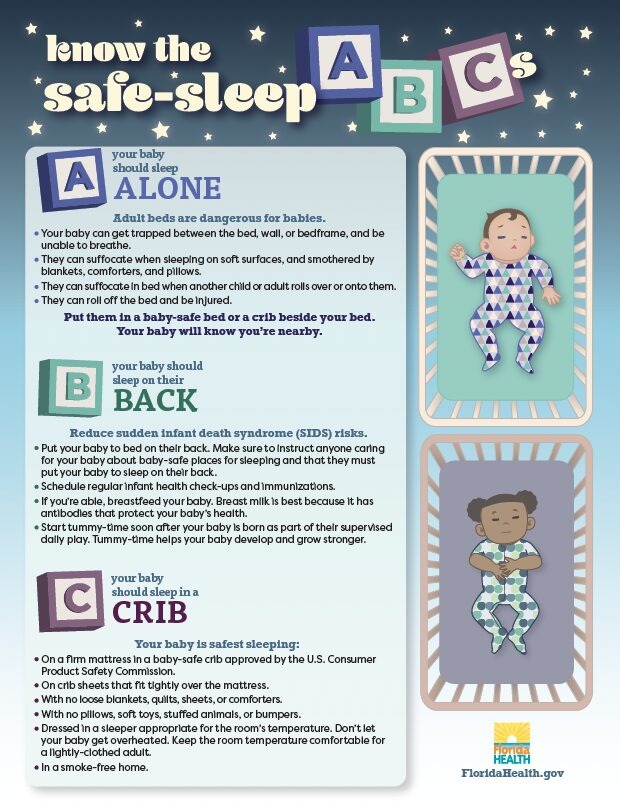
Stop swaddling when your baby shows signs of trying to roll. The American Academy of Pediatrics (AAP) uses the attempt as the trigger, even if your baby has never completed a rollover. Signs appear around three or four months, sometimes earlier.
The AAP’s safe sleep guidance sets out a simple sleep-space check:
- Position: Place your baby on their back at the start of every sleep.
- Surface: Use a firm, flat mattress with a fitted sheet in a crib, bassinet, portable crib, or play yard that meets U.S. Consumer Product Safety Commission (CPSC) safety standards.
- Surroundings: Keep pillows, loose blankets, bumpers, toys, and weighted bedding out of the sleep area. Do not use weighted infant sleepwear, including weighted swaddles or sleep sacks.
If your baby can comfortably roll both ways independently, the AAP says you do not need to keep turning your baby back after they change position themselves. Initial back placement and a clear sleep space still apply.

One parent of a 4-month-old on dropping the swaddle:
My 4 month old baby is such a good sleeper but since he discovered rolling over — we had to transition him out of the dreamland swaddle (which he LOVED). I just found out that it’s a controversial swaddle so please don’t make me feel worse 🙁
The parent also mentions a Merlin suit. Neither product is a safety endorsement. Once rolling attempts begin, stop wearable products that swaddle or restrict arm, chest, or body movement; a non-swaddling sleep sack that allows free movement is an option.
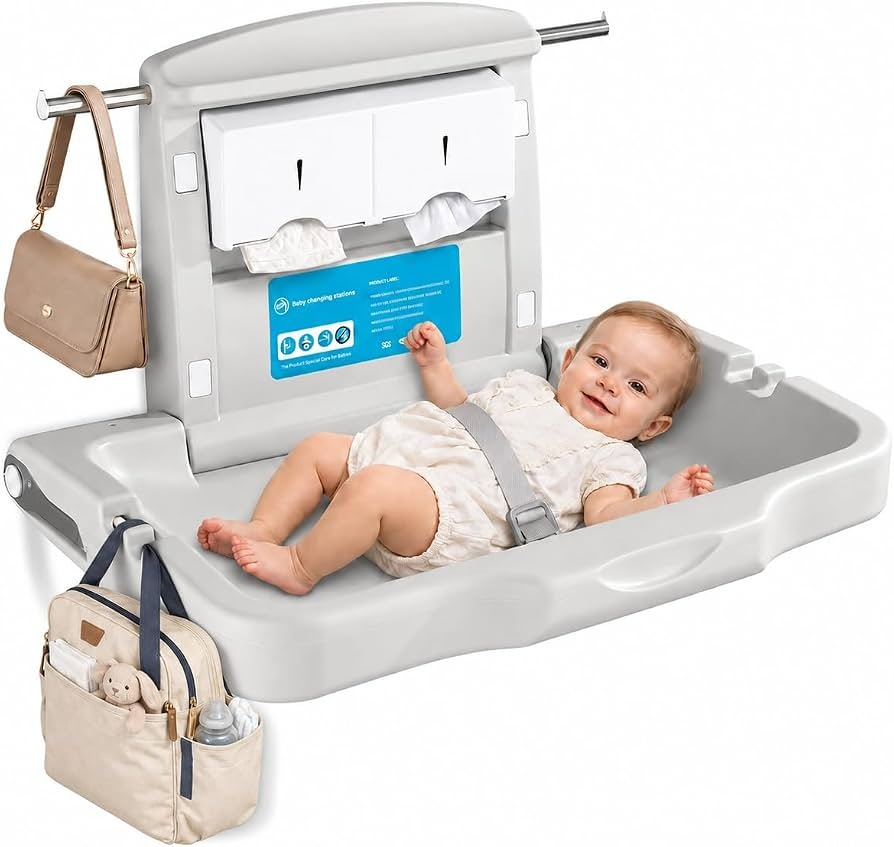
Rolling matters outside the crib too. Never leave a baby unattended on an elevated surface such as a changing table, bed, sofa, or chair; a baby can move unexpectedly. The AAP’s infant safety guidance recommends using a safe space when you cannot hold your baby.
More on this: how to stop swaddling when rolling begins.
If sleep changes around four or five months
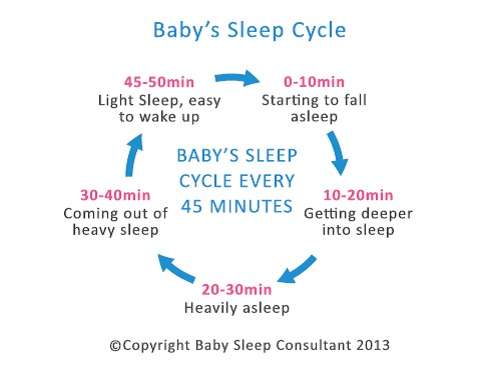
A baby who slept longer stretches may start waking more often or taking shorter naps. People call this the “four-month sleep regression.” Look at what changed for your baby: waking, feeding, and daytime behavior. For age-specific development, daily routines, and feeding transitions, see Baby Month by Month: What Changes and What to Do.
Frequent waking with normal feeding and daytime behavior is one thing. Waking together with feeding difficulties or other health concerns goes to your child’s clinician.
Regular, recognizable routines help organize the day even when naps and night waking change. Keep a familiar bedtime sequence and let the timing of sleep and play follow your baby’s needs.

For detailed troubleshooting, see the guide to four-month sleep changes and night waking.
Milk feeds now; solids when your baby is ready
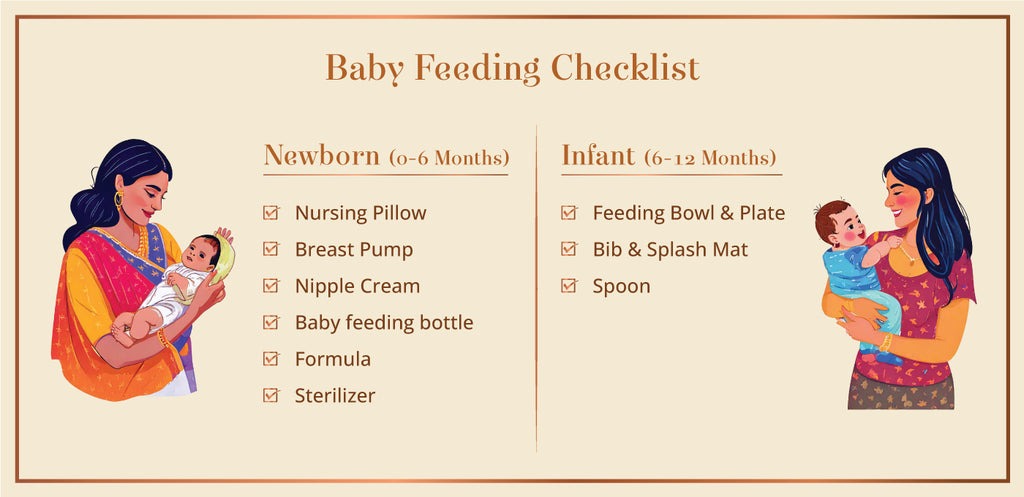
Breast milk and/or infant formula remain the feeding foundation. The CDC recommends introducing complementary foods at about six months, when your baby shows developmental readiness. Starting solids before four months is not recommended.
| What you are seeing | What matters for the decision | Next step |
|---|---|---|
| Your baby is early in the three-to-six-month period | Milk feeding is established. | Continue milk feeding according to your baby’s needs. |
| Your baby is approaching six months and showing readiness signs | Head and neck control, sitting alone or with support, opening the mouth for food, swallowing food, and bringing objects toward the mouth. | Consider complementary foods using age-appropriate guidance. |
If your baby is around six months and readiness or feeding raises concerns, talk to the pediatrician. Prematurity, swallowing difficulty, growth concerns, or complex allergy circumstances can change how a child begins solids and call for individualized clinical advice.

One parent whose six-month-old nursed well but showed little interest in purées:
So far we have tried sweet potato, plain Greek yogurt, banana, and green beans pureed. He seems disinterested and mostly pushes the food out of his mouth. He has his 6-month appointment on Monday but I was curious if others have experienced this with their baby? I’m not super worried because he nurses great.
Keep solids out of the bottle: The CDC says adding cereal or solid foods to a bottle does not help babies sleep longer and can increase choking risk.
The CDC guide to introducing solids details the readiness signs. For first foods, texture, and feeding methods, continue with the starting-solids guide.
Play that fits a real day

Face-to-face conversation, books, reaching for safe toys, and supervised awake floor time fit into ordinary care.
| Baby’s cue | Low-prep activity | When to adapt |
|---|---|---|
| Looks toward your face and makes sounds | Talk, pause, and answer your baby’s sounds. | Attention shifts or your baby gets upset. |
| Watches or reaches toward nearby objects | Offer an age-appropriate, easy-to-grasp toy during supervised floor play. Keep small objects out of reach. | Interest fades or frustration rises. |
| Is awake and working on upper-body movement | Offer supervised tummy time during a comfortable awake period. | The position becomes uncomfortable or distressing. |

One parent of a 3-month-old on a hard day:
My guy is 3 months old and I feel like everything is a struggle. Feeding him is a battle, he hates tummy time, hates floor mat time, I can’t move even a little bit when we are contact napping or he freaks out, even holding him when he’s awake and happy he will start crying if you aren’t staring right into his eyes and babbling. I feel like he’s either crying or I am 100% tied up with full attention on him.
When floor play is a struggle, try a short exchange with your face or voice instead. Books, familiar faces, and familiar voices work at any time.
How to read the milestone lists
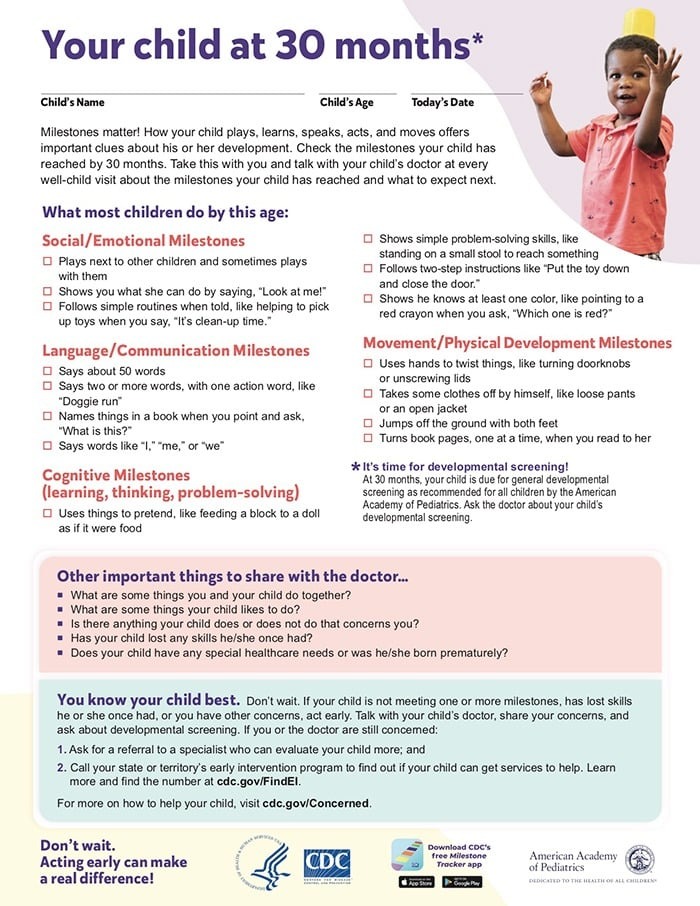
The CDC defines its milestone checkpoints as skills that at least 75% of children do by the stated age.
For example, the six-month list includes rolling from tummy to back, so a four-month-old has not reached that checkpoint yet. Check the list for your baby’s current age and note the specific behavior you see.
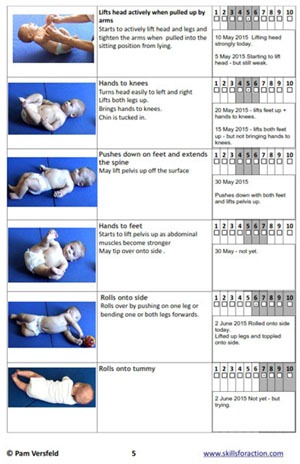
These CDC checklists are not standardized, validated developmental screening tools. If your baby loses a skill, misses a milestone, repeatedly seems in pain when moving, or persistently struggles with an activity, or you have a developmental concern, tell the pediatrician what you noticed and discuss screening or early-intervention options when appropriate.
Prematurity and individual medical circumstances can change how a clinician reads progress. For a more detailed age-by-age view, see the milestone guide or the CDC six-month milestone checklist.
Where to go next as your baby’s needs change
Rolling attempts call for an immediate sleep-safety change. To look ahead, see what changes from six to nine months.