
Use the CDC checklist for your baby’s age to see which skills to watch for. It guides what you observe and cannot diagnose a condition. If a listed skill is missing, a skill your baby had learned disappears, or you stay concerned, write down what you see and talk with your pediatrician about screening. In the United States, families with children younger than three can also contact their state early-intervention program directly. For a baby born early, corrected age is the better comparison.
What a baby milestone chart tells you
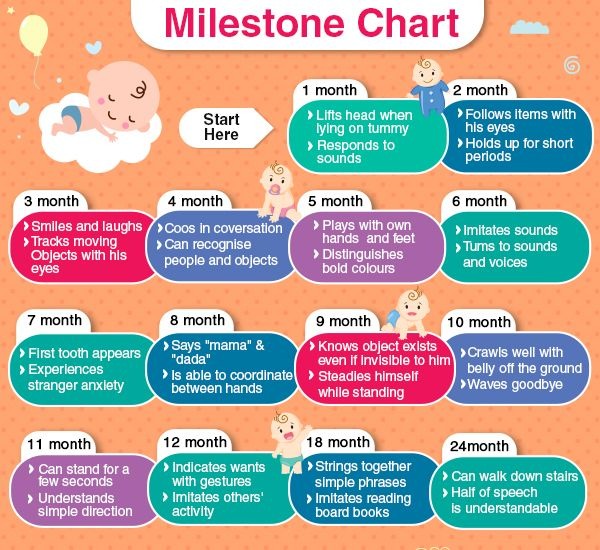
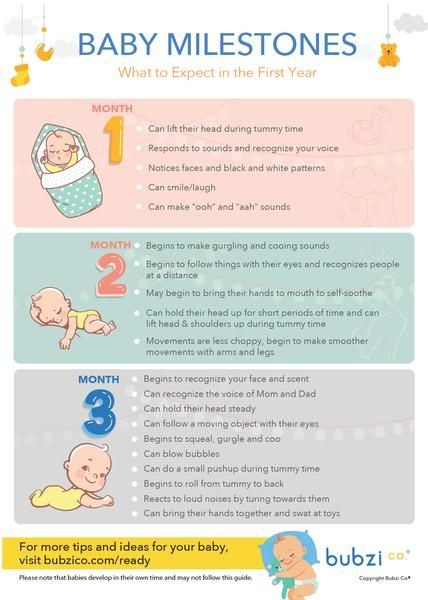
A milestone is something you can see your baby do: lifting their head during tummy time, making sounds back to you, or pointing to show interest. A chart groups these behaviors by age, so parents and pediatricians share the same language. For tummy time, head control and supervised play, read Tummy Time for Babies: How to Start and What to Do If They Resist.
The CDC’s Learn the Signs. Act Early. checklists place a skill at an age when at least 75% of children are expected to do it. That percentage explains how the CDC picked each milestone for each checklist age. It says nothing about the chance that your child has a developmental condition.
Charts disagree because some give average ages and others give ranges, while the CDC names specific behaviors at eight published ages.
My son is 8 months old this week. He is such a happy baby and a sweet kid, but he is “behind” according to miscellaneous internet milestones that are constantly pushed to me. This loop is playing constantly in my head: he isn’t crawling or getting into all fours (he army crawls everywhere), isn’t getting to sit by himself, isn’t mimicking our sounds (though he makes his own sounds in response to us talking and babbles all the time!), isn’t pulling to stand, isn’t understanding words really, isn’t clapping, waving, or pointing, and only sorta knows his name. I just thought he was a chiller or a late bloomer, but now I’m beginning to wonder whether he is behind and I did something wrong. Should I have read to him more? Should I have been a full out Montessori parent? I just feel like I’ve been trying to survive these first 8 months. I was content with my smiley baby who just wants to hang out with his mom, and now I am beginning to panic.
This parent is checking their son against several online lists at once: army crawling, babbling, gestures and more. Each skill comes from a different list with its own age attached, so the comparison doesn’t hold together. For babbling, first words and communication skills, read Babbling and First Words: What Counts, What to Notice.
In a 2022 Pediatrics paper, Zubler and colleagues described the evidence-informed revision of the CDC milestone checklists. The American Speech-Language-Hearing Association was among those who raised concerns, and the discussion stressed responding to each child’s individual developmental concerns.
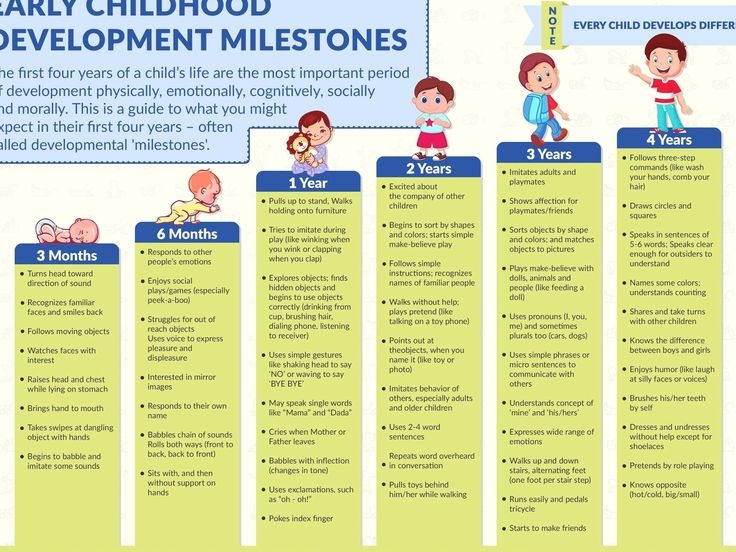
Baby milestones by age: eight CDC checkpoints
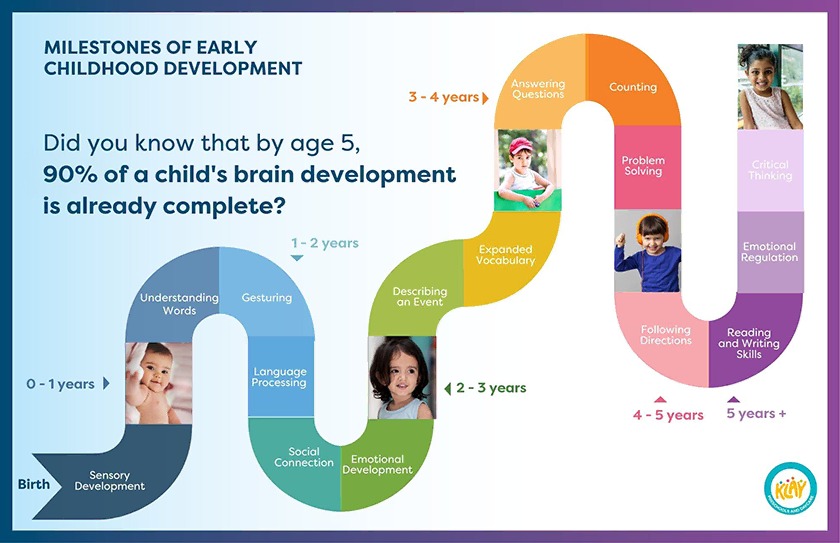
The CDC publishes checklists at 2, 4, 6, 9, 12, 15, 18, and 24 months. Each covers four areas of development. The table below picks a few examples per age; the official checklists list more. For the wider picture of milestones, motor skills and communication, see Baby Development and Milestones: What to Watch and What to Do.
| Age | Selected CDC milestone examples |
|---|---|
| 2 months | Looks at your face; makes sounds besides crying; holds the head up while on the tummy. |
| 4 months | Chuckles; makes sounds back when someone talks; pushes up onto forearms during tummy time. |
| 6 months | Laughs; takes turns making sounds; rolls from tummy to back. |
| 9 months | Looks when their name is called; makes repeated sounds such as “mamamama” or “babababa”; sits without support. |
| 12 months | Waves goodbye; pulls up to stand; picks up a small object with the thumb and finger. |
| 15 months | Claps when excited; points to ask for something or get help; takes a few steps independently. |
| 18 months | Points to show something interesting; tries to say three or more words besides “mama” or “dada”; walks without holding on. |
| 24 months | Says at least two words together; runs; plays with more than one toy in a simple combination. |
If your baby falls between two checklist ages, use the younger one. For a full-term eight-month-old, that’s the six-month checklist. Open the complete CDC milestone checklists for your baby’s age. They come as printables, online checklists and the CDC’s Milestone Tracker app.
Why development can look uneven from one skill to the next

A baby can be easy to engage socially and still need more time with one movement. The CDC checklists sort skills into four areas:
- Social and emotional: Smiling, responding to people, and sharing interest.
- Language and communication: Making sounds, responding to speech, using gestures, and saying early words.
- Cognitive: Exploring objects, learning, and beginning to solve simple problems.
- Movement and physical: Head control, rolling, sitting, standing, and walking.
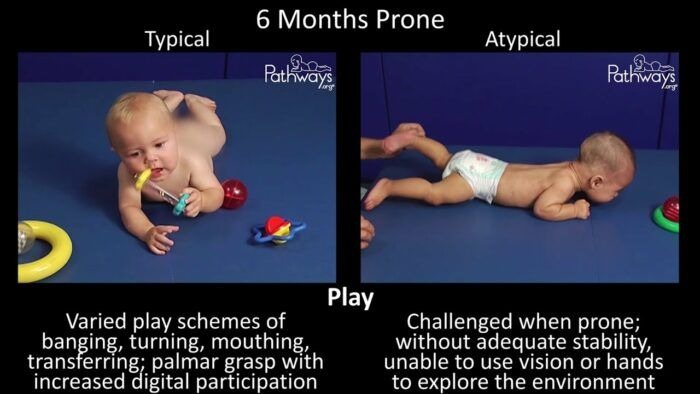
Even within one area, two descriptions can mean different things. Staying upright when you sit your baby up is one skill. Getting into a sit alone is another. The CDC lists both at nine months.
My son turned 9 months last week and he seems so behind on milestones (both formal and averages) and I’m getting worried. I brought these up with our pediatrician and he said he’s probably just a little delayed but that he’s not worried at all. But it’s not just 1-2 things, it’s a lot of things. And when I look up 9 month old videos online to see other kids his age, he seems nothing like them. His “classmates” at daycare are 2-4 weeks younger than him and a lot of them are crawling or at least scooting and pushing themselves into a sitting position, but he just sits still for the most part and can’t get into or out of sitting on his own (he can kinda get out of sitting but it’s basically a fall).
This parent compares their son with daycare classmates and watches how he moves into and out of sitting. The children in that comparison are only a few weeks apart in age, and a short video of another baby shows only a small sample of behavior.

Compare exactly what your baby does with the checklist’s wording. “Moves around” or “talks” can hide real differences.
If your baby was born early, start with corrected age
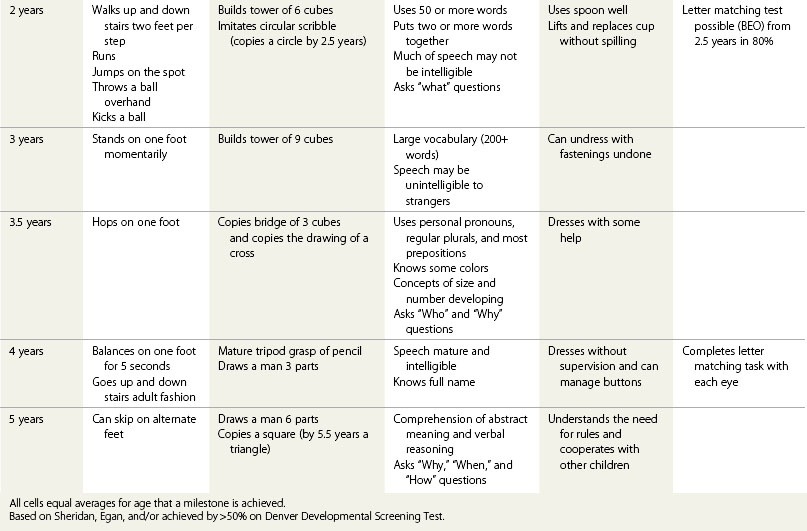
For a baby born more than three weeks early, CDC and AAP guidance recommends corrected age for developmental comparisons. Chronological age counts time since birth. Corrected age accounts for how early your baby arrived, so a baby who is six months old by the calendar and was born about eight weeks early is roughly four months old by corrected age. The American Academy of Pediatrics’ guidance for preterm milestones covers using corrected age for developmental comparison during roughly the first two years. Your baby’s medical history can change how the comparison is used.
How to record a milestone concern clearly
“I haven’t seen her get into a sitting position by herself” tells a pediatrician more than “she seems late.” A useful note records the behavior, when you saw it or expected it, and what you noticed in everyday activity. For rolling, sitting and fall hazards, read When Do Babies Roll Over and Sit Up.
| Observation status | What to record |
|---|---|
| Observed | You have seen the specific behavior. |
| Emerging or inconsistent | You have seen part of it or noticed it occasionally. |
| Not observed | You have not seen the behavior described on the relevant checklist. |
| Previously observed, now absent | A skill you had seen before is no longer being demonstrated. |
The last row matters most: a lost skill calls for professional attention. Note when you last saw it, if you know.
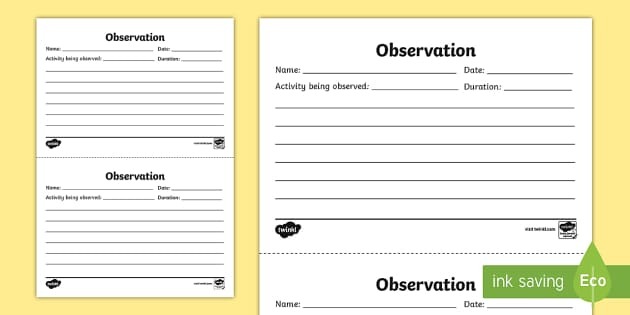
Simple developmental observation note
Child’s age and date:
Specific behavior:
What I saw, have not seen, or noticed change:
Where or when it happened:
Observation status:
What concerns me:
For example: “Nine months old. Responds when I call her name during play and makes repeated sounds. When placed sitting, she stays upright, but I haven’t seen her get into sitting by herself. I’d like to discuss this movement.”
When a missed milestone or lost skill warrants a conversation

A missing skill, a lost skill or a worry that won’t go away is reason enough to talk with your pediatrician.
- A listed skill is missing: Name the skill and the CDC age where it appears.
- A previously acquired ability disappears: Say what your baby did before, what changed, and when you noticed.
- You remain concerned: Describe the behavior even if your baby is progressing in other areas.
A baby who crawls well and uses a cup can still have a concern about gestures or communication, so tell the clinician what you see in each area.

You don’t need to wait for a scheduled screening to raise a concern. Missing one checklist item does not identify autism, cerebral palsy, or another specific condition.
Monitoring, screening, evaluation, and intervention have different jobs
These four steps differ in what they do and in what they decide.
| Process | What happens | What the next decision concerns |
|---|---|---|
| Monitoring | Parents and professionals watch skills and discuss development over time. | Whether a specific concern needs follow-up. |
| Screening | A standardized screening tool assesses developmental risk. | Whether further evaluation is needed. |
| Evaluation | Qualified professionals look at the concern in more detail. | What the findings mean and what support fits. |
| Early intervention | Each state program sets its own evaluation, eligibility and service process. | What help an eligible child and family can get. |
General developmental screening is recommended at 9, 18, and 30 months. Autism-specific screening is recommended at 18 and 24 months. A concern can prompt screening or evaluation between those visits.
Now, my baby had never been at the fastest pace for motor skill milestones, but I never felt like he was super behind either. He rolled back to tummy at 4 months and did tummy to back at 5 months. He sits really well without support! We finally got approved by insurance to go to PT, and I went just expecting some help with neck stretches. But after 2 sessions, our therapist said our baby is at the bottom 5 percentile for motor skill development compared to babies at his adjusted age and recommended Early Intervention. Honestly, I felt kind of shocked. My pediatrician never raised any alarm bells, even when I’d ask about milestones. He is pretty much on track with the CDC milestone tracker. Is PT just hyper vigilant about milestones and development? Do I go ahead and move forward with Early Intervention?
The motor percentile here is the parent’s description of the physical therapy visit, not an independently established clinical finding. The story shows how a general checklist and a focused motor assessment can lead to different conversations, even when a parent has seen many expected skills.
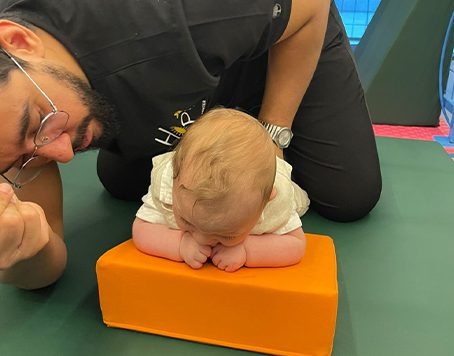
If a professional raises a concern, ask whether a standardized screen, a focused evaluation, or both would clarify it. The CDC’s monitoring and screening guidance explains how they differ.
How to access early intervention in the United States
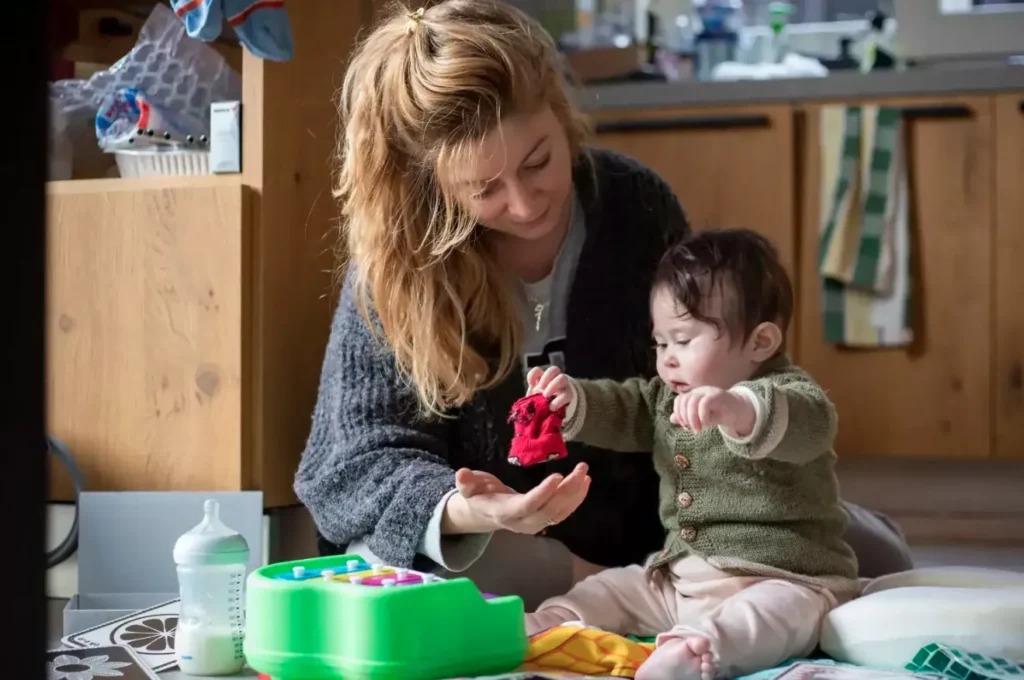
In the United States, you can contact your state’s early-intervention program directly if your child is younger than three. The CDC explains that the first contact does not require a doctor’s referral.
- Find the program: Use the CDC’s early-intervention resource to find your state or territory contact.
- Describe the concern: Share your child’s age and the specific behavior that prompted you to call.
- Learn the process: Ask what happens next and what information the program needs.
- Keep your pediatrician informed: Share any evaluation and its findings.
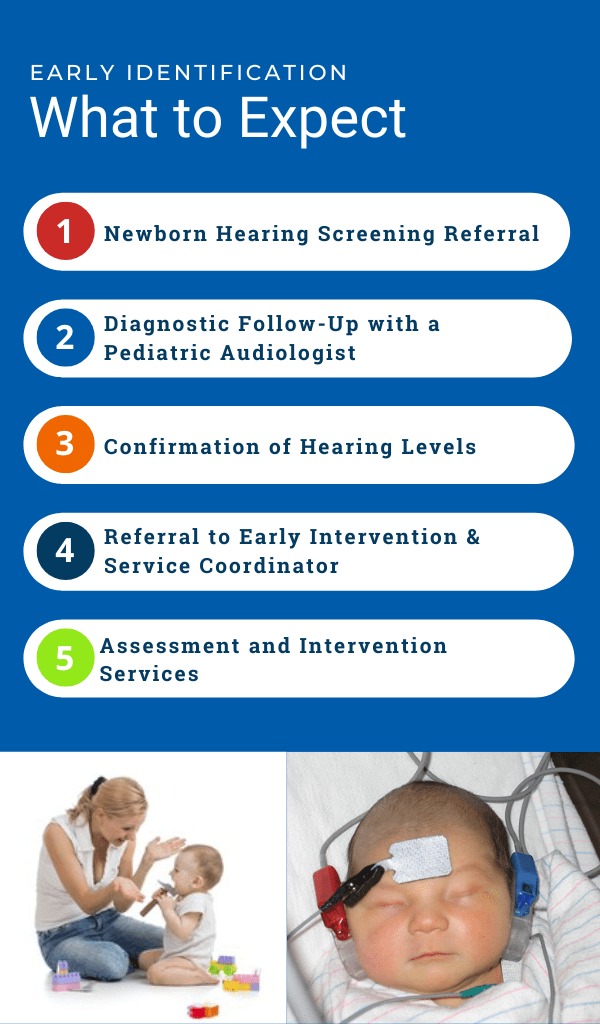
State differences matter. Evaluation steps, eligibility rules and available services depend on the program. Contacting a program starts the inquiry; it does not establish eligibility for a service.
Supporting development without chasing milestones

Development happens during ordinary interaction: answering your baby’s sounds, sharing a simple book, playing together, and offering supervised awake movement or tummy time suited to your baby’s abilities. No special toy or rigid routine guarantees faster milestones or replaces care for a developmental concern.