
A repeated sound counts as an early word when your baby uses it on purpose and consistently for the same person, object, or action, even if the pronunciation is off. If the meaning is unclear, watch the context, the gestures, and what your baby understands. If your baby loses skills, seems to have trouble hearing, or you keep having concerns, contact your pediatrician or your state’s early-intervention program.
Cooing and babbling: what you’re hearing
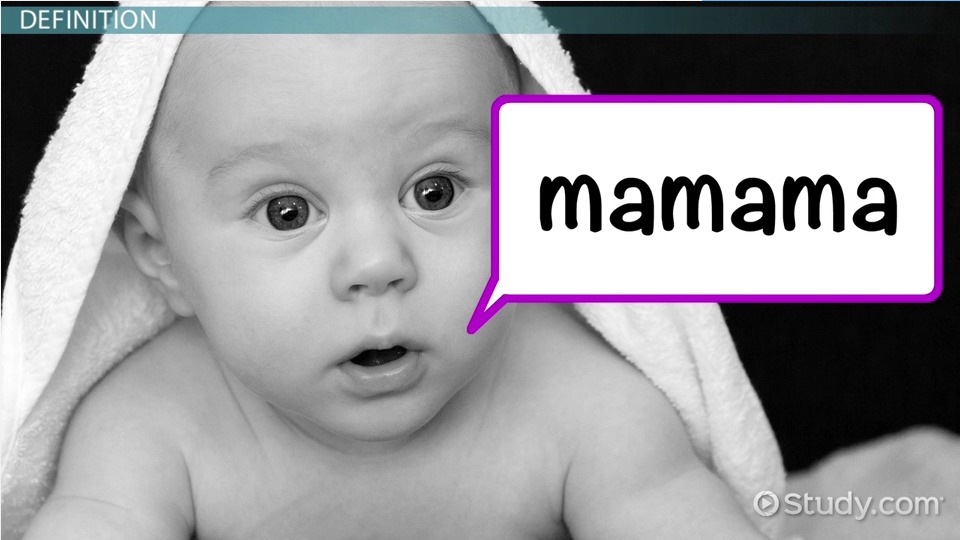
Babies find plenty of ways to make themselves heard before real words show up: a soft “oooh” during a face-to-face moment, a sudden squeal, a long run of lip raspberries. Then consonants join the vowels, and repeated syllables start to stand out.
Cooing is mostly vowel-like sounds. Babbling is easiest to recognize once consonants and vowels combine into sequences such as “ba,” “da,” or “bababa.”
Your baby might say “bababababa” while looking at a toy, then say it again while kicking or watching someone cross the room. It sounds like speech, but it isn’t tied to anything yet.
Does that sound count as a first word?
A first word can sound nothing like the adult version. What matters is that your baby uses the sound for something recognizable and keeps doing it across everyday situations.
Say your baby calls out “mamamama” while playing alone, then repeats it while looking at a ceiling fan. That’s babbling, with no clear target yet. If your baby looks at you, says “mama” to call you, and does it again another day, the intent is easy to see.
| What to notice | Points to a word | Meaning still unclear |
|---|---|---|
| Reference | The sound points to the same person, object, or action. | It shows up around unrelated people and objects. |
| Context | It happens in situations that fit. | It happened once, in an ambiguous moment. |
| Independence | Your baby sometimes starts it. | It only comes right after an adult says it. |
| Consistency | The meaning stays recognizable over time. | No pattern yet. |
A baby may first imitate “banana” right after hearing it, then use “nana” on their own while looking at the fruit.
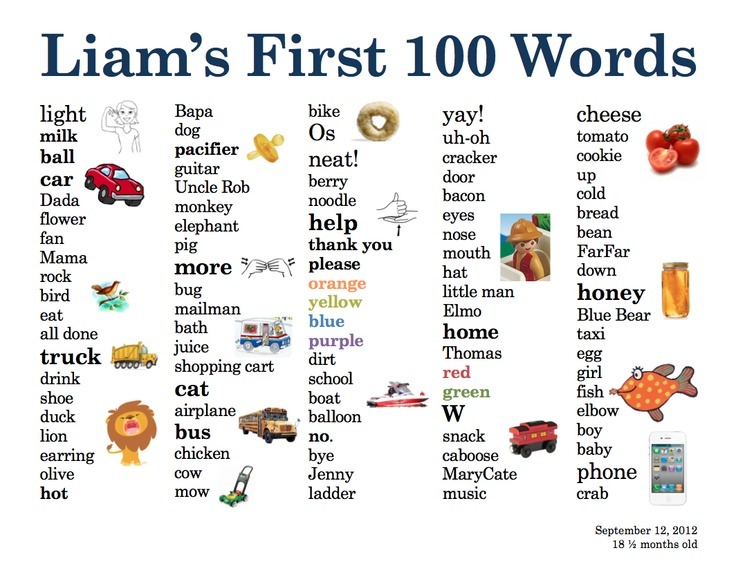
One parent describes how that played out:
It was around 10-11 months, but it was so fluid that I couldn’t tell you her real first word. At first she would just imitate me, like I’d hold up a banana, say “banana”, and then she’d say “nananana”. Then she started to kind of mix in “nana” to her babbles while looking at a banana. Like “mamamanana”. Eventually I could hold up a banana and she’d say “nana” confidently enough that I’d count that as a word.
The CDC’s 15-month examples include “ba” for ball and “da” for dog. Animal sounds and routine expressions carry meaning too.
Babbling and early words by age
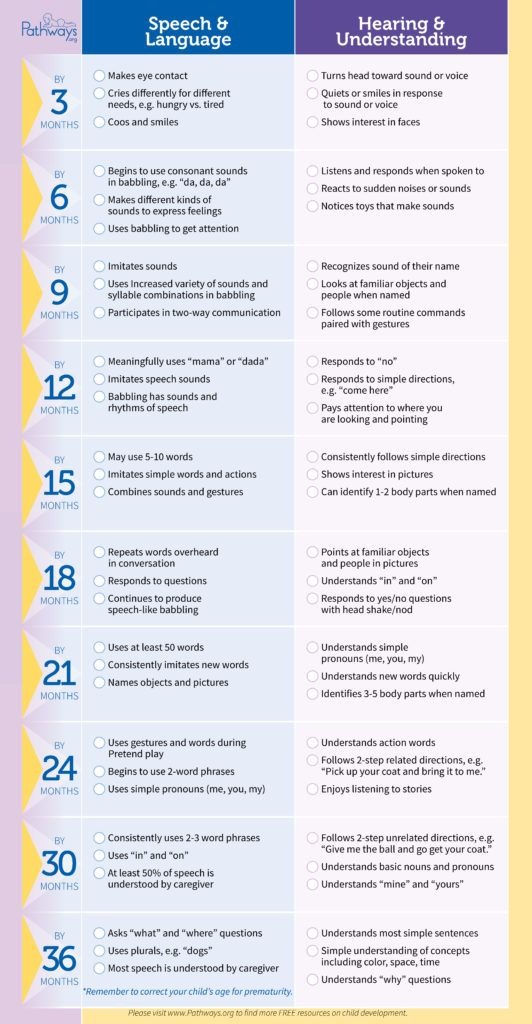
The CDC publishes milestones for specific ages, including its nine-month communication milestones. The American Speech-Language-Hearing Association (ASHA) describes communication in broader age bands.
The CDC uses “most children” to mean at least 75% of children show the behavior by the listed age. The checklist helps you notice development and prepare questions for your pediatrician. It doesn’t replace standardized developmental screening. For motor skills and other areas of development, see Baby Development and Milestones: What to Watch and What to Do.
| Age and source | Sounds or spoken words | Other communication |
|---|---|---|
| Birth to 3 months, ASHA | Cooing and early vocal exchanges | Responding to voices and social interaction |
| 4 to 6 months, ASHA | Varied vowel sounds, sometimes paired with a consonant, and raspberries | Attention and responses during vocal play |
| 7 to 9 months, ASHA | Longer strings of repeated syllables | Responding to a name and recognizing familiar names |
| 9 months, CDC | Repeated sounds such as “mamamama” and “bababababa” | Looks when called by name; lifts arms to be picked up |
| 12 months, CDC | Calls a parent “mama,” “dada,” or another special name | Waves goodbye and pauses when told “no” |
| 15 months, CDC | Tries one or two words beyond parent names | Looks toward named familiar objects and points to ask for help |
| 18 months, CDC | Tries three or more words beyond parent names | Follows a one-step spoken direction without a gesture; points to show something interesting |
| 24 months, CDC | Uses at least two words together, such as “more milk” | Points to named pictures or body parts and uses more gestures |
Notice the gestures and understanding behind the sounds
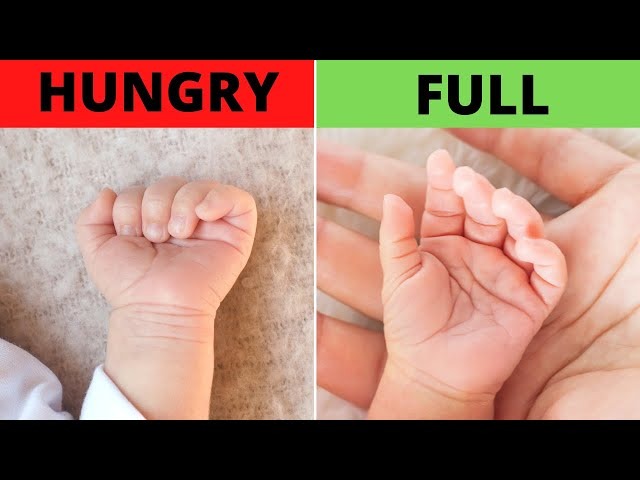
A baby with few spoken words can already communicate through gestures, responses to language, and shared attention.
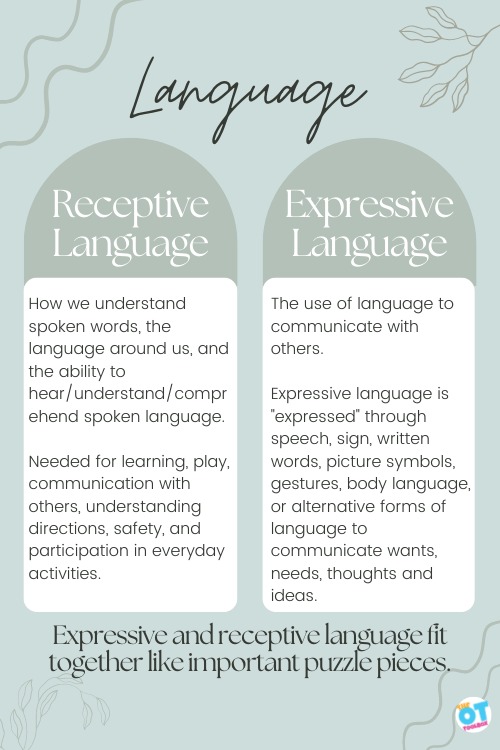
Speech and language professionals separate expressive abilities, what your baby communicates, from receptive abilities, what your baby understands. Pointing, waving, and taking turns in a conversation make the difference easy to see day to day.
| Communication area | Everyday example |
|---|---|
| Expression | Your baby uses a familiar sound to get your attention or ask for something. |
| Understanding | Your baby looks toward a familiar person or object when you name it. |
| Gestures and interaction | Your baby points, waves, raises their arms, or takes a turn with a sound. |
During play, your baby may turn toward a familiar person when you ask where they are, even though your baby can’t say that name yet. Or you say something, your baby pauses, and then answers with a sound.
One parent of an 11-month-old couldn’t tell whether “mama” was a word yet:
My daughter is 11 months. She turned 11 months a few days ago. She babbles a ton. Mamamama, gagagaga, nananana, yayayaya. Zazazaza. Although hasn’t said “d” yet. She says “ma” when a cat meows (we always imitate our cats’ meows to her). But I’m not sure if she actually refers to me as mama yet or if she’s just babbling. I think she’s just babbling. She understands a ton though. When I ask her where mama or where dada is, she will look at us and smile.
Here “ma” goes with the cat’s meow, and her smile when asked where mama and dada are shows she understands their names.
Milestone charts and your family’s situation
In a home that uses Spanish and English, your baby’s first labels can come in either language. ASHA supports families continuing to use the languages they speak comfortably, and multilingual exposure doesn’t cause a language disorder.
For a baby born prematurely, the AAP describes using corrected age to interpret early development, commonly during the first two years, with clinical context guiding the comparison.
Neither point explains away lost skills or hearing concerns. To talk through a concern with your pediatrician, see When Should You Discuss Baby Development Concerns.
Everyday exchanges that build early communication
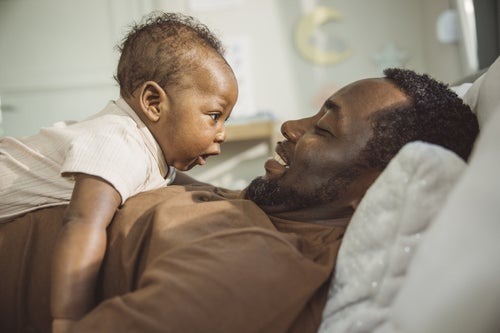
The easiest time to practice communication is when your baby is already looking at something, reaching for it, or making a sound about it.
Say your baby looks at a ball and says “ba.” Answer “Ball!” in a natural voice, pause, and keep playing. The word now attaches to something your baby can see, and the pause leaves room for the next sound or gesture.
Reading a short book, naming a familiar person, or talking about whatever your baby is holding works the same way. For book ideas and reading routines, see How to Read to Your Baby: Books, Baby-Led Tips, and Simple Routines.
In a 2008 experiment, Goldstein and Schwade studied 9.5-month-old infants. When mothers responded directly to their babbling, the babies changed features of their vocal patterns, compared with babies in the study’s noncontingent-response condition.
In a 2020 randomized trial, Ferjan Ramírez, Lytle, and Kuhl coached the parents of 71 typically developing infants at six, ten, and fourteen months.
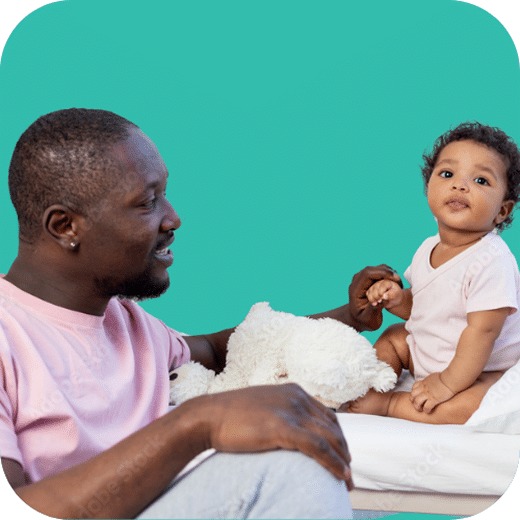
Through eighteen months, the coached group used more parentese, took more conversational turns, and showed language benefits under the study conditions. A 2023 follow-up by Huber and colleagues assessed 59 of those children through thirty months and reported continued benefits. These findings come from structured coaching, and none of them promises a first-word date.
When to raise a speech, babbling or hearing concern

Contact your pediatrician if your baby isn’t meeting a milestone for their age, loses a skill they had, seems to have trouble hearing, or keeps raising concerns for you. You don’t need to wait for several missing behaviors before asking about screening or evaluation. For the full age-by-age checklist and screening details, see Baby Developmental Milestones by Age: A CDC-Based Guide.
A change in what your baby used to do deserves attention. Maybe your baby waved bye-bye every day and has stopped, or a familiar sound no longer shows up where it used to.
Hearing matters too. A passed newborn hearing screen tells you about hearing at that time. Hearing loss can develop or become apparent later, and the CDC advises taking later concerns seriously even when the newborn screen was passed.
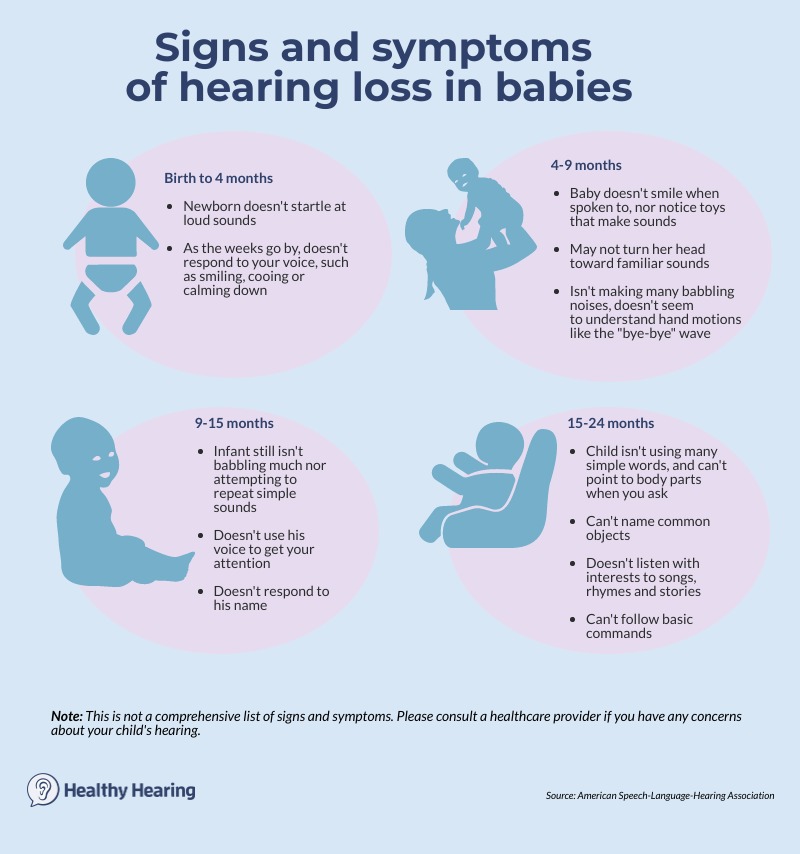
One missing syllable isn’t a diagnosis. Your pediatrician looks at your baby’s overall development and decides whether more screening is needed, and an audiologist or speech-language pathologist may get involved depending on the concern.
What to note and how to get help in the US
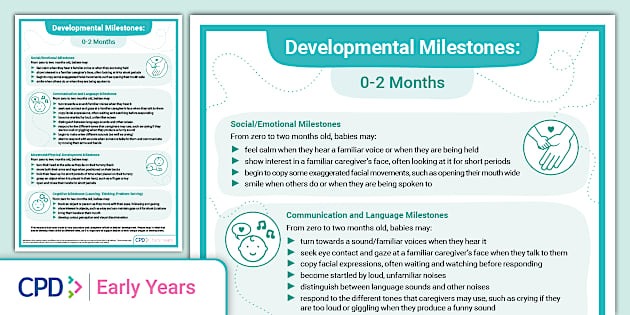
Specific observations help a clinician. “Not talking” leaves out whether your baby uses sound approximations, responds to familiar language, or communicates with gestures.
A short note can include:
- Age and context: Your baby’s age, and corrected age if premature birth applies.
- Exact sounds: A recognizable approximation or repeated syllable, written as you heard it.
- Apparent meaning: Which person, object, or action was present, and whether your baby started the sound.
- Other communication: Gestures, responses to familiar words, pointing, or vocal exchanges.
- Changes or hearing concerns: Any lost skill, or any worry about how your baby responds to sounds.
For example, a note could say: “At breakfast, she said ‘nana’ while reaching for a banana. Later, she used the same sound when she saw another banana and pointed toward it.”
In the United States, if your child is younger than three, you can contact your state or territory’s Early Intervention program directly and request an eligibility evaluation. According to the CDC’s Early Intervention guidance, you don’t need a physician’s referral.
The local program determines eligibility and services after the evaluation, and requirements vary across states and territories.