
Start whenever you’re ready, even from birth, and let your baby’s response set the book and the length. If your baby grabs, mouths, or turns away, switch to a sturdy book, name one picture, or try another time. One short, comfortable reading moment is enough to begin.
You open a book to the first page. Your baby catches the corner, pulls it closer, and starts chewing. By the time you reach the second sentence, the pages are turning faster than you can read them.
Finishing the story isn’t the goal. The book gives you things to point at, touch, and make sounds about.
When should you start reading to your baby?
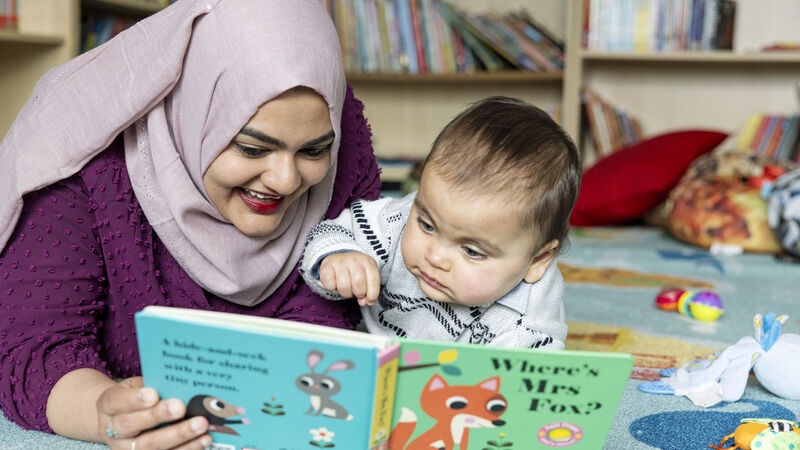
You can read to your baby from birth. The American Academy of Pediatrics’ literacy policy encourages shared reading from birth as part of warm, responsive interaction with caregivers. A newborn listens to your voice or glances at a picture without following a plot. Show one picture, say a few words, and pause for a response.
Which books fit your baby’s age and current interests?
Watch how your baby uses a book, then pick the next one. A newborn attends to your voice or a simple image. A baby who reaches and mouths needs pages that withstand handling. Pictures of familiar objects and repeated sounds work once your child wants to point or join in.
A board book of familiar routines, such as saying hello or getting ready for bed, gives a toddler who likes everyday activities pictures and predictable words to revisit. To compare babbling, first words, and communication skills, see Babbling and First Words: What Counts, What to Notice.
| What you notice | Book features to try | How to share it |
|---|---|---|
| Brief looks or listening | Simple pictures, noticeable contrast, short rhymes | Show one image or say a few rhythmic words |
| Grabbing and mouthing | Age-suitable cloth or sturdy board pages | Allow supervised handling |
| Pointing or turning pages | Clear pictures of familiar objects | Let the child choose a picture |
| Returning to familiar sounds | Repetitive words, predictable rhymes | Pause at a familiar sound |
Age ranges only narrow the shelf. They set no deadline for your baby.
Sesame Workshop’s book-selection guidance covers durable books, everyday pictures, and repetition through infancy and toddlerhood.
| Format | Useful quality | Trade-off |
|---|---|---|
| Cloth | Soft and flexible; some are washable according to their care labels | Seams and attachments need inspection |
| Board | Stiff pages are easier to grasp and turn | Edges may peel or wear with chewing |
| Ordinary paper | Allows longer stories and detailed illustrations | Pages bend and tear easily |
| Touch-and-feel or interactive | Offers textures or movable features | Attached elements require closer inspection |
If your baby handles the book, choose durable pages. If you turn the pages, delicate paper works.
Can I read a chapter book aloud to a newborn?
Yes. You hold the chapter book, and your baby listens to the words. A sturdy picture book suits the baby who wants to look, reach, and handle the pages.
What if your baby wants to grab, chew or play with the book?
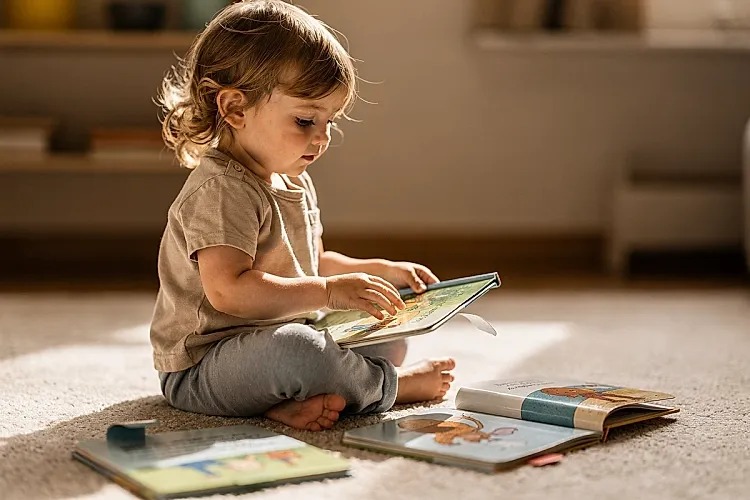
Reaching for a book or chewing its edge is part of how infants explore. Your baby may care about the object, one picture, or the sounds you make, and not the whole story.
Say you’re showing a dog and your baby grabs the cover. Name the dog, make a playful sound, and follow whichever picture catches their eye. An intact, suitable book is fine to handle during supervised play. For sensory play, baby books, and supervised activities, see Baby Play Ideas: What to Try at Every Stage.
I love having the thrifted books within his reach for him to do all that, but also to sit and open and look at pictures and dump them all over the place. Those are his “play” books. Best part is I won’t have any qualms about giving them away when their time is up. We have some nicer ones for reading at bedtime that we’ve been gifted or bought new. Still only board books because even when he’s trying to be gentle, he’s rough.
If the book turns into a struggle, stop and try again later. If your baby pulls pieces off or damages the edges, do the safety checks below before handling continues.
How do you hold the baby, the book and turn pages?
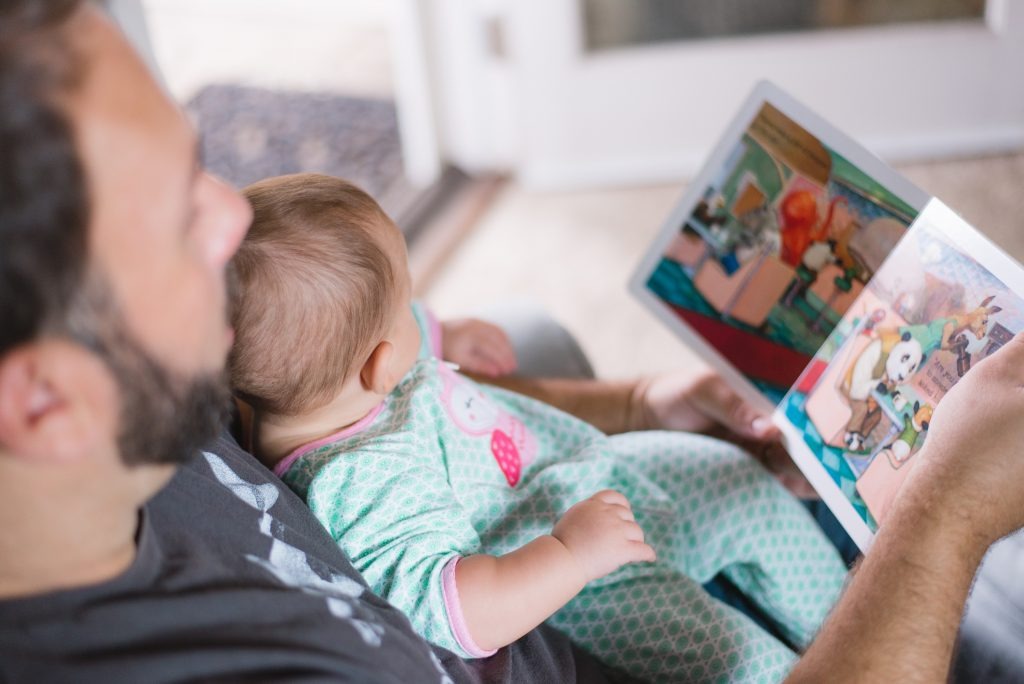
Keep the pictures visible and your hold stable. Support your baby comfortably and leave yourself a way to turn pages.
- On your lap: Sit securely with your baby supported and the open book in view. A smaller board book is easier to manage.
- Side by side: During supervised awake time, settle next to your baby on the floor and look at an open spread together.
- Face to face: If your baby’s position and support allow it, hold the pictures where you can share expressions and sounds.
If a position feels awkward or your baby slips out of support, change it. You don’t need to keep your face or every printed line in view at all times.
Describe the pictures and respond to your baby in whatever language you speak comfortably. The AAP supports sharing books in families’ preferred languages and encourages talking about the pictures even when you aren’t reading the printed text.
Does reading have to be part of bedtime?
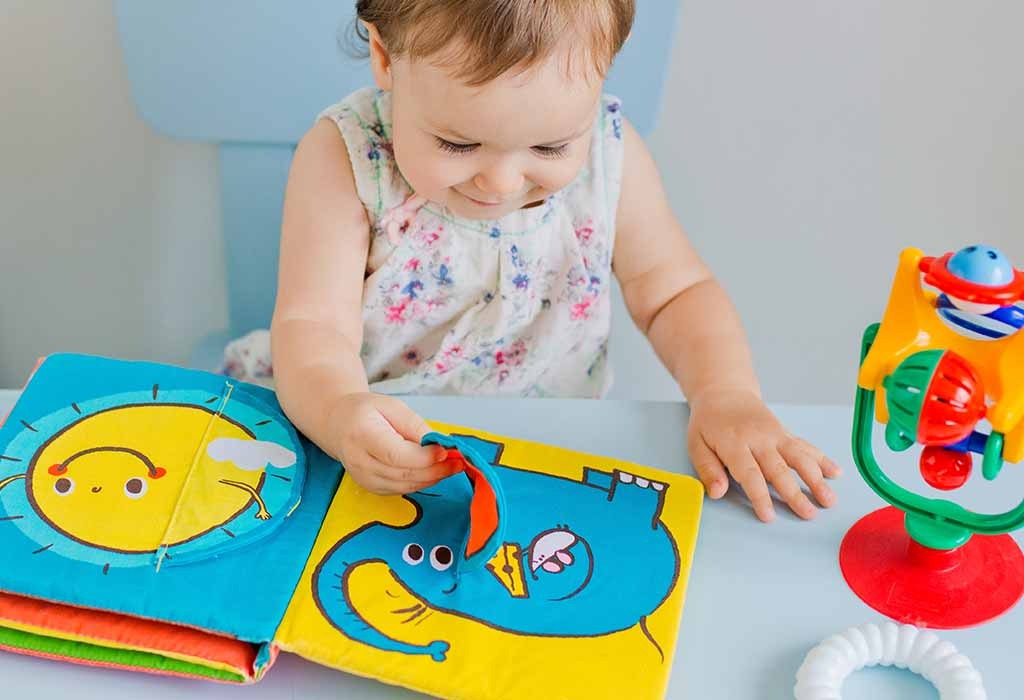
Read at bedtime or in a calmer moment during the day. Match it to your baby’s interest and your own attention. No set number of pages or minutes is required.
| Moment | Baby’s response | Reading approach |
|---|---|---|
| Quiet daytime pause | Looks at pictures or responds to a voice | Share a picture or brief rhyme |
| Early evening | Settled and receptive | Use a familiar short book |
| Late bedtime | Fussy or visibly tired | Leave the book for another occasion |
| Unplanned quiet moment | Moves close and shows interest | Follow the page your baby notices |
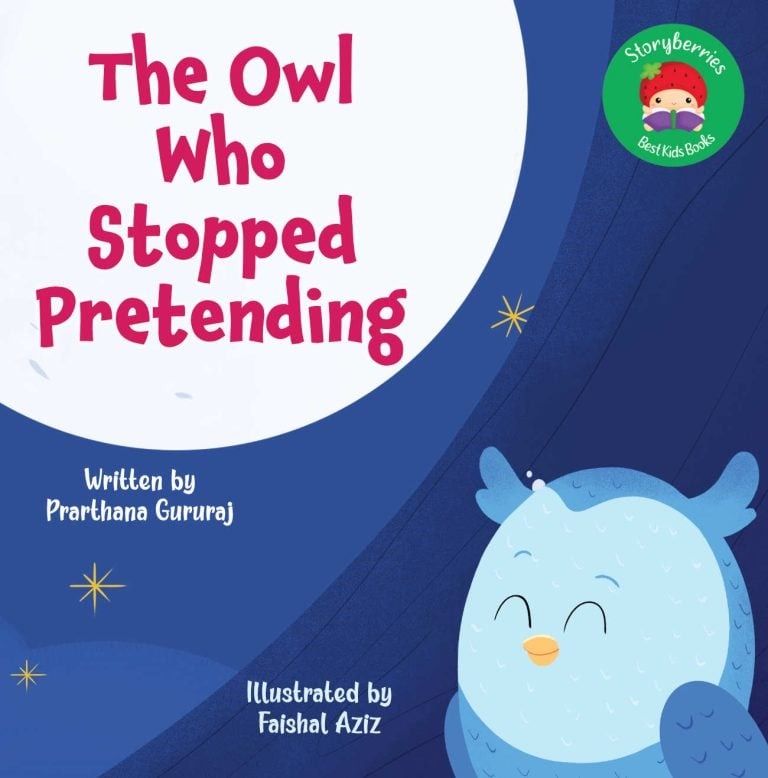
If your baby turns playful whenever a book appears at bedtime, try the same book earlier in the day.
Why does your baby want the same book again and again?
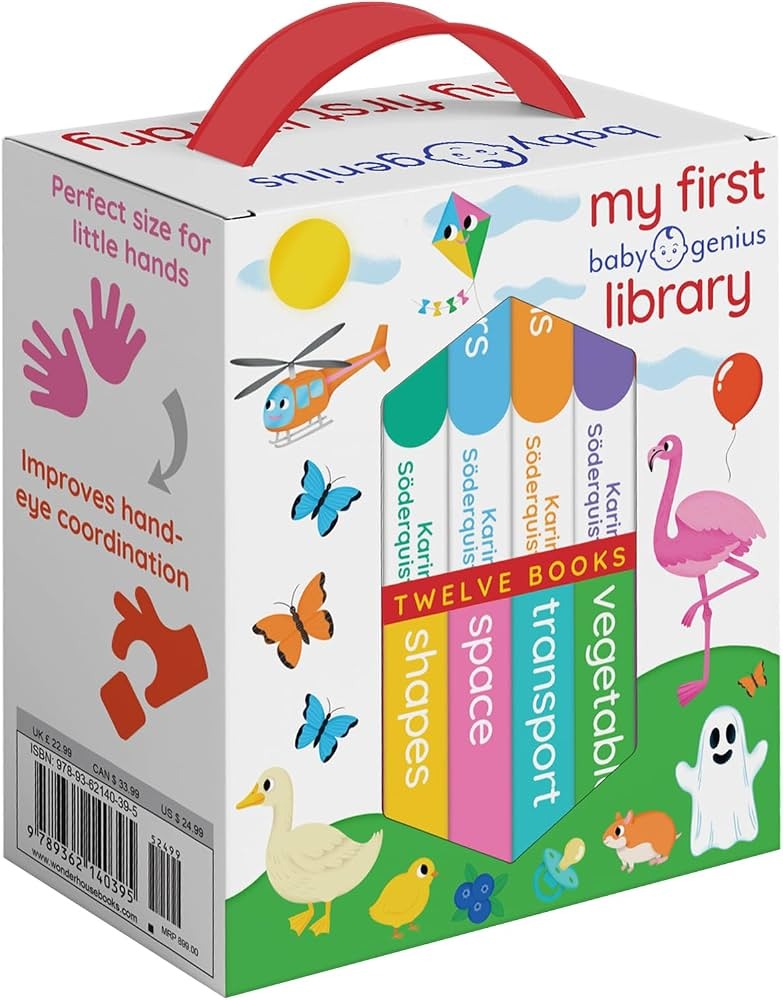
Picking the same book again and again is a simple preference. Familiar pictures, predictable words, and repeated sounds are the features your baby likes.
One parent described a 17-month-old who keeps choosing books already at home:
With my 17mo we’ve barely taken out library books because he likes to read the same ones over and over and he is rough with them and anytime we’re at the library he has no interest in picking them even though he loves books or gravitates towards a book we already own. I am very excited for library books when the whole activity becomes a thing or when he’s into longer books where you tend to read them once and that’s it.
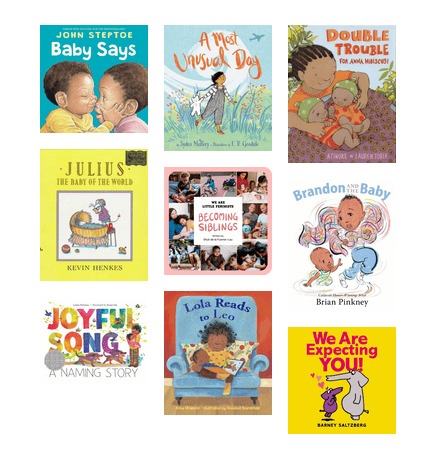
Keep the favorite within reach. When your baby shows curiosity, offer something new, and keep it in rotation if your baby takes to it.
Should you buy, borrow or rotate baby books?
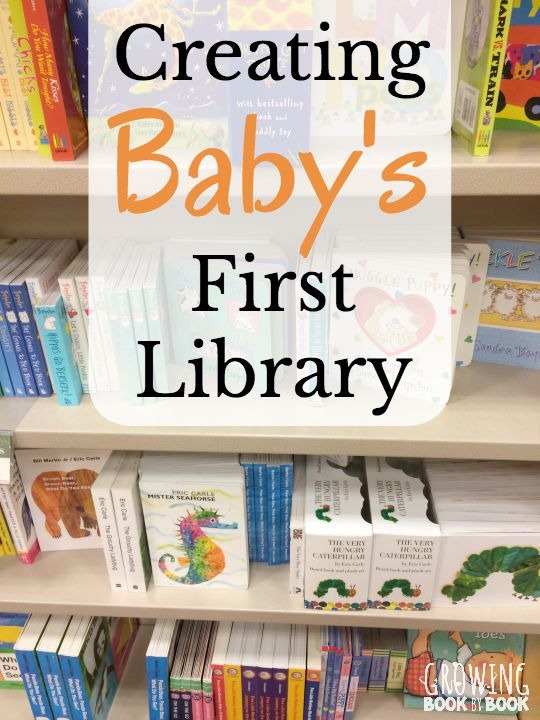
Owning a few often-used books is convenient. Borrowing lets you try titles before spending money or shelf space. The right mix depends on how your baby handles books, what’s available to you, and your budget.
A parent with a ten-week-old described buying about 50 books, including some intended for years later, and wondered whether the library would have made more sense:
My LO is 10 weeks old and I have been reading to him since day one. Over the past ten weeks I have consistently purchased books of all reading levels (from baby board books to small chapter books like Charlotte’s web). I figured purchasing these books will allow him to have several options for bedtime stories, plus he can have a variety of options when he learns to read. Am I being foolish for purchasing books rather than using the library? I have probably purchased around 50 books so far (including a few box sets), and maybe spent around $2-300. I’m calling this his “Christmas present”, since he is too young to participate. Will these books actually get good use for several years?
| Approach | When it fits | Trade-off |
|---|---|---|
| Own | A repeated favorite or a book handled every day | Cost and storage |
| Borrow | Trying unfamiliar titles or adult-led longer stories | Return and damage rules |
| Find used or free | Building a small, affordable handling collection | Condition and availability vary |
| Defer | A title mainly intended for a later stage | You may need to find it again |
That collection already includes Charlotte’s Web for a ten-week-old. Read it aloud yourself now, and give your baby a sturdy picture book to handle.
Borrowing policies, damage rules, and free-book programs differ by location, and they matter most if your baby still chews or tears books.
How to check whether a baby book is safe to handle
Inspect any book your baby will handle, especially if your baby pulls or mouths the pages. Even a book made for babies becomes unsuitable once a corner peels, a flap comes loose, or a battery enclosure is damaged.
- Pages and edges: Look for torn pieces, peeling board layers, and detached material.
- Textures and flaps: Check that glued or moving features are secure.
- Cloth and seams: Look at attached components and follow the item’s care instructions.
- Sound or light features: Identify the battery type, if any, and check that its compartment is secure according to the product instructions.
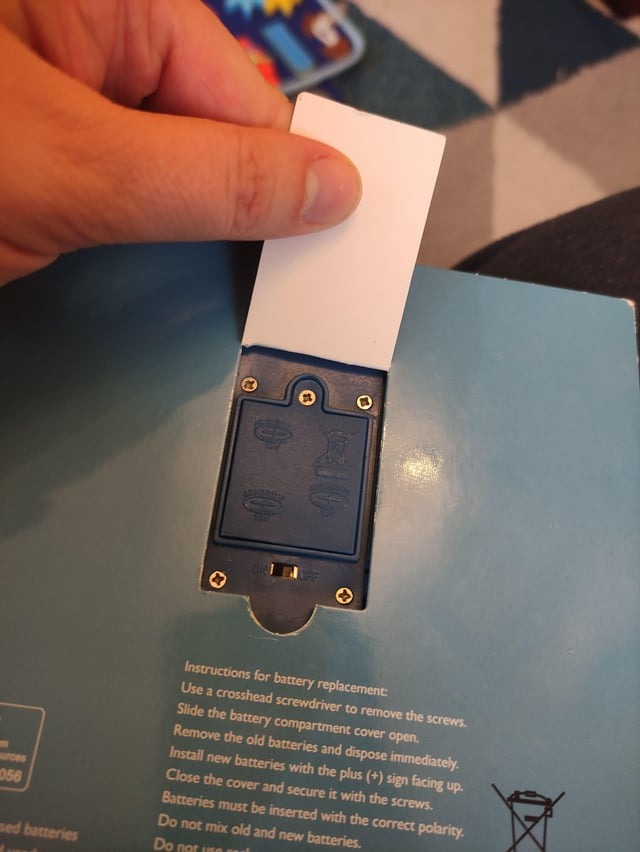
The US Consumer Product Safety Commission warns that accessible button and coin batteries can cause severe injury if swallowed. The hazard applies only when such a battery is present and accessible.
If you suspect your child has swallowed a button or coin battery, seek immediate medical attention. Call the National Battery Ingestion Hotline at 800-498-8666 or Poison Help at 800-222-1222.
The CPSC lists books and other paper articles among products exempt from the small-parts ban. Torn cardboard and detached decorations are still not safe for a baby to mouth.
Take any damaged or suspect book out of use. If a book has a button or coin battery and its compartment is damaged, keep it away from your child and repair, replace, or dispose of it according to its instructions.
What does evidence show about reading to babies?
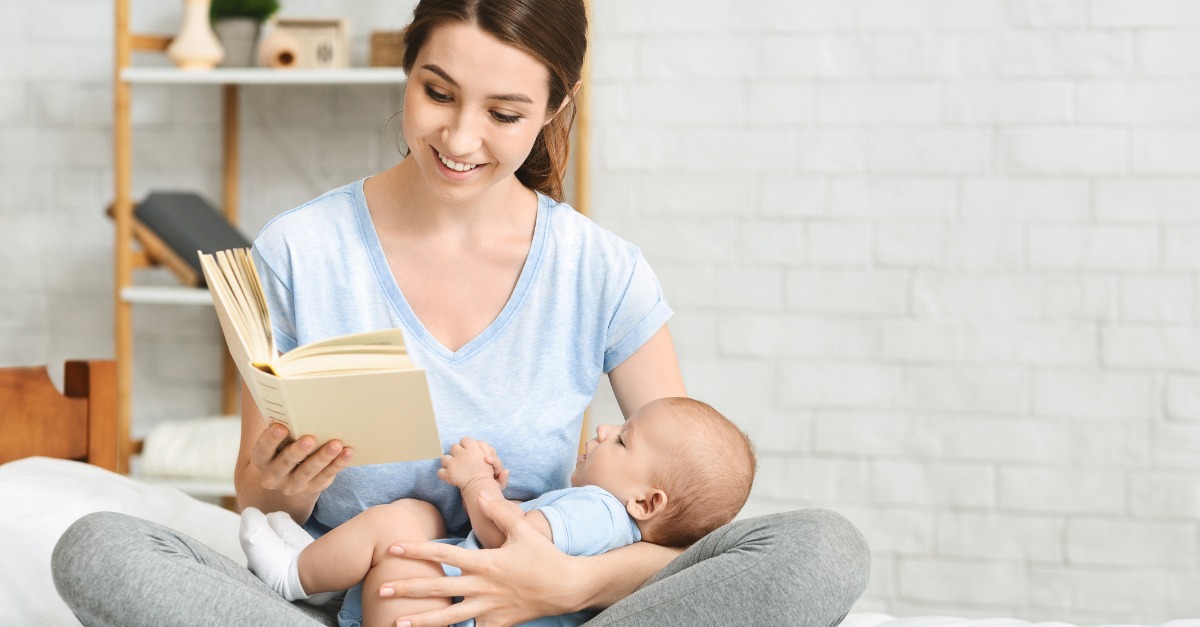
The AAP recommends shared reading from birth for responsive interaction and exposure to spoken language. Its 2024 technical report discussed shared attention and verbal and nonverbal responses. It also noted that no structured shared-reading method comparable to dialogic reading has yet been formally studied for preverbal infants and toddlers.
A 2025 systematic review examined eight experimental studies of facilitated group-reading interventions in children up to 24 months. Its quantitative language findings were limited and inconsistent, and it identified comprehension as a promising area.
In a small 2022 infant intervention study, groups of 16, 18, and 18 infants did not show statistically significant differences in language scores across randomized groups.
Infants whose caregivers reported consistently reading seven books a week had higher scores than infants whose caregivers sometimes read fewer. That comparison is an association, so it doesn’t prove that seven books a week cause better language outcomes. None of these studies establishes a guaranteed language gain or a clinically proven reading quota.