
Pick a safe, supervised play idea that matches what your baby can do and how they respond. You don’t need a rigid age chart or a special toy. If your baby turns away or gets upset, simplify or stop. If you have a concern about development or a lost skill, talk with a healthcare professional. Start with one activity, then use the age-by-age guide or a specialist page when you want more detail.
Some days your baby stares at your face. Other days the toys you set out barely get a glance. You might have a whole afternoon to fill, or just enough energy to sit down with a book.
Play fits into those ordinary moments. Your voice, a funny face, a toy within reach or a game of hide-and-find gives your baby something to notice and answer. Start with whatever catches their attention.
Choose a Play Idea Based on What Your Baby Can Do Right Now
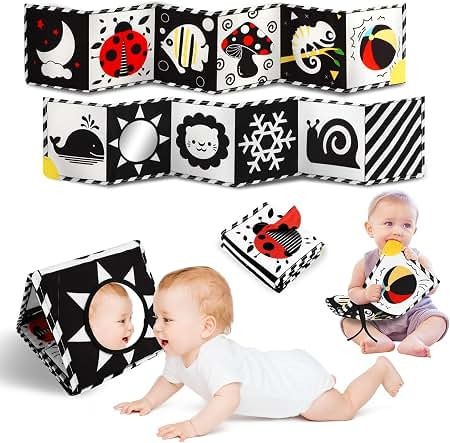
Start with one thing your baby already shows you: watching a face, reaching for an object, looking for something hidden or copying an action. Then pick the idea that fits your space and your energy.
| What your baby shows | Try this | Setting and your effort | What to notice |
|---|---|---|---|
| Watches faces or responds to voices | Talk, sing or make a face, then pause. | On your lap or face to face; no supplies. | Your baby looks at you, moves, makes a sound or goes still to listen. |
| Reaches toward or touches things | Hold one inspected toy within reach. | Safe supervised play surface; one toy. | Your baby touches, holds or explores it. |
| Enjoys finding or dropping things | Play peekaboo or a simple hide-and-find game. | Floor or lap; almost no setup. | Your baby searches, waits for what comes next or wants to repeat it. |
| Copies familiar actions | Make a simple gesture or join a safe pretend action. | Adult nearby; familiar items if needed. | Your baby tries to copy you or does something new. |
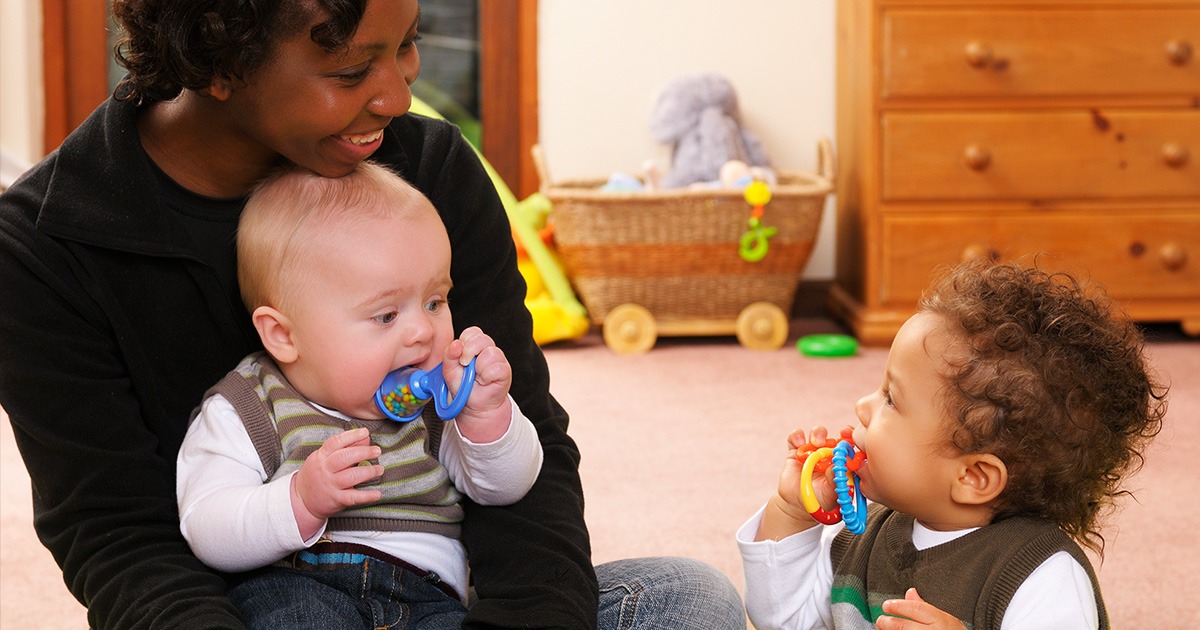
Check the Play Setup Before You Begin
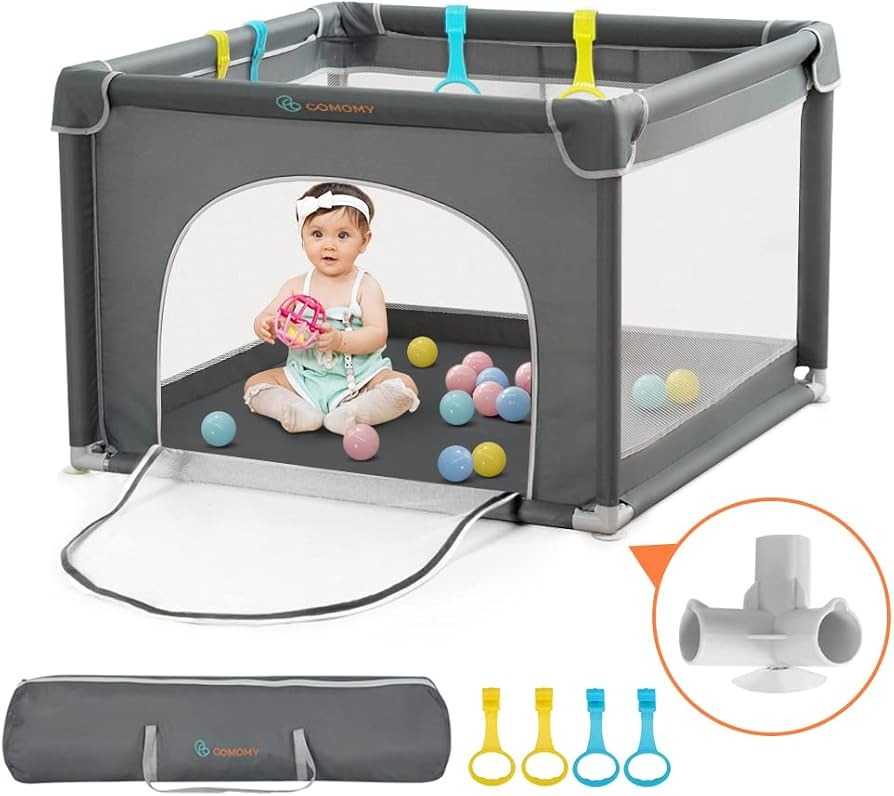
Check the position, the objects and the surroundings before you start. An item that looks harmless to you can have a small part that comes off when your baby chews, pulls or drops it.
- Adult attention: Stay close and watch actively, especially around objects, movement or water.
- Position: Use a stable play surface or holding position, and follow the instructions for any baby equipment.
- Objects: Check the age label, wear, detachable pieces, cords, balloons and reachable batteries or magnets. Remove anything that could cause choking. Apply the same check to household items: look at the actual item’s size, condition and parts.
- Product-specific guidance: For a purchased product, read the manufacturer’s instructions and check recall information.
The US Consumer Product Safety Commission’s toy-safety guidance covers hazards including small parts. The small-parts rules in 16 CFR Part 1501 apply to certain products intended for children younger than three. They do not make an ordinary household object infant-safe.
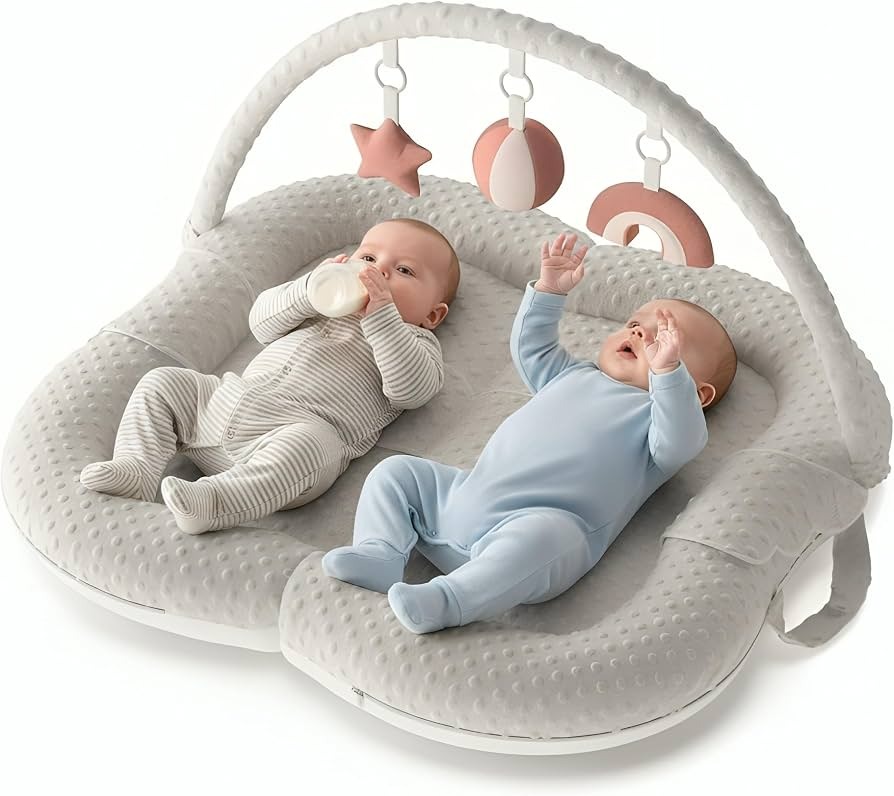
Sleep follows a separate safety rule. The American Academy of Pediatrics separates supervised tummy time while your baby is awake from placing your baby on their back to sleep, as explained in its back-to-sleep and tummy-to-play guidance.
Keep bath and water activities under direct adult supervision. A baby lounger, car seat or outgrown bassinet is not a climbing structure or a substitute sleep space. Some firsthand activity lists include risky equipment ideas, and appearing in a story does not make them safe. For feeding, sleep and developmental milestones, see Baby Care Guide: What Matters Now, From Newborn to Age 2.
Play Ideas by Stage, From Newborn to Two Years
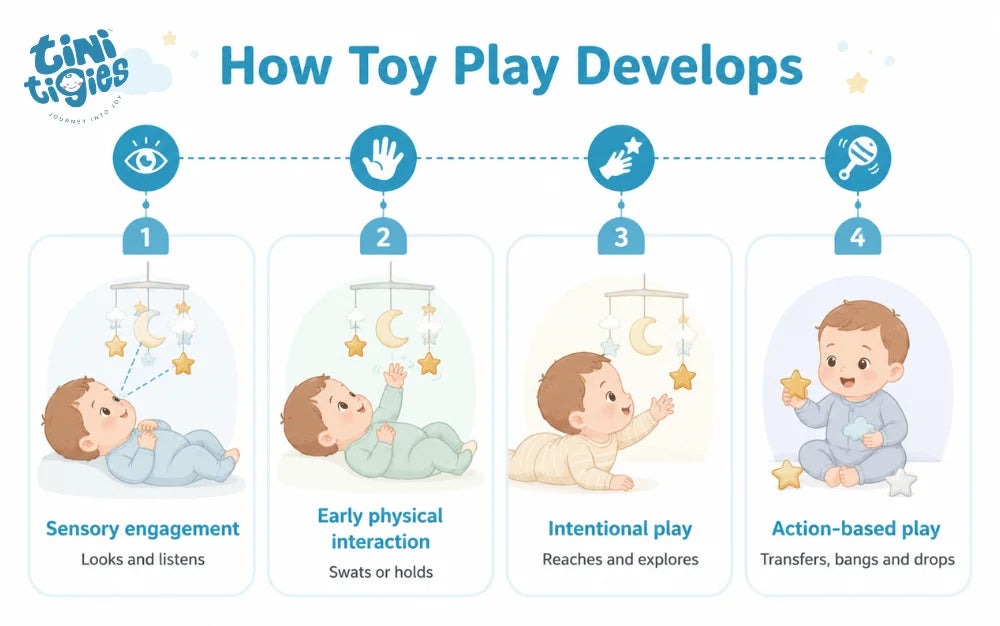
Babies get interested in different kinds of play as their social responses, movement and exploration change. Use these age bands to find activities that match what you’ve seen your baby do. For birthday gatherings, baby routines and party food safety, see First Birthday Party Ideas That Fit Your Baby, Budget, and Space.
| Approximate stage | Play focus | Example |
|---|---|---|
| Newborn to about 2 months | Faces, voices and sounds | Talk, sing or trade expressions while your baby is awake. |
| Around 3 to 6 months | Social sounds, looking at hands, early reaching | Let your baby look at or reach for a toy on a supervised play surface. |
| Around 7 to 9 months | Peekaboo, finding things, repeated actions | Hide your face briefly, then bring it back. |
| Around 10 to 12 months | Containers and searching | Let your baby put toys into a safe container and take them out. |
| Around 13 to 18 months | Imitation and familiar routines | Copy a safe everyday gesture, or let your baby copy yours. |
| Around 18 to 24 months | Combining toys, cause and effect, early pretend play | Try a toy with a button, or follow a simple pretend action. |
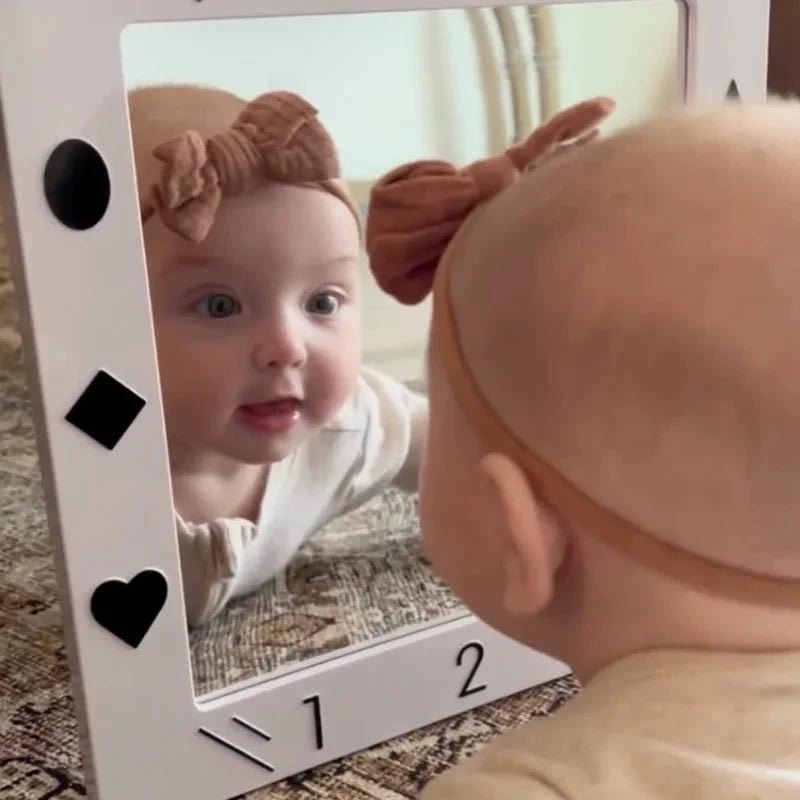
Peekaboo shows how a familiar game grows. At first your baby watches your face. Later they expect it to come back, then try to take a turn. A container game changes when your baby gets interested in putting things in, taking them out or finding an object.
Play Together Without Buying Another Toy

Many games need only your voice, your face and your response.
Harvard’s serve-and-return explanation describes how an adult responds to a young child’s look, sound or gesture. Your baby makes a sound while looking at you. You answer, pause and wait to see if they respond again. It takes no subscription and no setup.
One caregiver looking for ideas for her two-month-old described how online paywalls added to the frustration:
It really pisses me off when I try to search up activities for us to do together, and it’s an app that requires you to pay a subscription in order to have access to the activities. And now all of these apps are constantly popping up in my ads for YouTube and my social media accounts. But I can’t find any free content that I could use with my baby.
A book works when you can settle comfortably together: share the pictures and words, and follow what catches your baby’s eye. A toy fits when your baby shows interest in objects.

The American Academy of Pediatrics’ home-play guidance also lists simple activities that use household objects and your attention.
Low-Prep Play That Fits a Real Day

Play can fit into dressing, folding laundry, sharing a book or going outside. That helps on days when you have little energy and the routine feels repetitive. For baby play, motor skills and sensory activities, see Baby Play Ideas by Age: Easy Games From Birth to 2 Years.
One parent of a five-month-old kept a list of everyday outings and activities, including Target and the grocery store, to make the days easier:
Hello! I have a 5 month old, and, like many of you probably, around 3.5 months things started getting really difficult. … So, I thought I would compile a list of all the activities, big and small, that I’ve done so far to try and fill our days. Please adds yours too!!!
At home with little preparation
During a diaper change or while you dress your baby, your familiar voice gives them something to listen to. Fold clothes nearby while your baby sits comfortably in a safe play space, and a few words or a shared expression become a moment together.
A book or a look out the window gives you something to watch together.
When you leave the house
A library story time, a visit to look at books or a walk gives you a change of scenery. Talk about what you see, and the outing becomes time together.
When you have very little energy
Sit together with a familiar book or trade a few expressions when a longer outing isn’t realistic. Keep hazardous cooking, sharp objects and water-related chores separate from play.
When Your Baby Ignores a Toy or Wants to Stop

If your baby looks away from a toy, they’ve lost interest in it for the moment. What you do next depends on the rest of their response: settled and curious, briefly distracted, fussy or upset.
One exhausted caregiver described a four-month-old who seemed barely interested in dangling toys or a kickable piano:
So I’ve got our 4mo during the work day and much of the night and I’m just at a loss for what to do with him. A lot of time is spent feeding. I change all diapers immediately. I do some cooing and poking and prodding and sweet faces throughout the day. I set him down on a mat that has some dangling toys (he mostly ignores, sometimes touches/bumps or briefly grabs by accident?) or a kickable “piano” he doesn’t realize he’s kicking.
| What you notice | Response |
|---|---|
| Your baby looks, responds or explores comfortably | Keep going while your baby enjoys it. |
| Your baby looks away but stays settled | Pause or try a simpler game. |
| Your baby gets fussy or upset | End the activity and see to comfort or care needs. |
| The same toy keeps drawing little interest | Try a different kind of play that suits your baby’s abilities and interests. |

A short look or a shared sound can be the whole interaction. Looking away alone doesn’t tell you whether your baby is bored, tired or unwell, so watch their other signals and care needs too. Don’t force a toy into your baby’s hand or keep a game going through distress.
Know When a Play Question Needs a Development Conversation

The CDC defines developmental milestones as skills that at least 75% of children can do by a specified age, and its checklists do not replace standardized developmental screening. One refused game is not a developmental assessment. If you notice a persistent concern, a worrying change or the loss of a skill your baby had, write down what you saw and discuss it with your child’s healthcare professional. The CDC developmental milestones resource gives age-specific context for that conversation.
Find the More Detailed Guide for Your Next Question

For board books, shared reading and how babies communicate, see How to Read to Your Baby: Books, Baby-Led Tips, and Simple Routines. Two sections of this page cover the rest:
- More games for your baby’s stage: Revisit the play ideas by stage overview.
- Supervised floor play: The safety setup gives the essential sleep distinction.
For tummy time, head control and supervised play, read Tummy Time for Babies: How to Start and What to Do If They Resist.