
Pick one game your baby can already half-do and try it today. A newborn gets a face and a few soft words. A 7-month-old gets a toy within reach. A 15-month-old gets a ball to point at and name. Age is only a starting point. If your baby loses interest, make the game easier or switch. Skip anything that looks unsafe or makes your baby uncomfortable, and stay with your baby throughout. Choose a row from the chart below.
How to choose a play idea by age and ability
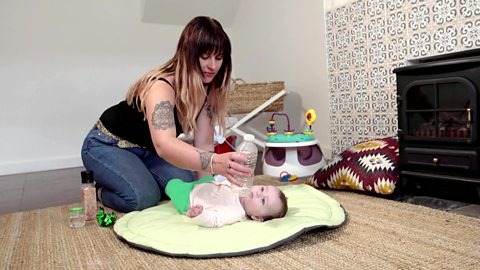
Start with something your baby already notices or tries to do. A newborn turns toward a familiar voice. An older baby reaches for a book, copies a sound, looks for a hidden toy, or drops objects into a container.
The age bands below are rough. A game from the band above or below fits just as well when the toy, position, and action suit your child.
| Approximate age | What may catch their interest | Try this | Make it easier |
|---|---|---|---|
| Birth to 3 months | Faces, voices, soft sounds | Talk or sing face-to-face, then pause | Use a quieter voice and keep it brief |
| 3 to 6 months | Pictures, sounds, reaching | Name one picture in a baby book | Show a single picture or offer one toy |
| 6 to 9 months | Reaching, movement, shared sounds | Play with a nearby toy on the floor | Echo a sound your baby makes |
| 9 to 12 months | Copying, gestures, finding objects | Copy a sound or play peekaboo | Start with an easy, visible reveal |
| 12 to 18 months | Pointing, searching, containers | Name an object your child points to | Demonstrate a single action together |
| 18 to 24 months | Pretending, copying adults, routines | Pretend to care for a stuffed animal | Model one action and let your child respond |
This approach draws on games in the UNICEF learning-activities collection, which offers age-related ideas and encourages adapting activities to a child’s abilities. Your first game can be your voice, a familiar picture, or a toy you already own.
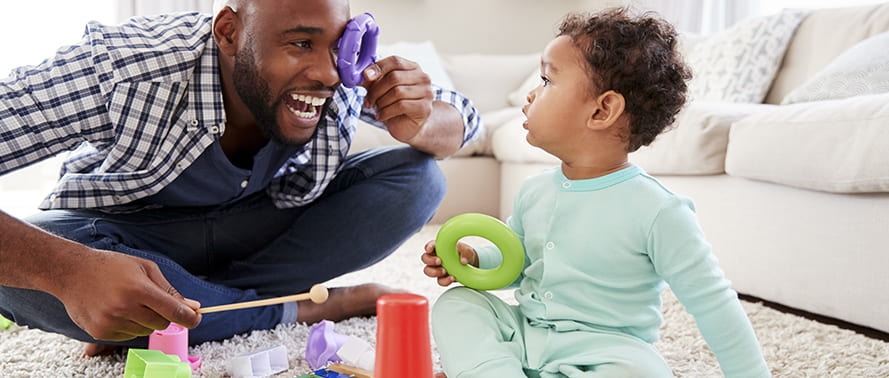
Watch what catches your baby’s eye or ear and which movements look comfortable. Pick one game and give your baby a few seconds to answer.
Play ideas for newborns to 3 months: faces, voices, gentle movement

For a newborn, a familiar face and voice make the whole game. When your baby is awake and calm, move to where they can see you. Say a few soft words, then pause. A look, a small sound, or a change of expression is their answer.
Sing one familiar line while your baby lies on a supported surface. Watch their hands and feet move and say what you see: “Look at those kicking feet.” Let the limbs move on their own.
Tummy time adds another chance to meet at eye level. While your baby is awake and you are watching, lie down near them on a firm floor and talk or sing. Some families start with the baby on the chest of an awake, alert adult. For positioning and gradual practice, see supervised tummy time.
The American Academy of Pediatrics’ tummy-time guidance draws an important distinction: babies sleep on their backs, and tummy time happens while they are awake with supervision.
If your baby turns away, fusses, or wants to rest, stop.
Play ideas for 3 to 6 months: reaching, books, and sounds
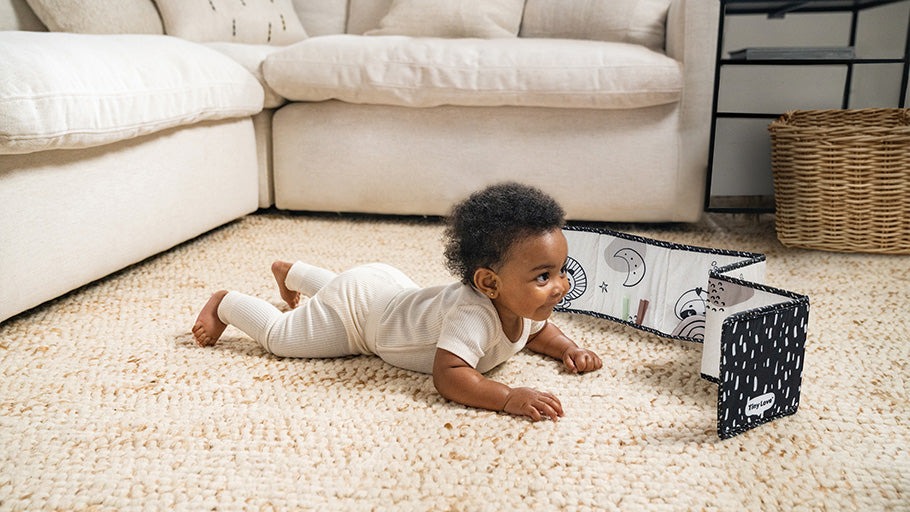
At about 3 to 6 months, pictures, sounds, and reaching give you three easy games. A board book or fabric book works well. Show one picture, name it (“Dog!”), and wait. Close the book after one page if that is all your baby wants. For more about choosing books, see baby books by stage.
For a reaching game, hold one toy within easy reach while your baby lies on the floor or sits well supported. Let them look, touch, or grab. If reaching is hard, bring the toy closer and let watching count as playing.
When your baby coos, coo the same sound back and wait for the next one. You can also describe how a clean fabric toy feels (“soft, bumpy”) while you stay right there.
One parent described how short those moments of engagement could be, even after trying many toys and activities:
For now, I’ve resorted to walking with her around the house and showing her inside my kitchen cabinets and different rooms, etc. Starting to get heavier and to carry her around for long periods of time. Are there any other toys out there that I’m missing that can buy me 15 minutes to go to the bathroom or to take a shower? What do you do with your high maintenance baby? That requires constant attention that keeps them happy?

A bathroom break is a separate need from a good game. A toy does not replace a safe care arrangement when you have to step away. When you do play together, try one game at a time and follow what holds your baby’s attention. To compare sensory play, baby books, and other activities, use Baby Play Ideas: What to Try at Every Stage.
Play ideas for 6 to 9 months: floor movement, imitation, exploration
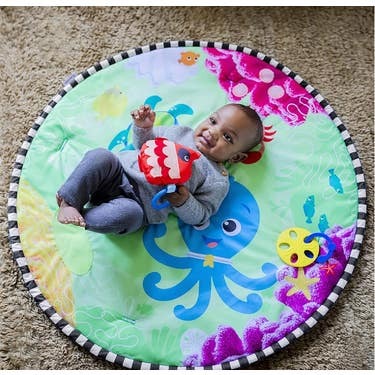
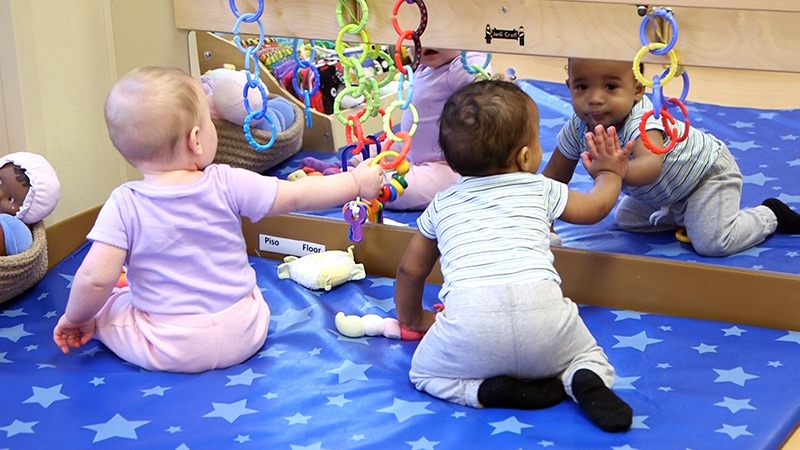
At 6 to 9 months, floor play lets your baby explore a toy by looking, reaching, touching, and moving. Clear a patch of floor and put one toy within reach. Sit close and give your baby time to notice it before you name or move it.
If your baby grabs or taps the toy, answer with a word or a soft sound: “You got it!” A long look counts as playing too.
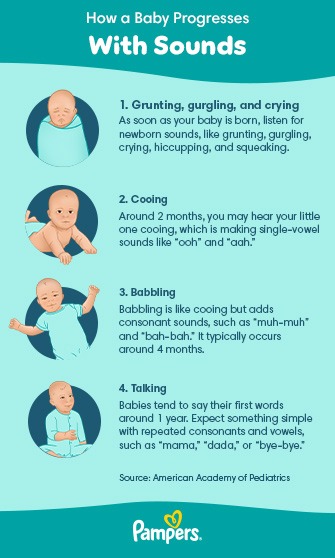
For a second game, listen for a sound your baby makes and echo it. Pause. If another sound follows, keep going. If your baby turns to something else, name it. Looking out a window together and naming a bird call or a passing car works the same way.
Play ideas for 9 to 12 months: copycat games and safe exploration
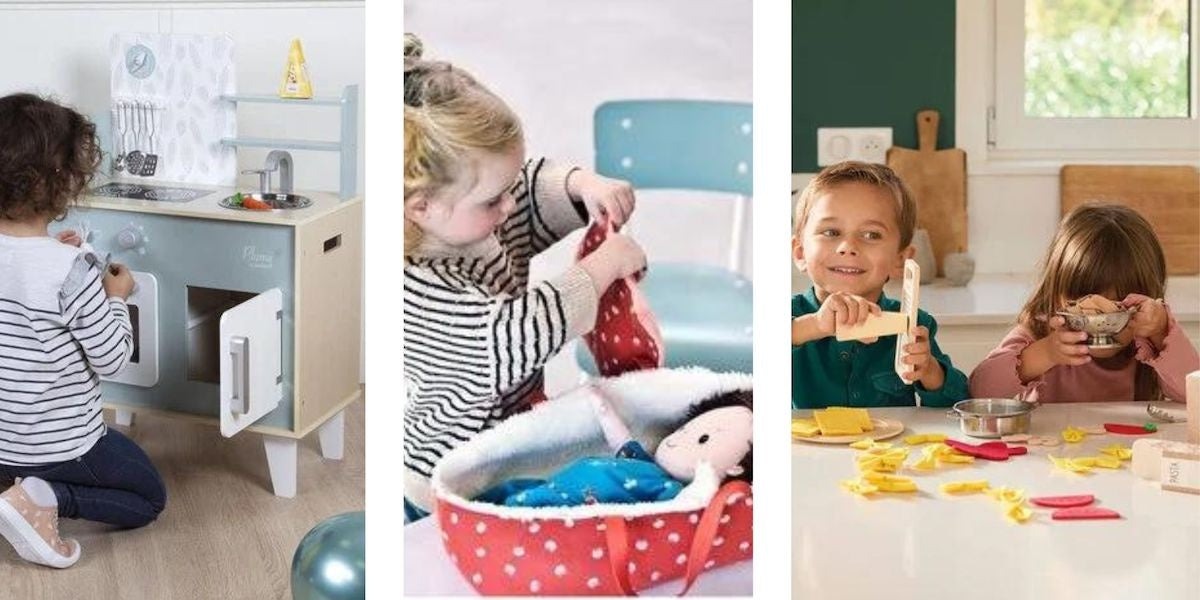
A more mobile baby watches what you do and what surrounds you. Copying a gesture or finding a familiar object gives that curiosity a target.
For a copycat game, pick one sound or movement your baby makes and copy it once, then pause. Tap the floor if they tap it. Answer a babble with a similar sound. Add a wave or a clap for your baby to watch. They don’t have to copy it.
For peekaboo, cover your face with your hands, then reveal it and watch the reaction. Keep the pace slow.
For one parent of a nine-month-old, the pressing issue was a child who wanted to follow and climb while the adult was exhausted:
My baby is 9 months old now, and now that his wake windows are getting longer, I genuinely don’t know what to do with him all day.
I’m so sleep deprived that I barely go out with him. We go on walks here and there, but when we’re at home he gets bored of his toys so quickly. All he wants to do is follow me around, but if I let him out of the playpen he ends up hurting himself trying to climb on everything. I’ve bought one of those little backpack head protectors and a head guard, but he just takes them off.
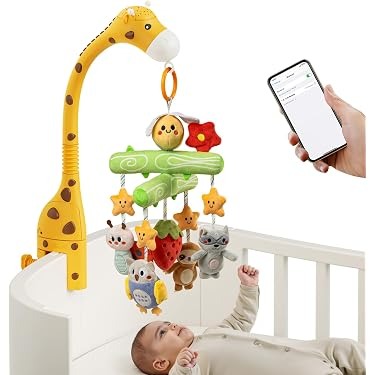
A floor-level copycat game fits a prepared play space with you nearby. The protective products mentioned in the post do not make hazardous climbing safe. For the room setup, see babyproofing as mobility changes.
Play ideas for 12 to 18 months: hide-and-find, pointing, and containers
Around the first birthday, searching, pointing, and handling containers become rewarding games. Start at whatever level your child can join, even if that means watching you.
For hide-and-find, put a large toy on the floor and cover part of it with a light cloth. Leave some of it showing. Ask “Where did it go?” and wait. When your child looks or reaches, pull off the cloth together. For an easier version, reveal the toy yourself after a short pause. Take the cloth away when the game ends and keep it off your child’s face.
Point-and-name needs no gear. When your child looks or points at a ball, an animal picture, or a household item, name it: “Ball!” Follow their interest. A look, gesture, or sound counts as their turn, and saying the word is optional.

When containers catch your child’s interest, drop one large object into a sturdy box or bucket, then take it out. Let your child copy you, touch the box, or watch you do it again. If dropping is hard, let them pull out an item you already put inside.
Play ideas for 18 to 24 months: pretend play and little helper games
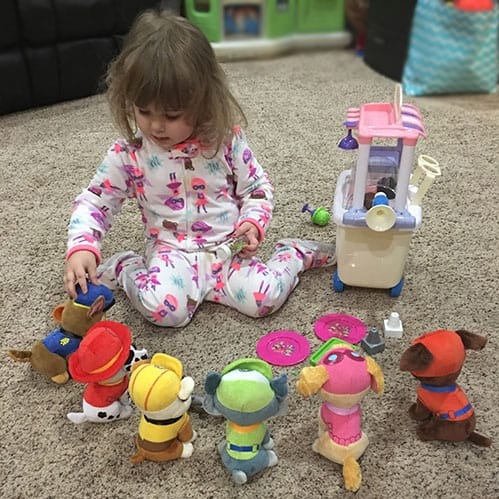
Ordinary household scenes make good pretend games. Set a stuffed animal nearby and show one action, such as rocking the bear or offering it a pretend snack. Pause and let your child decide what happens next. If they only watch, repeat the action slowly. If they add a new part to the story, follow it.
Container play turns into words at this age. Put an item in the box and say “in,” take it out and say “out.” Many children soon take over the game.
Walking toddlers can stroll through a safe space with you while you name what you see. Children who still play at floor level can stay with the pretend and box games.
Closer to age two, try a helper game. Set a clean, large towel on a low, safe surface and show how to move it to a laundry pile. Let your toddler copy one step. Keep the game away from laundry appliances, chemicals, and small objects.
How one familiar game grows with your baby

Peekaboo starts as a face-to-face game and grows into anticipation, then searching. Your child’s reaction tells you which version to play.
| What your child does | Your part | How the game changes |
|---|---|---|
| Watches your face | Cover and reveal your own face with your hands | Expressions and voice carry the game |
| Anticipates the reveal | Pause before showing your face | Your child reacts before the reveal |
| Searches or takes turns | Partly hide a toy on the floor, then help reveal it | Your child looks, finds, hides, or reveals |
When your child hides the toy, look for it together, then give them another turn.
What if your baby loses interest after a few minutes?
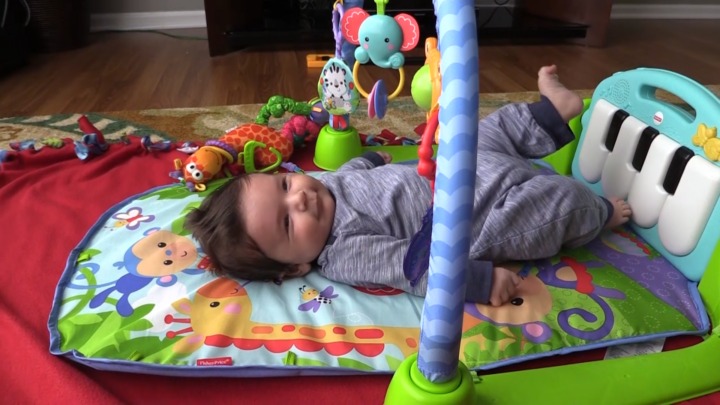
Looking away, turning toward a sound, or dropping a reach tells you the game has changed. Pause and read the cue before you add more.
| What happens | What to try | What to watch for |
|---|---|---|
| Baby looks away or stops responding | Pause and add nothing for a moment | Whether interest returns |
| Baby watches but cannot comfortably reach | Move one object closer or simplify the action | A comfortable way to join in |
| Baby keeps disengaging or seems uncomfortable | Switch games or stop | Whether a different game or a break helps |
If a moving toy stops working, put it aside and try a quiet sound game. Keep going if your baby answers your voice. Stop if they turn away again.
If your baby has a new symptom that worries you or seems unwell, care for their comfort and health first.
Low-prep baby play for long indoor days and tired caregivers
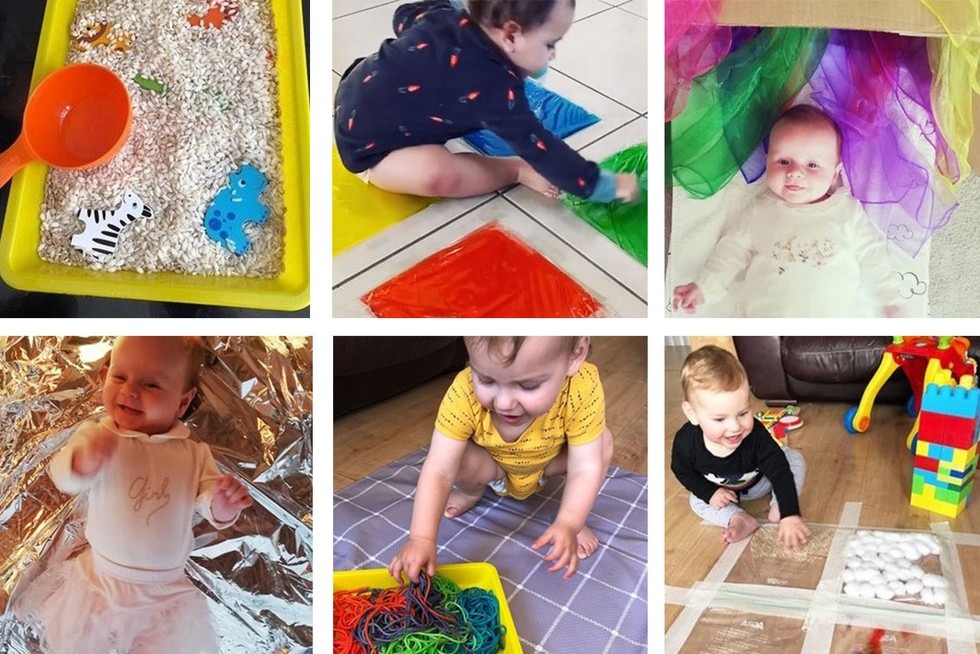
Long days at home wear a caregiver down. A familiar song, one page of a book, or a chat during a household routine takes almost no setup.
One parent described what winter days with a six-month-old felt like:
One thing i’m struggling with now is how mind numbing it is to entertain a 6 month old all day. They aren’t quite small enough to just be held and do everything/nothing with me anymore, but also not big enough to be independent.
It’s winter so my favorite way to burn time (long walks) isn’t really accessible anymore. Right now I just kinda alternate between him sitting with toys, tummy time, baths, watching me cook, and cleaning with one hand while i hold him.
Settle your baby in a play space away from hazards, then fold clean laundry and name each piece: “Blue sock.” Hum a tune as you work and answer any sound your baby makes.
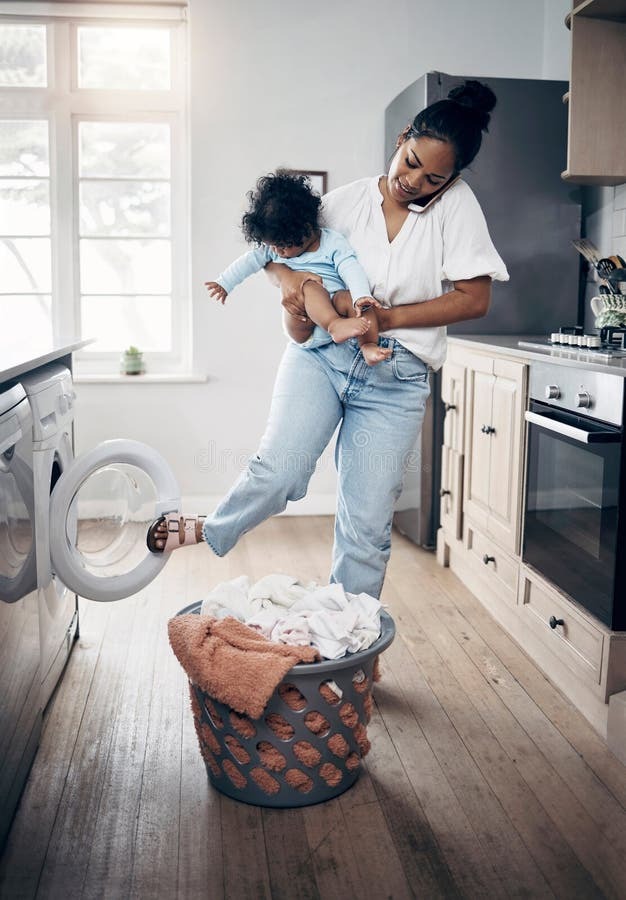
On another day, look through a book together or watch something outside a window. A change of room or a trip outdoors gives you new things to describe. During chores, keep your baby away from hot surfaces, liquids, appliances, and cleaning products.
Do you need to buy special toys for baby play?
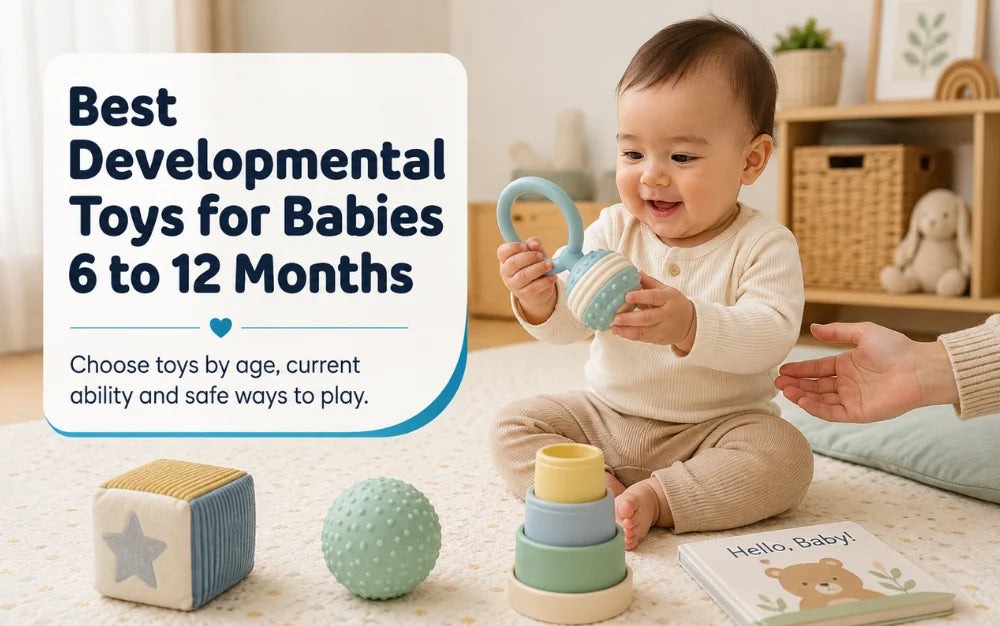
Start with the action you want your child to try. A purchased toy earns its place when it gives you a play action you don’t already have.
A first-time parent preparing a list for a three-month-old explained the uncertainty:
I’m starting an Amazon list for my son who will be 3 months this Christmas. I understand at that age he still doesn’t “play” with toys but for his development I’m wondering if there are toys out there that would be beneficial for him. I’m also wondering if there are any items that we will need at this age that we didn’t need with a newborn. This is my first kid so I have no idea what he will be like at 3-4 months.
| Option | What it provides | What to consider |
|---|---|---|
| You | Talking, singing, copying, hide-and-reveal | Your attention and a comfortable spot |
| Familiar object | Looking, grasping, exploring, shared reading | Size, condition, cleaning, age fit |
| Purchased specialty toy | One particular play action or format | Whether you need that function and lack it already |

A book gives you pictures to name together. A toy your baby can grasp sets up a reaching game. For sound games, your voice does the job. A new toy adds options, but it does not guarantee longer attention or faster development. For decisions involving milestone checklist, developmental skills, and pediatric screening, see Baby Developmental Milestones by Age: A CDC-Based Guide.
Baby play safety: what to check before you begin
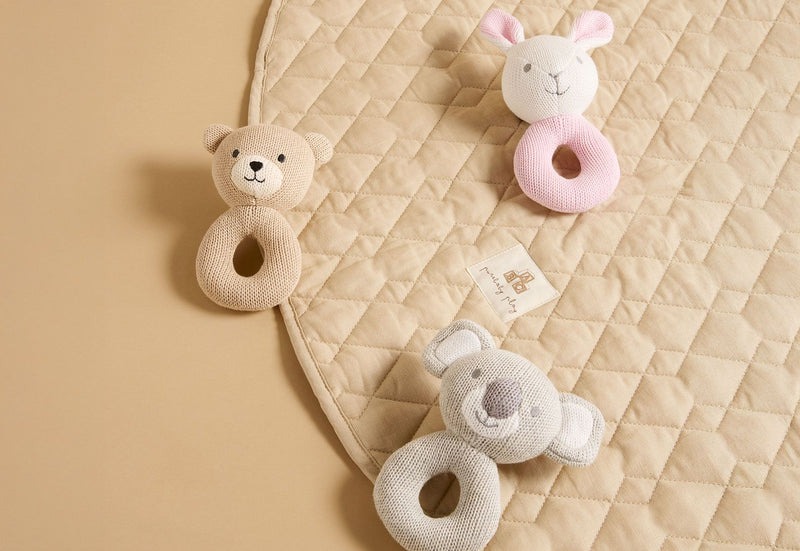
Check the materials, your baby’s position, the room, and how much supervision the game needs. Homemade sensory ideas need the same checks as store-bought toys.
The U.S. Consumer Product Safety Commission’s toy safety guidance explains choking hazards from small parts and small balls, particularly for children under age three. Its other safety materials document the risk of severe injuries when high-powered magnets are swallowed.
- Inspect the object. Skip anything small, detachable, or damaged, especially for a baby who mouths objects. Remove packaging.
- Reject dangerous sensory materials. Keep water beads, marbles, loose high-powered magnets, button batteries, cords, and other swallowable items out of baby games. A homemade container filled with them is still unsafe, even with a tight lid.
- Prepare the surroundings. Use a stable surface away from high edges, climbable furniture, hot objects, and open water. Awake play positions differ from safe sleep positions.
- Stay involved. A play area built for exploring does not replace your own supervision.
On March 12, 2026, a federal CPSC safety standard for water-bead toys took effect for products manufactured afterward. The rule addresses documented ingestion hazards; it does not make water beads suitable for infant sensory activities.
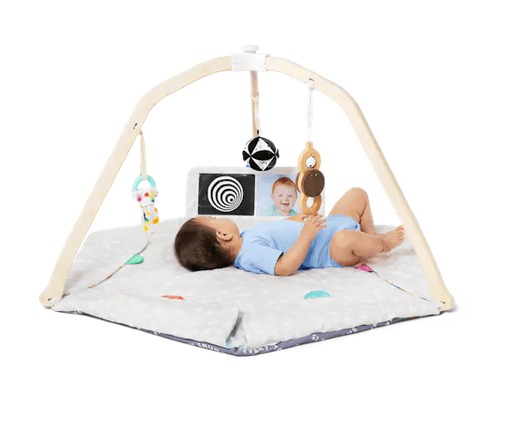
For a sensory game, pick a clean, undamaged object made for your child’s age and stay with your baby. A picture book, a sound-copying game, or a familiar toy is a practical alternative to bead-filled DIY activities.
When to check milestones or talk with the pediatrician instead

Losing interest in a single game does not establish a developmental delay. The CDC’s developmental milestone resources cover ages 2, 4, 6, 9, 12, 15, 18, and 24 months, and their checklists do not replace standardized, validated screening. Talk with your child’s pediatrician about lost skills or broader developmental concerns.