
Start tummy time in the first days home, with your baby awake and you watching closely. Keep sessions short, pick a secure position your baby handles, and change the timing or setup if they protest. If they fall asleep, move them to their back in a safe infant sleep space. Ask your pediatrician if discomfort continues alongside feeding or developmental concerns; otherwise, try again at the next calm awake period.
When to start tummy time and how much to try at first
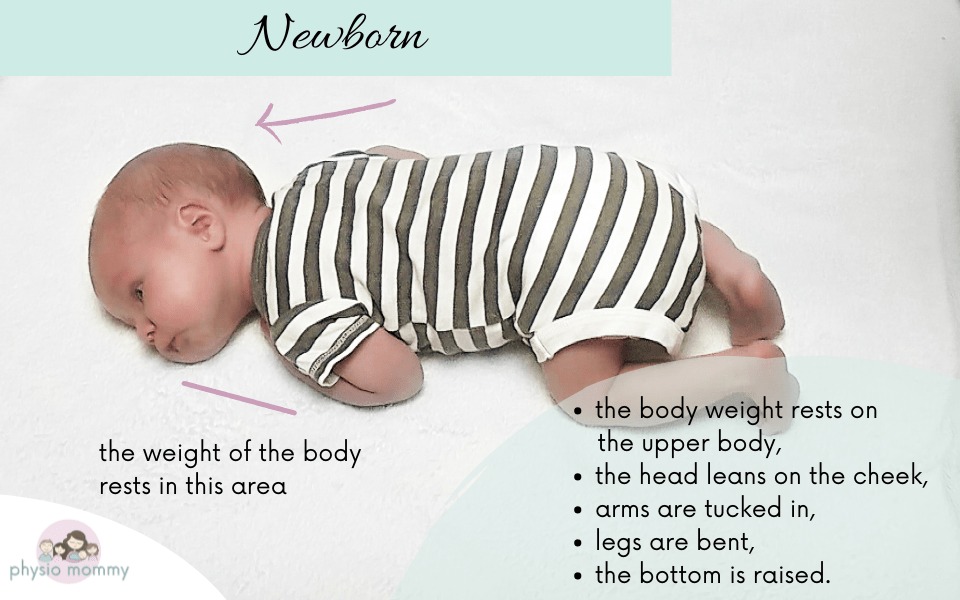
Most healthy newborns can start tummy time as soon as they get home from the hospital. It means time on the tummy while your baby is awake and you’re watching closely. A few comfortable minutes are enough for a first go.
The NIH Safe to Sleep guidance and the American Academy of Pediatrics (AAP) give a gradual starting reference:
| Age or stage | Suggested practice |
|---|---|
| First days home | 2 to 3 sessions daily, about 3 to 5 minutes each |
| About 7 weeks to 2 months | Build toward 15 to 30 minutes total per day, spread across sessions |
The AAP gives the 7-week figure and NIH gives the 2-month one. Both describe similar early progress, and babies differ in tolerance and medical needs. These aren’t required targets for every baby, and the total doesn’t have to happen in one stretch.
Keep the play space safe: awake tummy time is never a sleep position
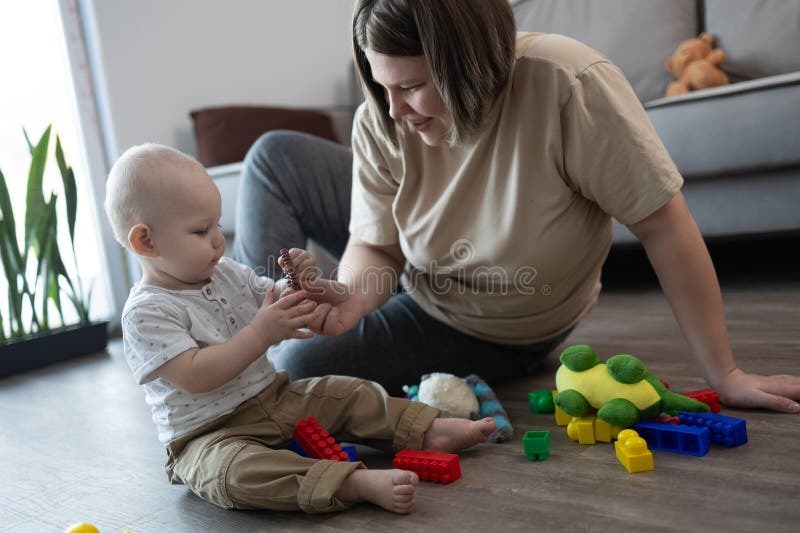
Do tummy time only when your baby is awake and you’re watching the whole time. A clear, firm, stable patch of floor is the simplest setup.
- Check the face. Keep the nose and mouth clear, with no loose soft material nearby.
- Stay beside your baby. The same goes for your chest or lap. Neither is a place to leave a baby alone.
- Avoid fall hazards. Beds, couch edges and elevated benches are fall risks that a floor setup avoids.
- End play if sleep starts. Place your baby on their back in a firm, flat, safety-compliant crib, bassinet or play yard.
The AAP safe sleep guidance applies even when your baby looked comfortable on your chest or the play area. Supervised side-lying is an awake activity, never a side-sleeping recommendation. See the separate safe sleep setup guide for sleep surfaces and equipment.
If your baby cries or refuses tummy time, change the next try

If your baby cries hard, spits up or falls asleep, end the session and settle them. A little fuss while they work to lift their head happens, but there’s no set number of crying minutes to push through.
| What happens | What to do now | What to try or watch next |
|---|---|---|
| Baby is alert and comfortable | Keep going with the short session | Watch for head turning, lifting or arm movement, and stop when they tire |
| Baby cries hard soon after you put them down | End it and settle them | Try a shorter, calmer session next time. Repeated marked distress with other symptoms needs a pediatrician’s input |
| Chest play works but floor play doesn’t | Use a secure supported position for this session | Compare how your baby responds and moves in each position |
| Spit-up or discomfort follows a feed | End the uncomfortable session | Try a different awake period when they seem comfortable |

A familiar face or toy can hold a comfortable baby’s interest.
I’m not sure what I’m doing wrong but my son absolutely hates tummy time. He’s almost four months old and I still can’t get him to do it for longer than about three minutes without screaming. I usually wait at least an hour after eating so it doesn’t hurt his tummy. I’ll get in the floor with him, offer him toys he likes, put a mirror in front of him to look at, play music for him, etc. nothing works. He HATES it. What do I do?

How to start on the floor, chest or supported lap
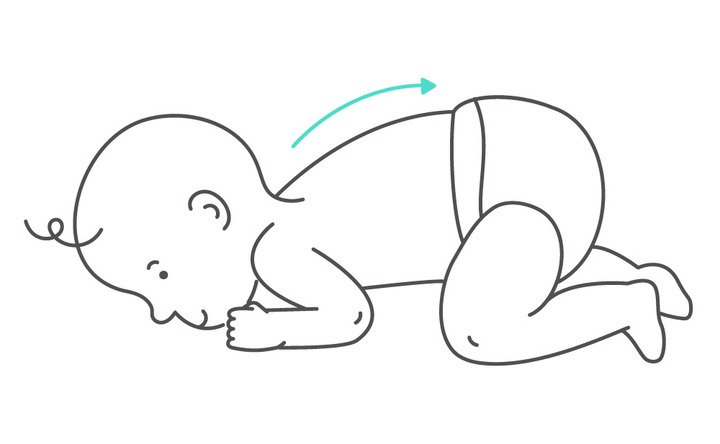
For a first floor session, place your baby tummy-down on a clear, firm play area and get down to eye level beside them, so they can look toward your face or voice. If the floor doesn’t go well, begin with secure chest-to-chest or supported lap play.
| Position | Your role | What it offers | When to reconsider |
|---|---|---|---|
| Firm floor | Stay close at eye level | Room to turn the head, move the arms and eventually push against the floor | Baby can’t stay comfortable or engaged |
| Your chest | Stay awake and stable in a reclined position, and support your baby | Familiar contact, voice and face-to-face interaction | You or your baby gets sleepy, or the hold becomes unstable |
| Across the lap | Sit securely and support your baby’s head, neck and body as needed | A different supported tummy-down start | You can’t keep the support secure |

The AAP’s three tummy time activities also include awake side-lying. Your baby rests on their side with arms forward and legs comfortably bent while you support them. If tummy-down is uncomfortable, side-lying is another awake option.
Should I use a rolled towel or tummy-time pillow?
NIH describes a rolled-towel technique used under supervision. Lurie Children’s advises against certain supports under the chest or arms, including a pillow that comes with a play mat. A clear, firm floor with no props is the simplest start.
Fit tummy time around feeds, spit-up and short wake periods
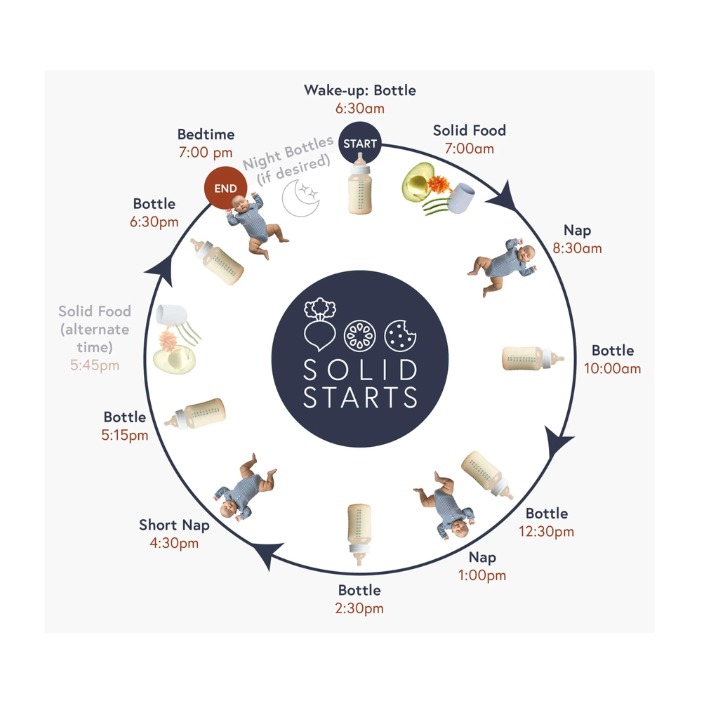
A nap or diaper change can give you a natural window for short play. Newborns who feed and settle back to sleep quickly leave very little comfortable time between those tasks. Don’t wake a sleeping baby just to finish tummy-time minutes.
Some babies spit up during tummy-down play, including against your chest. Choose a time when your baby seems settled after a feed.
Hello. I have a beautiful 7 week old baby girl. She spits up a LOT. (Yes I’ve tried pace feeding, burping, holding upright all that stuff) All the time and it’s made it so hard to get her tummy time. I want to put her down when she’s awake and not irritated (seems like almost never) and not too soon after a feed. I feel like this criteria is impossible to meet!! She maybe gets down once or twice a day max for a few mins. I’m so worried it’s not enough. She spends most her time in her bassinet or cradled in my arms. Tummy time on my chest just results in us both completely covered in spit up. I can’t just hold her there with her face covered with her vomit.
Talk to your pediatrician about significant recurring spit-up, feeding difficulty or real discomfort.
Does tummy time on your chest count?
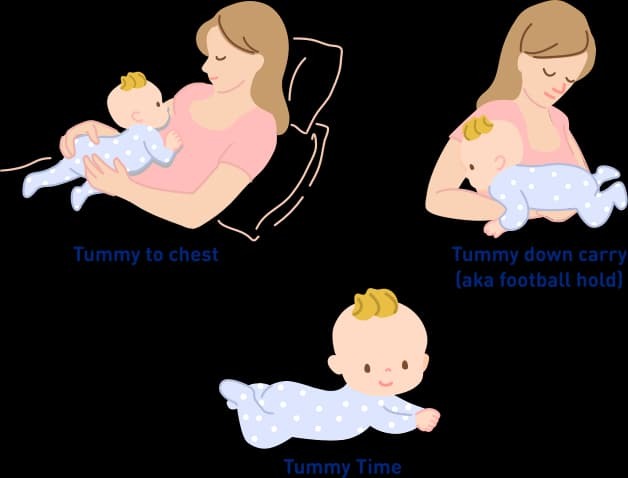
An awake baby lifting their head against your securely supported chest is doing a form of tummy play the AAP describes. The floor gives different chances to turn, lift and press through the arms. AAP and NIH guidance give no exact minute-for-minute conversion between chest time and unsupported floor time, so add brief floor sessions when your baby handles them.
What tummy time helps and what the research shows

During supervised awake tummy time, babies use their neck, shoulder and arm muscles and vary the pressure on the back of the head. NIH describes these movement and positioning benefits. Tummy time does not directly prevent sudden infant death syndrome (SIDS).
A 2020 systematic review by Hewitt, Kerr, Stanley and Okely covered 16 articles, 4,237 infants and eight countries. It found positive associations with gross or total motor development and with movement outcomes including rolling and crawling.
Other results were less clear. The review found an indeterminate association for positional plagiocephaly, walking, standing and sitting, and a positive association for brachycephaly. Most included studies were observational, so they don’t show that a particular session will get an individual child to a skill sooner.
In a 2026 scoping review, Khurana and Inamdar examined 18 publications involving 386 infants, covering techniques such as sensory stimulation, positional supports and structured practice.
What to notice at two and four months
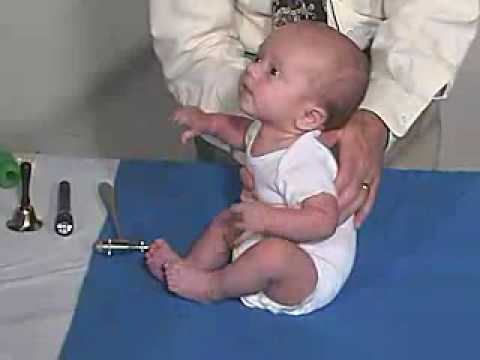
CDC’s developmental checklists include holding the head up on the tummy at two months and pushing up onto the elbows or forearms at four months. The checklist ages mark skills that at least 75% of children show by that age. Treat them as things to discuss at checkups, not home diagnostic deadlines. For a closer look at developmental milestones, motor skills, and communication, read Baby Development and Milestones: What to Watch and What to Do.
The CDC four-month milestone checklist describes the forearm-pushing observation. For the broader sequence of movement skills, see the developmental milestones by age guide.
When to ask your pediatrician about tummy time or development

Premature babies, babies with diagnosed reflux disease and children with special healthcare needs need positioning and activity plans made for them.
| What you notice | Details to describe | Why go |
|---|---|---|
| Consistent head turn to one side or a persistent tilt | Direction, positions and whether it changes | Movement and positioning review |
| An age-related movement skill hasn’t appeared | Age and the movements you’ve seen | Developmental review and possible screening |
| A skill your baby had has disappeared | The earlier ability and what changed | Prompt evaluation of the change |
| Feeding symptoms repeatedly interfere with awake activity | When symptoms happen and how they relate to feeding | Feeding and positioning advice for your baby |
The CDC recommends discussing absent or lost skills and other concerns with a doctor, including whether developmental screening or early-intervention referral is appropriate. For related next steps, the developmental concerns guide covers how to prepare for an appointment.
What if my baby was born early?
For children born more than three weeks prematurely, the CDC advises using corrected age with its milestone checklists. A pediatrician can explain how corrected age applies to your baby’s follow-up.

A parent described feeling guilty after receiving feedback about their baby’s muscle strength at a vaccination visit:
I feel pretty bad. Our baby got his 3 month vaccinations yesterday and the nurse was testing his muscle strength. She said he felt kinda weak and that we should do more tummy time with him, and I’ve been feeling so down ever since. Trying to not spiral with the whole “I’m a bad mom I didn’t do enough tummy time” thing because I know it’s just muscles and they get stronger. But I thought I was doing fine, I carry him around a lot and he’s able to hold up his head nicely already. It’s true I don’t do enough tummy time because he just screams, which I know is normal.
That’s one parent’s read of the visit, so we don’t know what the exam found. Asking which movement prompted the concern and what follow-up makes sense gives you a specific next step.