
Use your baby’s current age to find one useful next step in development, feeding, play, or safety. CDC milestones describe skills observed at specific ages, so you can notice changes without turning each month into a pass-or-fail test. If your baby was born prematurely, compare skills against corrected age. If your child loses a skill or you have a developmental concern, contact your pediatrician about screening or referral without waiting for the next age band.
Choose Your Baby’s Current Age
You don’t need to read everything about the first two years to find something useful for your five-month-old. Find your baby’s age below and start with the question that matters today.
A baby who is exactly six months old goes in the 6 to under 9 months group. At exactly 24 months, your child stays in the last group. CDC milestone checklists use their own specified ages.
A parent on r/NewParents asked for a month-by-month resource:
I have a 2 month old baby (was born at 33 weeks premature). I have a book from Public Health that discusses what to expect birth through 1 year, with lots of great information- but all the information is interwoven together and not separated out by month. Is there anything that covers development/milestones organized month to month so I don’t feel as overwhelmed reading a whole book at once to get the information I need? Could be books, app, blogs or resources online.
If your baby arrived early, the corrected-age section below explains which age to compare against. If you’d rather start from a task such as feeding, sleep, or play, see Baby Care Guide: What Matters Now, From Newborn to Age 2. Newborn feeding, sleep patterns, and early development are covered in Baby 0 to 3 Months: What Changes in Daily Life, Feeding, and Sleep.
What Changes from Birth to 24 Months

Babies begin by responding to faces and voices. Over the next two years, reaching, movement, gestures, language, and play become increasingly complex. Toddler mobility, first words, and well-child visits are covered in 18 to 24 Months: What Changes and What to Adjust at Home.
| Your baby’s age | Examples from CDC checkpoints | Everyday focus |
|---|---|---|
| Birth to under 3 months | At 2 months: smiling when spoken or smiled to; lifting the head during tummy time | Face-to-face time and supervised play while awake |
| 3 to under 6 months | At 4 months: responding with sounds; pushing up on forearms during tummy time | Back-and-forth sounds and reaching |
| 6 to under 9 months | At 6 months: laughing and rolling from tummy to back | Floor play and early movement |
| 9 to under 12 months | At 9 months: sitting without support and looking when called by name | Handling objects and communicating |
| 12 to under 18 months | At 12 months: pulling up to stand; at 15 months: pointing to request something | Moving around, gesturing, and joining daily routines |
| 18 through 24 months | At 18 months: walking independently; at 24 months: combining at least two words | Talking, imitating, and more complex play |

Your five-month-old sits in the 3 to under 6 months row. The table shows the 4-month CDC checkpoint, and the next one shown is at 6 months.
What a Developmental Milestone Means
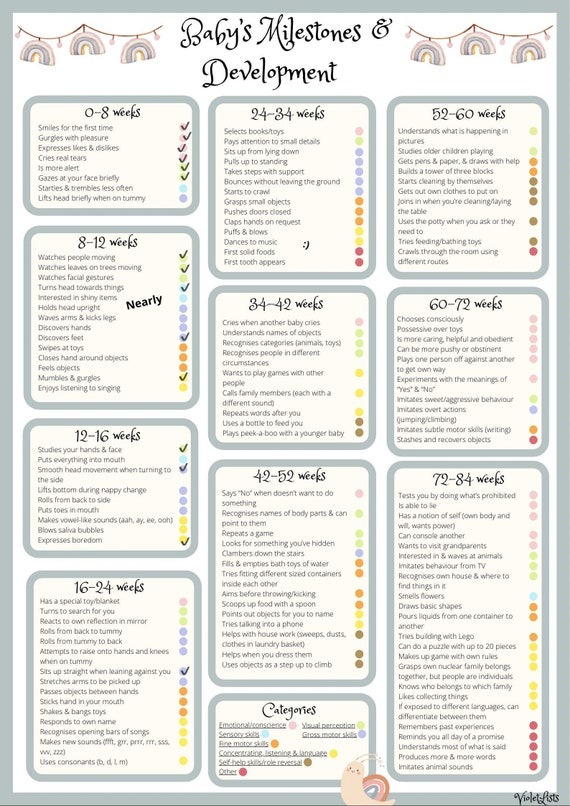
A developmental milestone is a specific behavior that marks progress in movement, communication, learning, or social interaction.
The CDC’s checklists list skills that 75% or more of children can do by the stated age.
Take the nine-month checklist. It includes sitting without support and looking when called by name. You can see both at home, and a concern about either deserves attention. An observation at home is not a clinical diagnosis.
Developmental monitoring means noticing new abilities, changes, and concerns over time. Parents, caregivers, and healthcare professionals all do it, and checklists make the observations more specific.
Developmental screening uses a validated instrument administered by a trained professional. It gives a structured assessment that everyday observation can’t.
The CDC developmental milestone checklists give the exact age and skill descriptions.

A parent on r/beyondthebump described how it feels to watch other babies reach skills first:
All that said, I keep seeing so many posts from moms with similarly aged babies, within 1-2 weeks of our girl, and they are rolling, almost sitting, etc. I feel like I’m failing my baby because she cannot do those things yet, despite knowing logically that she is still well within normal development ranges, her pediatrician and PT aren’t the least bit concerned, and in all other ways she is happy and thriving. I just can’t stop my brain from telling me I should be doing more.
If a worry like hers comes up, read when to talk with your pediatrician.
Corrected Age for Babies Born Early
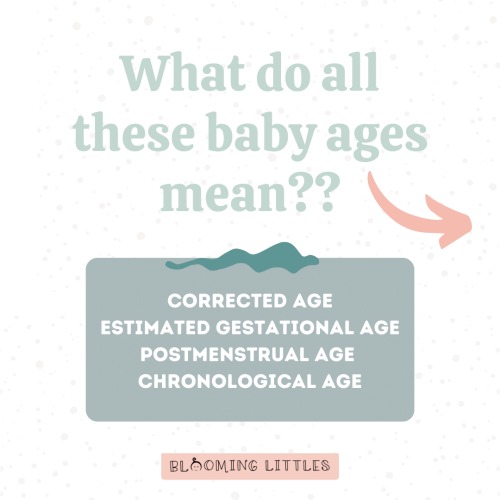
For a baby born prematurely, developmental comparisons use corrected age, also called adjusted age. It accounts for how many weeks before the expected due date the baby was born.
Chronological age is the time since birth. Corrected age subtracts the number of weeks born early.
Corrected age (weeks) = chronological age (weeks) minus weeks born early.
The American Academy of Pediatrics gives this example: a baby who is 16 weeks old and was born four weeks early has a corrected age of 12 weeks. Use weeks throughout the calculation.
Use the corrected age to pick the matching age-based checklist.
The American Academy of Pediatrics guidance on preterm milestones describes using corrected age for developmental tracking until about two years of age.
Corrected age applies only to developmental comparisons. Feeding, clinical follow-up, immunizations, and other medical care follow your care team’s instructions, which can differ from a corrected-age calculation.
Get the number of weeks born early from your child’s care team.
Match the Stage to Feeding, Sleep, and Safety

Readiness, new abilities, and safety needs decide which question to tackle first.
| Stage or change | Decision to make | Where to go next |
|---|---|---|
| Early infancy | Is the sleep area set up safely? | Review safe-sleep steps for the infant sleep area |
| Around 6 months | Is your baby ready to begin complementary foods? | Check the readiness signs below |
| Increasing mobility | What can your baby now reach, pull up on, or climb? | Check furniture and TV anchoring as mobility increases |
| Second year | Which activity suits your child’s new skills? | Choose an awake-time activity |
Starting solid foods
The CDC and AAP recommend introducing complementary foods around six months, once developmental readiness signs are present. Starting before four months is not recommended.
Readiness signs are head and neck control, sitting with or without support, opening the mouth for offered food, and swallowing it without continually pushing it out.
Two babies approaching six months can be in different places. One sits with support, shows interest in offered food, and has the readiness signs. The other needs more time or individualized clinical guidance. Four-month sleep, feeding changes, and tummy time are covered in Baby 3 to 6 Months: What Changes in Sleep, Feeding, and Play.
CDC guidance on introducing solid foods has the detailed criteria.

Sleep and home safety
Place your baby on their back for every nap and nighttime sleep, on a firm, flat sleep surface, with loose bedding and soft toys kept out of the sleep area.
As your baby moves more, watch what they can now reach, roll toward, pull up on, or walk to. A baby learning to roll has different surroundings from one pulling up on furniture. Secure top-heavy furniture and televisions before your child can pull up or climb, following the manufacturer’s anchoring instructions.
What to Do While Your Baby Is Awake

Start with whatever has caught your baby’s attention.
- In the early months: Talk to your baby, smile, and wait for a response. During supervised tummy time while your baby is awake, get face to face as they practice lifting their head.
- As reaching and vocal play emerge: Answer when your baby makes a sound. Put a toy within reach and let them explore it.
- As object play becomes more interesting: Try a simple game of hide-and-find, or offer objects that can go into a container and come back out.
- During the second year: Name familiar objects, share a book, or let your child copy an ordinary action such as using a toy cup.

Pick one interaction that fits your baby’s interest and abilities.
When to Talk With Your Pediatrician
Tell your pediatrician if your child has lost a skill, is missing a milestone at the checkpoint, or has another developmental concern. Ask whether validated screening or referral is needed without waiting for the next routine visit.
Developmental screening and well-child visits
| Screening or assessment | Recommended timing | What it means |
|---|---|---|
| General developmental screening | 9, 18, and 30 months | Uses validated instruments to assess development |
| Autism-specific screening | 18 and 24 months | Screens for autism-related developmental concerns |
| Additional screening when concerns arise | At other ages when indicated | A concern can prompt assessment outside the routine schedule |
The 30-month visit is included to cover the period after the first two years. These are recommended screening ages, and not every appointment includes the same assessment.
The CDC guidance on developmental monitoring and screening explains the difference between routine observation and formal assessment.

A brief description helps more than telling your pediatrician your baby seems behind.
You can bring:
- The specific observation: What your baby does, struggles to do, or has stopped doing.
- The timing: When you first noticed it and whether it has changed.
- Context: Prematurity, observations from other caregivers, and any existing medical or developmental plan.
- The decision you need help with: Whether you need validated screening, a specialist assessment, or a referral to early-intervention services.
If your child has an individualized developmental plan or specific medical restrictions, follow your healthcare team’s guidance. That plan takes precedence when interpreting your child’s progress.
Early-intervention programs are available through states and territories in the United States. Depending on your child’s developmental history and the assessment, a clinician may advise monitoring, further evaluation, or a referral.
Keep It Simple

One next step from your baby’s age band is enough for today. CDC milestones are checkpoints you watch for in children up to 24 months.