
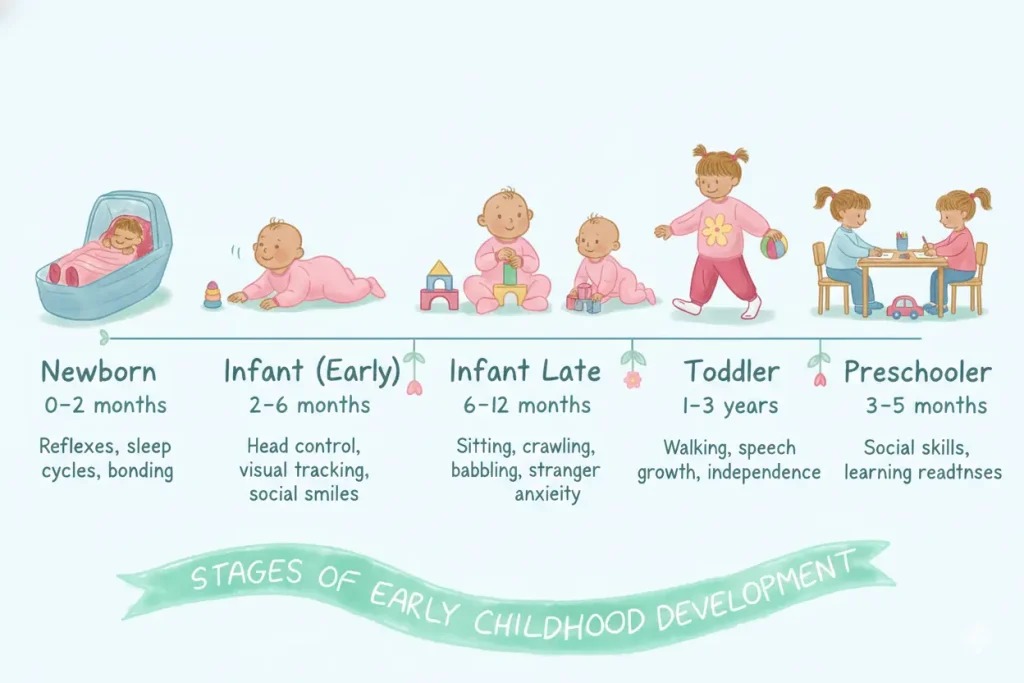
Use the age stages below to see how needs change. Respond to feeding cues, follow safe sleep rules, and watch for new skills. A rectal temperature of 100.4°F (38°C) or higher in a baby three months old or younger needs medical attention right away. For any other worry, write it down and use the focused guide that covers it.
What changes from birth to three months

In the first three months, feeding, sleeping, changing, and comforting can fill the whole day, and development is easy to miss. Then you catch your baby watching a face for longer, reacting to a familiar voice, or lifting the head a little during play. Routines stay unpredictable throughout. For more on development, daily routines, and feeding transitions, read Baby Month by Month: What Changes and What to Do.
| Age | What the day involves | What to notice |
|---|---|---|
| Birth to 4 weeks | Repeated feeds, diaper changes, comforting, and sleep | Responses to a voice, touch, or nearby face |
| 5 to 8 weeks | Changing feeding and nap patterns; difficult evenings | More attention to faces, early responsive smiles or sounds as the two-month stage approaches |
| 9 to 12 weeks | Rest and feeding keep varying, with more periods of interaction | Stronger head and upper-body lifting during awake tummy time and more varied responses to familiar voices |
The CDC’s two-month checkpoint gives examples of social, communication, cognitive, and movement skills. No fixed week applies to when each behavior must appear.
The first four weeks: what a day looks like

In the first month, one feed leads straight into changing, comforting, and another chance to sleep. A task you planned at home may have to wait because the baby needs care again. To compare newborn bathing, diaper changes, and cord care, use Newborn Care Basics for the First Month.
A care cycle includes these activities, in whatever order your baby needs:
- Feed: Respond to your baby’s feeding cues.
- Change or comfort: Handle a diaper, clothing, or settling as needed.
- Connect: Talk or make eye contact if the baby is awake and receptive.
- Rest: Offer a safe infant sleep space when the baby is ready to sleep.
Some cycles end quickly in sleep. Others mean more holding or another feed. The order changes, and you get little uninterrupted time between tasks.

Keep diapers and the things you use during a feed within easy reach. When the baby needs to feed or rest, an awake interaction can wait.
Feeding in the first three months
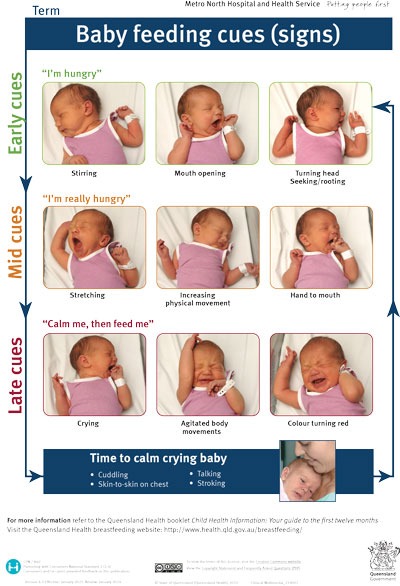
Frequent feeds define early life for breastfed babies. The CDC describes changing intervals over the first days and months, including times when a baby wants milk sooner than expected.
These numbers describe breastfeeding, especially exclusive breastfeeding in the first weeks and months. Your baby’s growth and any feeding plan from your doctor decide how they apply to you.
| Breastfeeding context | CDC description | What it means for you |
|---|---|---|
| Initial days | About every 1 to 3 hours | Feeding can fill most of the day and night |
| First weeks and months | Commonly every 2 to 4 hours | Intervals shift as the baby grows |
| Cluster feeding | Sometimes as often as hourly | A feed can come earlier than expected |
| Some longer sleep stretches | Occasionally 4 to 5 hours of sleep | A long sleep stretch is no reason to delay a feed |
| Across 24 hours | About 8 to 12 breastfeeds | A daily total to expect |
The CDC breastfeeding guidance also explains that very sleepy newborns sometimes need waking to feed.

For babies receiving only formula, the CDC describes feeding about every 2 to 3 hours during the first days. During the first weeks and months, most formula-fed infants feed about every 3 to 4 hours. Combination-fed babies need a feeding plan that fits their circumstances, and breastfeeding frequencies don’t tell you formula volumes.
If your baby wants to eat sooner than a chart says, feed the baby. If you worry about intake or growth, ask a pediatrician or qualified feeding professional. Milk is the focus at this age: the CDC places starting foods other than breast milk or formula around six months and advises against introducing them before four months. To compare feeding cues, milk intake, and newborn diapers, use Feeding a Newborn: Cues, Methods, and When to Get Help.
Sleep and naps with a flexible routine
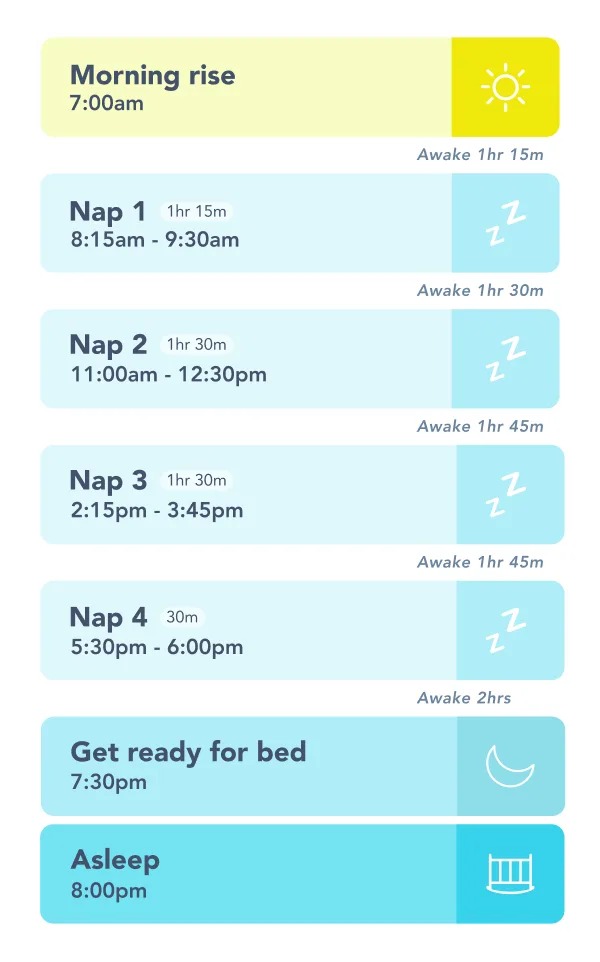
Newborn sleep changes from one day to the next. A neat nap chart leaves no room for the next feed, a diaper change, or the time it takes to settle a baby. For newborn sleep, night waking, and feeding cues, see Newborn Sleep: What to Expect in the First Months.
Take a feed every two hours, 90 minutes awake, and a nap of one to two hours. They can’t all fit into the same two hours. The figures are an example of a clash, not recommended wake times.
| Daily-life element | What can flex | What sets the limit |
|---|---|---|
| Play and changing | Timing, around current needs | Baby’s comfort |
| Nap expectations | Plans for an interrupted or shorter nap | Safe infant sleep conditions |
| Evening order | The sequence of ordinary settling activities | Feeding needs and signs that need medical attention |

Expect a baby to resist being put down or wake earlier than you hoped.
Crying and evening fussiness

Parents call it the “witching hour”: a baby who was calm all day starts fussing in the evening and needs comforting again and again, just when you’re worn out. The label says when it happens and nothing about the cause.
Feeding cues, tiredness, trouble settling, and discomfort are hard to tell apart when they show up together. Pay attention to crying that is unusually persistent, alarming, or comes with other worrying symptoms. Don’t diagnose it from a week number or a parenting discussion, since that can delay a useful conversation with the doctor.

Note the timing and any feeding or sleep changes that make the episode different from your baby’s usual behavior. If something concerns you, contact the pediatrician.
If crying leaves you overwhelmed, put the baby somewhere safe, step away briefly to regain your composure, and check on the baby during that break.
Smiles, sounds, head control, and supervised play
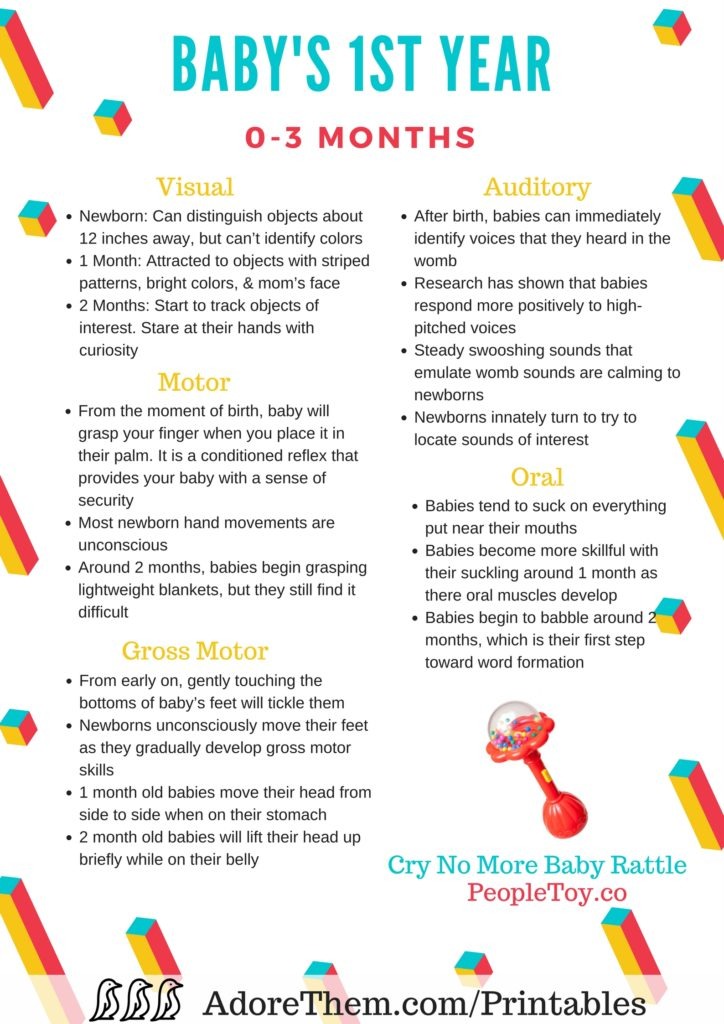
By two months, many babies respond more visibly to familiar people and show early communication and movement skills. The CDC organizes its checklist into social and emotional, language and communication, cognitive, and movement domains.
- Social response: Looking at faces and smiling when someone talks or smiles.
- Communication: Making sounds beyond crying and reacting to loud sounds.
- Attention: Watching a person move or looking at a toy briefly.
- Movement: Holding the head up during tummy time, moving both arms and legs, and briefly opening the hands.
The CDC’s two-month milestones describe behaviors reached by at least 75% of children by that age.

Speak to your baby, respond to the sounds they make, or let them watch your face. Tummy time is another awake activity and always needs supervision. The American Academy of Pediatrics describes starting with approximately 3 to 5 minutes, two or three times daily, and working toward 15 to 30 minutes per day by seven weeks.
For babies born more than three weeks prematurely, the CDC says to use corrected age with its milestone checklist. If your baby loses a skill they previously had, has not met a checklist milestone, or you have a developmental concern, discuss it with the pediatrician.
Sleep safety on difficult days
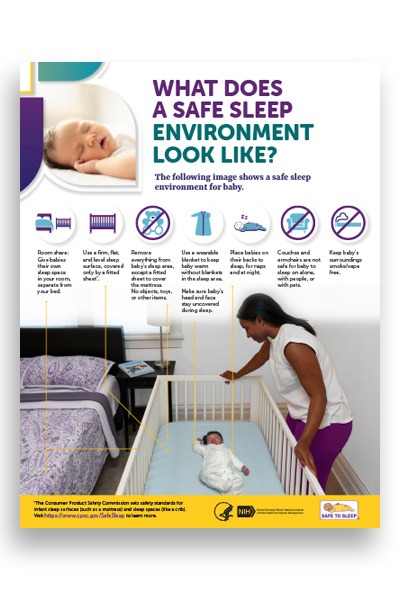
The American Academy of Pediatrics sets the same sleep requirements for every nap and night, including nights when you’re exhausted.
- Position: Put the baby on the back for sleep.
- Surface: Use a firm, flat infant mattress or sleep surface.
- Clear space: Keep pillows, loose blankets, bumpers, and other objects out of the infant’s sleep area.
- Equipment: A couch, chair, swing, bouncer, or similar soothing place is no substitute for an infant sleep space.
The AAP also identifies surfaces inclined more than 10 degrees as unsafe for infant sleep. A device below that angle is not automatically safe.
A baby falling asleep in your arms is an especially difficult moment when you’re tired. Falling asleep with a baby on a couch or chair raises serious sleep-related dangers. Follow the AAP safe sleep guidance for the intended nap and nighttime space.
These precautions lower the risk of sleep-related death without eliminating it. Tummy time is for awake play and is never a sleep position.
When to contact the pediatrician and what to bring

Some symptoms need immediate medical attention. Routine concerns can wait for scheduled well-child visits. For very young babies, fever is an especially important trigger.
Act immediately: A rectal temperature of 100.4°F (38°C) or higher in a baby three months old or younger needs immediate medical attention, even without other symptoms. The AAP directs babies younger than three months with fever at this threshold to the emergency department right away; for a baby three months old, call the pediatrician immediately.
A newborn who is difficult to wake needs evaluation in the emergency department. If the baby cannot be awakened, call 911.
See the AAP’s infant fever guidance for the age-specific recommendation.
The American Academy of Pediatrics lists US well-child visits at 3 to 5 days old, one month, and two months, followed by a four-month visit.

Before a routine visit, write down your concern so the useful details are ready when you talk with the doctor:
- Age: Include corrected age if relevant.
- Main change: Describe the behavior or skill you noticed, and when.
- Feeding: State the feeding method and any particular intake concern.
- Sleep or crying: Include a change that might help explain the concern.
- Temperature: Include the reading and how it was measured when relevant.
- Questions: Prioritize three to five concerns for the appointment, as the AAP recommends.
Caregiver support and the next stage

Help with a prepared meal, groceries, or a shared care shift eases the early weeks. Persistent or severe emotional distress calls for professional support. When your baby moves past three months, a guide to months three through six answers the next age-stage questions.