
Between 9 and 12 months, let the skills your baby shows guide changes to the room and the table. Make newly reachable spaces safer, offer food textures your baby can handle while breast milk or formula stays central, and plan for the first birthday’s feeding changes. If your baby is missing a CDC milestone, loses a skill, has ongoing feeding trouble, or you have any other concern, call your pediatrician. Otherwise, make one change that fits what your baby does now.
A baby who scoots across the living room and a baby who pulls up beside the couch may be the same age. Their next safety challenges are different. At the table, a baby who can pick up tiny objects with two fingers is developing a new way to explore food, even if much of dinner ends up on the tray.
The full first-year picture is in Baby Month by Month: What Changes and What to Do.
What Changes Between 9 and 12 Months? Start With the Skills You See
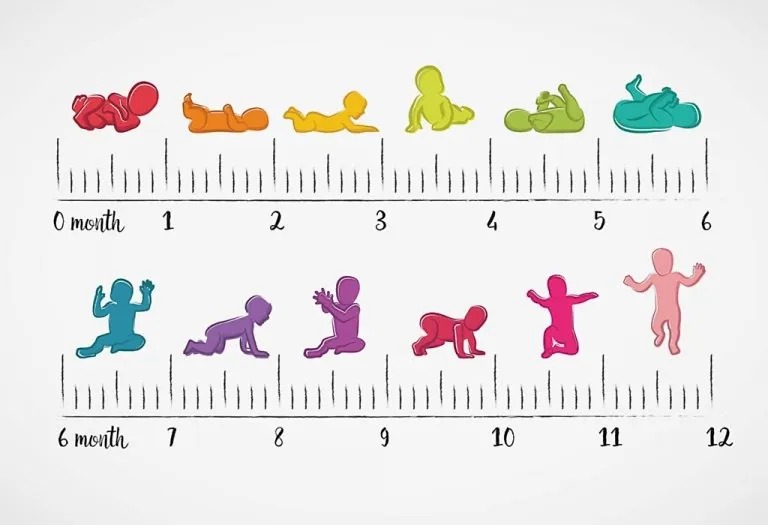
The CDC keeps separate nine-month and one-year developmental checklists. Each milestone describes an ability that at least 75% of children show by that age. These numbers give you something to discuss at checkups. Your pediatrician looks at your baby, not the average.
At nine months, CDC movement examples include getting into a sitting position, sitting without support, moving an object from one hand to the other, and raking food toward the hand with the fingers. By one year, examples include pulling up to stand, walking while holding furniture, picking up small objects between thumb and pointer finger, and drinking from a lidless cup while an adult holds it. Furniture anchoring, cords, and stair gates are covered in Babyproofing Your Home by Mobility Stage.
| What you see | What changes | What to do |
|---|---|---|
| Sitting independently or moving farther along the floor | More places and objects come within reach | Look over every room your baby can now reach |
| Pulling up or stepping while holding furniture | Furniture and TVs become something to hold onto | Check that furniture and TVs are stable and anchored |
| Raking food or picking it up with thumb and finger | Handling food gets more precise | Match food texture and shape to what your baby can manage |
| Dropping food or resisting a texture | Some meals end up mostly on the floor | Tell a messy meal from a pattern |
| Approaching twelve months | Drink and food guidance changes | Review the birthday milk and honey rules |
| Missing an age milestone or losing a skill | Time to talk to your pediatrician | Tell your pediatrician what you have seen |
Moving More: Crawling, Pulling Up, and Cruising
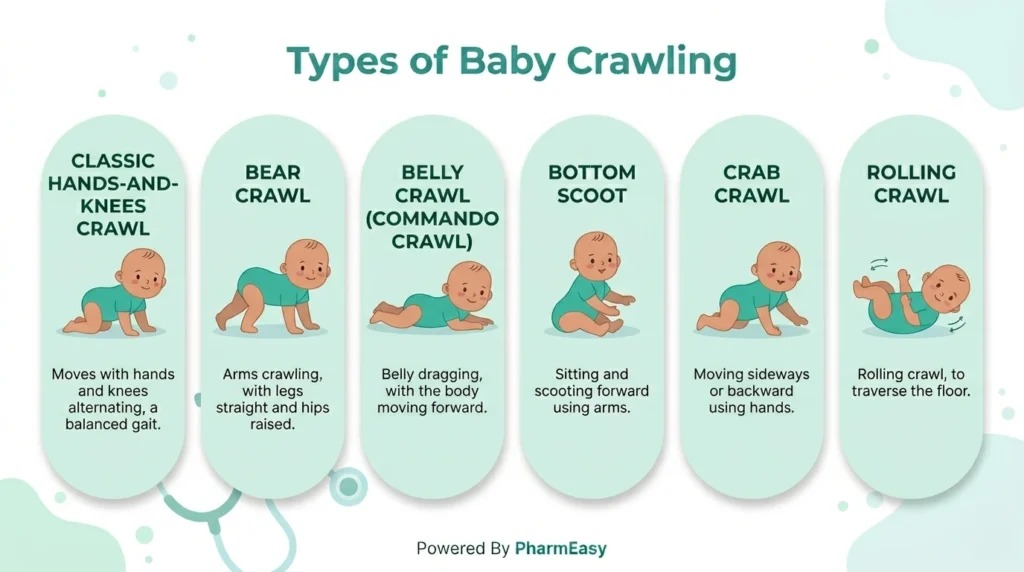
Babies get across the floor in different ways, including crawling and scooting. Moving across a room, kneeling against furniture, pulling to stand, and taking steps while holding on are separate skills, and you can describe each one precisely. More on crawling and first steps: Crawling and First Steps: How Babies Learn to Move.
Independent walking is a separate milestone from the CDC’s one-year pulling to stand and cruising. The American Academy of Pediatrics also describes variation in how babies move between eight and twelve months.
One parent described a nine-month appointment that left them worried about pulling to stand:
My 9 month old recently had her check up at the doctor, and when I was asked if she was trying to pull to stand, I told her no because she’s not, and the doctor got on to me and gave me a sheet of exercises and told me she needed to be walking at her 12 month check up. I have been helping my baby by using foam blocks and toys, I’ve had her kneeling and she can do that a long time without leaning her whole body on the block, and she can stand for a short amount of time using her hands on the block without me holding her, but as far her wanting to pull up on her own, that’s not happening. Any idea how I can get her to pull up on her own?
Babyproof as Each New Skill Appears
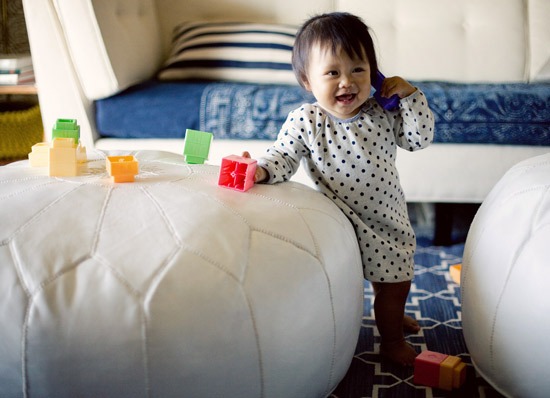
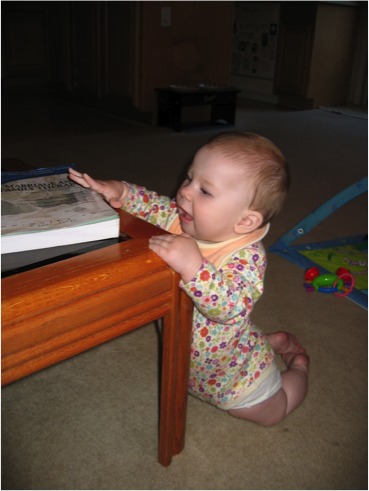
Pulling up lets your baby use household furniture for support. A newly standing baby will grab a dresser, TV, or low stand.
The Consumer Product Safety Commission advises securing furniture and televisions to prevent tip-over injuries.
- Furniture and televisions: Inspect any dresser, TV, stand, or shelving your baby might pull on. Follow the product’s anchoring instructions.
- Small objects and new routes: Look again at toys and loose items now reachable from floor or standing height, and walk through every room your crawling or scooting baby can now enter.
- Cords: Check the area around anything your baby pulls up on, including what an outstretched arm can reach.
In 2026, the CPSC recalled Wnttmt baby walkers sold by WURUI BABY for fall and entrapment hazards. If you own a recalled walker, stop using it and follow the CPSC refund instructions.
The American Academy of Pediatrics advises against seated baby walkers with wheels, including models not on recall lists, because they carry injury risks and do not help babies learn to walk.
Meals Now Depend on Skills as Much as Appetite
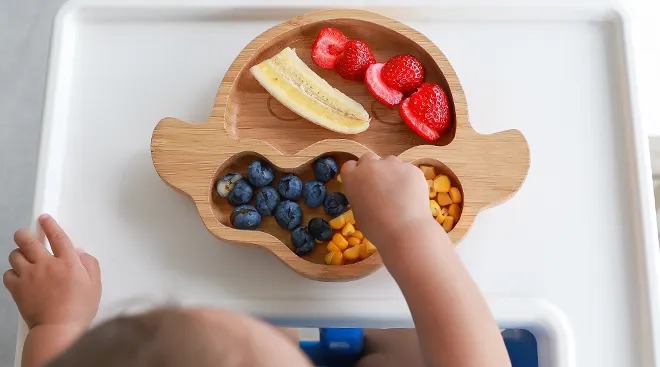
Feeding at nine to twelve months involves grasping, handling food textures, and coordinating bites and sips. What your baby can safely eat depends on the food’s shape and consistency and on your baby’s feeding ability.
Breast milk or infant formula remains a main source of nutrition from six through twelve months, while solid foods contribute more and more. You can offer new textures without cutting milk feeds abruptly.
The CDC advises adjusting size, shape, and texture to reduce choking hazards. Seat your baby upright and stay with them throughout eating.
Adapting an ordinary dinner
A vegetable from the family dinner can be your starting point. Cook it until it mashes easily with a fork, then check it against the CDC’s choking-hazard guidance before serving. Remove hard pieces, seeds, and bones.
Adapting dinner this way can feel less daunting than cooking a separate meal. One caregiver of a ten-month-old described the strain:
Hi, I am desperate for meal ideas for my 10mo. A lot of the time it’s just him and I at home for dinner and I eat a lot of random stuff a lot of the time. Lately I’ve been relying on pouches way too much and he is getting more and more interested in food. I feel like I’m letting him down. Any advice? Tonight’s struggle meal: a chicken and veggie pouch and cucumber sticks
Pouches still work at dinner. Your baby’s growing interest in food also lets you add other textures, cut to a safe size and shape.
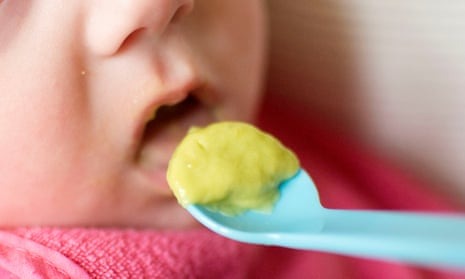
When Food Hits the Floor and Refusal Needs Attention

Dropping part of dinner, rejecting one texture, and refusing nearly every solid food are three different situations. Look at what your baby accepts, whether the reaction keeps happening, and whether eating causes distress.
| What you see | What a parent described | What to do |
|---|---|---|
| Food thrown or spoon refused | A ten-month-old throws food and resists spoon-fed purées while continuing to breastfeed | Look at which foods your baby does accept |
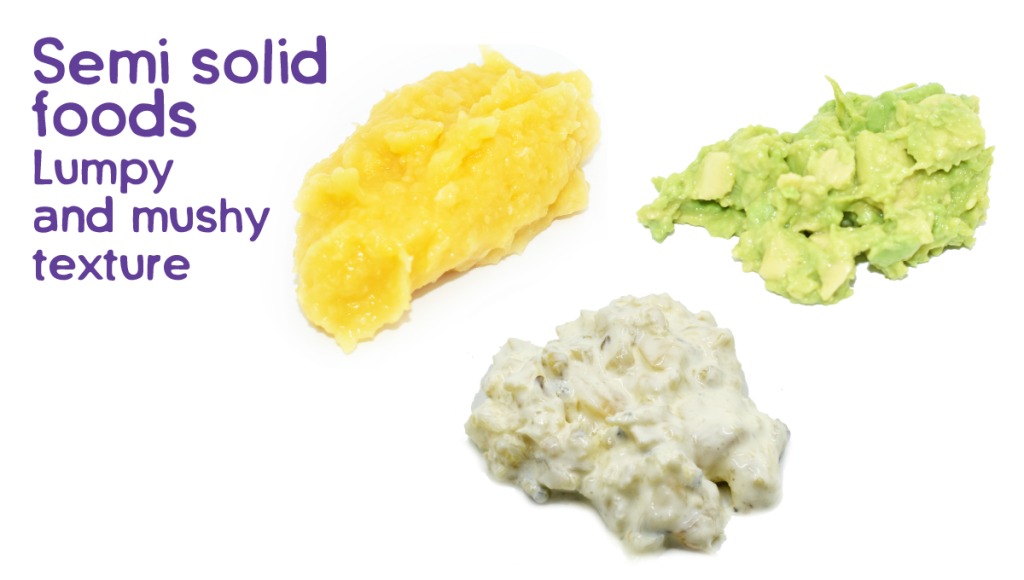
| Smooth foods accepted, pieces rejected | Purées go down, but more textured foods are spat out or left untouched | Note which textures work and whether the difficulty continues |
| Repeated broad refusal with distress | A caregiver reports crying at food and very little acceptance of solids | Raise persistent refusal or nutrition concerns with your pediatrician |
If you have a feeding concern, write down the foods and textures your baby accepts, how your baby reacts to other offerings, and how things have changed. Persistent refusal, distress, worries about intake or growth, or a lost feeding skill are reasons to call your pediatrician. Those details help decide whether your baby needs an individual feeding assessment.
The First-Birthday Shift: Milk, Cups, and Meals
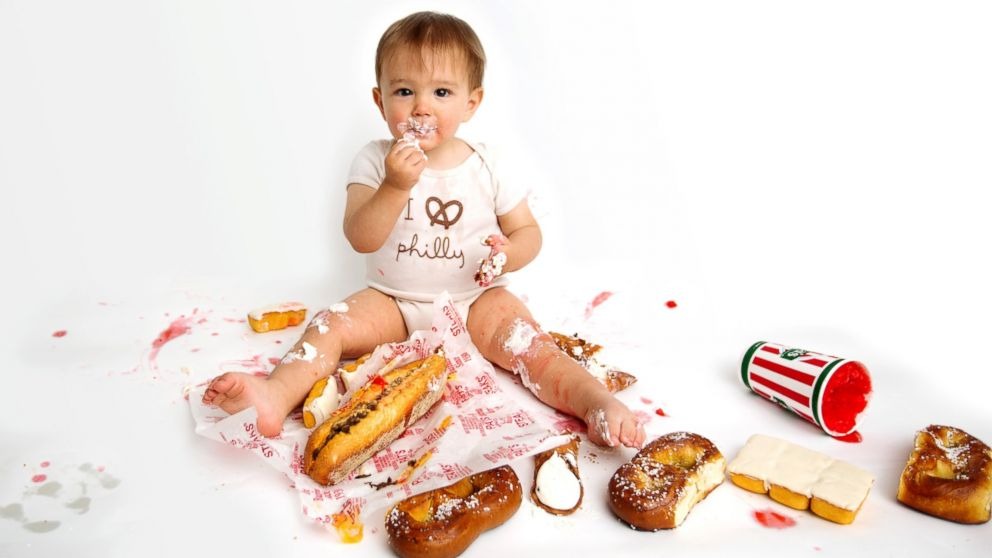
At twelve months, some food and drink guidance changes. Your baby may already be practicing with a cup and eating a wider range of safely prepared textures.
| Decision | Before 12 months | At or after 12 months |
|---|---|---|
| Main milk source | Breast milk or infant formula remains central | Pasteurized, unsweetened whole cow’s milk can be introduced. If your baby has dietary or medical needs, ask your pediatrician which milk or fortified alternative fits. |
| Honey | Do not offer honey | The restriction specific to children under one no longer applies |
| Cup use | Supported practice can begin around nine months | CDC includes an adult-held lidless cup in its one-year skills |
| Breastfeeding | Continues to provide nutrition | May continue beyond the first birthday |

An eleven-month-old on formula who practices with an adult-held open cup is close to the milk change, so plan that transition now. Straw cups, open cups, and the move off the bottle are covered in Sippy, Straw and Open Cups: First Transitions.
What to Notice and Bring to the 9- or 12-Month Checkup
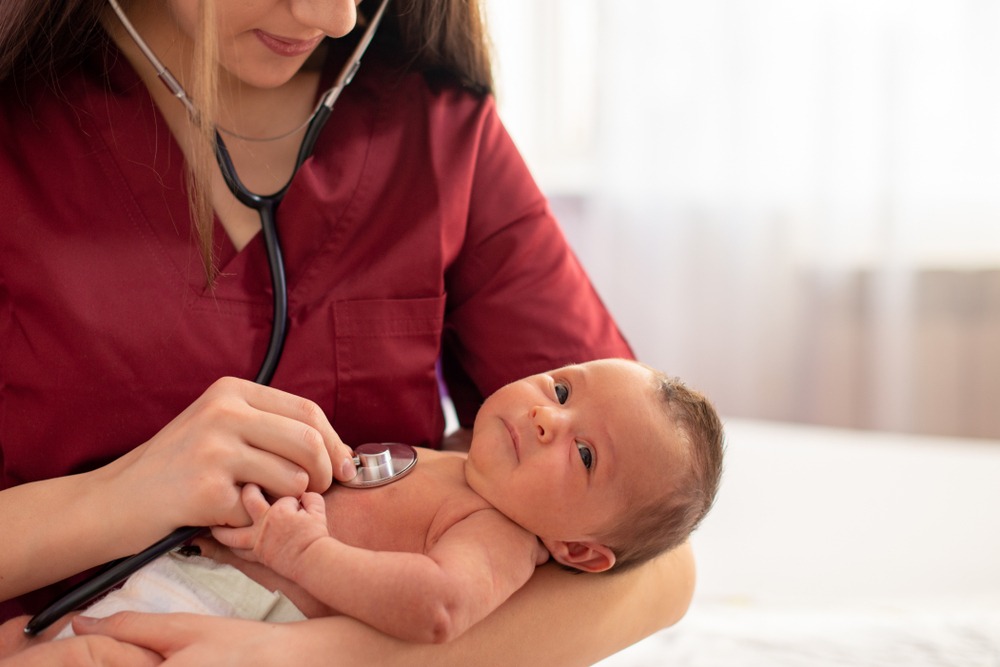
The American Academy of Pediatrics recommends developmental screening at 9, 18, and 30 months, along with routine developmental surveillance at checkups. Before the visit, write down:
- what happened, when, and under what circumstances
- any changes or lost skills
- any safe practice attempts
If your baby was born more than three weeks early, the CDC’s nine-month checklist uses corrected age.