The AAP/Bright Futures schedule puts routine checkups in the first week, usually at 3 to 5 days old, then at 1, 2, 4, 6, 9, 12, 15, 18 and 24 months. Vaccines follow their own recommendations, and your baby’s immunization record shows which doses they’ve had. If you missed a dose or your baby has a medical condition, ask the pediatrician.
When are well-baby visits scheduled in the first two years?
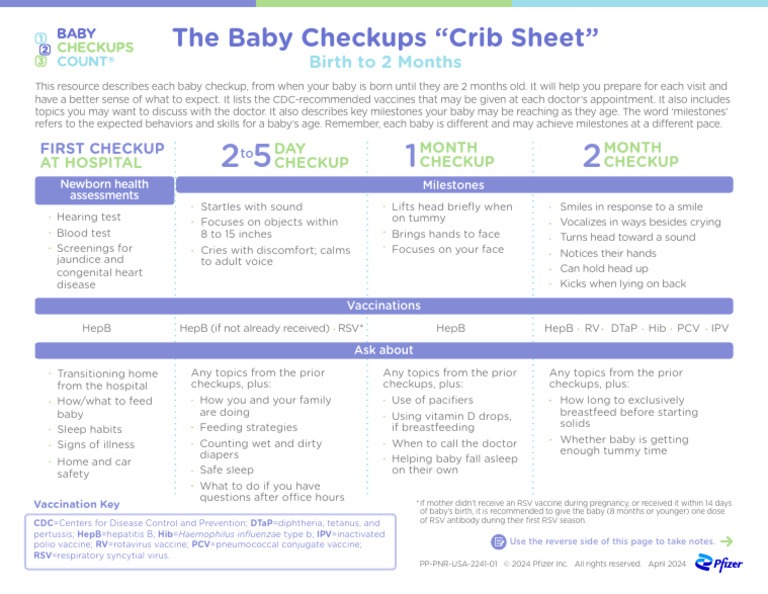
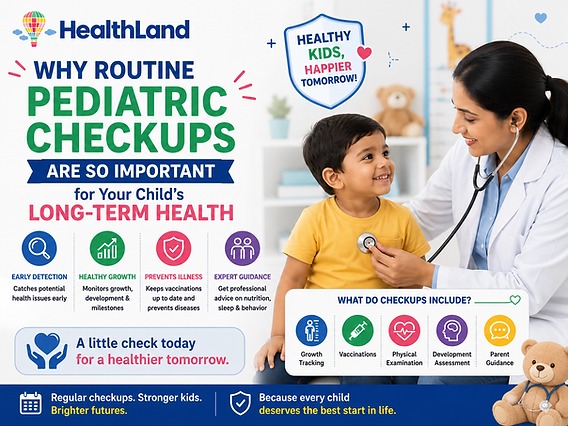
The first routine pediatric visit after hospital discharge usually happens during your baby’s first week. After that, the American Academy of Pediatrics (AAP) Bright Futures calendar sets regular checkups through the second birthday, so you have a steady chance to talk about health and development.
Some checkups include vaccines and some don’t. The table shows what each visit covers and what to ask about vaccines at that age.
| Baby’s age | What the checkup covers | Vaccine question to ask |
|---|---|---|
| 3 to 5 days | Early newborn assessment, feeding, weight and concerns after discharge | Which immunizations or other preventive treatments were recorded at the hospital? |
| 1 month | Growth, feeding and general newborn health | Which doses are already documented? |
| 2 months | Growth, early development, examination and routine-care questions | Which vaccines are planned, and which are shots or oral? |
| 4 months | Growth, development, feeding and sleep | Do the earlier doses change what’s recommended now? |
| 6 months | Development, feeding transitions and safety | Do your baby’s age, the season or a medical condition change the plan? |
| 9 months | Growth and development, including recommended standardized developmental screening | Is any vaccine due at this visit? |
| 12 months | Growth, health, development and changing routines | Which age-based recommendations apply to the record so far? |
| 15 months | Development, safety and emerging toddler routines | Is a planned or catch-up dose due? |
| 18 months | Development and recommended general and autism-specific screening | Does the record show anything due? |
| 24 months | Growth, health, development and recommended autism-specific screening | Are any planned or deferred vaccines still open? |
These ages reflect AAP preventive checkup guidance. Extra visits may be appropriate after an illness, a missed checkup or a medical concern.
An eight-month-old heading into the nine-month visit still gets developmental follow-up, even with no routine injection that day. To find your baby’s next checkup, match their age and last completed visit to the calendar, then confirm the date with the office. The broader baby health guides cover concerns outside the routine visit.
What does the pediatrician check at a well-baby visit?

A well-baby visit combines growth measurements, a physical examination, developmental surveillance and advice on daily care. The focus shifts with your baby’s age, health and earlier findings.
At two months, expect questions about feeding, sleep and the home environment. By 18 months, the talk turns to language, behavior and standardized developmental screening. Exams and recommended tests change with age.
Developmental surveillance means following your baby’s skills and any concerns across visits. A standardized screening uses a structured tool at set ages. The CDC recommends general developmental screening at 9, 18 and 30 months, and autism-specific screening at 18 and 24 months. The 30-month screening falls outside this article’s visit calendar.
A screening can flag a reason for further assessment. It does not diagnose a developmental condition.
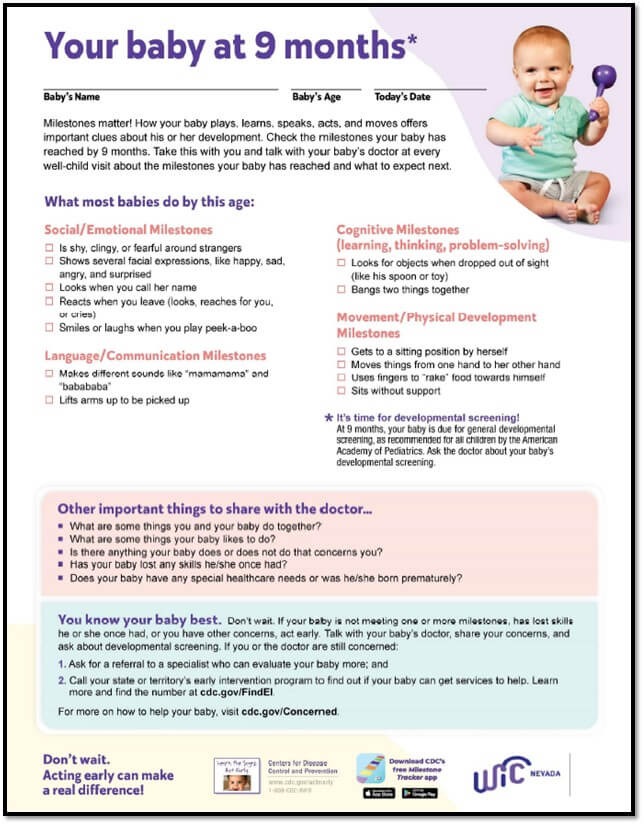
Before the visit, write down one or two specific observations about your baby’s feeding, sleep, movement, communication or safety. If something changed recently, add an example or the approximate date so the pediatrician has a concrete question to answer. The developmental milestones by age and feeding by age guides cover those topics in more detail.
How does the vaccine schedule fit with well-child visits in 2026?
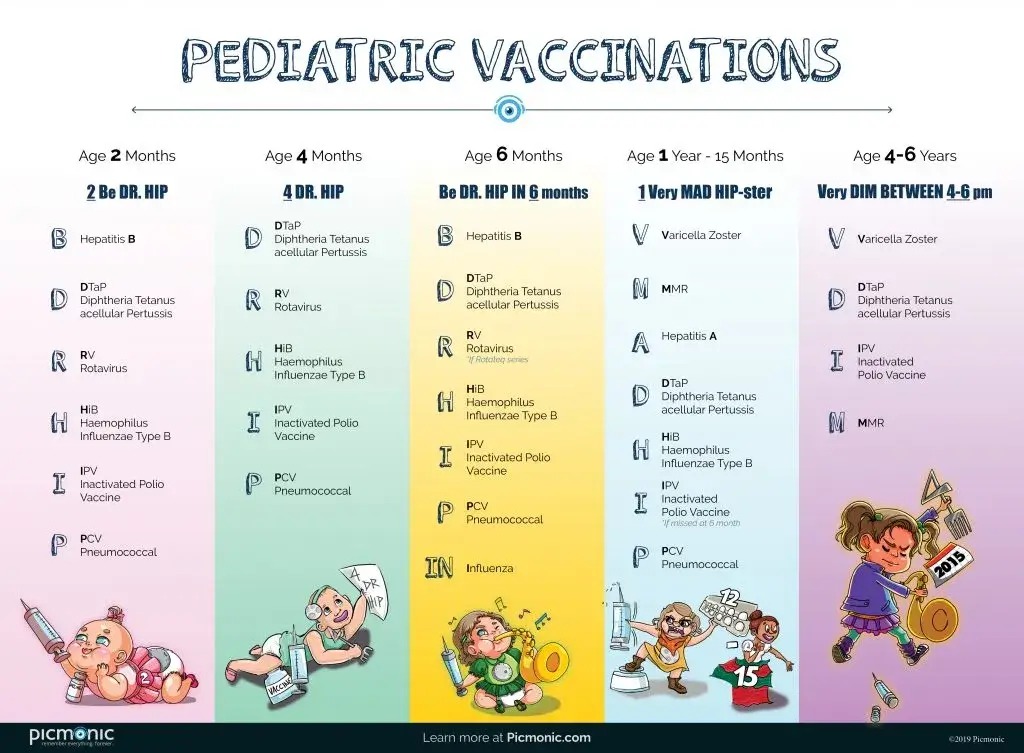
Checkup dates, vaccine recommendations and the record of given doses answer three different questions.
| Record or guidance | Question answered | Source |
|---|---|---|
| Preventive visit calendar | When is the next routine checkup? | AAP/Bright Futures |
| Immunization recommendations | Which vaccines are recommended for an eligible child? | Current professional guidance and your pediatrician |
| Immunization record | What has this child already received, and when? | Dated clinical record |
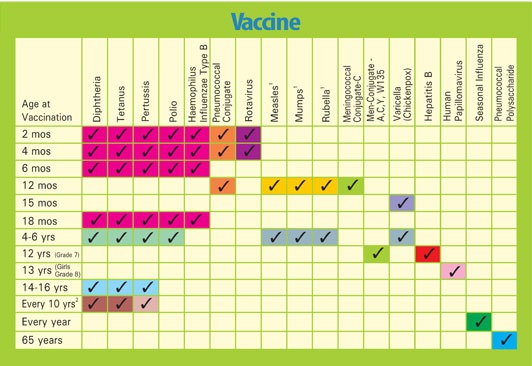
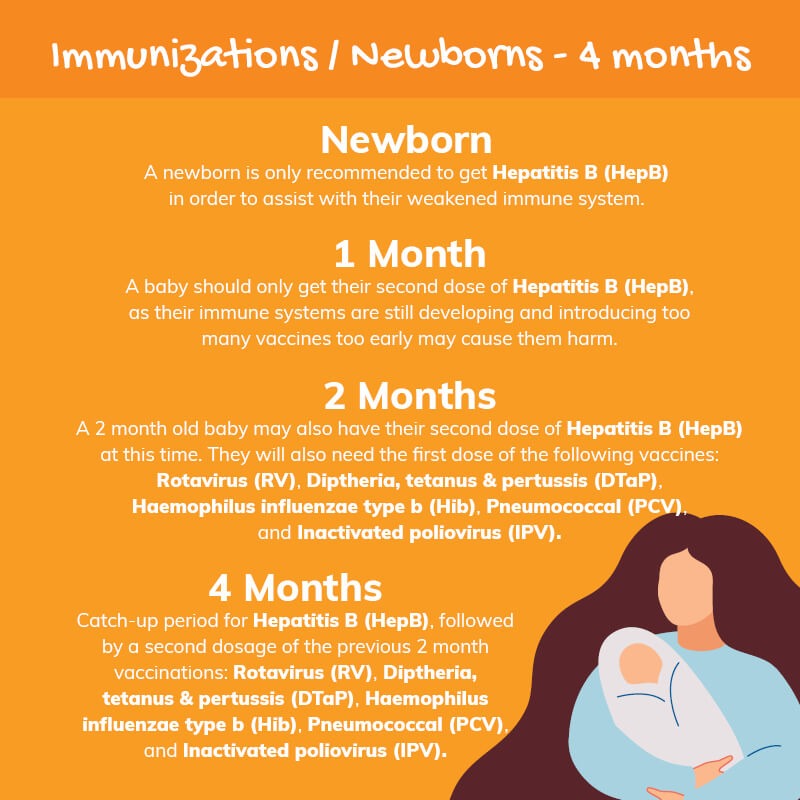
Two examples from the CDC age schedule: rotavirus vaccine starts in early infancy as a two-dose or three-dose series, depending on the product, and routine measles, mumps and rubella (MMR) vaccination begins at 12 to 15 months. Neither tells you how many injections your baby will get at the next visit.
In 2026, the AAP and CDC schedules did not line up. The AAP issued its own childhood and adolescent immunization recommendations and said it no longer endorsed the CDC schedule then in effect. A federal court order affected the status of the CDC’s published schedule.
Why a 2026 chart can carry a different date: The AAP policy statement is dated February 9, 2026 and appeared in the March 2026 issue of Pediatrics. After a March 16, 2026 court order stayed a January 5 revision, the CDC schedule page identified its July 2, 2025 schedule as operative.
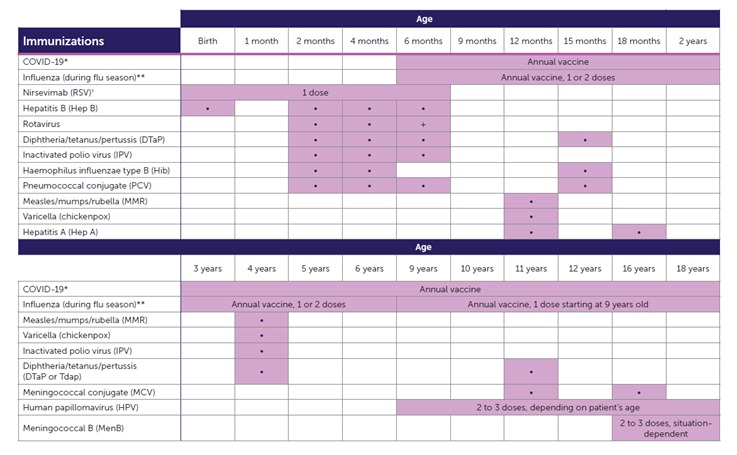
That is why an online chart labeled 2026 can differ from the one your pediatrician follows. Which source is in effect can change, and eligibility also depends on your baby’s earlier doses and medical circumstances.
Before a planned vaccination, compare the vaccines and timing the office proposes with the CDC child and adolescent immunization schedule, the relevant AAP guidance and your baby’s documented history. Ask which recommendation applies, and request the Vaccine Information Statements (VIS) for the planned vaccines.
How many shots will my baby get at an appointment?
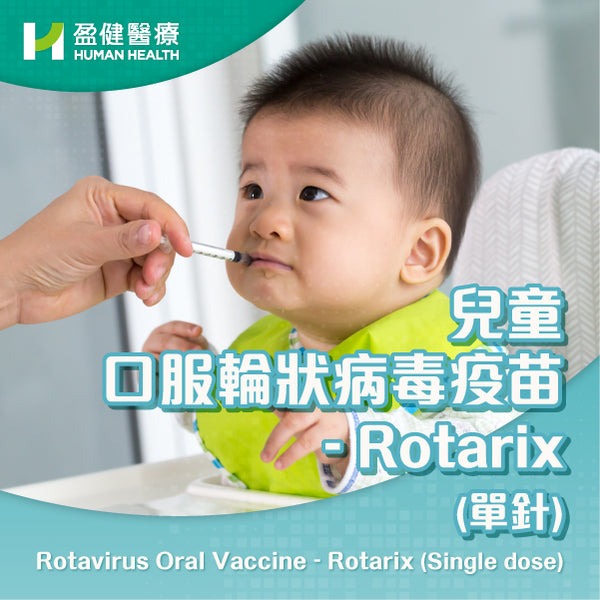
The number of injections depends on which vaccines are planned and how each one is given, including combination and oral vaccines.
| Term or product | Meaning | What it means for needle count |
|---|---|---|
| Disease target | A disease or antigen named in vaccine information | Several targets do not automatically mean several injections |
| Combination vaccine | One vaccine product protecting against multiple diseases | Several components can go in together in a single administration |
| Vaccine dose | A scheduled administration of a specified vaccine product | A dose isn’t always an injection |
| Oral rotavirus vaccine | A vaccine given by mouth | No injection for that oral administration |
| Infant RSV monoclonal antibody | Passive immune protection, distinct from an active vaccine | Eligibility and how it’s given are reviewed separately |
| Vitamin K and antibiotic eye ointment | Newborn preventive treatments, neither of which is a vaccine | Vitamin K may be injected; eye ointment is applied topically |
One parent approaching a two-month appointment put the shot-count question this way:
Little ones, 2 month vaccine appointment is coming up. How do I prepare and take care of little one post vaccine ? 1. They are supposed to get 5 shots. So how many needles ? Is it 5 or can they be combined ? 2. Is it a good/bad idea to ask the doctor to stagger the 5 shots over say 5 days instead of giving all of them at once ?
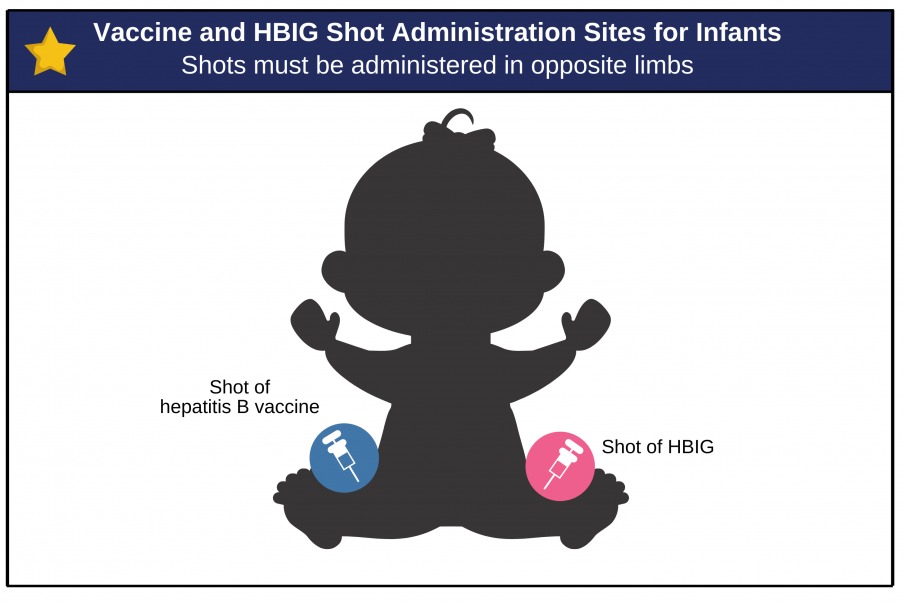
Ask the pediatrician to name the planned vaccines, point out which are oral or combination vaccines, and tell you how many injections to expect. If you’re thinking about spacing doses across visits, raise it before changing anything, since some vaccines have strict age windows.
How should you prepare for a vaccination visit and comfort your baby?

The CDC recommends bringing your questions and your baby’s immunization information, and using comfort measures that suit your baby’s age during and after shots.
- Bring the available record. The office can match the planned care to the doses already documented.
- Choose familiar soothing measures. Cuddling, gentle talking or a pacifier work for many babies. Ask staff how to hold your baby safely during an injection.
- Ask before giving pain medication. Check that a pain reliever suits your baby’s age and health first.
A parent whose eight-week-old was getting her first vaccines described a small detail that worked for their family:
Update: thank you guys so much for all of your support and kind words! She did really well and only cried for a few seconds after the vaccines. I feel so much better as well, I know that a lot of it was in my own head and now she is asleep and we are just cuddling. I was talking to her and rubbing her ear (which puts her to sleep at night) to comfort her during the vaccines and then afterwards I gave her the pacifier and she settled down really quickly

Before you leave, review the VIS and the aftercare instructions. Routine bathing, dressing and feeding questions are covered in the broader newborn care guide.
What should you watch for after vaccines, and when should you call?
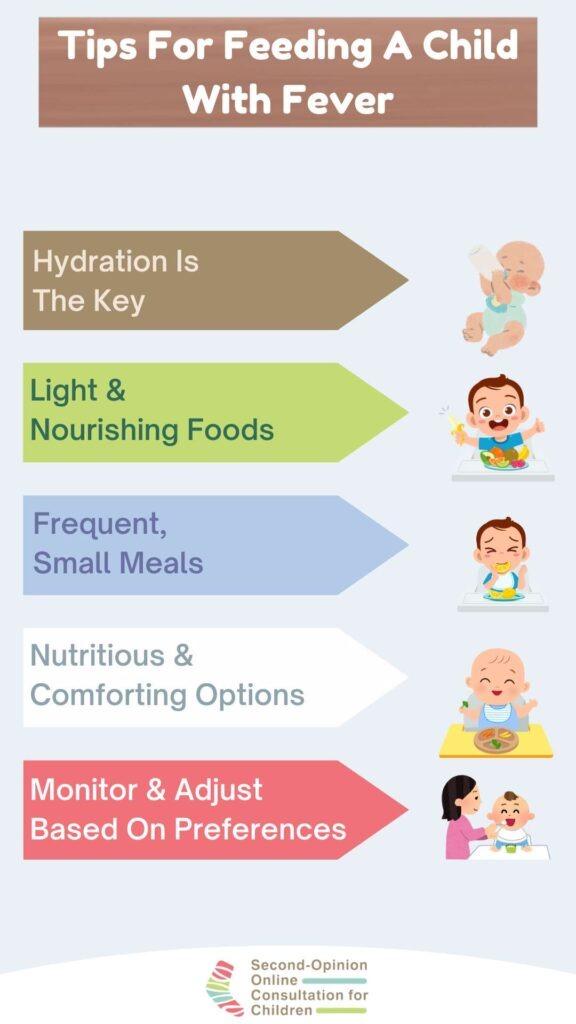
Soreness, a temporary fever or a short-lived change in feeding can follow a vaccination. What to do depends on your baby’s age, the symptom and any instructions the office gave you.
Call 911 for signs of a severe allergic reaction: Difficulty breathing or swelling of the face or throat after vaccination requires emergency medical help.
Contact the pediatrician immediately for fever in a very young baby: For a baby three months old or younger, the AAP advises immediate pediatrician contact for a rectal temperature of 100.4°F (38°C) or higher, including after vaccination.
The AAP guidance on fever in babies describes the young-infant threshold.
For mild soreness or swelling where a shot was given, a cool, damp cloth can help. If your baby feeds less than usual, offer breast milk or formula more often and follow the aftercare instructions.

A fever after a shot doesn’t prove the vaccine caused it, and it doesn’t rule out another illness.
For other symptoms, tell the office the measured temperature, any feeding changes and how your baby is behaving. The separate guide to fever in babies covers the broader evaluation of febrile illness.
What if a well-baby visit or vaccine dose was missed?
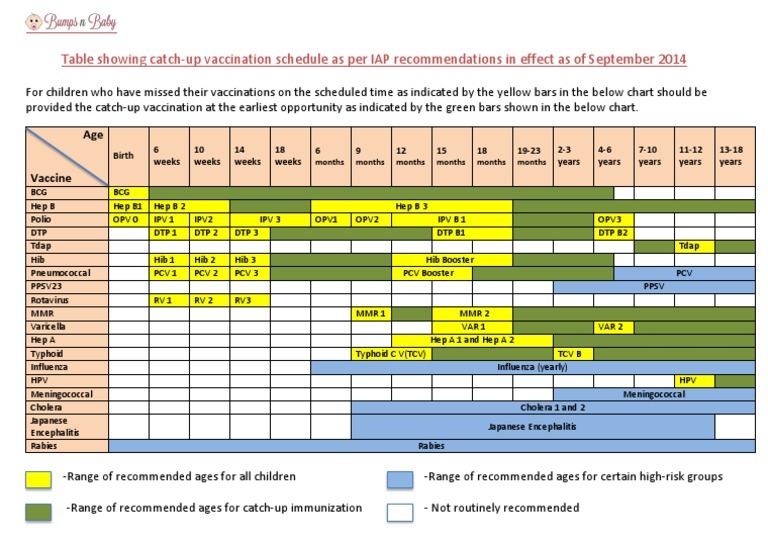
You can reschedule a missed checkup. A missed vaccine dose needs a review of your baby’s age, earlier doses and the vaccine’s own requirements.
The CDC catch-up immunization schedule says an incomplete series generally doesn’t need to restart just because more time has passed. Each vaccine still has minimum ages, minimum intervals and sometimes maximum ages.
Rotavirus is the clearest example of age limits:
- First dose: The maximum age to start the series is 14 weeks, 6 days.
- Final dose: The maximum age to complete the series is 8 months, 0 days.
Those limits apply to rotavirus only.
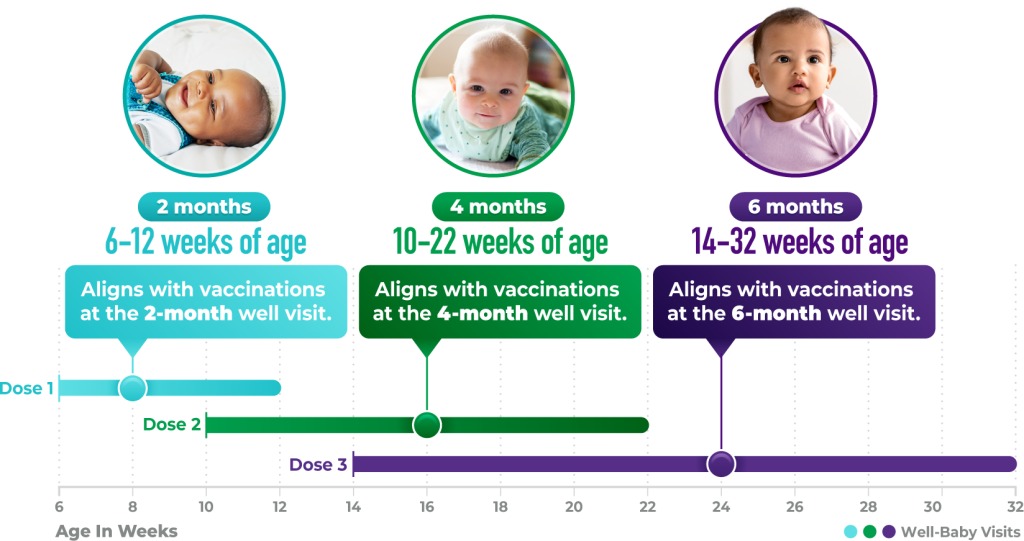
If you missed the four-month appointment, you don’t have to start the whole series over. The pediatrician works from the dated record and each vaccine’s intervals to set the catch-up sequence.
Most clinically stable preterm infants follow chronological age for immunizations. Hepatitis B and other medical exceptions need individual assessment, and corrected age isn’t a universal substitute.
If a checkup or dose was missed, call the office to reschedule and ask for a catch-up assessment based on the recorded dates and vaccines. Mention any vaccine with a known upper age limit.
How do you keep a reliable immunization record and check what was given?
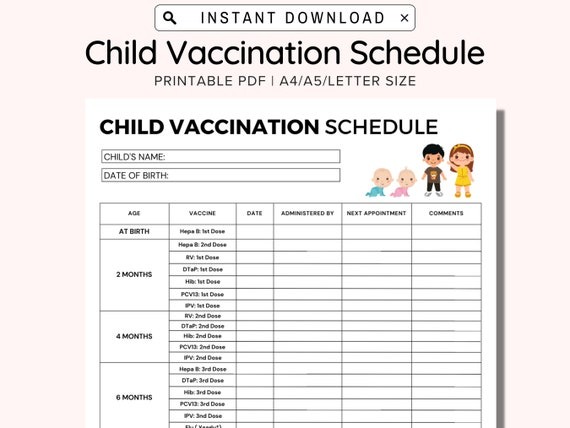
Keep the dated record that lists each vaccine your baby received and when. A schedule shows what’s recommended and an appointment reminder shows what was planned, so neither proves a dose was given. If you switch pediatricians, transfer the record so the new office can separate previous doses from future recommendations. If a vaccine or date looks wrong, ask the office that gave the shot to correct it before the next plan is set.
What if online advice, family opinions and your pediatrician disagree?
A worrying story from a relative is hard to set aside, especially when it comes with screenshots, social posts and professional advice. One parent described that conflict in a Reddit discussion about an upcoming two-month vaccination visit:
To preface, I want to say I grew up having all my childhood vaccinations and so did my mother and everyone I know and am related to. Somewhere along the line my mum fell completely down the anti-vax Facebook rabbit hole and tbh I had started to for a while but when I got pregnant I realized this isn’t just about me and my body anymore. I started reading accounts from real, practicing paediatricians and doctors, looking at myself and everyone around me who received their childhood vaccines, as well as everyone I know having babies right now.
When a claim bothers you, save its exact wording and source. Bring that one claim to the pediatrician and ask how it applies to your baby. That keeps the conversation on a medical question you can act on, and you don’t have to settle a larger argument with relatives.
Are well-baby visits covered by insurance, and what should you confirm before leaving?
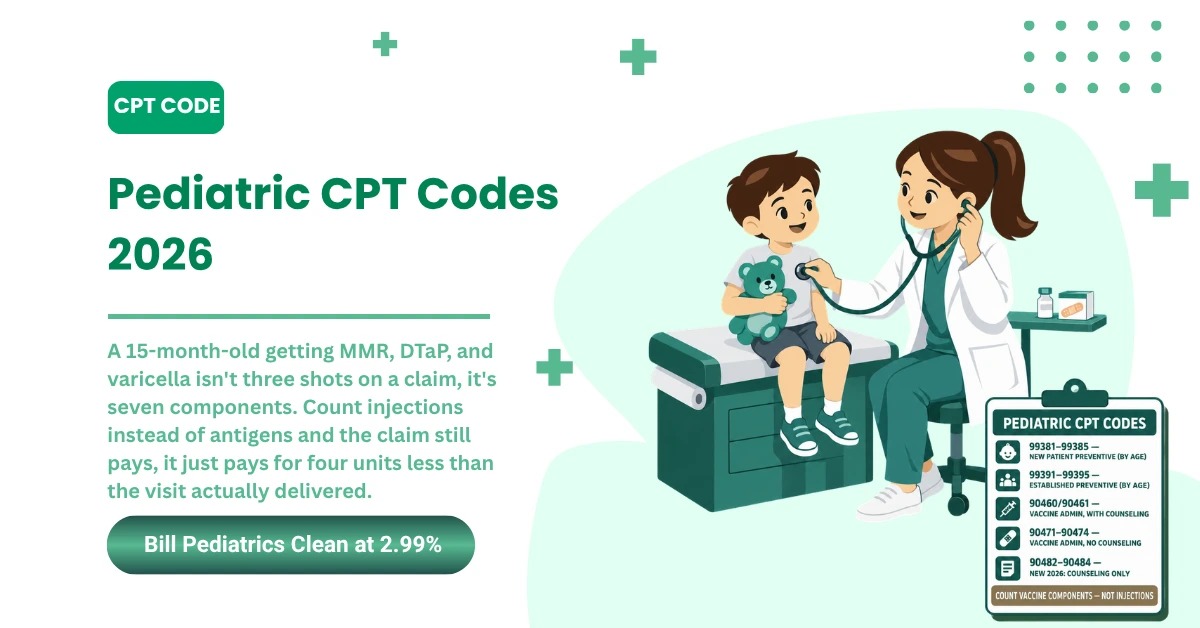
Many US plans cover qualifying in-network preventive services for children without out-of-pocket cost sharing. Your bill depends on the plan, the network, the services provided and how the encounter was coded.
A preventive checkup and a separate evaluation of a new problem can carry different billing terms. If you ask the doctor to look at a new rash during the well-child exam, for example, that part may be billed separately.
Ask these questions before the visit, and book the next appointment or get scheduling instructions before you leave:
- Network participation: Is this pediatrician in-network for your baby’s plan?
- Preventive coverage: How does the plan cover the routine well-baby visit?
- Separate concerns: Can an extra evaluation during the visit carry a separate charge?
- Billing contact: Who should you call with follow-up questions?