
Comfort, swallowing, diapers and weight tell you more than a perfect-looking latch or a timer. If pain lasts, your baby can’t feed well, or diapers or weight look low, call your pediatrician and a lactation specialist. They can watch a feed and set a feeding plan with you.
What to expect when you start breastfeeding

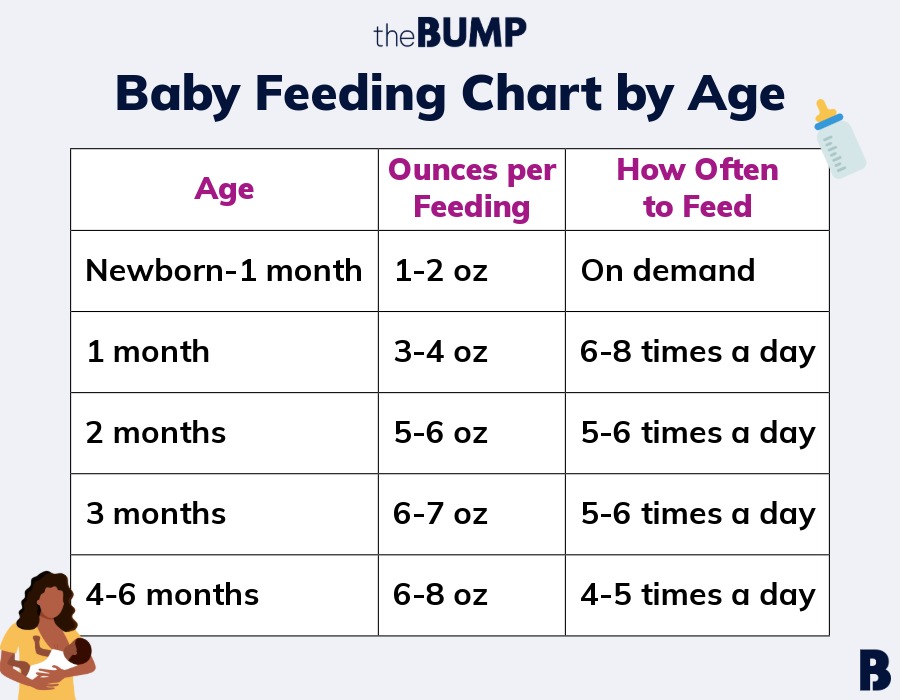
Newborns nurse 8 to 12 times in 24 hours, with feeds 1 to 3 hours apart in the first days. Early hunger cues include bringing hands to the mouth, turning toward the breast, and smacking or licking the lips. Crying comes later. The first milk, colostrum, comes in small amounts. Thinner, whiter milk often arrives around day 3, sometimes later for first-time mothers.
How to position your baby for a deeper, more comfortable latch
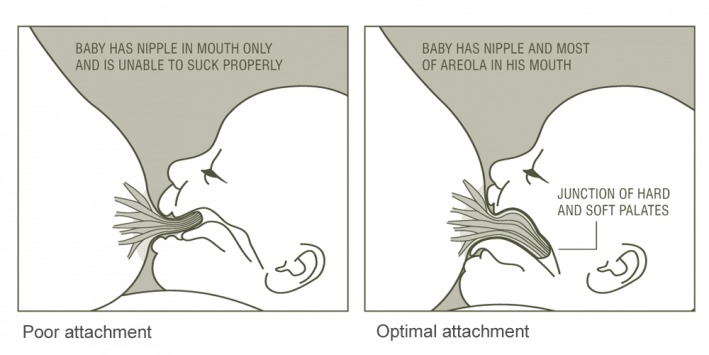
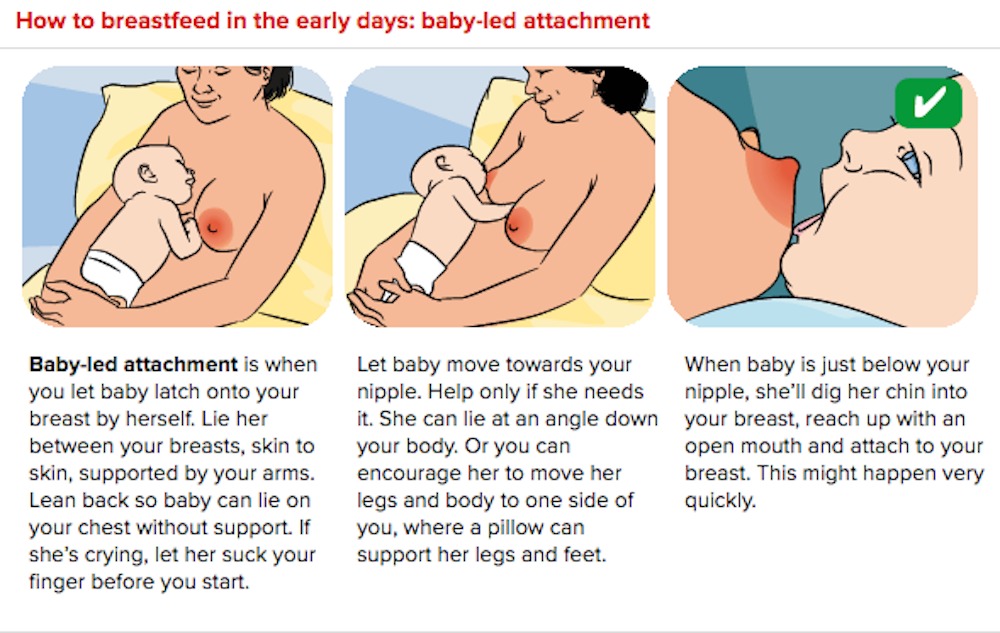
Your baby should reach the breast without turning their neck or pulling you forward.
A hold that worked in a hospital bed may feel awkward on a couch or dining chair. A regular pillow under your forearm gives support while you bring your baby to the breast.
- Get comfortable. Sit with support under your back and arms, and keep your baby close to your body.
- Turn your baby toward you. Keep their chest and belly facing yours, with the head in line with the body.
- Wait for a wide mouth. Touch your nipple gently to your baby’s lips to invite a wide opening. Then bring your baby in close so the mouth takes the nipple and the surrounding areola.
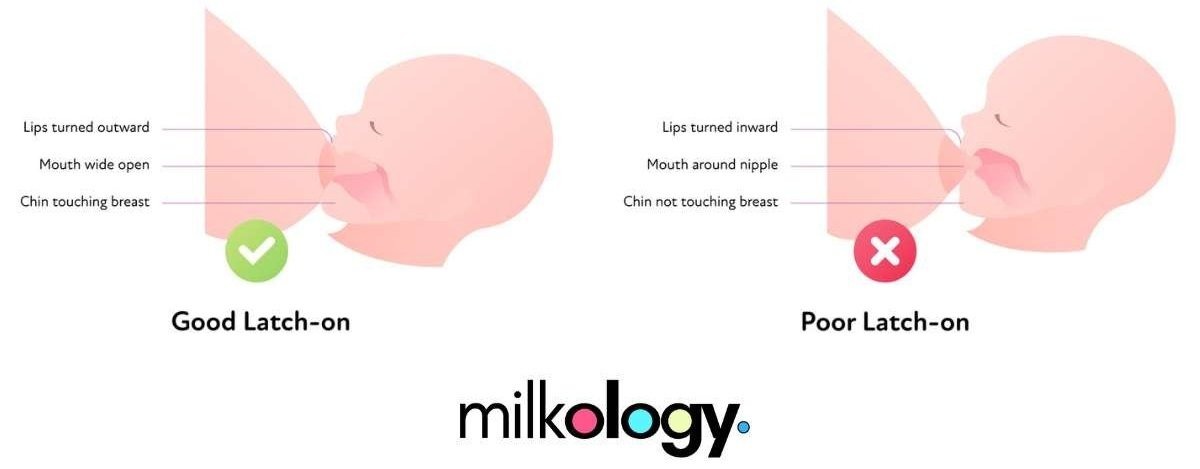
- Check the chin and lips. The chin touches the breast and the lips turn outward.
- Fix a painful latch. If it hurts or stays shallow, slide a clean finger into the corner of your baby’s mouth to break the suction, then reposition.

Cradle, cross-cradle, and football holds all support that alignment. Cross-cradle makes it easier to guide a young baby’s head and shoulders. The football hold keeps your baby’s body alongside yours.
How to tell whether the latch is working during a feed

During a feed, watch for a secure attachment, regular swallowing and comfort. A wide-open mouth and outward-facing lips are good signs. Repeated slipping, skin damage or significant pain needs a closer look.
| What you observe | Encouraging sign | Watch for |
|---|---|---|
| Mouth and areola | Wide mouth taking in the nipple and surrounding areola | Nipple-only attachment or a narrow mouth |
| Lips and chin | Lips turned outward and chin resting against the breast | Lips tucked inward or a twisted head position |
| Sucking and swallowing | Regular swallowing during active sucking | Repeated attempts with little observable swallowing |
| Comfort and stability | Attachment remains stable and feeding is comfortable | Repeated coming off, clicking, nipple compression, or marked pain |
If your baby keeps coming off or you can’t tell whether they swallow, tell the lactation professional. Those details help them assess the feed.
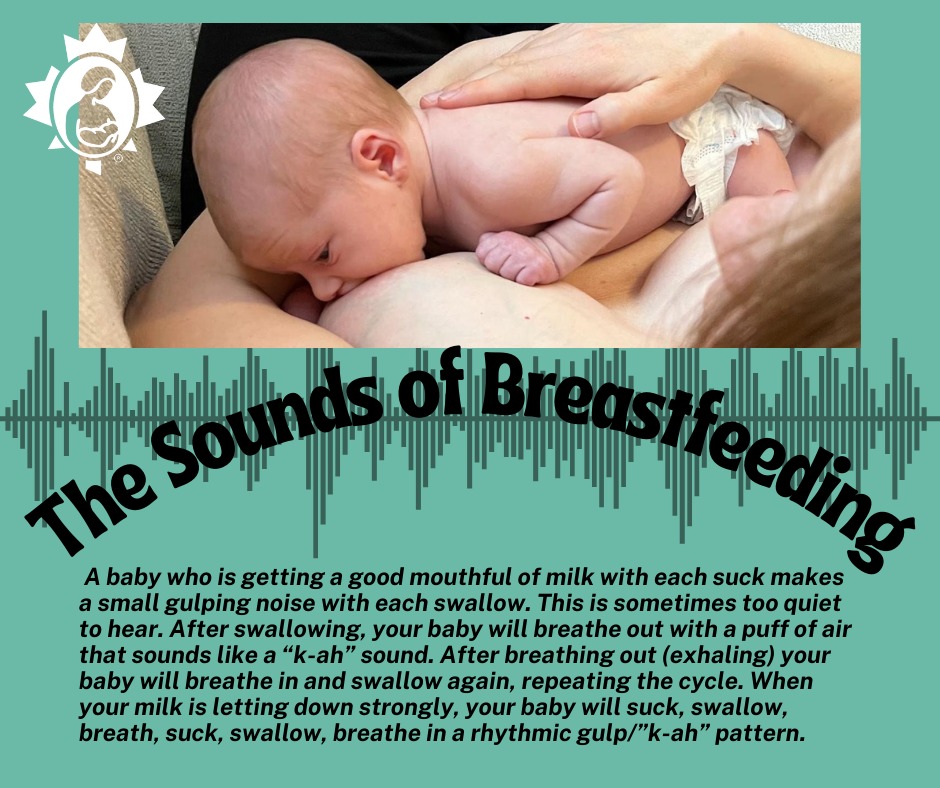
Listen during active sucking and check that swallows continue as the feed goes on. A misshapen nipple after nursing, cracked skin, or discomfort that makes it hard to continue are all pain signs to take seriously.
How to tell whether your baby is getting enough milk
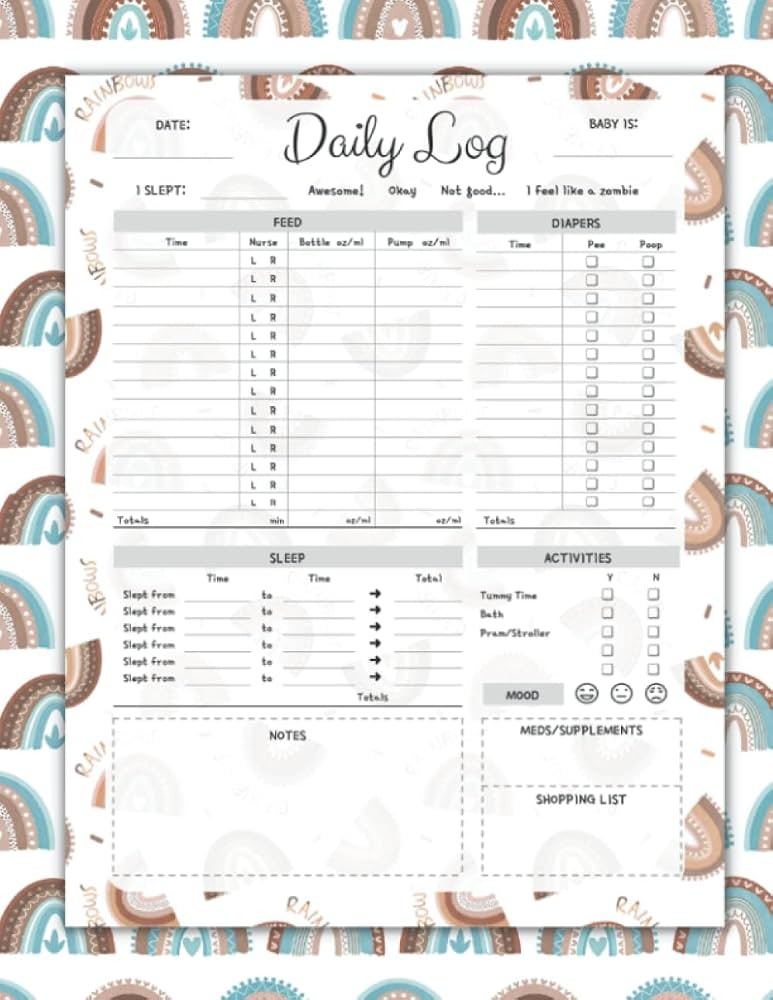
Diaper output and measured weight put a day’s breastfeeding in context. Compare your baby’s wet diapers and stools with the CDC’s first-week reference for their actual age.
| Baby’s age | Minimum wet diapers | Minimum stools |
|---|---|---|
| Day 1 | 1 | 1 |
| Day 2 | 2 | 3 |
| Day 3 | 5 | 3 |
| Day 4 | 6 | 3 |
| Days 5 to 7 | 6 | 3 |
The wet-diaper reference rises sharply in the first four days. Low output by day 5, continued weight loss after day 5, or visible yellowing of the baby’s skin needs prompt pediatric assessment. The table shows one source’s values. AAP guidance describes early stools somewhat differently, and your baby’s weight and overall health matter as much as the count.
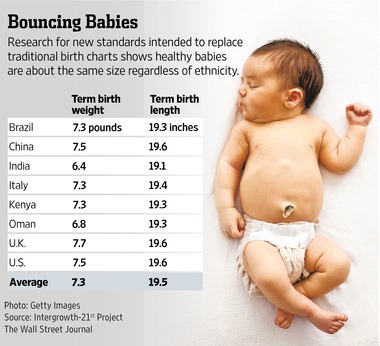
Many newborns return to their birth weight by about days 10 to 14, according to the CDC.
A clinician tracks measured weights over time, assesses feeding, and decides whether the plan supports adequate growth. A content look, full breasts or the amount you pump can’t replace a weight check.
If you’re unsure whether diapers are wet enough, keep a count by day of life and write down the weights from each clinical visit. Bring that record to the pediatric checkup.
According to CDC guidance, breastfed and partly breastfed infants in their first year who get less than 32 fluid ounces of formula daily need 400 IU of vitamin D each day. Ask your pediatrician about the recommendation for your baby.
What to do when breastfeeding hurts even though the latch looks good
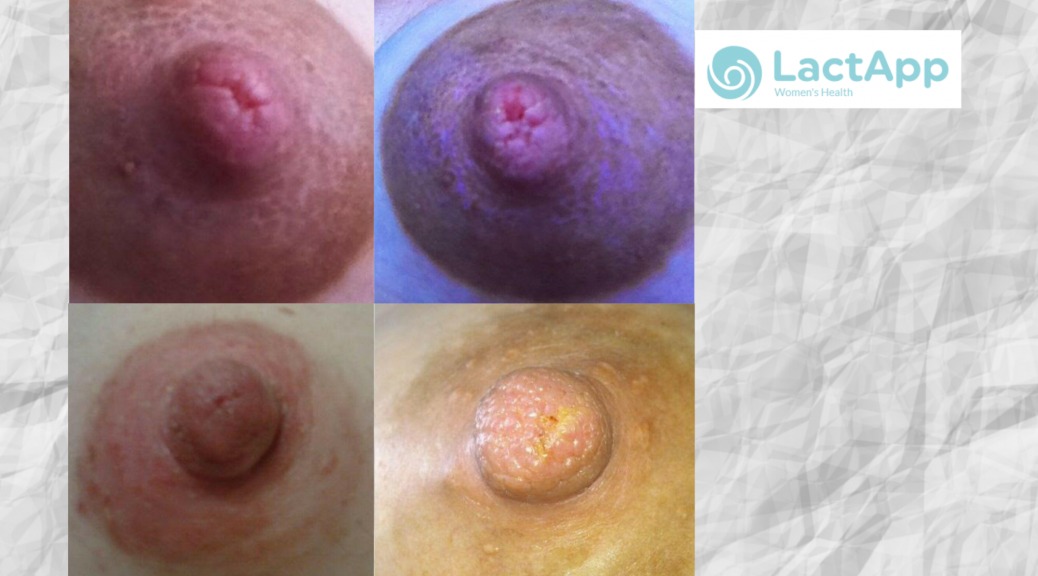
Severe or persistent pain deserves an observed breastfeeding assessment even when the latch looks normal. A latch can look well positioned and still hurt, and your own experience is part of the assessment. Early tenderness happens, but cracked or bleeding nipples, pain that interferes with feeding, or discomfort that continues need attention to your symptoms as well as your baby’s attachment.
The CDC recommends seeking help for damaged nipples or breastfeeding pain that has not improved within 1 to 2 weeks. Intense pain or a feeding problem needs assessment sooner. Breastfeeding pain with fever calls for prompt contact with your own medical clinician. A clinician or qualified lactation professional will look at:
- Attachment. How wide and stable the latch stays through the feed.
- Milk intake. Whether your baby swallows and whether intake signs look reassuring.
- Nipple condition. Any injury, compression, or other problem that needs a medical exam.
- Your baby’s behavior. Repeated pulling off or trouble continuing to suck.
In a study published March 11, 2026, Octavia Calder-Dawe and Eva Neely analyzed 668 written responses about breastfeeding pain from a self-selected New Zealand survey. Parents described having their reports of pain minimized even when assessments of latch appearance looked reassuring (study record).
Tongue-tie is one factor to evaluate. The American Academy of Pediatrics’ 2024 clinical report recommends a comprehensive evaluation of feeding before treatment decisions and notes limits in the evidence for frenotomy outcomes.
Cluster feeding, sleepy babies, and long feeding sessions
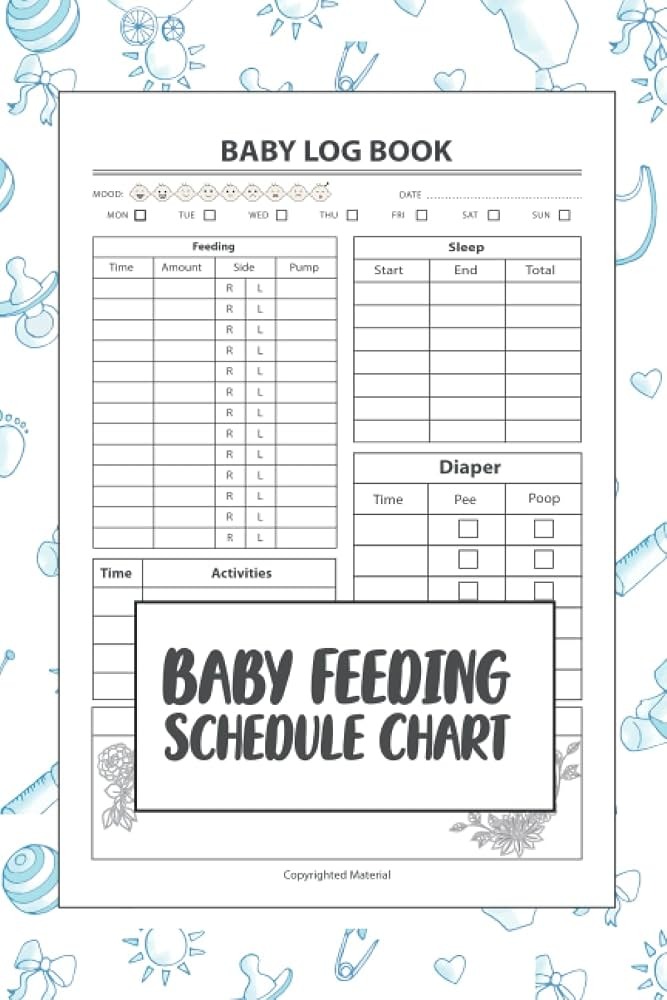
Cluster feeding means several feeds close together, sometimes over a few hours. The CDC notes that some exclusively breastfed babies feed about every 2 to 4 hours in the following weeks and months, with much closer sessions in other stretches.
A long evening of nursing can make you wonder whether your supply is low. Check for swallowing and compare diapers with the table above.

Some newborns need waking to feed, depending on their health and the pediatrician’s feeding plan.
If your baby won’t latch or keeps slipping off
When direct nursing isn’t working, pin down what is going wrong.
- No attachment. Your baby goes to the breast but never holds a latch.
- Repeated slipping. Your baby latches briefly, loses the latch, and you start over.
- Little swallowing. Your baby looks attached, but you see little swallowing during active sucking.
- Position-dependent attachment. Nursing works with one arrangement of your arms or your baby’s body and breaks down when that support changes.
If your baby can’t attach or keep feeding effectively, call a pediatric clinician and a lactation professional promptly. They will assess intake and build a dependable plan covering positioning, your baby’s health, milk transfer and your feeding goals. Expressed milk, formula, or combination feeding can be part of that plan. To compare breast milk, infant formula, and solid foods, use Baby Feeding From Birth to 24 Months: What Changes and What to Do Next.
Pump choices are covered in choosing a breast pump for your routine. Expressed milk has its own handling steps in safe breast-milk storage, and breastfeeding, formula, and combination-feeding options helps you choose a feeding method.
When and where to get breastfeeding help in the US

US breastfeeding support includes pediatric medical care, hands-on feeding help and informational services.
| Support route | Best suited to | Important boundary |
|---|---|---|
| Pediatrician or other pediatric clinician | Infant health, measured weight, feeding progress, and concerning symptoms | Provides medical assessment and follow-up |
| International Board Certified Lactation Consultant (IBCLC) or qualified lactation professional | Observed feeds, positioning, latch difficulties, and milk transfer | Medical conditions may also need a clinician |
| WIC (Special Supplemental Nutrition Program for Women, Infants, and Children) | Breastfeeding education and support for eligible families | Eligibility and available local services differ |
| Office on Women’s Health helpline | General breastfeeding information, peer counseling, and resource information | No medical diagnosis, treatment, prescriptions, specialist referrals, or emergency response |
The first newborn pediatric follow-up should happen no more than 48 hours after hospital discharge, according to the American Academy of Pediatrics. It is the time to check measured weight, intake, and any feeding concerns from home.
The Office on Women’s Health helpline is open Monday through Friday, 9 a.m. to 6 p.m. Eastern Time, and closed on federal holidays. Call 1-800-994-9662 for information and peer support on breastfeeding questions.
Emergency and immediate medical care: If your baby can’t be woken, call 911. A baby who is very hard to wake or has seriously weak sucking needs an emergency department now. If your baby is three months old or younger and has a rectal temperature of 100.4°F (38°C) or higher, call the pediatrician immediately. For the separate fever topic, see when a baby’s fever needs urgent medical attention.
Prompt feeding assessment: Call your baby’s pediatrician soon if you see low diaper output, worrying weight progress, jaundice, or ineffective feeding.