
Most newborn jaundice is mild, but a baby’s appearance can’t tell you whether the bilirubin level is safe. Yellowing in the first 24 hours, or yellowing that keeps getting worse, needs prompt medical assessment. The emergency signs are listed below.
When newborn jaundice needs urgent attention
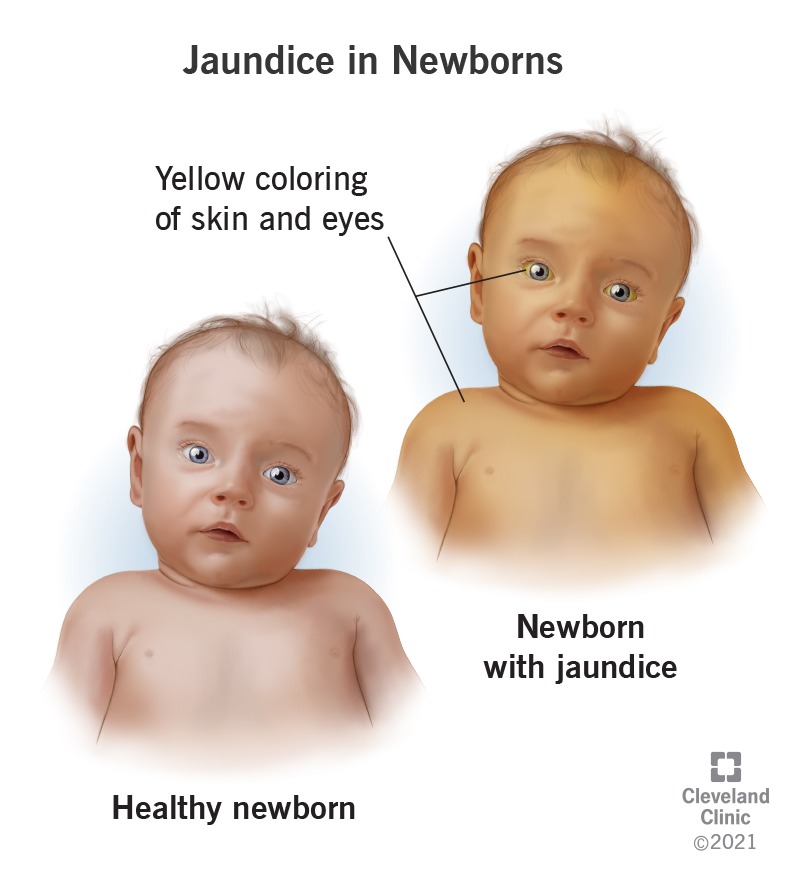
Jaundice noticed in the first 24 hours after birth needs prompt bilirubin measurement. A baby who becomes unusually difficult to wake or too weak to feed needs a faster response. Severe bilirubin buildup is uncommon, but it can cause neurological injury, including kernicterus.
| What you notice | What to do |
|---|---|
| Your baby can’t be awakened, has a seizure, or develops alarming stiffness or limpness. | Call emergency services immediately. |
| Your baby is very hard to wake, feeds poorly, or seems too weak to feed. | Go to an emergency department immediately. |
| Yellowing appears in the first 24 hours, becomes more pronounced, or spreads while your baby is otherwise responsive and feeding. | Call your baby’s clinician right away for an exam and bilirubin testing instructions. |
These response levels reflect the AAP’s newborn jaundice symptom guidance. The AAP’s 2022 bilirubin management guideline covers infants born at 35 weeks of gestation or later. Earlier-born infants follow separate neonatal pathways.
What jaundice looks like
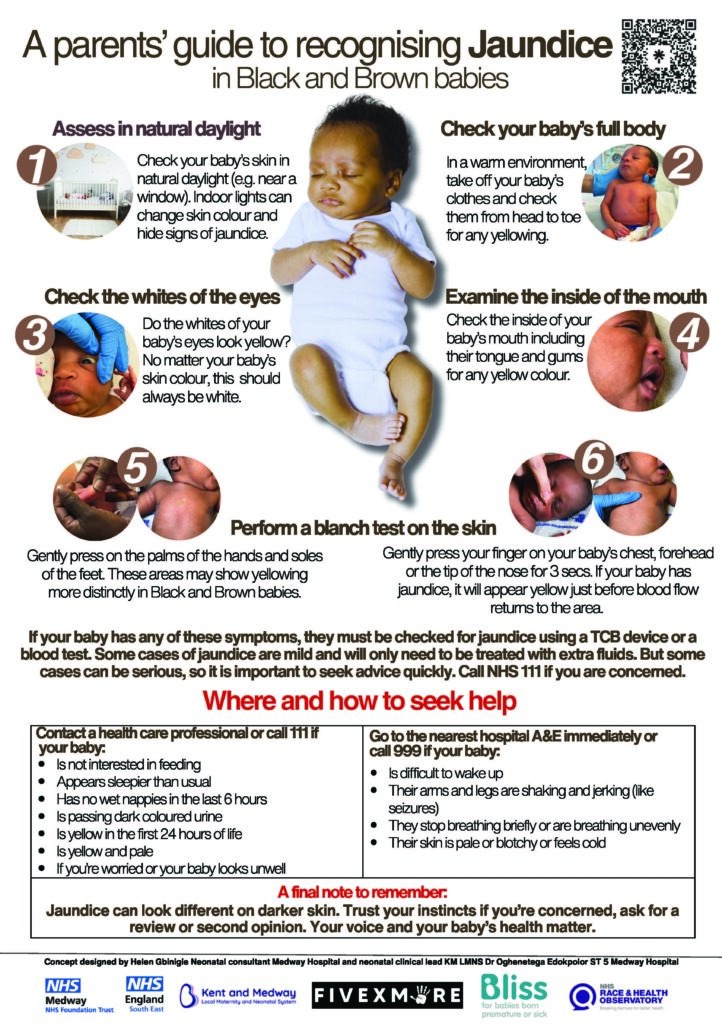
Jaundice turns a baby’s skin or the whites of the eyes yellow. The color often shows on the face first, then spreads to the chest, abdomen, arms and legs. In darker skin tones, yellowing can be hard to see, and changing light makes comparisons unreliable. A baby who looks alert and feeds well can still need a bilirubin test, because the color doesn’t measure how much bilirubin is in the blood.
Why bilirubin builds up
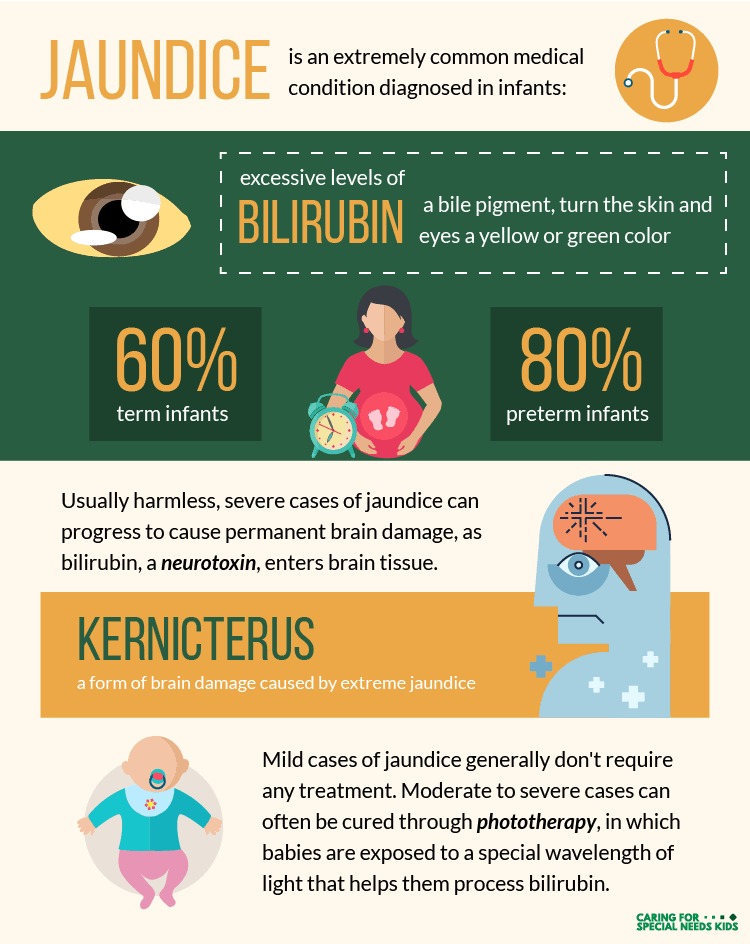
Bilirubin is a yellow pigment the body makes when it breaks down red blood cells. A newborn’s liver is still developing and clears it slowly, so bilirubin can build up during the first days after birth.
These details tell the care team which newborns need closer monitoring:
- Gestational age: Babies born earlier clear bilirubin less efficiently, and gestational age also sets the treatment threshold.
- Birth bruising: Extensive bruising or a cephalohematoma adds to the bilirubin produced as blood breaks down.
- Faster red-cell breakdown: Hemolysis, some blood-group incompatibilities and G6PD deficiency can increase bilirubin production.
- Family history: A sibling who needed jaundice treatment counts in your baby’s risk assessment.
- Feeding difficulties: Too little milk contributes to bilirubin buildup and can call for feeding support.
Under the AAP’s 2022 framework, babies born at 35 weeks through 37 weeks and six days are assessed by gestational age and any additional risk factors for neurotoxicity. That decides which treatment threshold applies.
Tell the newborn team about significant bruising, a relevant family history or feeding difficulties. A risk factor doesn’t mean you caused the condition.
For related concerns beyond jaundice, see the baby health guides.
When bilirubin gets measured
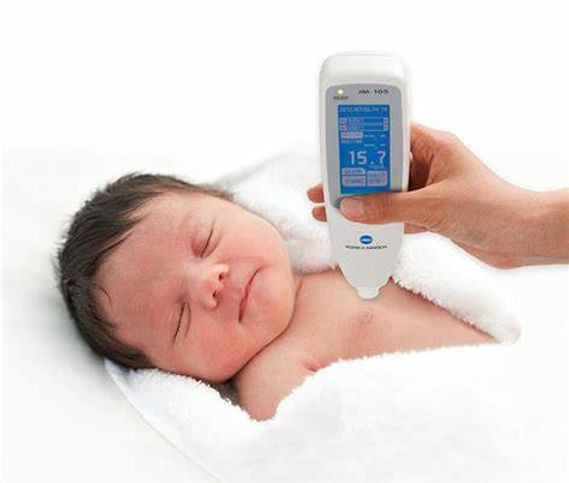
The AAP recommends measuring bilirubin at 24 to 48 hours after birth, or before discharge if the baby leaves earlier. If jaundice appears before 24 hours, clinicians measure it right away.
A transcutaneous bilirubin test (TcB) estimates the level through the skin. A total serum bilirubin test (TSB) measures it in a blood sample and guides phototherapy decisions. Clinicians order a blood test when the skin reading meets the AAP’s confirmation criteria, including when it nears the baby’s phototherapy threshold.
The same number can mean different things for different babies. Age in hours, gestational age and risk factors for neurotoxicity all change which threshold applies.
Questions to ask about a result
- What was the bilirubin value, and in which units?
- Was it a TcB skin reading or a blood TSB? That tells you whether blood confirmation is needed.
- How many hours old was your baby at the test? Thresholds change with age.
- Which gestational-age and risk factors apply? They set the treatment threshold.
- What does the result mean for treatment or follow-up?
The AAP’s 2022 clinical guideline has the full details.
Follow-up after you leave the hospital
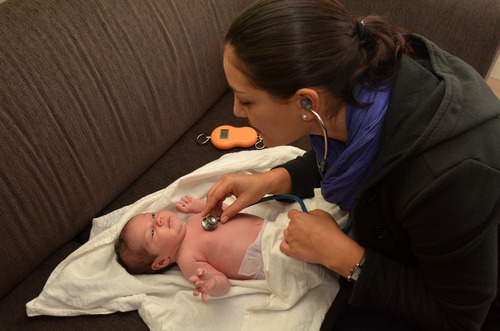
Jaundice can become more noticeable after you go home. A test before discharge is one part of a plan that can include another exam or bilirubin measurement.
AAP parent guidance says most infants discharged before 48 hours of age should be seen within two days. A baby whose bilirubin is close to the treatment threshold, or who has other risk factors, can need earlier follow-up. Your care team’s instructions set the actual appointment.
What to leave with
Before you go, get these details:
- The bilirubin value, how it was measured and whether the team has reviewed it.
- The date, time and place of the next exam or test.
- Who receives the result and acts on it.
- How to reach that service, including outside office hours.
- Who arranges another test if the appointment falls through or a sample is lost.
One parent described being readmitted around day five:
My baby is about to turn 5 days old, bili levels in the hospital were perfect. I noticed on Tuesday he was a bit yellow and they weren’t concerned at the drs. Brought him back today and still not concerned but his levels were right under 20 so his pediatrician recommended him to be admitted My husband rushed to get our toddler from daycare to grandparents home, I didn’t get a chance to say goodbye to him for the night since I’m breastfeeding. Our baby is a 37 weeks which is the biggest concern and reason for admitting him. He’s doing really well and they didn’t think his number would be bad with how alert he is.
If an unexpected hospital visit disrupts the household, the first-week preparation guide covers the practical arrangements.
Feeding a jaundiced newborn
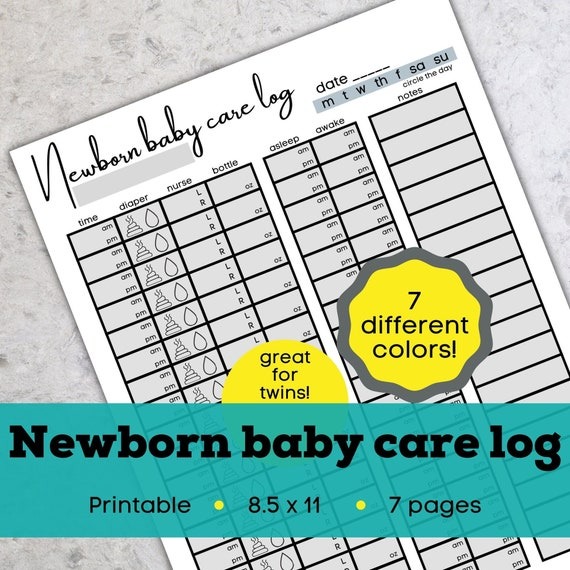
Too little milk can raise bilirubin, so some jaundiced newborns get a feeding assessment. Breast-milk jaundice is a different pattern: yellowing can last longer even when feeding goes well.
AAP parent guidance describes about 8 to 12 breastfeeds in 24 hours during the first days. Beyond the feed count, the assessment looks at:
- Feeding behavior: whether your baby latches, stays engaged and transfers milk well.
- Diapers and stools: the output pattern, which is part of the feeding history.
- Weight: weight change and any concern the care team spots.
- Milk transfer: whether you need help with technique or milk production.
Supplementation with expressed milk or formula is right for some infants after an individual assessment. A jaundice diagnosis by itself doesn’t call for every breastfeeding parent to stop nursing or add formula.
If latch or milk transfer worries you in an otherwise alert, feeding baby, ask the baby’s clinician or a lactation professional for an assessment. The guides to feeding a newborn and breastfeeding basics cover those techniques in more depth.
What happens during phototherapy
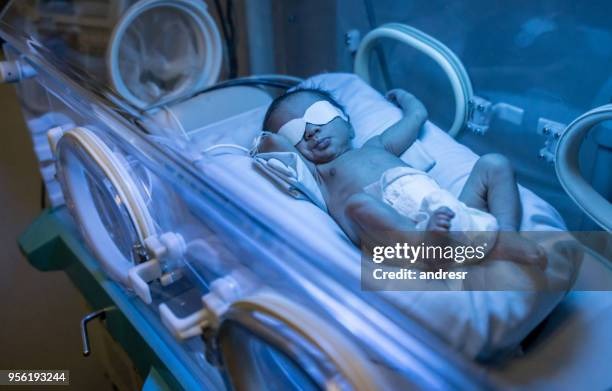
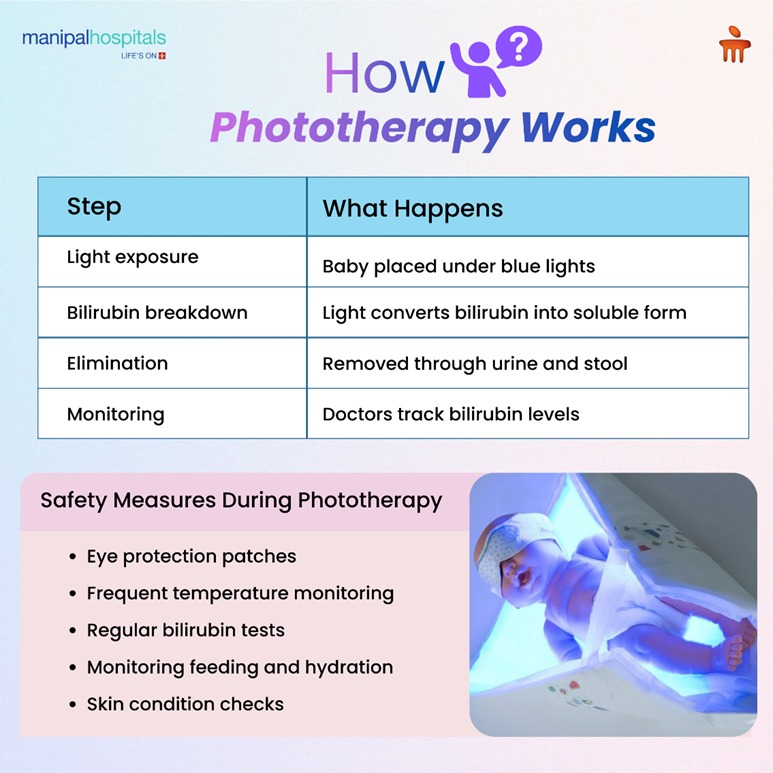
When bilirubin reaches the treatment threshold, a newborn may need phototherapy. Controlled medical light in the blue part of the spectrum helps the body clear bilirubin while staff track the response.
In hospital, treatment can use overhead lights or another prescribed device. Exposure time, eye protection, feeding arrangements and how often bilirubin is rechecked depend on the equipment and your baby’s condition.
One family’s discharge test led to repeated phototherapy and a NICU stay:
Full term baby boy, born yesterday @ 8lb 7oz. Everything seemed fine, they were in process of preparing for discharge when they did final 24hr test. Bilirubin was high and so they brought in the blue uv lights for 6 hours. Bilirubin went up more so they did another 6 hours, went up even higher. In both rounds of light therapy we were removing baby to breastfeed, so the light therapy was not consistent. Now we are in Nicu doing constant Bilirubin, not allowed to take him out and must be bottle fed. I don’t know why I am posting this. My wife is in tears trying to get some rest so she can keep pumping, and I am playing every bad scenario in my head while I wait another hour for the next test.
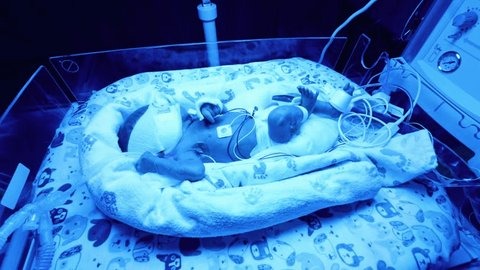
During treatment, ask what the device requires, when you can feed and hold your baby, and what the team must see before treatment ends.
Hospital and home phototherapy
Hospital phototherapy allows direct observation and adjustment. Some infants can get clinician-prescribed treatment at home when suitable equipment and reliable monitoring are available.
Under the AAP’s home-treatment criteria, the infant must be born at 38 weeks or later and be at least 48 hours old. The baby must also be clinically well and feeding adequately, with no neurotoxicity risk factors or previous phototherapy.
An appropriate LED device must be available promptly, with daily serum bilirubin testing and a result within the guideline’s eligible treatment range.
Safety: Never use sunlight, including light through a window, to treat newborn jaundice. It is not a substitute for medically controlled phototherapy.
Severe cases may need specialist care beyond phototherapy.
Rebound after phototherapy
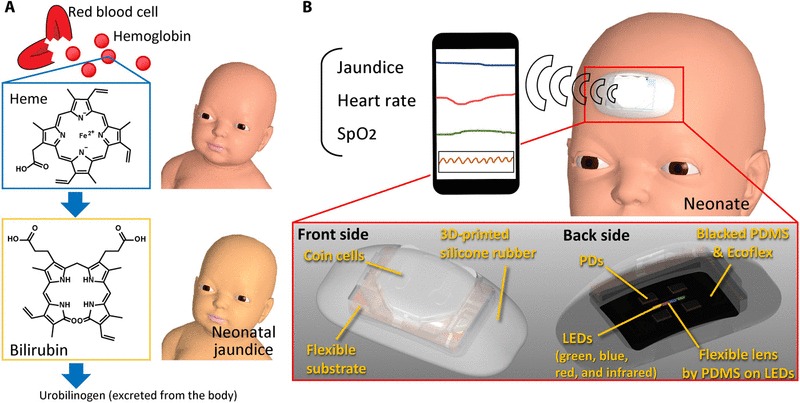
Bilirubin drops while the baby is under the lights and can rise again after they stop. Clinicians call this rebound, and they decide on another blood measurement based on the baby’s risk.
For infants treated during the birth hospitalization, the AAP recommends earlier rebound testing when phototherapy began before 48 hours of age, the direct antiglobulin test is positive, or hemolytic disease is known or suspected. Follow-up for other infants depends on their treatment course and risk factors.
One parent described a rebound during a treatment pause:
He has been on the billy blanket for 3+ days. He responded really well to the first round of phototherapy and the readings dropped down considerably. But then we took a 12 hour break to check for rebound and his readings went back up again. The second 6 hour readings slightly went back up too. They are saying that with days and time it will get better and we just need to keep him on the blanket. He is in 2 and half hour feed cycle and is combination fed with breast milk with formula top ups. He eats well and is not a sleepy baby. We are making sure he pees and poos often to flush it all out of the system.
A rise after treatment doesn’t automatically mean phototherapy failed or must restart. That depends on the measured level and the baby’s risk factors. The AAP implementation FAQ explains risk-based rebound follow-up.
When jaundice lasts longer than expected
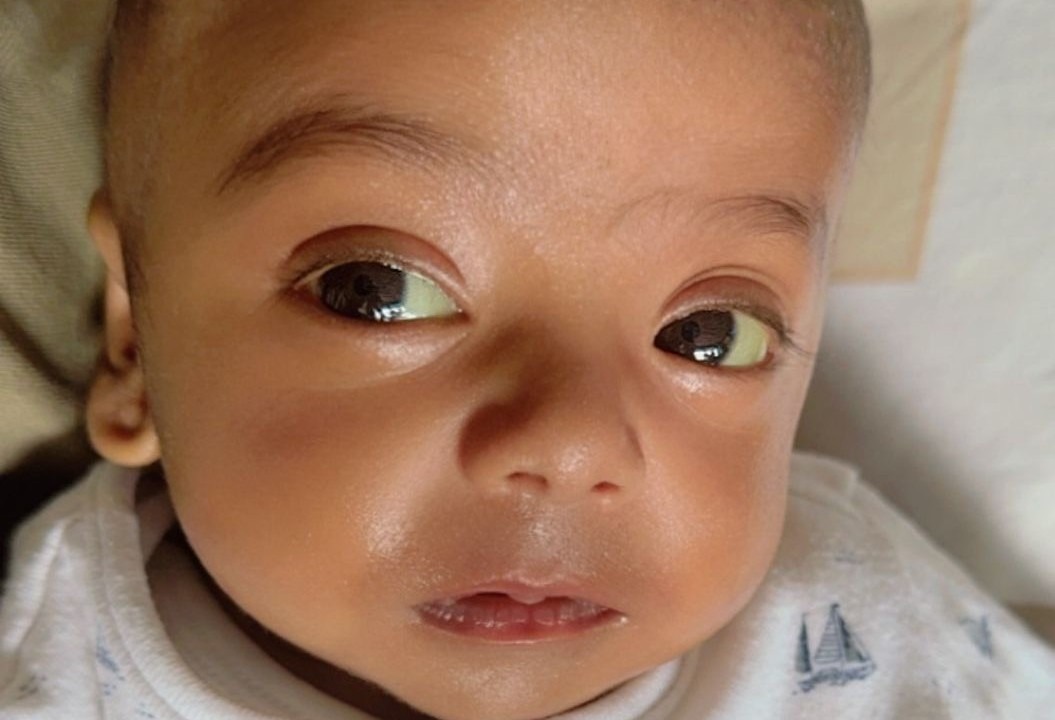
Yellowing that lasts beyond the early newborn period needs assessment for causes other than the usual first-days bilirubin rise. Some breastfed babies stay jaundiced longer while feeding and growing well.
Don’t wait for a routine checkpoint if stools are pale or chalk-colored, or urine is unusually dark. Those changes can signal a problem with bile flow, including cholestasis, and need prompt medical evaluation.
The AAP recommends total and direct or conjugated bilirubin testing at these points:
- Formula-fed infant still jaundiced at two weeks: The clinician should measure total and direct/conjugated bilirubin.
- Breastfed infant still jaundiced at three to four weeks: The same testing is recommended.
Direct or conjugated bilirubin measurement can help identify bile flow conditions that need a different workup. Breast-milk jaundice is one possible explanation for ongoing yellowing, but clinicians still assess persistent jaundice at these points.