
If your baby seems well apart from sore gums or a need to chew, rub the gum gently or offer a supervised teether chilled in the refrigerator. A measured fever, poor feeding, unusual distress or symptoms that get worse need a different plan. Check those separately and get pediatric advice based on your baby’s age and condition.
Your baby chews everything within reach, drools through another shirt and wakes at odd hours. Teething is the obvious guess, especially when a white tooth edge is starting to show. What matters is whether the discomfort stays in the gums or your baby seems unwell overall. Sore gums call for simple comfort. Anything beyond that needs another explanation.
When do babies start teething?
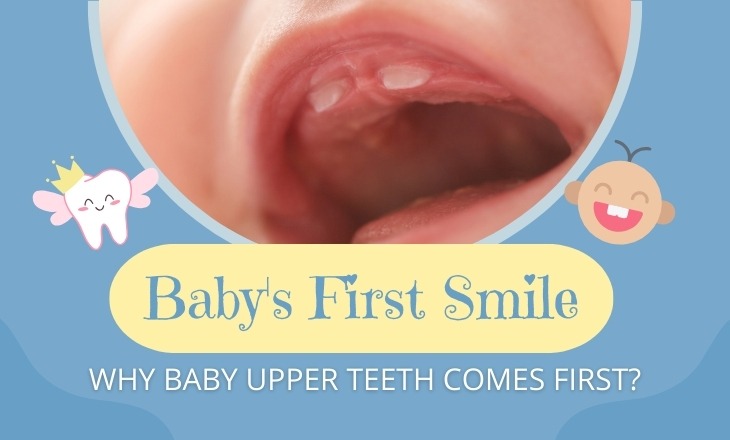
Most babies get their first tooth around 6 to 10 months, though earlier or later is normal. A 3-month-old chewing both hands is probably exploring with their mouth. A 7-month-old with a visible incisor edge and a tender patch of gum has a more specific clue. Check the gum near the emerging tooth and treat age as a rough guide.
Which signs can accompany teething?
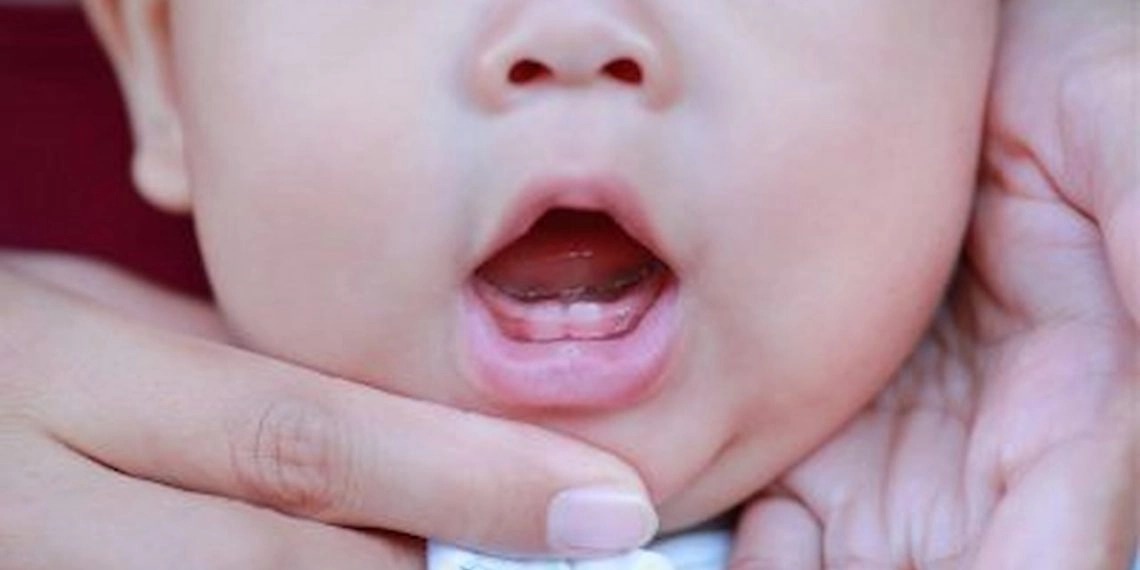
A sore, irritated patch of gum near an emerging tooth is the most useful local clue. Drooling, chewing, mouthing and some irritability go along with tooth eruption, but they also show up at other times in infancy.
A baby who keeps feeding and interacting normally while gnawing on a toy is in a different situation from one who cries unusually hard or eats far less.
| What you notice | How it relates to teething | What to check next |
|---|---|---|
| Tender gum or tooth edge emerging | Local clue that a tooth is coming through | Check whether the discomfort centers on that gum |
| Chewing fingers or objects | Goes with eruption or ordinary mouth exploration | Look for a visible change in the gum |
| Extra drooling | Commonly reported around eruption | Weigh it together with the gum clues |
| Fussiness, night waking or changing feeds | Nonspecific, even when a tooth is emerging | Run the warning-sign checks below |
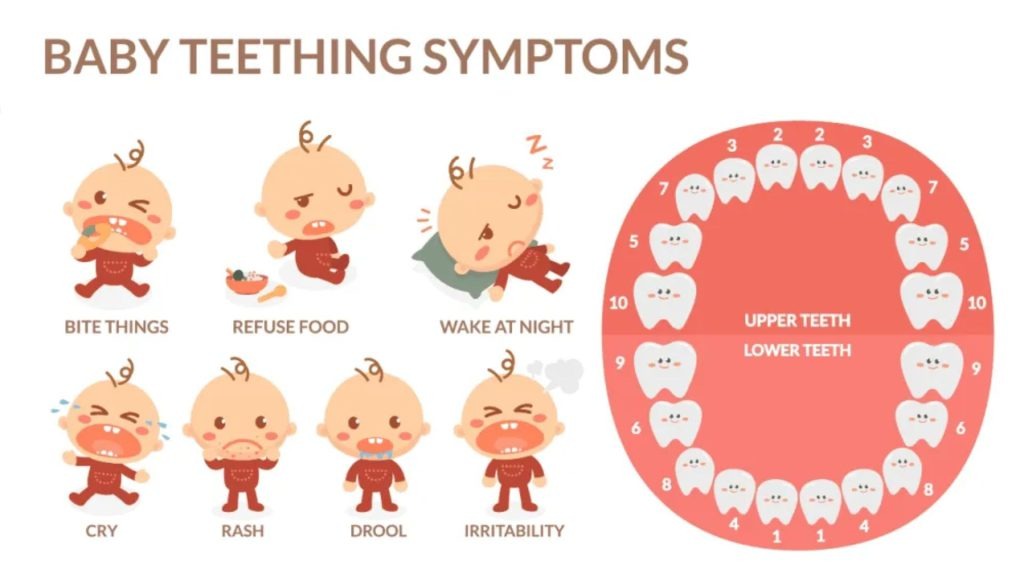
A 2016 Pediatrics review of 16 observational studies involving 3,506 children linked gum irritation, drooling and irritability to primary tooth eruption, though the studies measured and reported symptoms differently. A systematic review published online in 2024 examined 25 studies and also found considerable variation in reported symptoms. No symptom count diagnoses teething, so gum findings tell you more than general behavior does.
Can teething cause a fever?
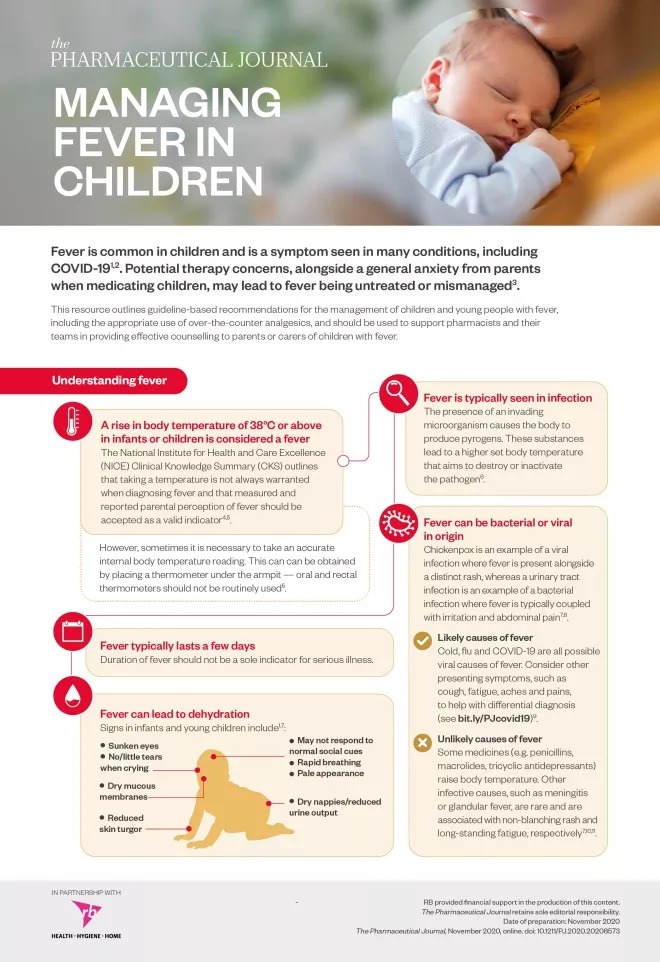
A small temperature increase has been observed around tooth eruption. A measured fever is a separate matter: the American Academy of Pediatrics uses a rectal temperature of 100.4°F (38°C) or higher as the fever threshold.
For a baby 3 months old or younger: Contact a pediatric clinician immediately for a rectal temperature of 100.4°F (38°C) or higher, even if a tooth is visibly emerging. The AAP fever guidance explains the age-specific response.
For babies older than 3 months through 6 months, the AAP advises notifying a clinician at a rectal temperature of 101°F (38.3°C). For babies older than 6 months, the threshold for contacting a clinician is 103°F (39.4°C). Your baby’s overall condition still counts, and some symptoms deserve a call at a lower temperature.
One parent saw emerging molars and a worrying temperature at the same time:
Well it was last night. Did not want to eat and had 102 fever when we checked at 3 AM. He was waking up every 2 hours and needing to be on the boob. I did give him some Motrin before he fell asleep. Didn’t help much. He was still miserable this morning and currently has 102.5 fever. It seems to be going up and down. He seems totally fine and then he starts feeling miserable and hot. I’m nursing him with a wet rag on his head.
The medicine in that post is one parent’s choice and gives no dosing guidance. A 2017 meta-analysis found no statistically significant association between tooth eruption and fever overall, although an analysis limited to rectal measurements reported an association.
Use a thermometer, note how the temperature was taken and apply the age-specific guidance. The baby-fever guide covers detailed assessment beyond teething.
When might fussiness or night waking mean something else?
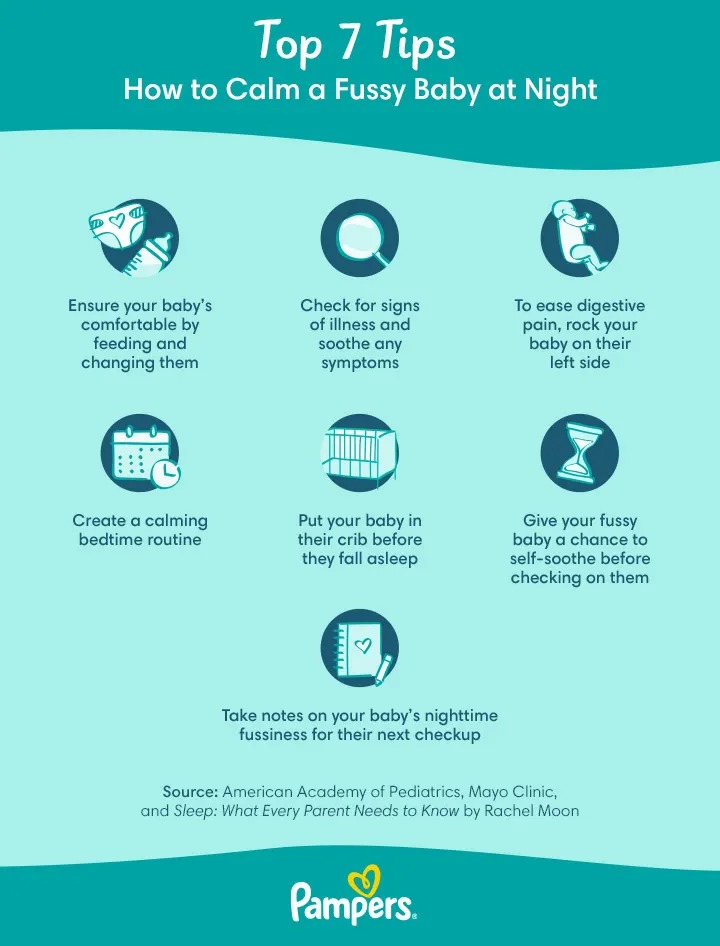
An emerging tooth does not stop an ear infection or another illness from developing at the same time. A noticeable change in behavior, feeding or responsiveness needs attention even when the gums look sore.
One parent assumed teething through several rough nights:
Last week, my 11 month old’s sleep was terrible. He woke up every 2 hours screaming and would not go back to sleep. I never do this, but I even let him cry himself back to sleep twice around 3 am after giving oragel and Tylenol. I was so exhausted. His second tooth is coming in, so I assumed it was teething pain.
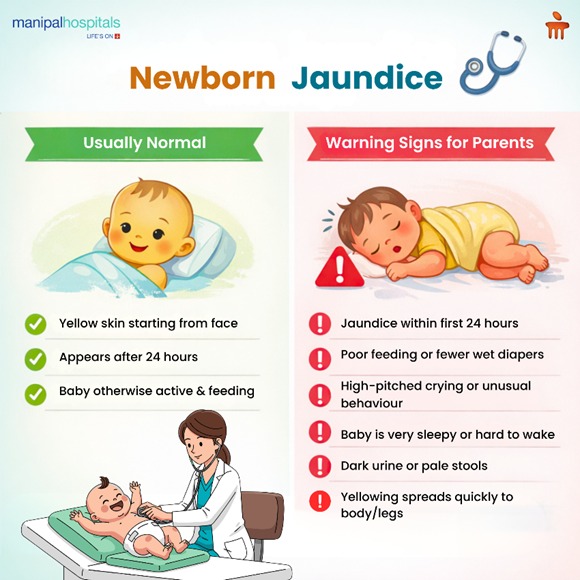
The parent later reported that a pediatric examination found a double ear infection. The post also described unusual clinginess and sudden daytime sleepiness, which mattered as much as the night waking.
When your baby seems unwell, watch for:
- Alertness and behavior: Unusual withdrawal, trouble consoling the baby, or behavior far from normal.
- Milk intake and hydration: A meaningful drop in feeding or a change in wet diapers.
- Severity and progression: Intense crying, persistent distress, or symptoms that get worse with time.
Saliva around the mouth can irritate nearby skin. Diarrhea and diaper rash have other causes, so tooth eruption does not explain them; the AAP advises contacting a pediatrician if diarrhea lasts longer than a day. For diaper changes, bathing routines, and crying, see Everyday Baby Care: What to Do and When to Call.
A clinician can assess concerning changes and examine for conditions such as an ear infection. If your baby seems well but keeps waking, baby night-waking guidance covers that separate sleep question.
How can you safely soothe sore gums?
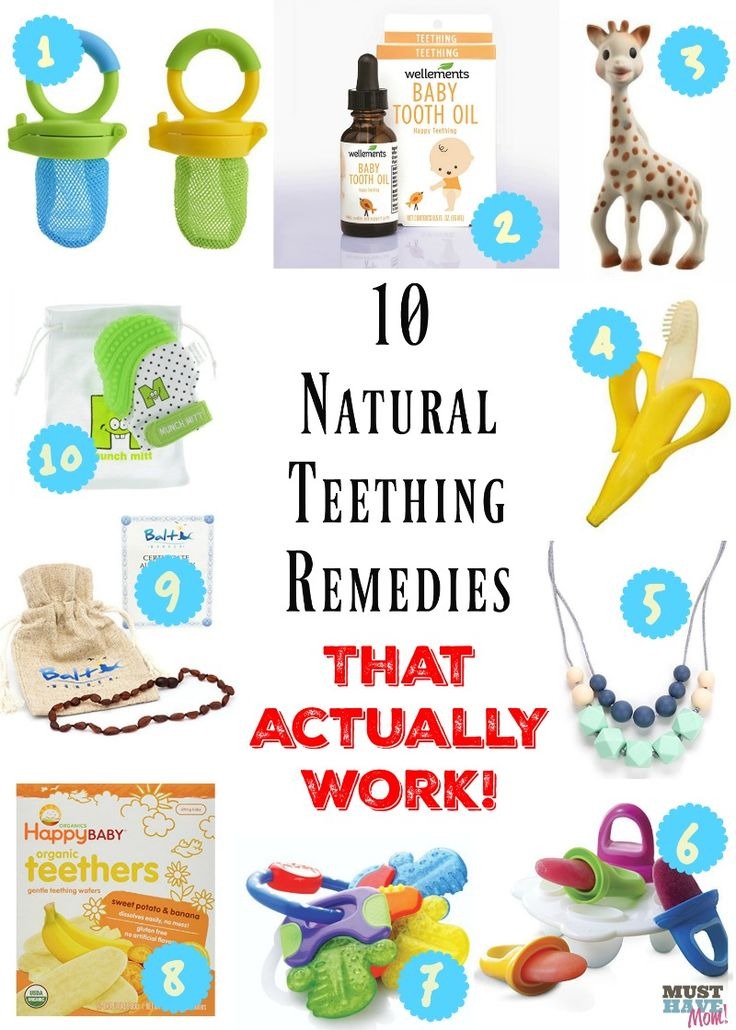
Gentle gum massage and a firm teether cooled in the refrigerator are simple ways to comfort an otherwise well baby with sore gums.
- Clean your hands. Wash before touching your baby’s mouth, then rub the sore gum gently with a finger if your baby accepts it.
- Cool an appropriate teether. Use an intact, age-appropriate firm, non-liquid-filled rubber teether chilled in the refrigerator. Freezing can make a teether too hard or cold against delicate gums.
- Supervise use. Offer it while your baby is awake, follow the cleaning instructions and keep teethers out of the sleeping space.
The FDA’s teething-pain advice also explains why certain marketed remedies should be avoided.
What if gum massage or a chilled teether doesn’t help?
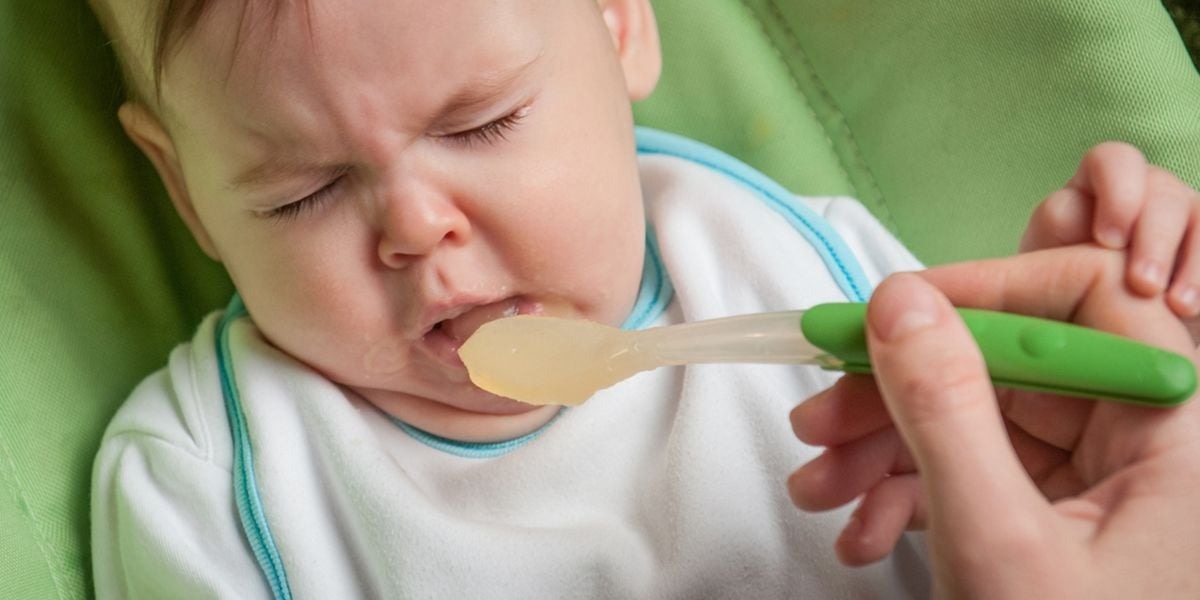
Some babies pull away when you touch their gums. Others refuse a chilled teether yet chew eagerly on everything else.
One parent who had tried the usual suggestions described the frustration:
I thought he was teething because he had been crying a lot, wouldn’t let me touch his gums, was grabbing his jaw and ear. I had given him ibuprofen but it hadn’t seemed to make a difference so after 3.5 hours, when he started crying again, I called the pediatricians nurse line to see if I could give him Tylenol then or if I had to wait 6 hours after the ibuprofen. First, I got told that it isn’t recommended to just drug babies around the clock (no duh) and told to try a wet, refrigerated washcloth or a teether or gum massage. He won’t let me in his mouth right now, so gum massage is out. I tried a cold teether and he wasn’t interested.
If your baby resists, stop. A clean, damp washcloth chilled in the refrigerator is another option for supervised chewing while awake; avoid frozen cloths. If your baby wants nothing near their mouth, holding them close is enough.
When distress continues or feeding and behavior change, go back to the warning signs above.
Which teething products and remedies should you avoid?
Some teething remedies carry risks serious enough to rule them out for infants. The FDA warns against several oral anesthetics, homeopathic teething preparations and wearable jewelry.
| Product or remedy | Safety concern | What to do |
|---|---|---|
| Benzocaine teething gels or liquids | Serious adverse-effect warnings | Do not use for infant teething |
| Lidocaine oral anesthetic products | Potentially serious harm to young children | Do not use for teething in infants or young children |
| Homeopathic teething tablets and preparations | Safety concerns; uncertain contents or effects | Avoid |
| Amber necklaces and other teething jewelry | Choking and strangulation risks | Do not put them on a baby |
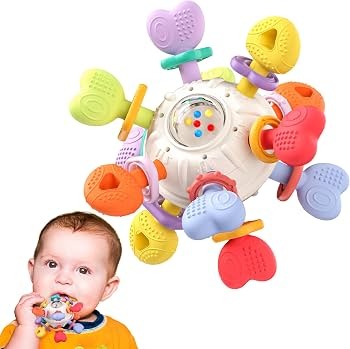
An ordinary teething toy needs its own safety check, since damaged components, strings, detachable parts and recalls decide whether a particular item is suitable.
On June 11, 2026, the U.S. Consumer Product Safety Commission recalled LiKee pull-string teething toys, model LK-FDWJ, because silicone strings could reach the back of a child’s throat and pose a choking hazard. Owners of that model should stop using it immediately and contact ChilanTech about a replacement.
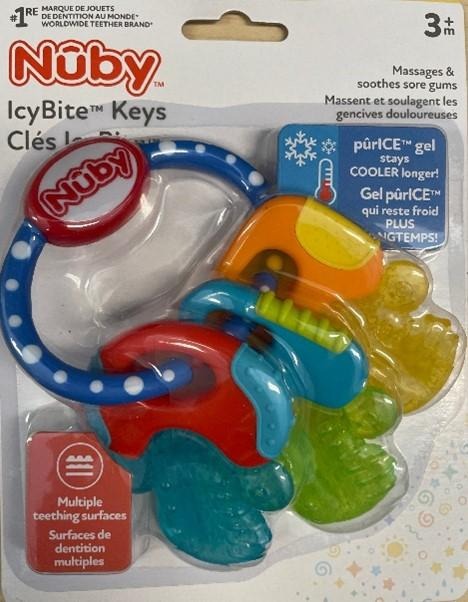
Before giving your baby a new or secondhand teether, identify its manufacturer and model, inspect the parts and read its age and cleaning instructions. Check that exact product in the CPSC recall database. For material, grip and cleaning comparisons, use the separate teething-toy guide.
How long does teething discomfort last?
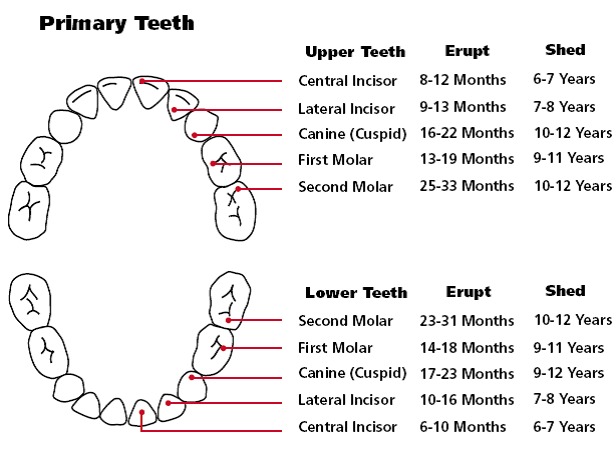
Primary teeth come in over years, and discomfort around one emerging tooth comes and goes. Many parents get a rough stretch, see a tooth appear, then hit another unsettled stretch as the next one approaches.
No universal number of hours or days applies to each tooth. Several episodes close together can feel continuous, even when the symptoms change between them.
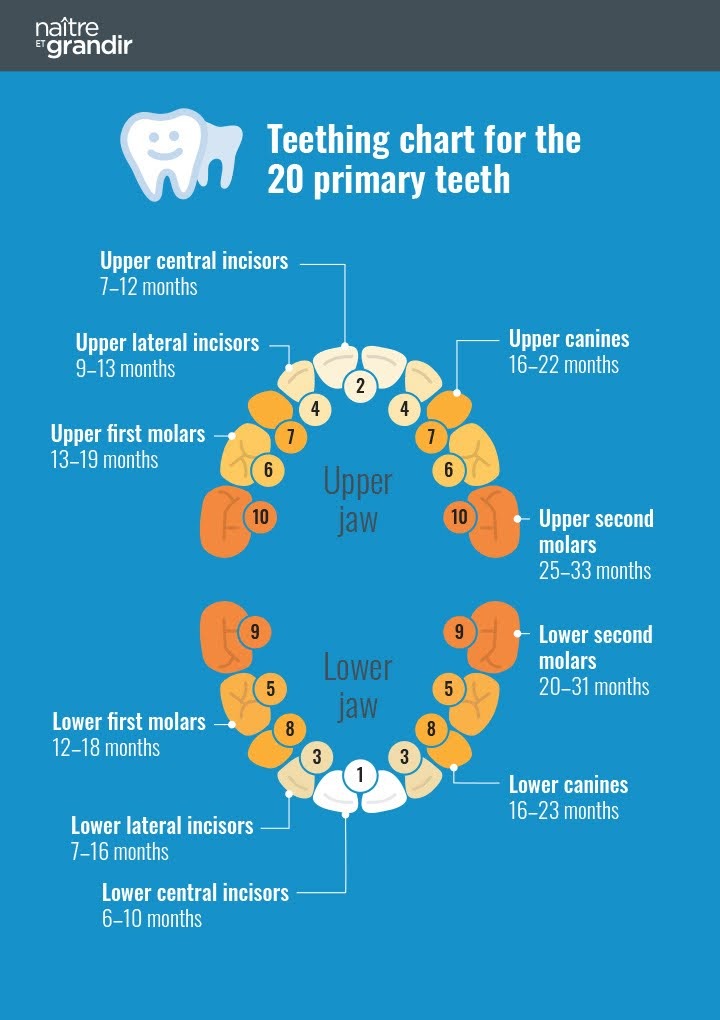
When discomfort seems to last for weeks, look for stretches of normal sleep, feeding and behavior, and check whether a tooth has become visible. Extended or worsening distress needs the warning-sign check above, wherever the next tooth is in the gum.
What changes once the first tooth appears?
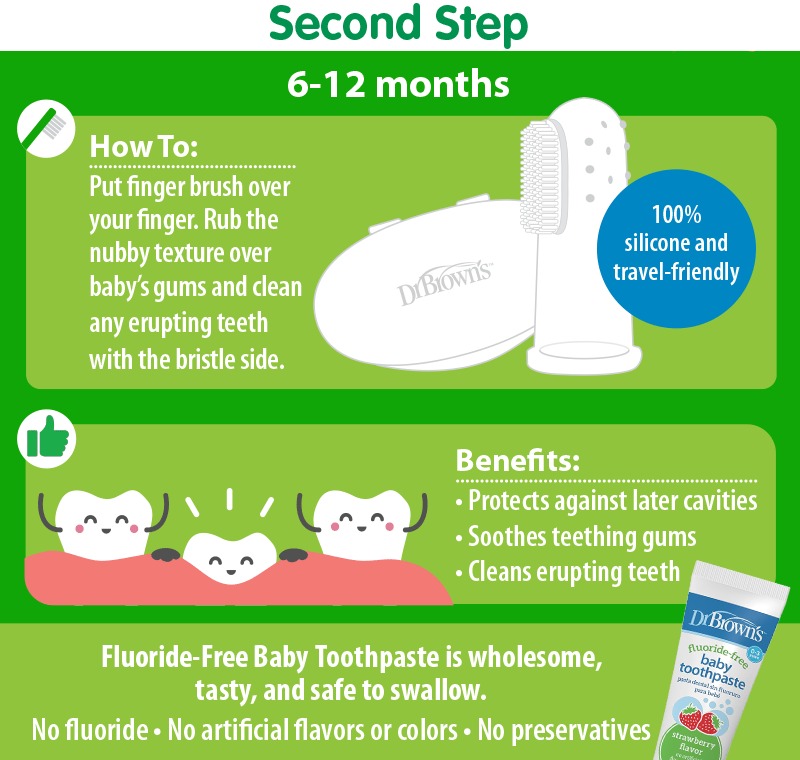
Once a tooth appears, clean it with a small, soft-bristled toothbrush as part of the bedtime routine. The American Academy of Pediatric Dentistry recommends the first dental visit when the first tooth comes in or no later than the first birthday; its parent guidance explains the visit and early tooth care.