
Choose the carrier type that suits your routine. Use a specific model only if its instructions cover your baby’s size and you can keep the airway clear, support your baby properly, and fasten the carrier securely and comfortably. If you can’t, stop that setup and get qualified fitting help or try another carrier. The American Academy of Pediatrics advises against upright carriers and other upright positioning devices for premature infants and babies with respiratory problems.
The carrier that works well around the house can be awkward when you head out alone for a walk. A wrap feels wonderfully adaptable until you have to manage several fabric passes in a hurry. A buckle carrier is easier to repeat from day to day, but its panel or straps still have to fit the people using it.
Start with what you need the carrier to do. Pick a type, check that your baby meets the model’s limits, check the fit on both of you, and test it before you buy.
Which Type of Baby Carrier Fits Your Routine?
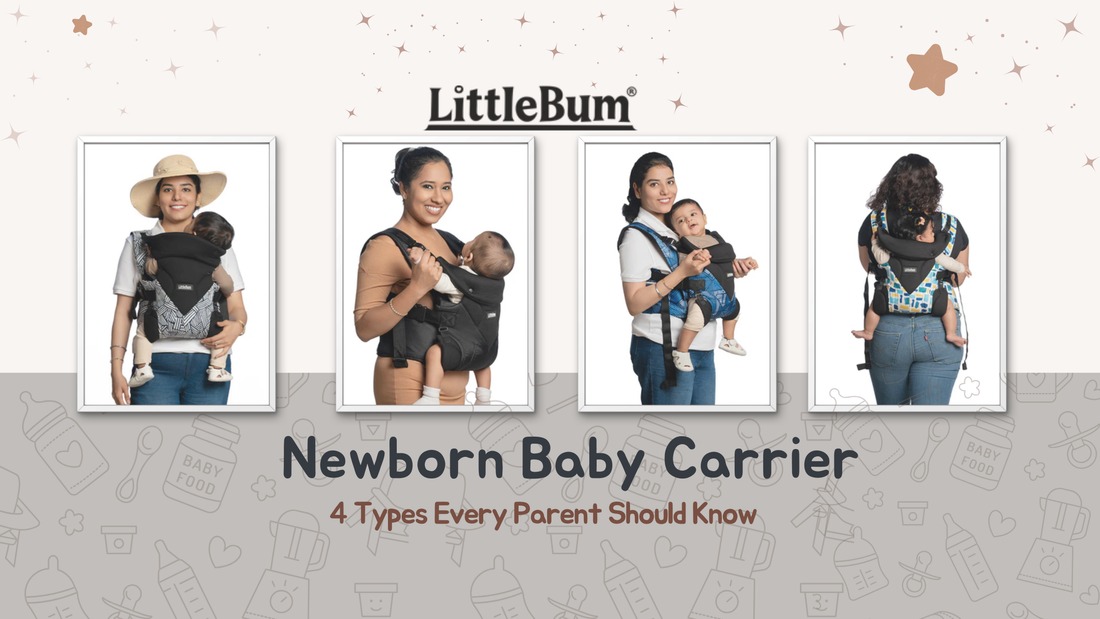
Wraps, ring slings, structured carriers, and hybrids all carry a baby, but they fasten and support differently. Decide how much setup you want to learn and what you need the carrier to do on an ordinary day.
| Carrier type | How it works | Useful scenario | Trade-off to consider | What to evaluate |
|---|---|---|---|---|
| Stretchy wrap | Stretchable fabric tied in several passes | Carrying close to home when you’re happy to learn the wrap | Several fabric layers; tying and tension need attention | Infant size limits, fabric tension, carrying methods the maker allows |
| Woven wrap | Woven fabric arranged and tied around baby and wearer | Caregivers who want to learn different wrapping methods | More technique and more setup choices | The specific carry, secure tying, infant support |
| Ring sling | Fabric adjusted through rings, usually worn on one shoulder | Compact carrying and frequent adjustments | Weight sits unevenly; the seat needs careful adjusting | Stable tension, seat formation, wearer comfort |
| Soft structured carrier | Fabric panel with adjustable straps, usually buckles | Caregivers who want the same fastening routine every time | Panel shape, buckle reach, and adjustment range vary | Infant eligibility, panel configuration, adult fit |
| Hybrid or half-buckle | Combines structured elements with tied fabric | Caregivers happy to use both buckles and fabric adjustments | Some learning and loose fabric to handle | The exact fastening and the carrying positions the maker allows |
If you often leave home alone with a baby, fastening the carrier by yourself matters more than having several ways to tie it. If you mainly want a carrier for short stretches at home, a wrap can be worth learning. For shared use, check how long and how hard it is to change the adjustments.

Fabric volume also affects how the carrier fits in a bag. A compact sling and a wrap with several long passes of fabric pack and handle very differently.
Write down your main carrying situation and pick the two styles that fit it best. If your bigger question is how carrying fits among strollers and other equipment, the guide to baby gear for everyday use covers that broader decision.
Framed hiking child carriers are a separate equipment category with different child-readiness and fitting considerations.
Check Newborn Fit Beyond the Label
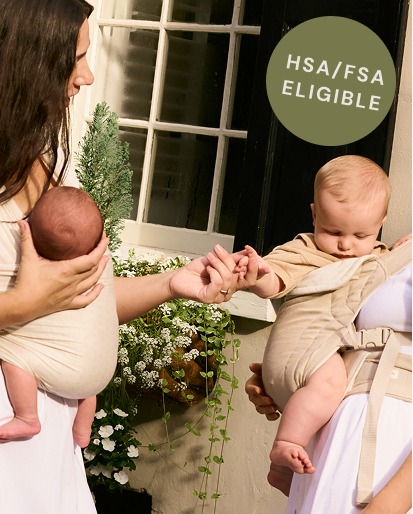
A newborn carrier must meet the model’s size and carry-mode limits and fit your baby’s actual proportions and posture in the configuration the maker approves.
Use the instructions for your exact model and version. Find the weight and height limits, any age or developmental requirements, the permitted carrying positions, and newborn adjustments or accessories. Some configurations have requirements that differ from the carrier’s general product description.
| Fit check | What a usable setup shows | Reason to stop or reassess | Where the requirement comes from |
|---|---|---|---|
| Size and carry-mode eligibility | Baby meets the model’s stated conditions for your configuration | Baby is outside a limit, or an accessory or adjustment is missing | Product manual for your exact model |
| Leg openings | Openings hold the baby securely | Baby could slip through | AAP carrier guidance and model instructions |
| Seat and panel width | In a panel-style carrier, fabric supports the baby’s thighs without pressing into the backs of the calves | The panel presses into the calves or doesn’t support the thighs as the instructions require | Model instructions and how your baby fits |
| Upper panel and head support | Head and neck are supported and the face stays clear and visible | Fabric crowds the face or the baby can’t hold a supported position | Model instructions and infant safety guidance |
| Carrying height and stability | Baby sits at a height where you can see their position | Baby sinks, shifts a lot, or can’t stay securely seated | Approved setup and how your baby fits |
The leg-opening check matters most for a small newborn. The American Academy of Pediatrics’ carrier guidance advises choosing a carrier suited to the child’s size and checking that the leg openings cannot let the infant slip through.
Two babies of similar weight can sit differently in the same panel. Some carriers require a specific newborn configuration that changes as the child grows. A photo of a larger baby fitting comfortably in that model tells you little about the smaller infant in front of you.
Don’t use extra padding, improvised inserts, or a changed carry position to force a fit.
The AAP advises against placing premature infants or infants with respiratory problems in backpacks or other upright positioning devices because their breathing can be compromised in that position. Ask the baby’s clinician about carrying options for those circumstances.
Check Airway, Position, and Hip Support
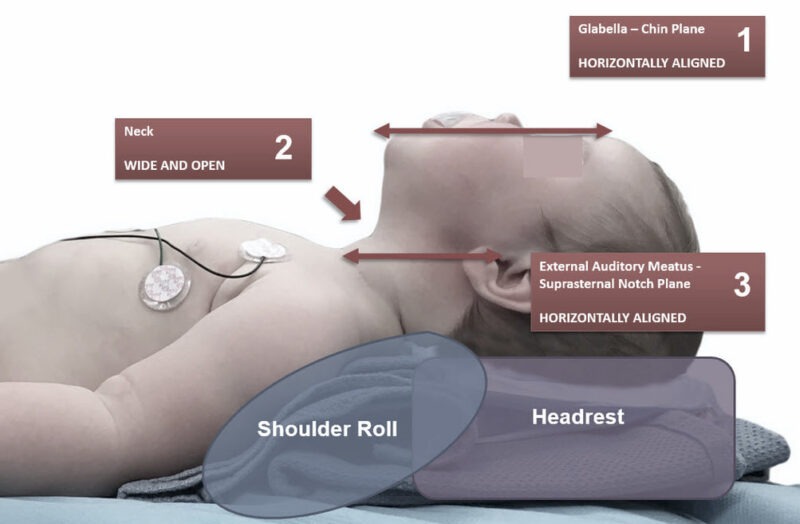
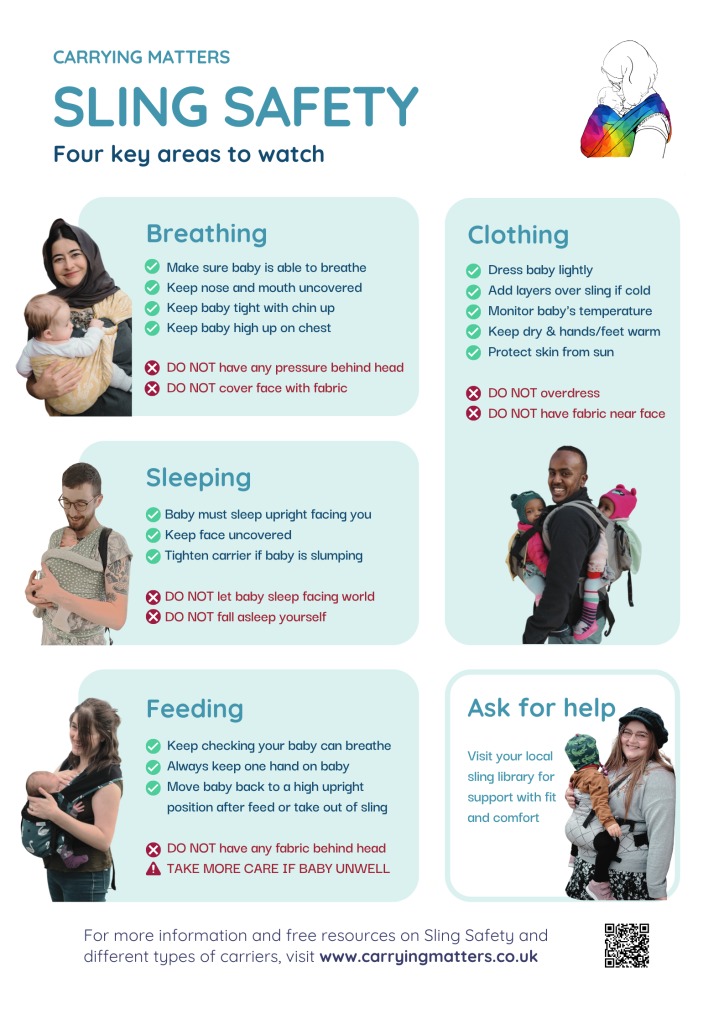
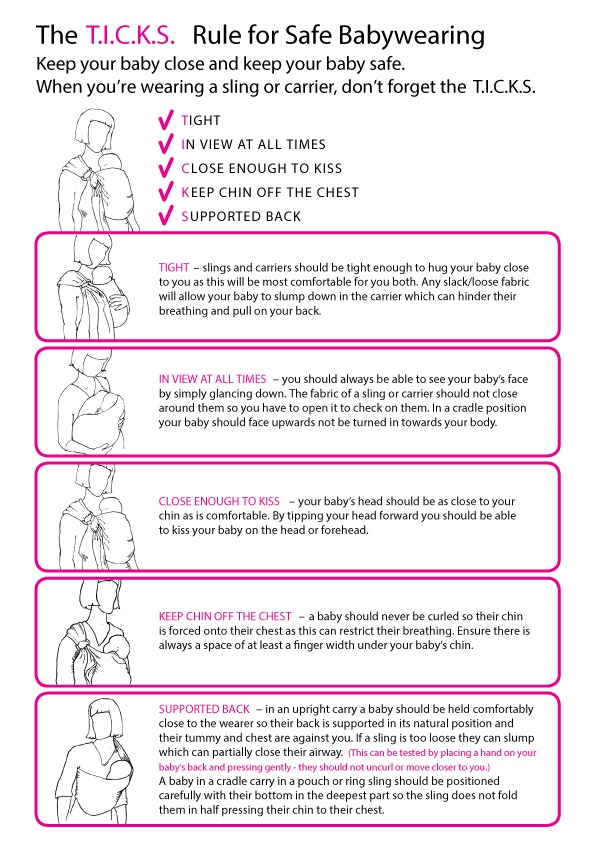
A safe carrying position keeps your baby’s nose and mouth clear, the face visible, and the head supported without pressing the chin into the chest. Check this again after you move or adjust the fabric.
A 2010 warning from the US Consumer Product Safety Commission described two ways infants could suffocate in slings: fabric covering the nose or mouth, and a curled position that compresses the chin toward the chest. The warning stressed particular concern for babies younger than four months.
What to observe while carrying
- Face and breathing space: Mouth and nose stay clear of fabric and your body. You can see the face the whole time.
- Head and neck: The head is supported and doesn’t fold forward into a chin-to-chest position.
- Body support: The carrier holds the permitted carrying position without letting the baby slump or sink.
- Leg and thigh support: Fabric or panel supports the thighs with the legs bent.
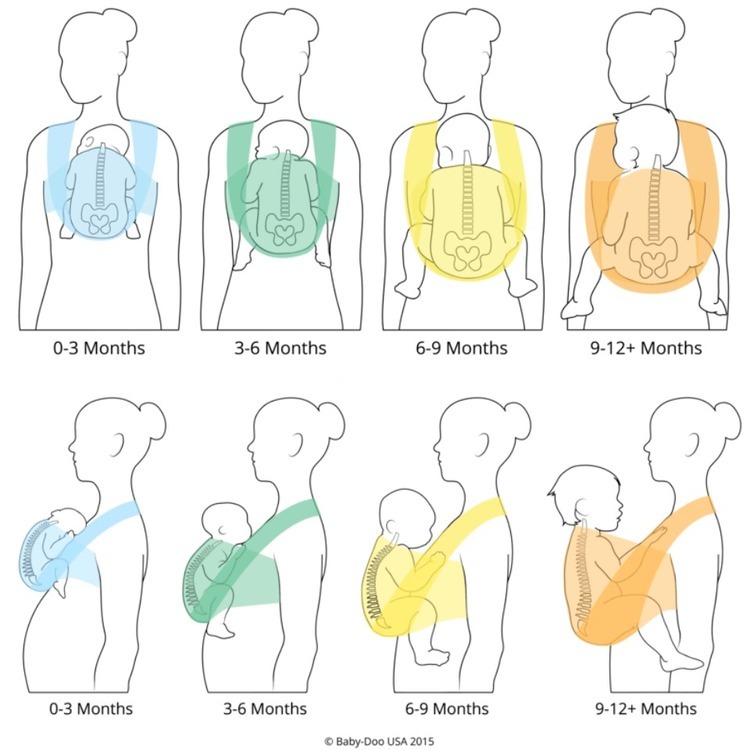
The International Hip Dysplasia Institute recommends a supported spread-squat position, often called the M position. The thighs are supported while the knees and hips stay flexed. This is a positioning recommendation. Existing evidence does not show that a particular carrier prevents hip dysplasia or that the absence of the M position alone causes the condition in otherwise healthy hips.
If fabric blocks your baby’s face, the chin is pressed toward the chest, or your baby can’t stay securely supported, stop carrying in that configuration. Fix the problem before you continue, or use a different approved carry.
When you pick something up while wearing your baby, bend at the knees. This lowers the chance of tipping the infant out and protects your back. Keep your baby’s position visible as you move.
When a carried baby falls asleep
Keep checking your baby’s airway if sleep happens while you carry. The AAP advises moving a baby who falls asleep in a carrier or sling to a firm, flat sleep surface, on the back, as soon as possible.
For sleeping arrangements and the infant sleep environment, see the safe sleep checklist.
Fit the Carrier to the Adult, Too
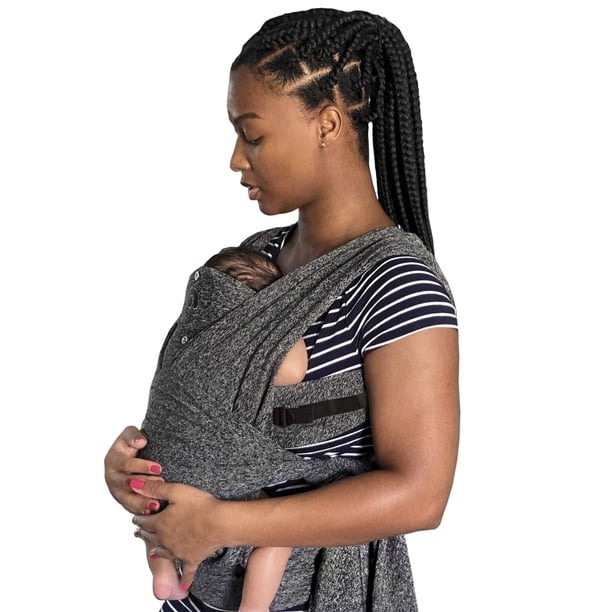
You need secure support and a way to fasten the carrier that you can manage. Sore shoulders, shifting fabric, and hard-to-reach fasteners make for an uncomfortable carry.
Follow the manufacturer’s instructions for your carrying mode. Depending on the design, the controls include a waistband, shoulder straps, tied fabric, buckles, or adjustment points near the panel.
Assess the wearer fit
- Waistband or primary support: Place it as directed and check that it stays put when you move gently.
- Shoulder contact: Notice where straps or fabric bear weight and whether they cause uncomfortable pressure.
- Tension: Adjust the designated points until the carrier is stable without distorting your baby’s supported position.
- Breathing and movement: You should be able to breathe comfortably and move without significant pain or instability.
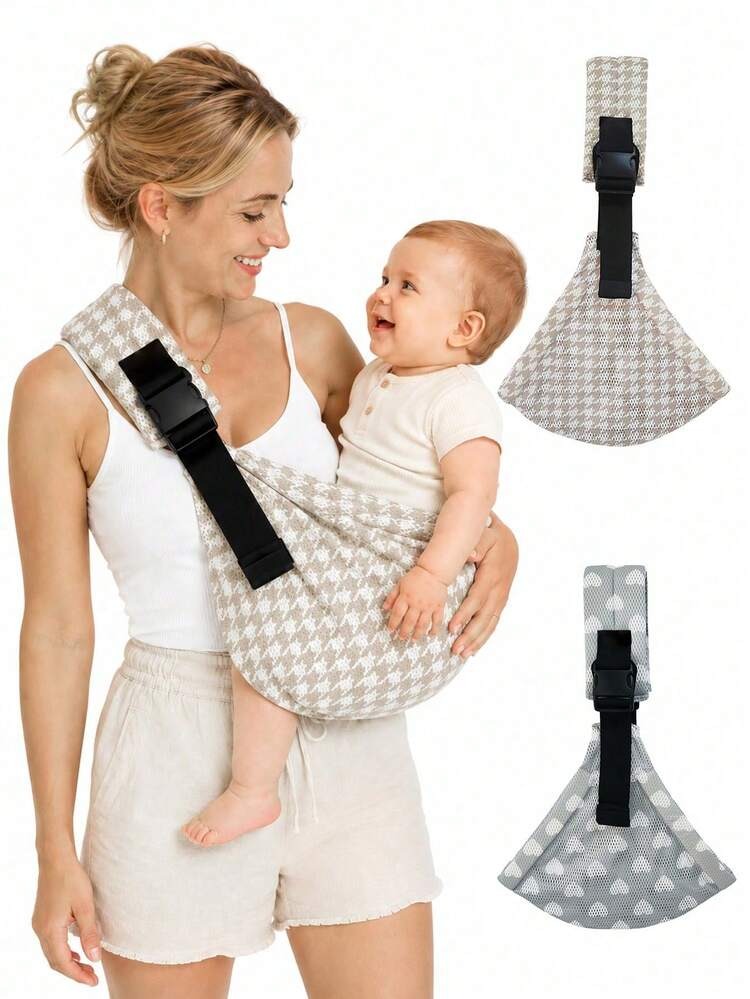
Ring slings usually load one shoulder; structured designs often use two shoulder straps. One shoulder feels different from two straps over a longer walk, and the fabric, your adjustments, and your body also play a part.
When a carrier gradually slips down, find which strap, waistband, or fabric adjustment controls that movement. Tightening every available point can make your baby’s position worse. The model’s instructions explain which part does the supporting.
Two adults sharing one carrier may need very different settings. Fit each wearer separately, even though the baby is the same.
Significant back or shoulder pain, restricted breathing, and an unstable carry are reasons to stop using the setup.
Fabric, Heat, and Everyday Logistics
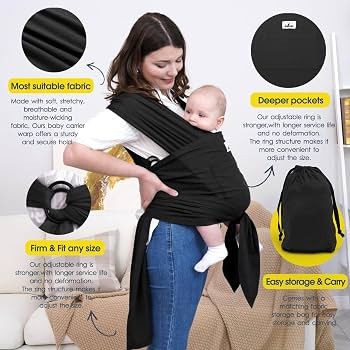
Fabric bulk, layers, and weather change how convenient a carrier feels on an outing. A stretchy wrap that’s comfortable indoors can be less appealing on a warm walk, while a compact sling or a structured carrier brings different support and adjustment demands.
Before you leave, think about your baby’s clothing, how much fabric is around both of you, the expected conditions, and how long you’ll carry. Reassess if conditions change. Breathable-fabric claims don’t guarantee your baby won’t overheat.
Try the Carrier in the Way You’ll Use It

A good trial mirrors how you’ll actually carry your baby. It shows whether the person who’ll wear the carrier can load, secure, adjust, and remove it without unnecessary difficulty.
If you usually leave home alone, test fastening it by yourself. If two adults will share the carrier, each needs a suitable setup and a realistic idea of how much readjusting it takes.
An in-store demonstration, a local babywearing group, or a carrier library lets you compare types.
A practical carrier trial
| Trial task | What to observe | Next decision if it fails |
|---|---|---|
| Prepare the approved configuration | You follow the required setup without guessing | Get instruction or reject that configuration |
| Load and secure the baby | The eligibility and positioning conditions from earlier still hold | Stop until the setup supports your baby properly |
| Fasten without help | The caregiver can reach and operate the closures | Consider fitting assistance or a different design |
| Adjust for another caregiver | Both adults get a good fit and can switch settings easily | Reconsider whether this works as a shared carrier |
| Move gently | The carrier stays stable and comfortable as you move | Reassess before going further |
Write down where it fails. “I cannot reach this buckle while fastening the carrier alone” is a specific problem that a fitting session or a different design might fix.
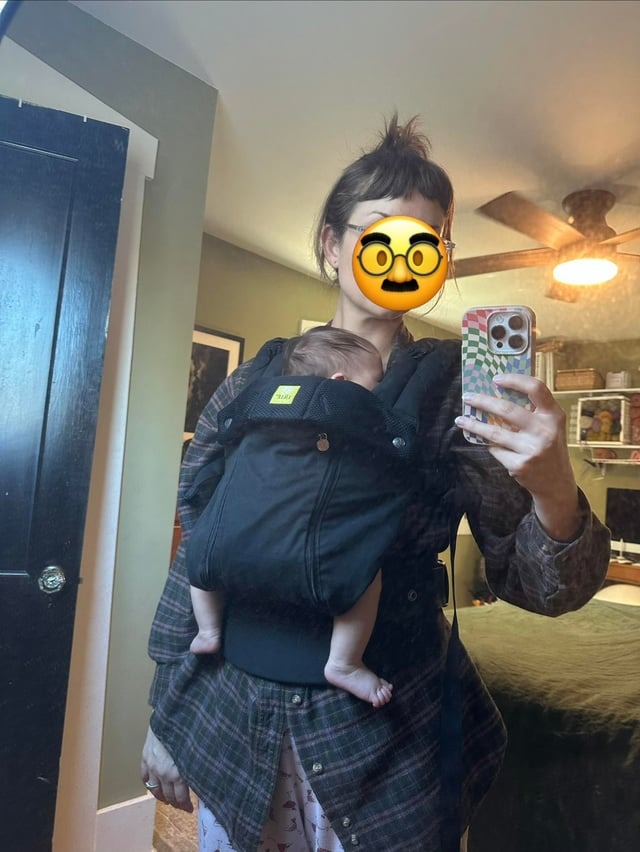
A short indoor trial won’t show how the carrier feels on a long outing or as your baby grows.
When Baby Resists or the Carrier Keeps Slipping
When carrying keeps going wrong, describe exactly what you see before you change anything. A baby fighting a ring sling, a wrap that sags as you walk, and a buckle carrier that hurts you are different problems with different fixes.
| Observed problem | What it tells you | Next step |
|---|---|---|
| Baby cries, stiffens, or pushes away | Your baby is uncomfortable or unwilling to stay in this carry | End the attempt, then reconsider comfort, timing, and another suitable carry |
| Baby cannot stay securely seated | The permitted configuration isn’t supporting this infant | Get qualified fitting help or try a different approved model before another attempt |
| Wrap or carrier keeps sagging | Either the adjustment method or the match is wrong | Try a different design if the approved adjustment method can’t keep support stable |
| You develop significant pain | This carrier doesn’t give you comfortable support | Try a carrier that supports the wearer differently |
| Fastening is consistently awkward | This closure system doesn’t suit your routine | Get handling instruction or choose an easier fastening system |
A baby who protests being put in a carrier may be reacting to several things. Crying, resistance, or straightening the legs does not point to a medical diagnosis. If your baby looks ill or has trouble breathing, stop carrying and get medical care.
When no wearable option suits an outing, a stroller can be the easier choice.
When comparing replacements, focus on the feature that caused trouble: panel width, buckle access, or support across your shoulders.
Buy, Borrow, or Buy Used: Verify the Product
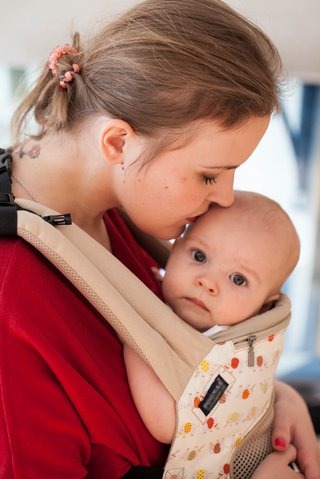
With a used carrier, an unidentifiable model or a damaged buckle can rule out an otherwise promising option.
Product checks before committing
- Identify the product: Find the exact model and any version or production details so you can match the right manual and warnings.
- Inspect the components: Look at fabric, stitching, straps, rings, buckles, and adjustment points for damage or wear.
- Confirm the instructions: Make sure all required components and the correct setup information are present, including any newborn-specific configuration.
- Review safety history: Use the model identification and warning label information to check manufacturer notices and US recall records.
- Compare purchase terms: Factor in return options, available fitting support, and any accessories you’d need.
For soft infant and toddler carriers manufactured after February 22, 2025, CPSC guidance identifies ASTM F2236-24 under 16 CFR Part 1226.
CPSC sling carrier guidance describes the separate 16 CFR Part 1228 rule and the ASTM F2907 standard family.
The CPSC classifications follow product design and intended use. Soft infant and toddler carriers carry an infant upright, while sling carriers include designs that carry in a reclined position. Shopping terms such as “wrap” and “hybrid” describe styles; the federal category depends on the model.
Skip a used carrier if you can’t identify the model or a key part is damaged. Don’t use improvised repairs or unsupported accessories to make up for uncertain condition or missing parts.
For more purchase checks, see buying used baby gear safely. The exact model number, the manufacturer’s warning labels, and current recall records belong together when checking a baby carrier for recalls.