
Pick a compatible bottle and nipple that your baby feeds from comfortably and that you can clean reliably. Buy a few to start, judge nipple flow by how your baby feeds, and buy more once the setup works. Persistent coughing, poor intake, or other recurring feeding trouble needs a professional assessment. If your baby cannot breathe, cough, or cry during a choking episode, call 911 immediately.
Start with how your baby will be fed
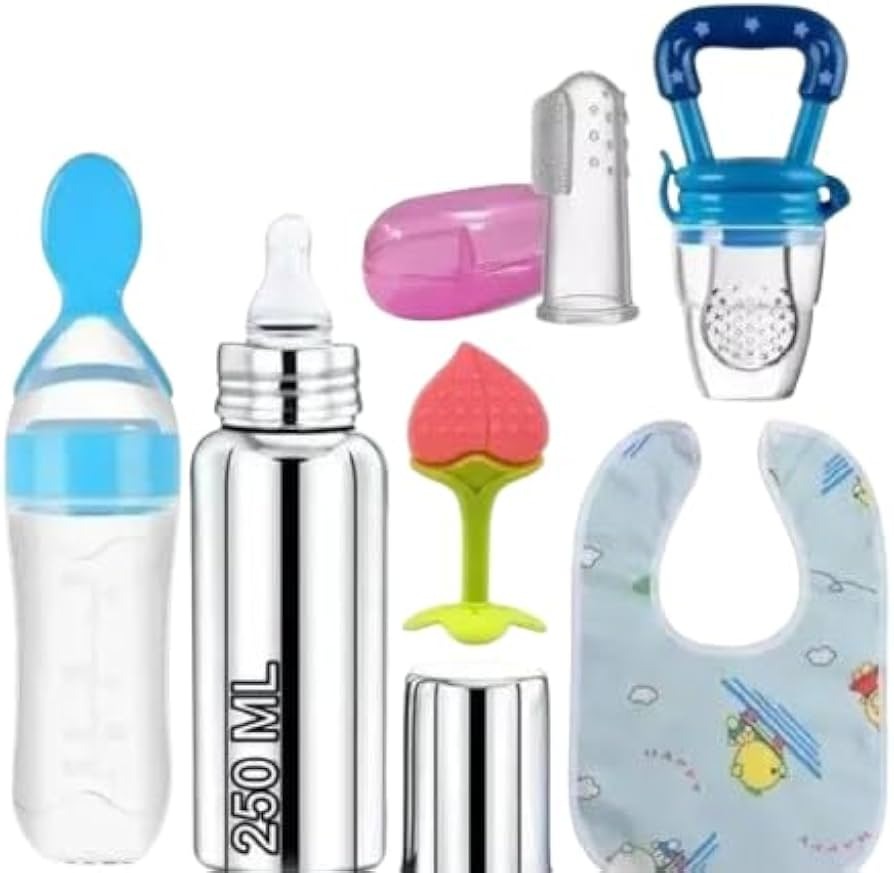
Bottles used now and then for expressed milk or formula face different demands than bottles used for every feed. If you pump exclusively or mostly formula-feed, washing time and handing bottles between caregivers matter all day. If your baby already feeds comfortably from a particular bottle, start there. Write down the milk type, who will feed your baby, how often you’ll use bottles, and whether they’ll go to daycare or another caregiver.
Use feeding cues to choose nipple flow
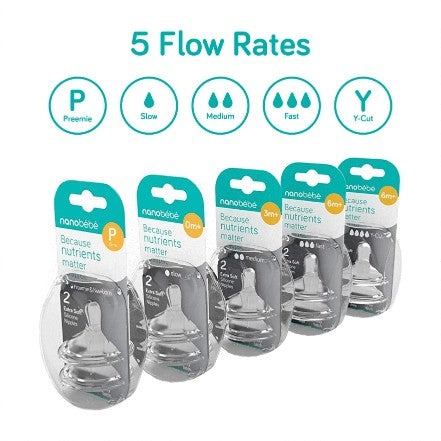
“Slow flow” or “Level 1” means something different at each manufacturer. Measured flow differs sharply between brands, so treat the label as a starting point and watch what happens during a feed.
In a 2019 laboratory study, Pados and colleagues tested 375 nipples across 25 types, 15 per type. Measured flow ranged from 0.86 to 37.61 mL/min, and the packaging descriptions did not predict it accurately.
Another study, from 2016, tested 260 nipples across 26 types from 15 brands and found 1.68 to 85.34 mL/min, including an intentionally fast Y-cut design. Both studies measured how much formula a pump pulled through each nipple in one minute. The 2019 study’s abstract and publication details are available on PubMed.
Flow is only one factor. MedlinePlus describes silicone and latex nipples in dome-shaped, flat, and wide options. Material and shape are separate from the number on the package, and latex sensitivity is another reason to check the material.
What to watch during a feed
| What you observe | What it means for this choice |
|---|---|
| Your baby sucks, swallows, pauses, and resumes comfortably. | The current flow is working. |
| Your baby turns away, seems frustrated, or struggles to feed efficiently. | Check flow, latch, and other feeding factors. |
| Feeding takes unusually long and your baby tires. | Don’t switch to a faster nipple by default. |
| Repeated coughing or trouble coordinating sucking and swallowing. | See the assessment section below. |
The CDC advises holding the bottle at an angle, allowing breaks, and responding to hunger and fullness cues. Never prop the bottle or force your baby to finish it. See the responsive bottle-feeding basics for the broader context.
Here is how fast a workable bottle turned frustrating for the parent of a 12-week-old:
Im having the hardest time finding a good nipple bottle for my 12 week old baby. We had to supplement with bottle feeding when he was a couple weeks old and used the Philips avent natural response level2. It worked for a while but he developed lip blisters and was always clicking, he didnt have a good latch and feeds took a long time. And so began our journey.
The same post describes other nipples that felt too fast or too slow for that baby. Philips Avent’s Natural Response guidance also uses feeding behavior to choose among its nipple flows.
Make sure the bottle parts belong together
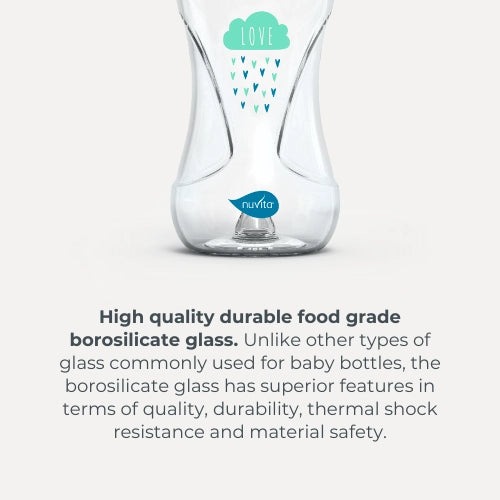
Every bottle is a set of matching parts: body, nipple, collar or screw ring, cap, and sometimes a vent or insert. Parts that look alike can belong to different product families, even within one brand.
- Body and neck: Identify the material and the exact model or generation.
- Nipple and collar: Match the approved nipple line to the ring and body.
- Vent or membrane: Follow the assembly instructions for that exact setup.
- Spare components: Confirm that you can identify and buy matching nipples and rings.
Philips Avent shows how this works: its Natural glass bottles take specified Natural and Natural Response rings and nipples. The company lists Anti-colic rings and the AirFree vent as incompatible with those glass bottles.
AirFree guidance also covers particular plastic bottle combinations. If you hand bottles to daycare, give clear assembly instructions, especially when replacement nipples and rings come from several generations of one brand.
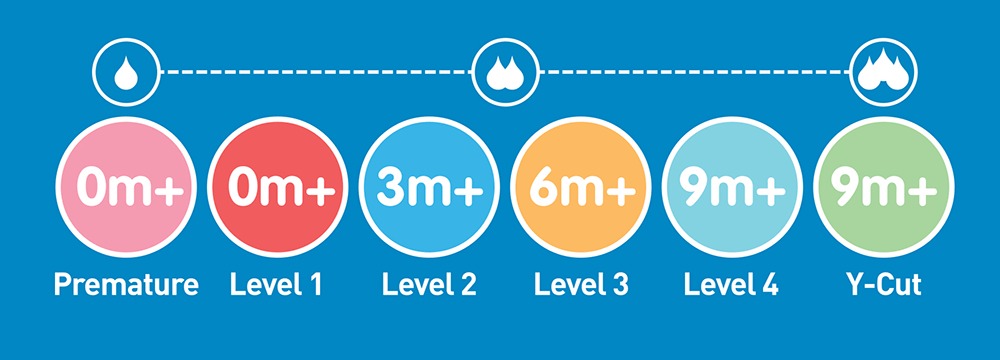
Before mixing parts, compare the exact bottle model, nipple line, collar, and optional vent against the manufacturer’s compatibility chart or manual, and check the replacement-part identifiers. A leak after assembly can come from how the parts fit, so check an unfamiliar combination before you decide the bottle is defective.
Compare materials and sizes for daily use
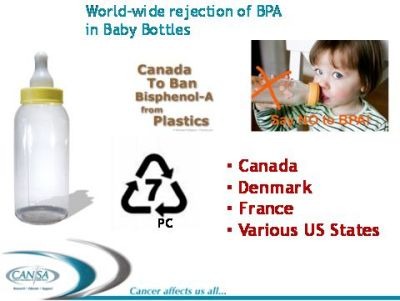
Glass, plastic, and silicone bottles handle differently. Weigh carrying weight, breakage, care instructions, volume markings, and how each shape feels in your hand.
| Material | Useful characteristic | Trade-off to consider |
|---|---|---|
| Glass | Rigid body that suits mostly-at-home use. | Heavy, and it can break. |
| Plastic | Lightweight and easy to carry. | Care instructions vary by model, and it wears. |
| Silicone | Flexible body on designs that use it. | Check handling, how easy the markings are to see, and how you clean the pieces. |
For regular daycare trips, low weight and easy-to-read markings can decide it. At home, a heavier glass bottle can be comfortable to use.
Pick a 4 oz or 8 oz bottle for easy handling. Let your baby’s feeding cues decide how much milk to offer.
Does plastic mean a BPA problem?
After certain BPA-based food-contact uses were abandoned, the FDA changed its rules. That history gives no reason to treat every modern plastic baby bottle as hazardous. Check the model’s materials and care information, and weigh the handling trade-offs above.
Decide whether vents are worth the extra cleaning
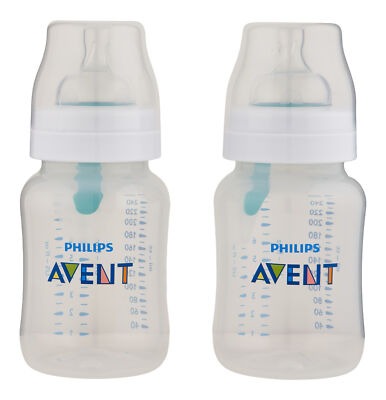
Some bottles have valves, vents, or membranes that control how air moves through the bottle. Designs differ, and an “anti-colic” label doesn’t show that a bottle will reduce colic, reflux, or spit-up for every baby.
Every removable part adds an assembly and cleaning step, and that adds up when several caregivers use the bottles daily.
Fewer small pieces to wash appealed to this parent:
I’m so sick of washing those little green pieces that never seem clean. Baby can sit up now, is tasting foods, and backwards crawling so this week I stopped using them. I don’t see a difference but my husband thinks baby is spitting up more. We still make sure the little notch on the nipple is facing up. Honestly I don’t really understand how these bottles work. I just want to reduce my washing.
The parent stopped using the vent, but whether you can omit an insert depends on the manufacturer’s instructions.
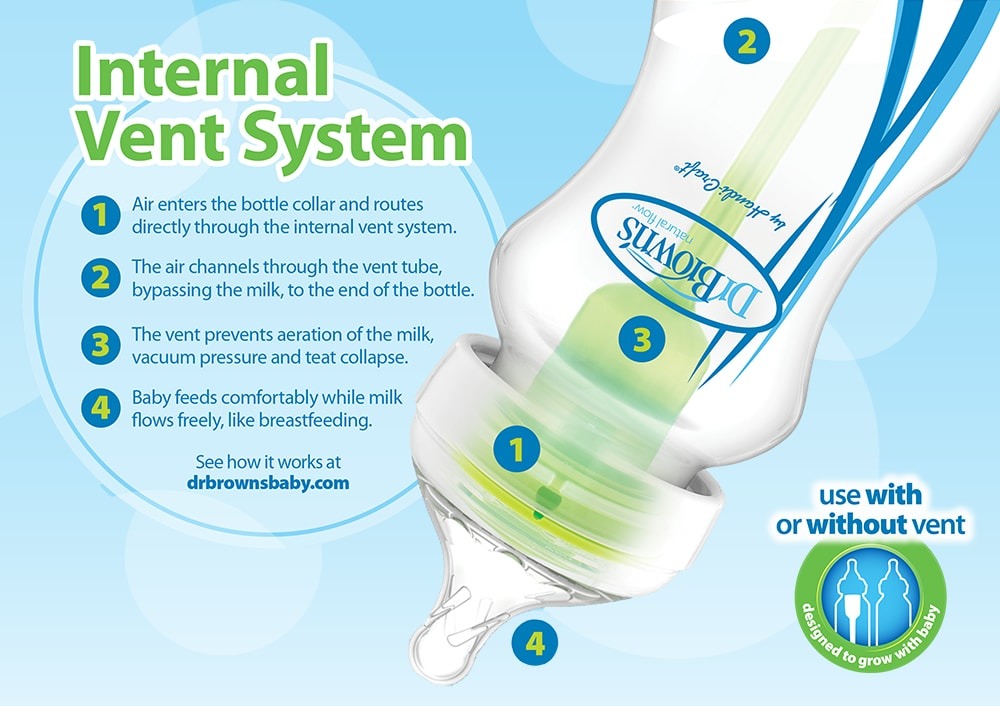
For each design you’re considering, compare the number of pieces and how the vent fits.
Make cleaning realistic after every feed
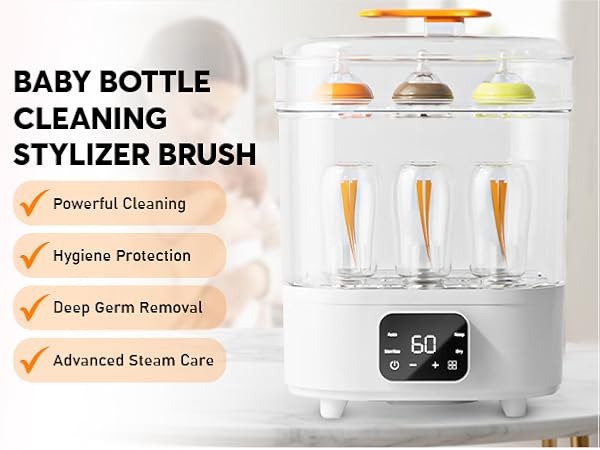
The CDC advises cleaning bottles after every feeding: body, nipple, ring, cap, and any detachable valves or membranes the product instructions specify.
Daily sanitizing matters most for infants younger than two months, babies born prematurely, and babies with weakened immune systems. If you wash items in a dishwasher with hot water and a heated drying cycle or sanitizing setting, the CDC says you don’t need a separate sanitizing step.
A cleaning routine you can repeat
- Disassemble: Separate the parts the manufacturer specifies, including removable vent components.
- Wash: Follow a CDC cleaning method and the bottle’s care directions.
- Sanitize when needed: Add the CDC’s sanitizing steps for your baby’s situation and cleaning method.
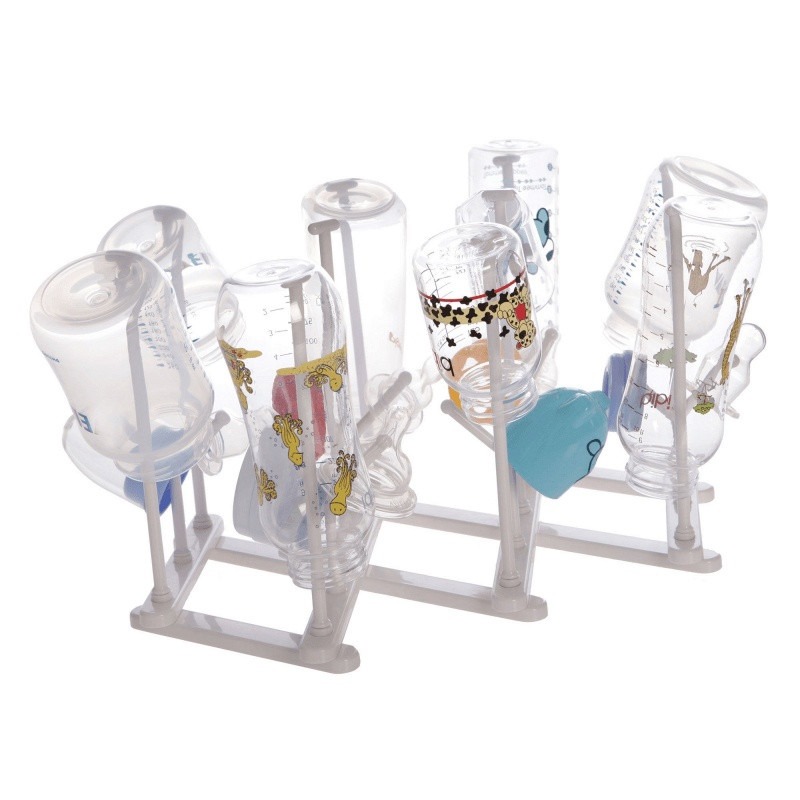
- Air-dry and store: Keep feeding items clean while they dry and until next use.
The CDC infant feeding equipment guide describes handwashing and dishwasher methods, including keeping small dishwasher parts in a closed-top basket or mesh laundry bag.
Try a few bottles before buying a full set
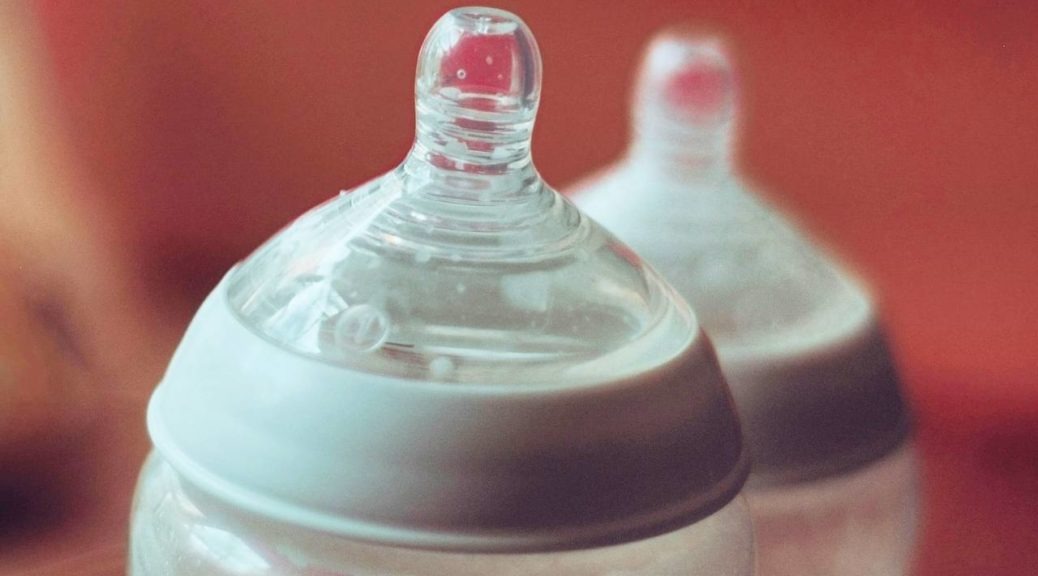
A small first purchase leaves room to change course if your baby struggles with the first bottle. MedlinePlus suggests trying a few bottle and nipple types to see what works for your baby.
Costs and adjustments added up for this exclusively pumping parent:
With every bottle it’s either too fast and he’s choking or too slow and he’s getting frustrated. I’ve tried sizing up, sizing down (some brands he’s using preemie, other brands 3+ month), tightening the ring, loosening the ring, upright feeding, paced feeding, etc. I’m matching up all the notch vents and checking for clogs. I’ve spent more money on bottles (not to mention pump parts and accessories) than I ever imagined at 1month postpartum. For the love of God, please, someone tell me they’ve found the holy grail of bottles/nipples!
The parent had tried Philips Avent, Dr. Brown’s, Lansinoh, and Evenflo Balance, among others.
Keep a short trial record
| Record | What to note | Use it to decide |
|---|---|---|
| Exact product | Brand, model, nipple type, flow label, compatible parts. | Know exactly what you tried. |
| Feeding observation | Comfort, frustration, fatigue, or other difficulty. | Keep the product or rethink the feeding setup. |
| Everyday handling | Leaks, assembly confusion, washing effort. | Whether every caregiver can use it consistently. |
| Next purchase | Working candidate, open concern, or reason for change. | Don’t buy more just because of a good review. |
Log what differs during real use.
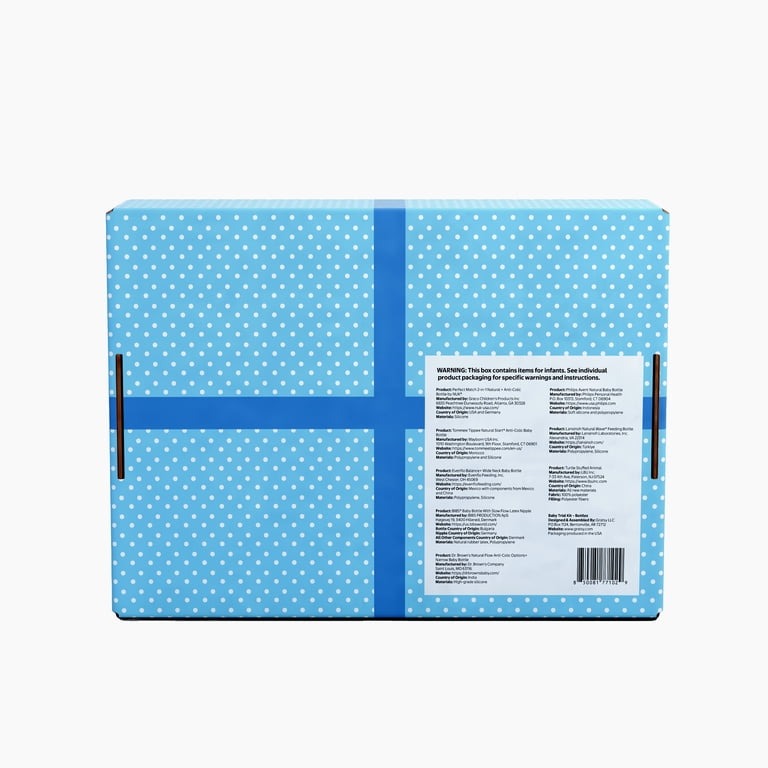
Once one combination works and the cleaning routine fits, buy more matching bottles and spare parts to match how often you feed and how many caregivers handle them. Plan those supplies alongside other essentials with the baby registry checklist.
Know when feeding needs professional assessment

Repeated trouble with sucking, swallowing, coughing, or getting enough milk calls for more than a different nipple. ASHA’s pediatric feeding and swallowing guidance explains that these problems can involve several functions working together and can require evaluation by qualified clinicians, including speech-language pathologists.
If your baby cannot breathe, cough, or cry during a choking episode, call 911 immediately and follow infant choking emergency guidance. For recurring coughing, choking-like episodes, inefficient feeding, poor intake, or growth concerns that aren’t an emergency, contact your baby’s pediatrician or a qualified feeding and swallowing specialist.
In this account, a nipple change helped at first, then the coughing returned:
My baby is having a hard time taking bottles. I’m an EP and baby had been using Dr Browns narrow bottles with the T nipples. He was taking a long time to drink the bottle and falling asleep so I upped the nipples size to 1. He is coughing with the 1 even with paced feeding so I bought lansinoh bottles with medium nipples. He was doing great with those and I felt so relieved.
The post later describes renewed coughing after another improvement. The baby was five and a half months old, with an adjusted age of four months.
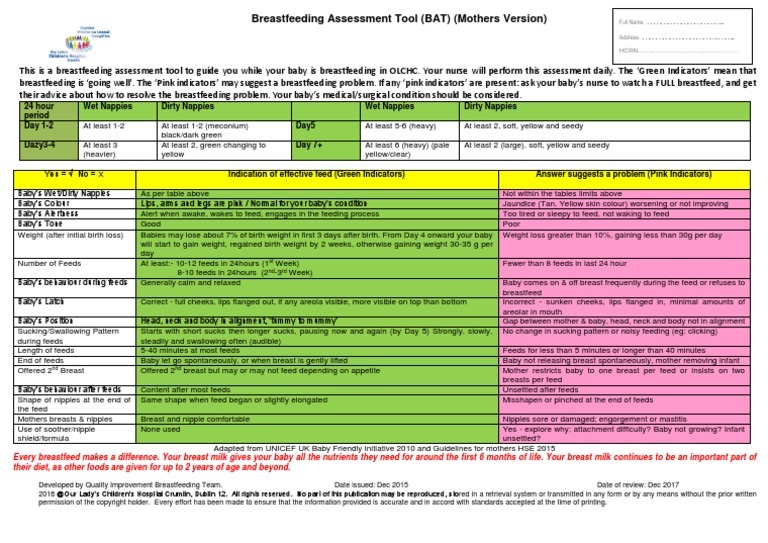
Tell the clinician what symptoms you’ve seen, when they happen, and which bottle or nipple changes you’ve made. The ASHA pediatric feeding and swallowing guidance explains how clinical assessment works. For persistent bottle refusal, see the bottle-refusal guide.
Check the exact bottle model before buying more
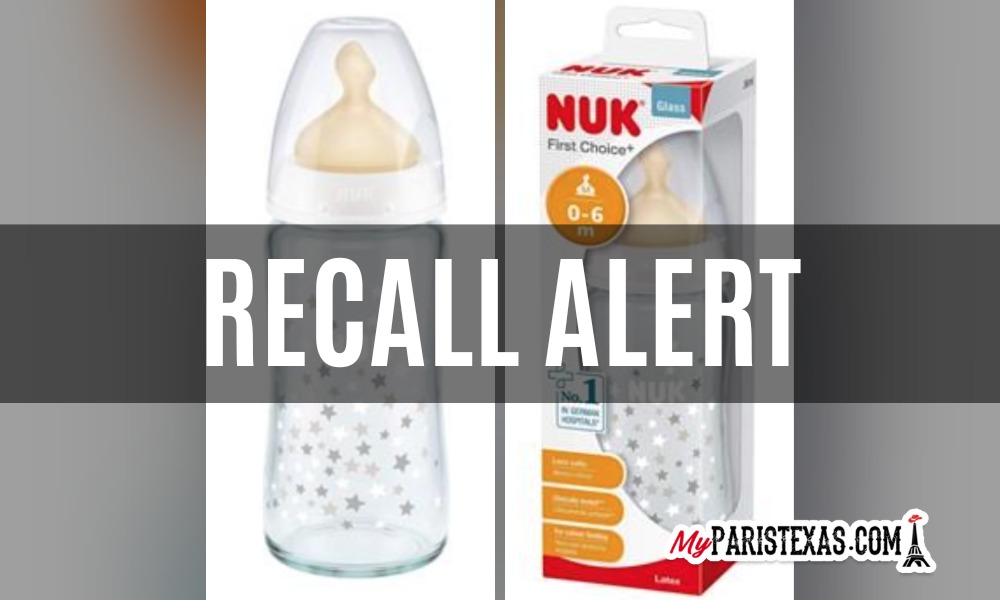
A recall can cover a single package, color, or item number within a wider product family. Brand reputation and general bottle shape don’t tell you whether your unit is affected.
On June 4, 2026, the Consumer Product Safety Commission announced recall 26-530 for approximately 40,000 Boon NURSH eight-ounce reusable bottles in a specified pink tie-dye three-pack. The notice identified item B11654, UPC 669028116546. The hard outer shell could bubble or peel into material that poses a choking hazard.
When it issued the notice, CPSC reported 135 incidents involving the defect and no injuries. It told consumers to stop using the affected bottles and get the stated remedy. The CPSC’s original recall notice identifies that specific variant.
Before you buy or reuse a bottle, look up its exact model, item or SKU number, UPC if available, and variant in the CPSC recall database. Discard cracked or torn nipples and cracked or chipped bottle bodies. Follow any stop-use and remedy instructions that apply. Check secondhand and discounted bottles the same way as new ones.