
Use the age ranges as a starting point, then let your baby’s cues and last nap decide when the next one happens. The ranges are approximate. A calm, alert baby can stay up longer than one who is clearly tired.
What a baby wake window measures
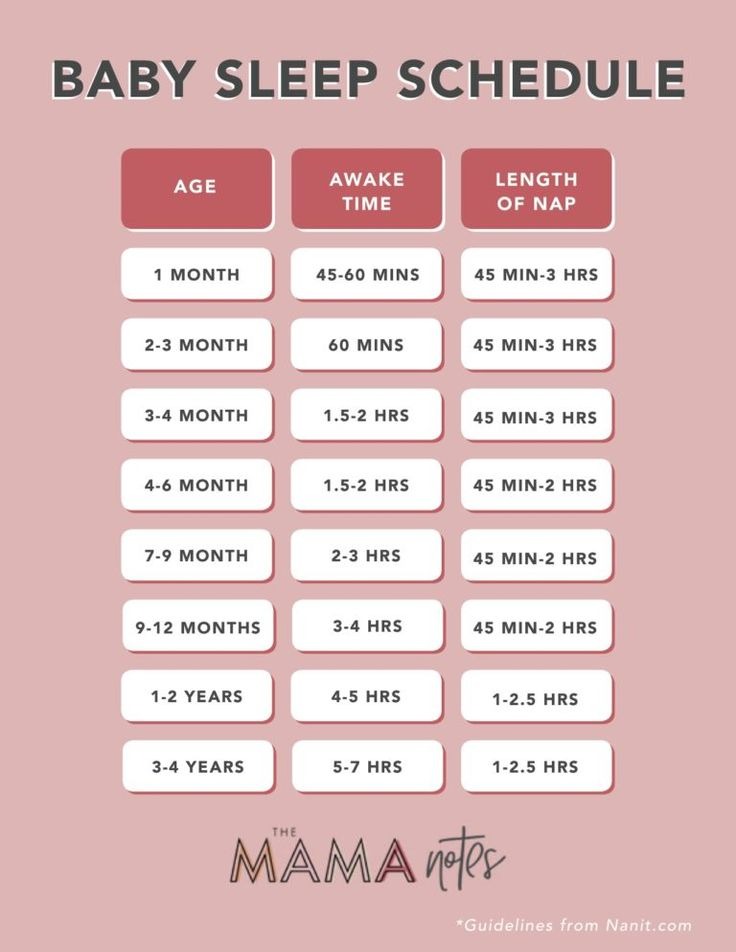
A wake window is the time your baby spends awake between sleeps. You use it to guess when the next nap fits after a feed, some play and the usual daytime routine.
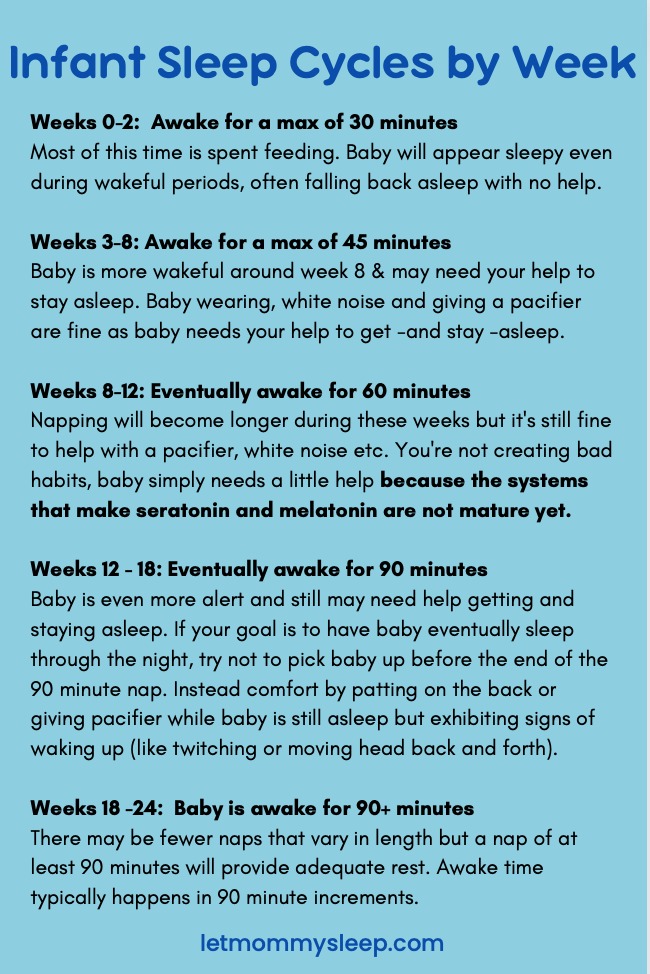
Baby wake windows by age: why estimates differ
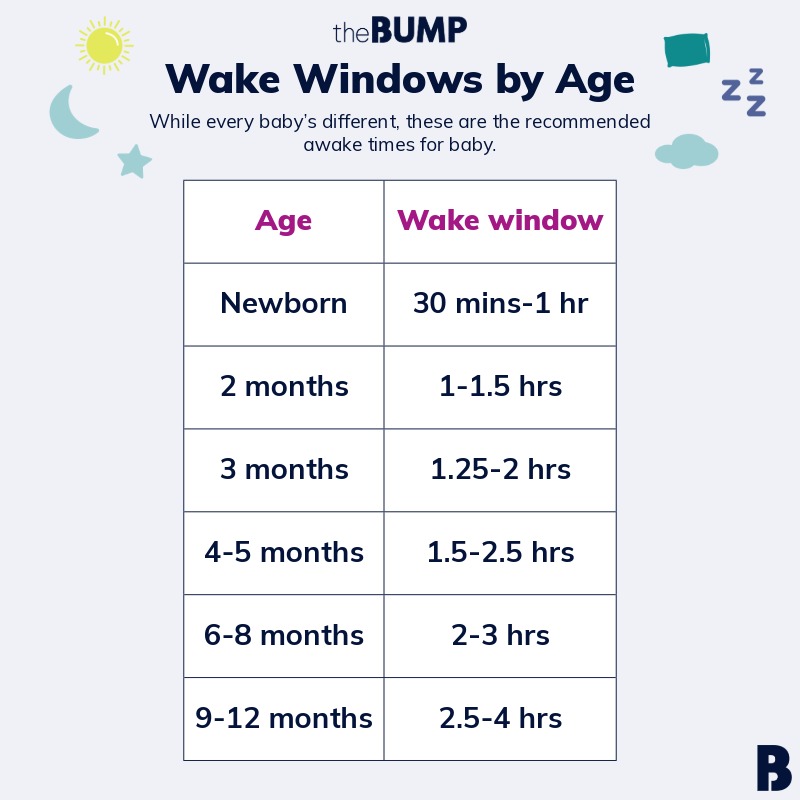
Charts disagree with each other. Cleveland Clinic gives these estimates in its pediatrician-led wake-window guide:
| Baby’s age | Estimated wake window |
|---|---|
| Birth to 1 month | 30 minutes to 1 hour |
| 1 to 3 months | 1 to 2 hours |
| 3 to 4 months | 1 hour 15 minutes to 2 hours 30 minutes |
| 5 to 7 months | 2 to 4 hours |
| 7 to 10 months | 2 hours 30 minutes to 4 hours 30 minutes |
| 10 to 12 months | 3 to 6 hours |
For older babies, Taking Cara Babies reports 3 to 4 hours at 11 to 14 months and 4 to 6 hours at 14 to 24 months. Cleveland Clinic’s chart ends at 12 months.
Even for the same age, publishers disagree:
| Publisher | Reported wake window for 7 to 10 months |
|---|---|
| Taking Cara Babies | 2.5 to 3.5 hours |
| Cleveland Clinic | 2.5 to 4.5 hours |
| Sleep Foundation | 1.5 to 6 hours |
Four hours awake at seven months is over the first range and inside the other two. No chart settles it alone, so check how your baby acts and how the last nap went.

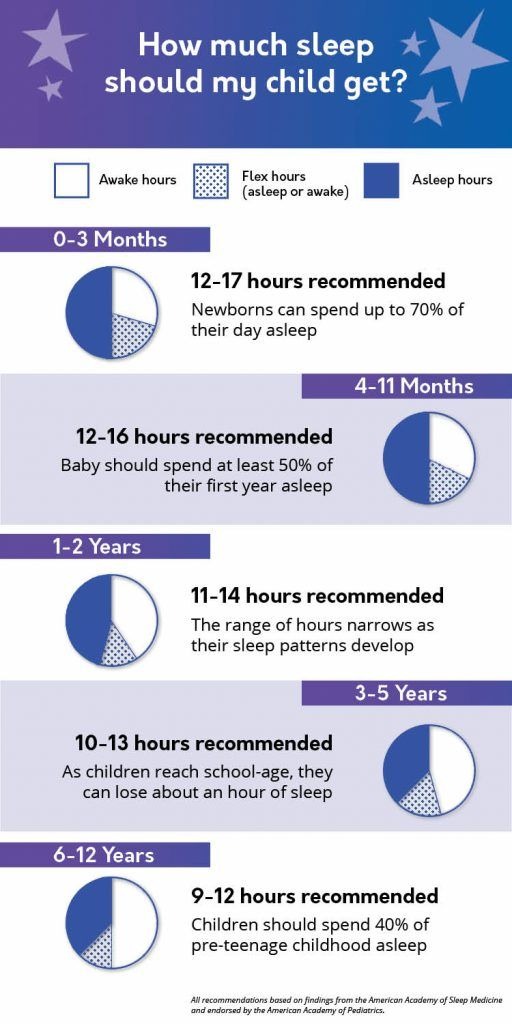
Sleep recommendations answer a different question. The CDC’s 24-hour sleep guidance gives 14 to 17 hours from birth through three months, 12 to 16 hours at four through twelve months, and 11 to 14 hours at ages one to two years, including naps.
The American Academy of Sleep Medicine’s 2016 consensus covers ages four months and older. It made no recommendation for younger infants because the evidence was insufficient and sleep patterns varied widely. Both sets of numbers cover total sleep, not the minutes awake between naps.
How to count a wake window
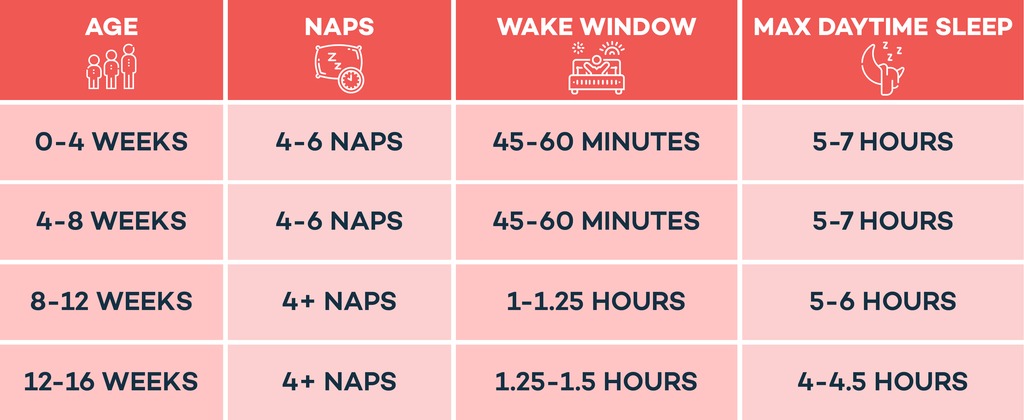
Guides don’t even agree on where to start and stop counting. Taking Cara Babies counts from taking your baby out of the crib or bassinet until putting them back down. Cleveland Clinic starts when the baby wakes and ends when they are put down. Sleep Foundation counts from waking until the baby falls asleep.
Say your baby wakes and comes out of the crib at 9:00 a.m.:
- 9:00 a.m.: The baby wakes and is taken out of the crib.
- 11:00 a.m.: The baby is placed down for a nap.
- 11:15 a.m.: The baby falls asleep.
Counting to the moment you put your baby down gives 2 hours. Counting to sleep onset gives 2 hours 15 minutes, a 15-minute gap.

The start moves too. If your baby wakes quietly at 8:50 and you lift them out at 9:00, a wake-based count starts at 8:50 and a crib-removal count starts at 9:00.
Pick one way to count and label it in your notes, such as put down at 11:00 or fell asleep around 11:15.
Which behaviors can signal a baby is tired
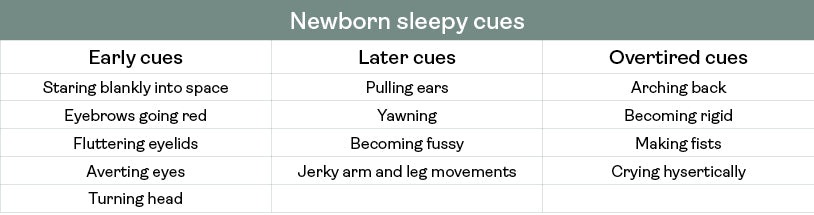
Time awake gives context. Behavior shows how your baby is doing right now. Cleveland Clinic lists yawning, rubbing the eyes, frequent blinking, looking away and becoming less active as signs of sleepiness.
| What you notice | What it means | Check also |
|---|---|---|
| Yawning or rubbing the eyes | Tiredness is starting | Time since the last nap |
| Less activity or engagement | Your baby is winding down | Whether this is unusual for your baby |
| Frequent blinking or looking away | Your baby is ready to rest | Recent stimulation and overall mood |
| Fussiness along with other tired signs | Tiredness is part of it | Hunger, discomfort and the last nap |
One yawn proves nothing. A cluster does: yawning, less engagement and quieter play, plus a nap that ended a while ago, point to tiredness.
When your baby stays alert past the estimated window

Sometimes your baby is still happily playing when the estimated window ends. Other days the tired signs show up early.
Planning feeds and play around each predicted window stressed out one parent of an almost-three-month-old:
My baby is almost 3 months old and I have been trying to follow WW for two or three weeks and it just drove me crazy. Every time I see her WW is ending I start stressing about whether she will be overtired (cuz she is fully awake and having fun). Or maybe she just woke up and I am feeding her and she drifts off and then I am stressing because her nap time will overlap with her feeding time.
I stopped following WW schedule and now just follow baby’s cues. She goes to sleep easier, with a little less fussing. It seems that she just doesn’t need as much sleep as “sleep consultants” recommend. She cat naps around 30 minutes per nap and sleeps through the night.

When the chart and your baby disagree, go by what you see:
- Calm and engaged: Keep playing and watch for tired signs.
- Clearly tired: Start your usual wind-down and put your baby down, even if the chart says wait.
- Hungry or uncomfortable: Feed or comfort first.
- Very young baby with an irregular day: Expect feeds, awake time and sleep to shuffle often.
Why a 30-minute nap leaves questions unanswered

A 30-minute nap doesn’t tell you whether the wake window was too long or too short. Look at the last nap, the last feed and how your baby acts after waking.
Dropping to two naps still left one eight-month-old taking short daytime sleeps:
I’m curious how other parents conquer naps. I feel like it can’t be this hard for all babies. Mine likes to take 30 minute naps and I’m over it. Some days we have gotten 1hr 15 minutes for the first nap but the second is still around 30 minutes. he is 8 months old and about a month ago is when we dropped to 2 naps and while it has improved some, id still like him to get more day sleep. I read that at this age wake windows should still be 2.5-3 hours, but my LO can easily go 4 hours.
Frankly I’m tired of tracking wake windows and still getting 30 minute naps. Do you still follow wake windows??
If short naps keep happening, look across several days: how often they occur, whether your baby seems comfortable afterward, and whether feeding or daytime mood has changed.
How nap transitions change awake time
Babies move toward fewer naps as they grow. That shifts the spacing between sleeps, even when your old routine worked well.
A 2026 observational study in Sleep Medicine analyzed 10.7 million logged days from 175,593 infants aged three to eighteen months. In this app-based group, recorded naps averaged 3.9 per day at three months and 1.0 at eighteen months. Daytime sleep averaged 226 minutes at three months and 101 minutes at eighteen.
Fewer naps also move where the remaining sleeps fall. One parent in a sleep-training discussion reported easier settling over four days after lengthening wake windows and moving to two naps:
I posted a few days ago (“4th week of sleep training”) about my baby still occasionally crying for 20+ minutes when being put down for naps and bed.
Veterans were quick to point out she was on a 3 nap schedule when she would be on 2, and that her wake windows were too short. I was vaguely aware she should’ve dropped a nap but kiddo seemed SO sleepy at 2.5 hours I couldn’t fathom keeping her up for 3.5.
I took the advice on good faith and aimed for 3/3.5/3.5 low behold, she did stretch to 3.5 hours the first day and then made it no problem each day after.
It’s day 4 of 3/3.5/3.5 and she went down without a single whine or complaint every. Single. Time. Today.
The 3/3.5/3.5 sequence is one family’s four days, with no controlled comparison, so other babies may need different intervals.
One coauthor of the 2026 study was employed by Napper, a sleep-tracking company, and the data came from app users, so the findings may not fit all families.
If your old routine starts leaving awkward gaps, check whether the number and spacing of naps has changed. For full-day planning, see Baby Nap Schedule by Age: A Flexible Guide From Newborn to Toddler.
When naps collide with feeding, errands and bedtime
A drive, lunch plans or an evening feed can land right where a chart says nap. One parent of a seven-month-old described the math this takes:
As many of us do I feel like I’m constantly stressing over naps and schedules and living my life doing “nap math”. How long is this drive we need to take, will he fall asleep, shall we leave early so that if he does fall asleep he gets a full nap? If he naps at 9:30 he should nap again at 1 and so I should make lunch plans for 2. If he doesn’t nap in the next 30 minutes his last nap will be too late and bedtime might get messed up.
On a day like that, make three choices:
- Identify the fixed commitment: A feed, appointment or trip may not move.
- Leave room for the nap: Plan a rest before or after the commitment and follow your baby’s cues.
- Protect feeding: If a feed overlaps the wind-down, feed first and let the scheduled minute go.
Safe naps and the limits of a wake-window chart
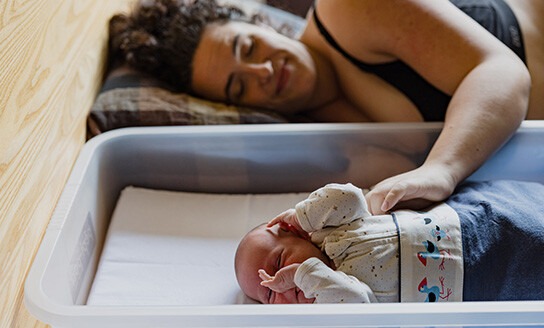
For babies younger than 12 months, the American Academy of Pediatrics recommends back sleeping for naps and nighttime on a firm, flat sleep surface with a fitted sheet, free of loose blankets, pillows and other soft objects. For sleep surface, night waking, and nap schedule, see Baby Sleep: Safe Setup, Typical Patterns, and What to Try.
If a baby in this age group falls asleep in a car seat, stroller, swing, carrier or sling, the AAP advises moving them to a firm sleep surface on their back as soon as possible. The AAP’s safe-sleep guidance has the full recommendations.
See a pediatrician if your baby seems unusually lethargic or ill, has feeding or weight concerns, or has persistent serious sleep difficulties. A new nap schedule won’t address those.